
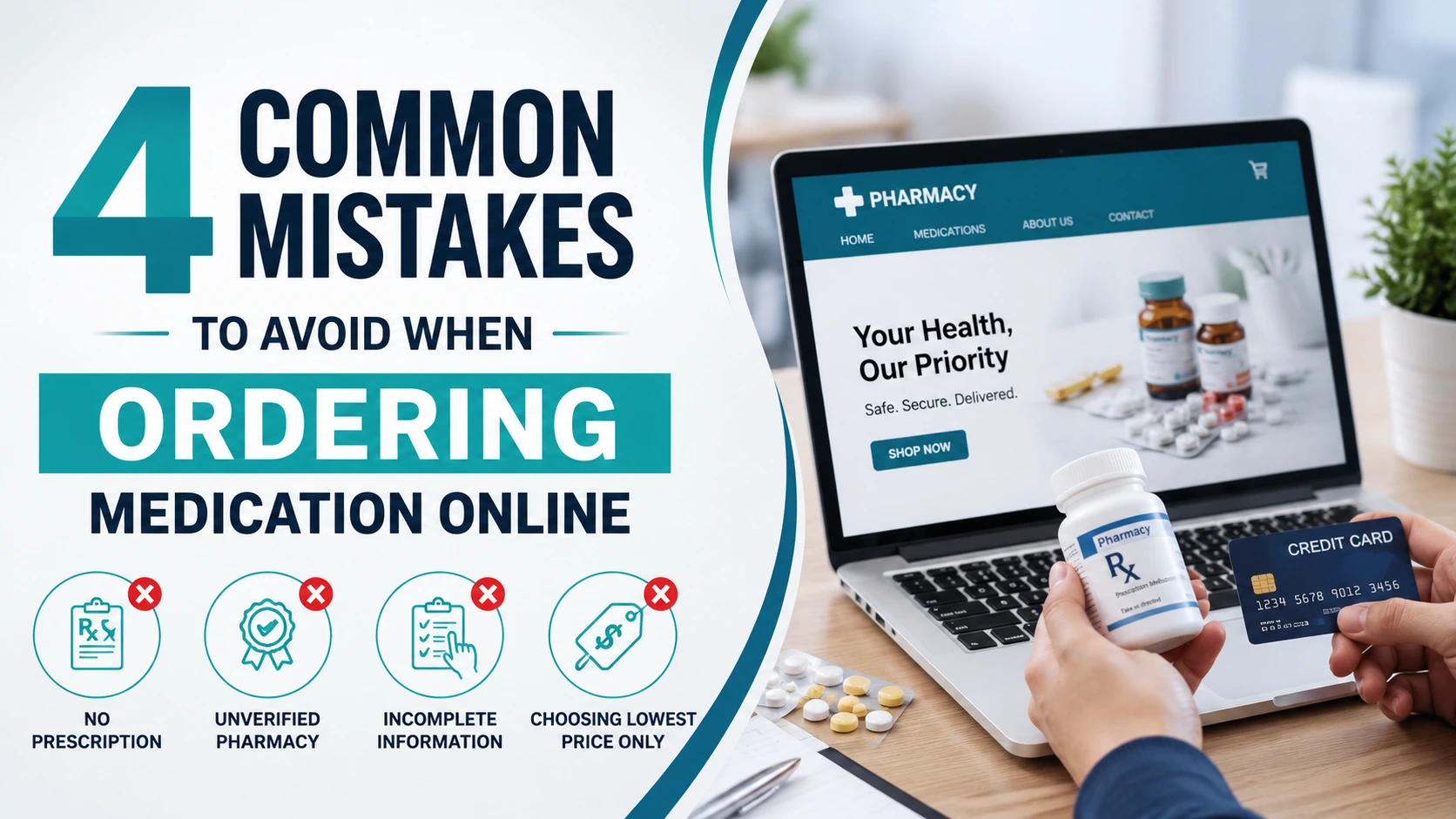
It is quite easy to get carried away thinking you have found a trustworthy source of relief. But rogue websites often advertise unapproved ‘generics’, great discounts, and offers to sell prescription-only drugs without the need for a prescription.
Mistake 1: Using a site that doesn’t require a prescription
Any website that is happy to sell you prescription-only medicine without needing to see a prescription is breaking the law. End of story.
Prescription-only medicine is so classified because the risks it carries can only be properly mitigated through some level of clinical oversight. A doctor or qualified prescriber has to verify that this drug is suitable for your particular condition before it’s handed over. If an online purveyor chooses to totally ignore that requirement – or follows it up with a super-quick, “tick-box” form that inspects no details and simply clicks OK for everyone – that is not a genuine pharmacy. They are selling products that are not their property to sell.
The danger in this situation is not theoretical. Fake medicine is a global crisis. Over 50% of the meds obtainable from unregistered websites hiding their physical address are fraudulent (World Health Organization). That might be the wrong pharmacological compound entirely, a mere fraction of the intended dose, or a lethal substitute. You could ingest the stuff for weeks and see no improvement at all, as your condition invariably gets worse.
Reputable dealers require you to submit either a prescription signed off on by a separate doctor, or to complete a detailed online form that is vetted for approval by a qualified physician. That red tape isn’t a nuisance – it’s a safeguarding stipulation.
Mistake 2: Skipping the regulatory check
A lot of people don’t even consider checking a pharmacy’s legitimacy before they make a purchase. They figure that if a site looks good and can process a credit card, it’s the real deal. And often enough, it is not.
Before you do anything else, check where the pharmacy is registered. Legit e-pharmacies have to list their registration numbers with the appropriate government agency in their country. In practice, true websites will have this information in the footer or the “About Us” section. If you can’t find or verify any sort of registration, you’re done here.
It only takes a few minutes to verify this information and it will already reduce a big chunk of the risks that come with online shopping. So do it.
Mistake 3: Self-diagnosing and rushing the questionnaire
Self-diagnosis is more common because health information is more accessible, and there’s nothing wrong with researching your symptoms before you talk to a professional. The problem is when people decide they already know what they need and use a clinical questionnaire as a box-ticking formality rather than a medical assessment.
Answering an online health consultation dishonestly – or downplaying your symptoms, not mentioning other medication you’re on, or conveniently forgetting to reveal a relevant condition – in order to have a specific drug greenlit is seriously risky. The point of the consultation isn’t to restrict the medication from anyone who could use it – it’s to catch the drug interactions and contraindications that could really harm you.
Drug interactions are a medical reality. Some paired drugs will see their effect reduced, others can cause life-threatening reactions when combined. The doctor deciding whether to prescribe something to you can only do so if you give them accurate information. The same goes for contraindications – pre-existing conditions that make a drug dangerous for you specifically.
That’s why the service you want to be using treats the clinical assessment as a substantial part of the process, not just something they have to do to keep the lawyers at bay. The Access Doctor online clinic, for instance, integrates detailed health guides alongside its consultation process, so that you understand the risks right along with the benefits.
Mistake 4: Choosing based on the lowest price
Comparing prices makes sense in most areas of consumer spending. Medication is not one of them.
Deeply discounted drugs are a warning sign. The discount must be compensated somewhere, and in loosely regulated markets, it usually is through relaxed manufacturing principles, expired or nearly expired supplies, or counterfeit products in which the active pharmaceutical ingredient has been weakened or completely replaced.
A medicine that costs significantly less than the usual market price doesn’t mean you’re getting a good bargain. It typically implies the product is not subjected to appropriate quality testing, and there’s no way to verify the contents. Spending a little more on a product from a registered, regulated source is not overpaying – you’re paying for the guarantee that the medication will function as it should.
That being said, reputable digital pharmacies usually have equal or better rates than physical retailers, and it is reasonable to choose online for comfort or price. The price shouldn’t be a deciding factor, though. Regulations, clinical processes, and openness should be your top priorities.
Treating digital health literacy as a basic habit
Online healthcare is here to stay for the vast majority of people who find it a quicker, more convenient way to stay on top of their health. The risks are real but incredibly easy to avoid once you’re aware of them. Check credentials, only use services that include a suitable clinical consultation, be honest with information, and don’t let cost be the only factor.
The information you need to make safe decisions is already out there. It’s the consistent application of this advice that separates a genuinely beneficial online health interaction from one that exposes you to danger.