

If you live in a coastal region, you know the feeling. The weather alert flashes on your phone, the cone of uncertainty shifts toward your neighborhood, and a pit forms in your stomach. It’s not just fear of the wind; it’s the dread of the preparation. It is the “plywood panic.”
For decades, storm preparation has been synonymous with physical exhaustion. It involves rushing to the hardware store, fighting for the last warped sheets of wood, and spending hours on a ladder wrestling heavy boards into place. By the time the storm arrives, you are physically depleted and anxious about whether your makeshift barriers will actually hold.
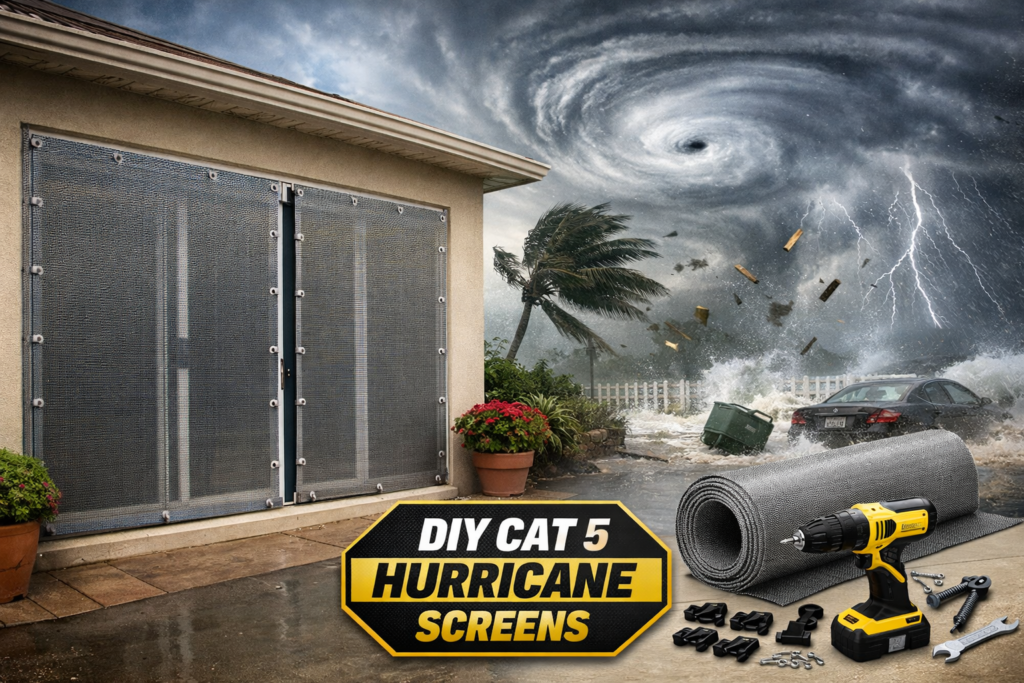
Fortunately, engineering has caught up to the weather. You no longer need to choose between breaking your back with plywood or spending a fortune on contractor-installed shutters. A new generation of protection allows you to secure your home in minutes using permanent, high-strength fabric systems. Find out more about these DIY roll-down hurricane screens that offer Category 5 protection without the panic, and get the upper hand against the season’s worst threats.
Key Takeaways
- Plywood is a Gamble: Despite its popularity, safety organizations classify plywood as a “last resort” due to frequent anchoring failures and a lack of true impact ratings.
- Fabric Outperforms Metal: Unlike rigid metal that dents, proprietary woven fabric absorbs and dissipates impact energy, meeting strict Miami-Dade High Velocity Hurricane Zone (HVHZ) standards.
- DIY Saves Thousands: By installing manual screens yourself, you eliminate the typical $45–$100 per hour labor fees charged by professional contractors.
- Simplicity Equals Reliability: Manual crank systems are often superior to motorized versions because they eliminate the risk of electrical or motor failure during critical power outages.
The “Plywood Problem”: Why Experts Say It’s Time to Upgrade
For many homeowners, plywood is the default option. It is readily available and feels solid. However, relying on lumber to protect your home from a major hurricane is a dangerous misconception. It is a temporary patch, not a permanent solution, and experts are increasingly warning against it.
The Physical and Mental Toll
The logistical burden of plywood is immense. Sheets of 5/8-inch plywood are heavy, unwieldy, and difficult to store. If you don’t leave them up year-round—which ruins your home’s curb appeal—you must haul them out of storage or buy new ones every time a storm approaches. The installation process often leads to injury before the wind even picks up.
Once installed, plywood creates what is known as the “Cave Effect.” It completely blocks natural light, plunging your home into total darkness day and night. If the power goes out, which it almost certainly will, you are left navigating a pitch-black home with flashlights. This sensory deprivation increases stress and anxiety for families and pets during an already terrifying event.
The Safety Reality
Beyond the inconvenience, plywood often fails when it matters most. Wood is organic; it warps, rots, and weakens over time. Furthermore, most DIY plywood installations lack the specific spacing and anchoring required to withstand negative pressure.
The U.S. Probation Office and Pretrial Services for the Southern District of Florida warn that plywood should only be considered a “last-resort alternative.” Their guidelines note that it often fails because it warps or isn’t installed with the precise anchoring hardware necessary to keep it on the wall. When a board flies off during a storm, it exposes the window to breakage and becomes a deadly projectile itself.
How Can “Fabric” Stop a Category 5 Hurricane?
The most common objection to upgrading is skepticism about materials. How can a flexible fabric screen possibly be stronger than a rigid sheet of metal or wood? It seems counterintuitive.
The Physics of Energy Dissipation
The secret lies in how the material handles energy. When a piece of debris hits a rigid surface like a metal shutter or plywood, that object stops instantly. All the kinetic energy creates a massive shock at the point of impact. This often causes metal to dent, buckle, or tear, and it causes wood to splinter.
High-strength hurricane screens function differently. They are designed to act like a trampoline or a catcher’s mitt. When debris strikes the screen, the fabric flexes slightly. This flexibility absorbs the energy and disperses it across the entire surface area of the screen and frame. Instead of fighting the wind with rigidity, the screen manages the force, neutralizing the impact without breaking.
Validated by the Toughest Tests
This isn’t theoretical; it is tested under the strictest building codes in the nation. To be sold as true hurricane protection, these screens must pass the Miami-Dade TAS 201 protocol. This test requires the screen to withstand a 9-pound 2×4 timber missile shot at 34 mph (approximately 50 feet per second) without penetration.
Cat 5 Hurricane Screens pass this test. They stop the missile, protecting the glass behind it. If a fabric screen can stop a flying 2×4, it can handle the branches, roof tiles, and patio furniture that typically become airborne during a storm.
Everyday Protection
The strength of the fabric offers benefits even when the skies are clear. These screens block up to 91% of UV rays. This creates a cooler patio or home interior, lowers your air conditioning costs, and prevents your furniture and flooring from fading—all while maintaining your view.
DIY Installation: Do You Really Save Money?
For the “Self-Reliant Storm Prepper,” the appeal of these screens isn’t just safety; it’s the ability to take control of the installation. The home improvement industry often creates a barrier to entry, implying that only licensed contractors can install hurricane protection.
Breaking Down the Cost
The reality is that labor is a massive portion of any hurricane shutter quote. Contractors typically charge between $45 and $100 per hour for labor, plus markups on materials. For a whole-house installation, you could be paying thousands of dollars just for the crew to screw tracks into your walls.
By choosing a DIY-friendly system, you strip away those costs. You are paying for the professional-grade materials—the hood, the tracks, and the screen—not the guy in the truck.
Addressing the Skills Gap
Are you qualified to install them? If you own a power drill, a level, and a tape measure, the answer is likely yes. The process involves mounting the housing box above the opening and securing the side tracks. It is precise work, but it is not complex construction.
Manufacturers like Cat 5 Hurricane Screens support this process with:
- Simple sizing guides: Ensuring you order the exact right fit.
- Step-by-step instructions: Walking you through the mounting process.
- Customer support: Real help if you have a question.
You get the same Miami-Dade rated protection as the neighbors who hired a contractor, but you keep the labor savings in your own pocket.
Why Simplicity Equals Reliability
In an era of “smart homes,” the instinct is often to automate everything. You might be tempted to look for motorized screens that deploy with a remote control or an app. However, when it comes to disaster preparedness, simplicity is a feature, not a bug.
The Power Outage Reality
Hurricanes and power outages go hand in hand. The grid often fails long before the worst winds arrive. If you rely on motorized shutters, you are introducing a point of failure. If the power dies, you may be unable to lower your screens without a complicated manual override or a backup generator. If the motor jams or a circuit board fries from a power surge, your protection is stuck.
The Case for the Crank
A manual crank system works 100% of the time. It does not care if the power lines are down. It does not require a battery backup. You simply attach the crank handle, turn it, and the screen deploys.
From a maintenance perspective, manual systems are superior for the long haul.
- No Motors to Replace: Tube motors eventually burn out and are expensive to swap.
- No Electricians: You don’t need to run wiring through your exterior walls.
- Fewer Moving Parts: Fewer components mean fewer things that can break or corrode in salt air.
For a prepper mindset, the manual crank is the robust choice. It ensures that you are never dependent on the utility company for your home’s safety.
Conclusion
Storm protection should offer peace of mind, not back pain. The days of struggling with heavy wood and sitting in the dark are over. By upgrading to DIY hurricane screens, you are making a calculated decision to improve both your safety and your quality of life.
You get the verified strength of a system that passes the Miami-Dade TAS 201 missile test. You get the reliability of a manual system that doesn’t need electricity. And perhaps most importantly, you regain your time. Instead of spending days panic-buying materials and hammering boards, you can secure your home in minutes and focus on what matters—keeping your family safe.