
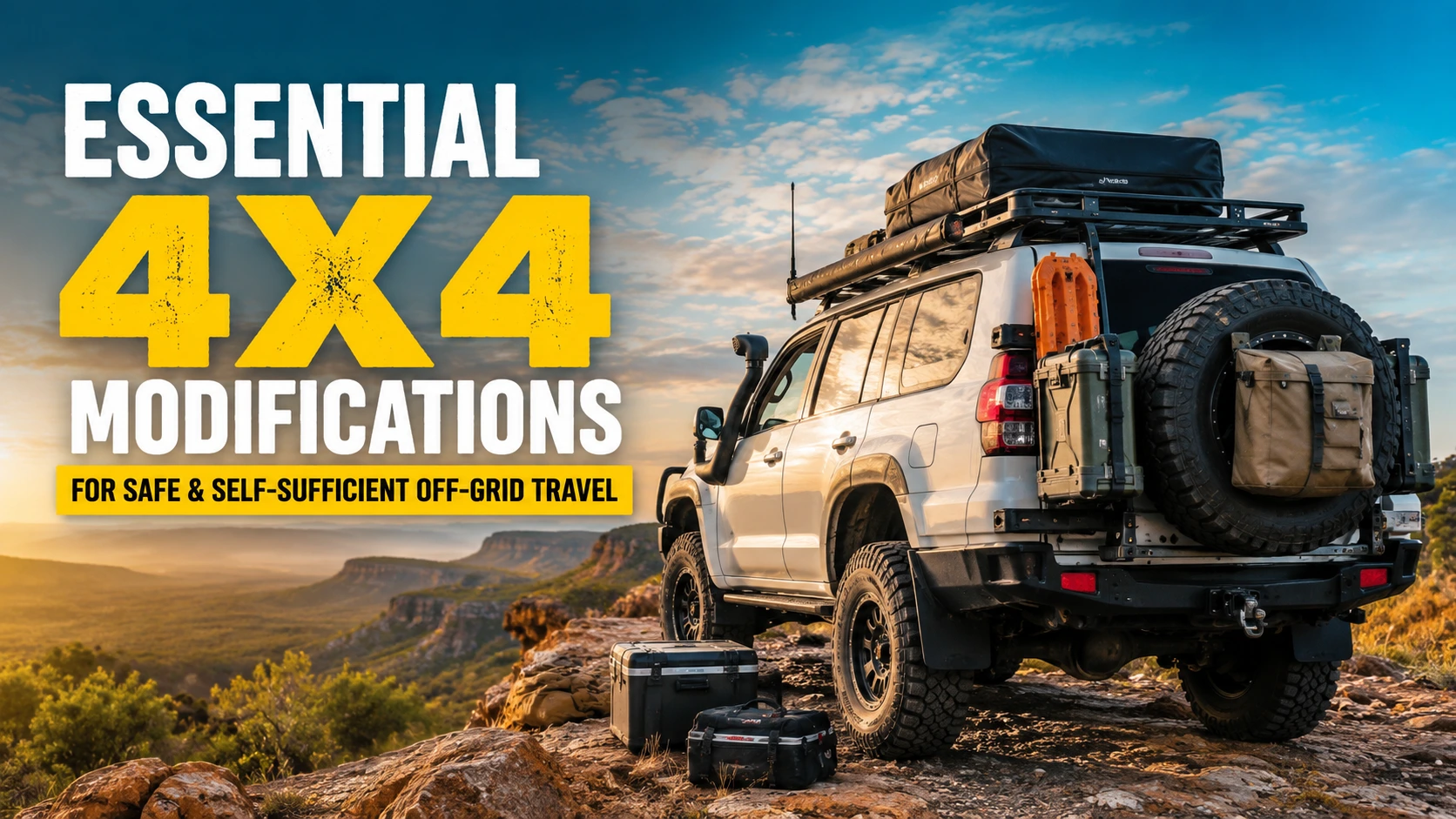
Australia is currently experiencing an unprecedented domestic touring boom. In recent years, travellers took tens of millions of camping trips, injecting billions into the local economy and breathing new life into remote townships. Regional Australia hosts the vast majority of these adventures, drawing drivers away from coastal cities and into the rugged beauty of the outback. With SUVs and light commercial utes consistently dominating new vehicle sales, many Australians are eager to tackle iconic tracks. However, transitioning a daily commuter vehicle into a reliable, self-reliant touring rig requires careful planning, a solid understanding of mechanics, and the right modifications.
Essential Fluid Storage for Remote Travel
Venturing into remote outback environments introduces entirely new challenges, particularly regarding fuel and water consumption. Driving through soft sand in low-range gears can increase a diesel 4WD’s fuel consumption by 50 percent, while petrol vehicles can see their usage nearly double. Iconic routes like the Simpson Desert or the Canning Stock Route require vehicles to carry enough fuel for extensive journeys over hundreds of parallel sand dunes without a single resupply station.
Properly securing these vital fluids is a matter of absolute survival. According to official outback safety guidelines, travellers venturing into remote areas are strongly advised to carry extra fuel in suitable, approved containers, alongside a minimum of four litres of drinking water per person per day. Relying on loose, unsecured containers inside the passenger cabin is inherently dangerous, increasing the risk of toxic fumes and lethal projectiles during a sudden stop, which makes external storage mandatory.
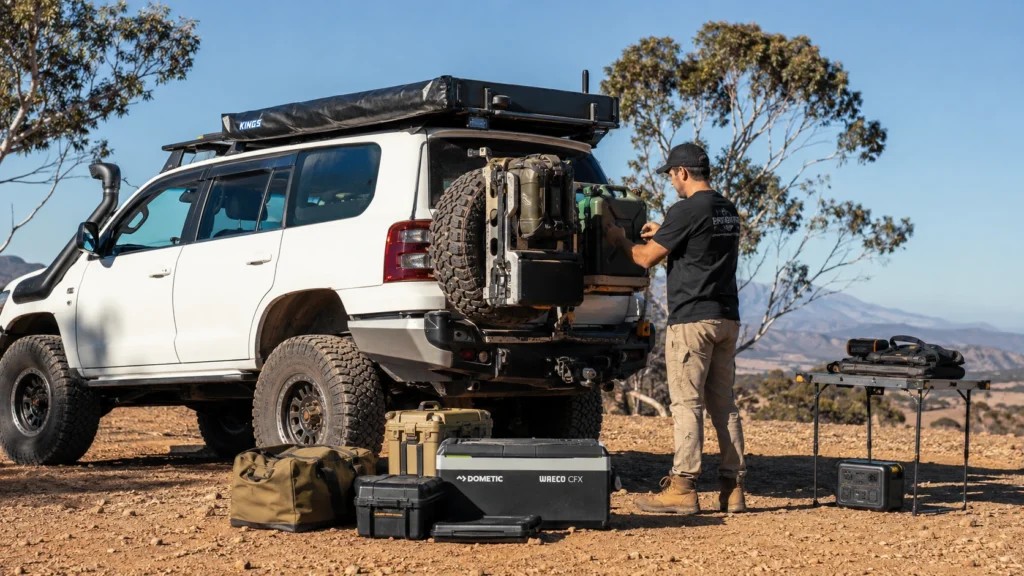
To safely transport external fluids without sacrificing your precious payload limit, lightweight storage solutions are highly recommended. Upgrading heavy exterior accessories from traditional steel to lighter metals makes a noticeable difference in handling and performance. For instance, installing a rugged flat-plate aluminium jerry can holder provides excellent impact resistance on rough corrugated tracks while keeping the empty weight down to roughly six kilograms. This simple swap directly improves fuel economy and helps drivers stay well within legal payload thresholds while keeping hazardous liquids safely outside the cab.
Understanding Your Vehicle and Managing Weight
Before installing every available accessory on the market, drivers must address one of the most critical aspects of 4×4 touring. Overloading is a systemic issue on Australian roads, creating severe safety risks and voiding insurance policies. Recent roadside police operations across the country revealed that a significant portion of weighted touring rigs exceeded their Gross Vehicle Mass (GVM) limits. Surprisingly, roadside checks have shown that only a tiny fraction of drivers actually know their vehicle’s true kerb weight before stepping onto the weighbridge.
To combat this dangerous trend, you need to assess your base setup and calculate your available payload. Evaluating your specific off-road vehicle capabilities is an essential first step before bolting on heavy cargo modifications. The physical placement of your gear is just as important as the total overall weight. Adding heavy accessories far behind the rear axle creates a seesaw effect that multiplies the downforce on the suspension, lifting the front wheels and reducing steering traction. This severe imbalance heavily impacts vehicle handling, making weight distribution a top priority for any off-grid build.
Top Modifications for Off-Grid Self-Sufficiency
Creating a highly capable, self-sufficient touring setup involves much more than just throwing camping gear in the back of a ute. The ultimate goal is to build a balanced, reliable vehicle that can safely handle extreme conditions while providing comfort in the bush. Here are the most essential modifications to consider for your next big adventure:
- Suspension and GVM Upgrades: Because standard factory payloads are easily exceeded by basic touring equipment, upgrading your suspension is crucial. Major aftermarket suspension companies now offer certified GVM upgrade kits that allow popular dual-cab utes to legally increase their payload limits.
- Lightweight Canopies: Replacing heavy steel trays and fiberglass canopies with aluminium alternatives significantly reduces the base weight of the vehicle. This gives you a much larger allowance for carrying food, advanced recovery gear, and vital spare parts.
- Communications and Visibility Gear: When traversing dune country, head-on collisions over blind crests are a serious and present risk. High-visibility sand flags are strictly mandatory in many desert conservation parks, and mounted UHF radios are absolutely essential for communicating with oncoming traffic and convoy members.
- Heavy-Duty Storage Systems: Custom storage solutions protect sensitive equipment from harsh outback dust (often called “bulldust”) and extreme summer temperatures that frequently exceed 50 degrees Celsius. Quality rubber seals and heavy-duty latches are non-negotiable for keeping your gear pristine.
Preparation is the definitive key to any successful off-grid adventure. By prioritising weight management, securing your essential fluids, and investing in high-quality, lightweight modifications, you can confidently explore the most remote corners of the country. A meticulously built 4×4 not only ensures compliance with local transport regulations but also guarantees a significantly safer, more rewarding travel experience for everyone on board.