

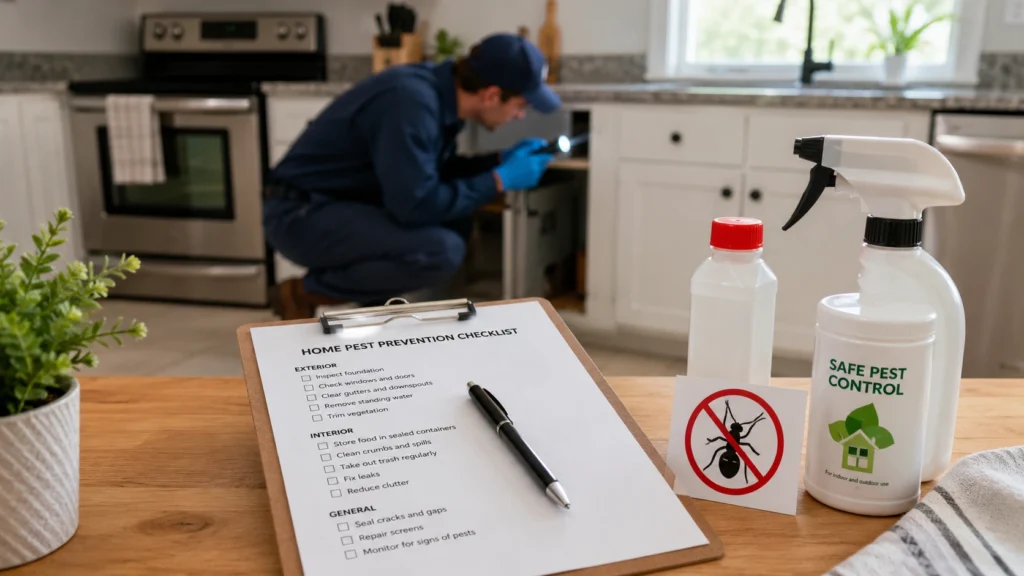
Key Takeaways
- Make pest prevention part of regular home maintenance throughout the year.
- Inspect seasonal entry points, especially around doors, windows, foundations, vents, and utility lines.
- Control moisture, standing water, food sources, clutter, and outdoor shelter.
- Seal gaps and repair screens, weatherstripping, gutters, leaks, and damaged materials promptly.
- Identify pests before choosing treatments and prioritize lower-risk prevention methods.
- Monitor recurring activity and seek professional help when problems persist or involve hidden areas or property damage.
Pest prevention is most effective when it becomes part of regular home maintenance rather than a reaction to an active infestation. By addressing moisture, food sources, clutter, and entry points year-round, homeowners can make their property far less inviting to insects and rodents. Small problems are easier to manage before they spread into walls, attics, kitchens, or storage areas. For recurring activity or concerns that require a more detailed inspection, homeowners may consider expert pest control services in Weston for long-term prevention alongside practical steps taken at home.
Why Seasonal Prevention Works
Pests respond to changing temperatures, rainfall, humidity, and available shelter. A dry summer may drive pests toward indoor water sources, while cold or wet weather can push rodents and insects through tiny gaps around foundations, pipes, and doors. A loose screen or slow plumbing leak may seem minor, but either can create a dependable route or resource over time. A sensible approach begins with inspection and prevention, then uses targeted control only when needed. The principles behind integrated pest management emphasize identifying the pest, monitoring activity, removing the conditions it needs, and choosing lower-risk solutions first.
Winter: Check For Hidden Entry Points
When outdoor conditions are cold or rainy, homes offer warmth and cover. Walk around the exterior and inspect door sweeps, garage corners, window screens, foundation vents, and openings around utility lines. Pay special attention to pipes, wires, air-conditioning lines, and cable connections that enter the building. Also inspect the roofline, attic vents, chimney areas, and crawl-space access points. Indoors, look in attics, basements, and storage rooms for droppings, nesting material, chewed packaging, or gnaw marks. Keep firewood, cardboard, and unused materials away from interior and exterior walls to prevent them from creating hiding places near the home.
Spring: Start With Outdoor Cleanup
Spring is an ideal time to correct small exterior issues before warmer weather increases pest activity. Start by clearing leaves, pine needles, and plant debris away from the foundation. Clean gutters and confirm that downspouts carry water away from the house rather than allowing it to collect near the siding or the crawl space.
- Trim branches and shrubs so they do not touch the roof, windows, or siding.
- Move mulch, lumber, planters, and stored materials away from exterior walls.
- Repair torn screens, damaged vent covers, and worn weatherstripping.
- Check outdoor faucets and irrigation equipment for drips or leaks.
- Inspect sheds and fences for damp, decaying wood that may attract pests.
Summer: Control Water, Food, And Shade
Warm weather can bring more visible activity from ants, flies, mosquitoes, roaches, and rodents. Water is often the first issue to address. Empty standing water from buckets, toys, planters, tarps, and other outdoor containers. Repair dripping faucets, leaking hoses, and irrigation problems promptly. Food and shade also matter. Keep trash cans closed, clean spills near patios and grills, and store pet food in sealed containers rather than leaving it outside overnight. Screens or barriers around porches and frequently used doors can reduce access. When practical, place bright outdoor lighting farther from entry doors because many flying insects gather near illuminated areas.
Fall: Seal And Store Before Cold Weather
Fall preparation helps reduce the likelihood that pests will move indoors as outdoor shelter becomes less comfortable. Examine lower siding and foundation walls for cracks, then seal gaps around windows, doors, vents, and utility openings with materials suited to the location. Store pantry overflow, birdseed, and pet supplies in tight containers instead of bags that can be chewed or torn. Keep firewood elevated and positioned away from the home. Before closing up a garage, shed, or storage room for the season, remove clutter, sweep corners, and inspect stored belongings for signs of activity.
Inside The Home: Remove Food And Shelter
Cleanliness is important, but it is only one part of prevention. Pests also need water, cover, and a way inside. Consistent routines in the kitchen and lower-traffic areas can make a major difference.
Kitchen And Pantry
- Wipe crumbs and spills soon after they occur.
- Store flour, cereal, grains, snacks, and pet food in sealed containers.
- Clean beneath appliances and inspect pantry corners regularly.
- Empty trash often and use a bin with a secure lid.
Basement, Attic, And Garage
- Reduce clutter that provides dark, undisturbed nesting areas.
- Repair leaks and improve ventilation in damp spaces.
- Keep boxes off the floor when possible and avoid storing items directly against walls.
- Inspect stored items before bringing them into living areas.
Early Warning Signs To Watch
Pests often leave evidence before homeowners see them directly. A quick monthly inspection can catch concerns early. Watch for droppings near walls, cabinets, appliances, or stored food; gnaw marks on wood, plastic, wiring, and packaging; grease marks along baseboards; shed skins, egg cases, or damaged fabrics; and unusual sounds in walls or ceilings. Recurring dampness, standing water, musty odors, or soft wood should also be addressed. These conditions can signal a moisture issue that supports pest activity even if no insects or rodents are currently visible.
Use A Safer Pest Control Process
- Identify the pest. Avoid applying a random product to an unknown problem.
- Find the cause. Look for food, water, shelter, damage, or an entry point.
- Start with physical fixes. Use repairs, sanitation, screens, traps, and sealed storage.
- Monitor results. Check whether activity drops after the source is corrected.
- Use products carefully. Read and follow every label, including instructions for children, pets, ventilation, storage, and disposal.
For home-specific guidance on reducing attractants while limiting unnecessary pesticide use, the California Department of Pesticide Regulation offers practical advice about preventing pests at home.
When To Ask For Professional Help
Not every sighting requires outside assistance, but persistent activity deserves attention. Consider professional help when pests continue appearing after cleanup and repairs, when there are signs of structural damage, or when insects are nesting in walls, ceilings, or other hard-to-reach areas. Prompt assessment is especially useful for recurring rodent activity, suspected termites, large infestations, and stinging insects near commonly used entrances.
If mice or rats continue to appear despite preventive measures, consider contacting a rodent exterminator for a professional assessment. A professional can help identify potential entry points, determine whether the activity is ongoing, and recommend appropriate steps for addressing the problem.
Professional assistance can also be valuable when pest activity is difficult to locate or when DIY treatments have provided only temporary results. Repeated sightings, droppings, gnaw marks, unusual sounds inside walls, or damage to insulation and wiring may indicate that pests have established a hidden nesting area. Addressing these signs early can help prevent the problem from becoming more extensive.
Choose a qualified provider who explains the likely pest, proposed treatment, safety measures, and follow-up plan. Ask how the source of the infestation will be addressed, what preventive measures are recommended, and whether additional inspections may be needed. Clear communication can help ensure that treatment is appropriate for the property and that future pest activity is easier to prevent.
Build A Year-Round Routine
Effective pest prevention comes from small, repeatable habits. Set aside time each month to check for leaks, food spills, clutter, damaged screens, and new gaps around the home. Combine that routine with seasonal yard cleanup, sealed food storage, moisture control, and timely repairs to reduce the chance that a minor warning sign becomes a larger disruption.
Conclusion
Effective pest prevention does not require complicated routines or constant treatment. It starts with consistent attention to the conditions that allow insects and rodents to enter, feed, hide, and reproduce. By checking the home each season, securing food and waste, controlling moisture, reducing clutter, and repairing small openings before they become larger problems, homeowners can make their property less attractive to unwanted pests. A year-round approach also makes it easier to notice warning signs and respond before activity spreads into walls, attics, kitchens, or storage areas. When recurring infestations or difficult-to-identify activity require additional support, professional inspection and targeted treatment can complement the preventive work done at home. With simple monthly checks and timely seasonal maintenance, homeowners can protect their property and maintain a cleaner, more comfortable living environment throughout 2026.