
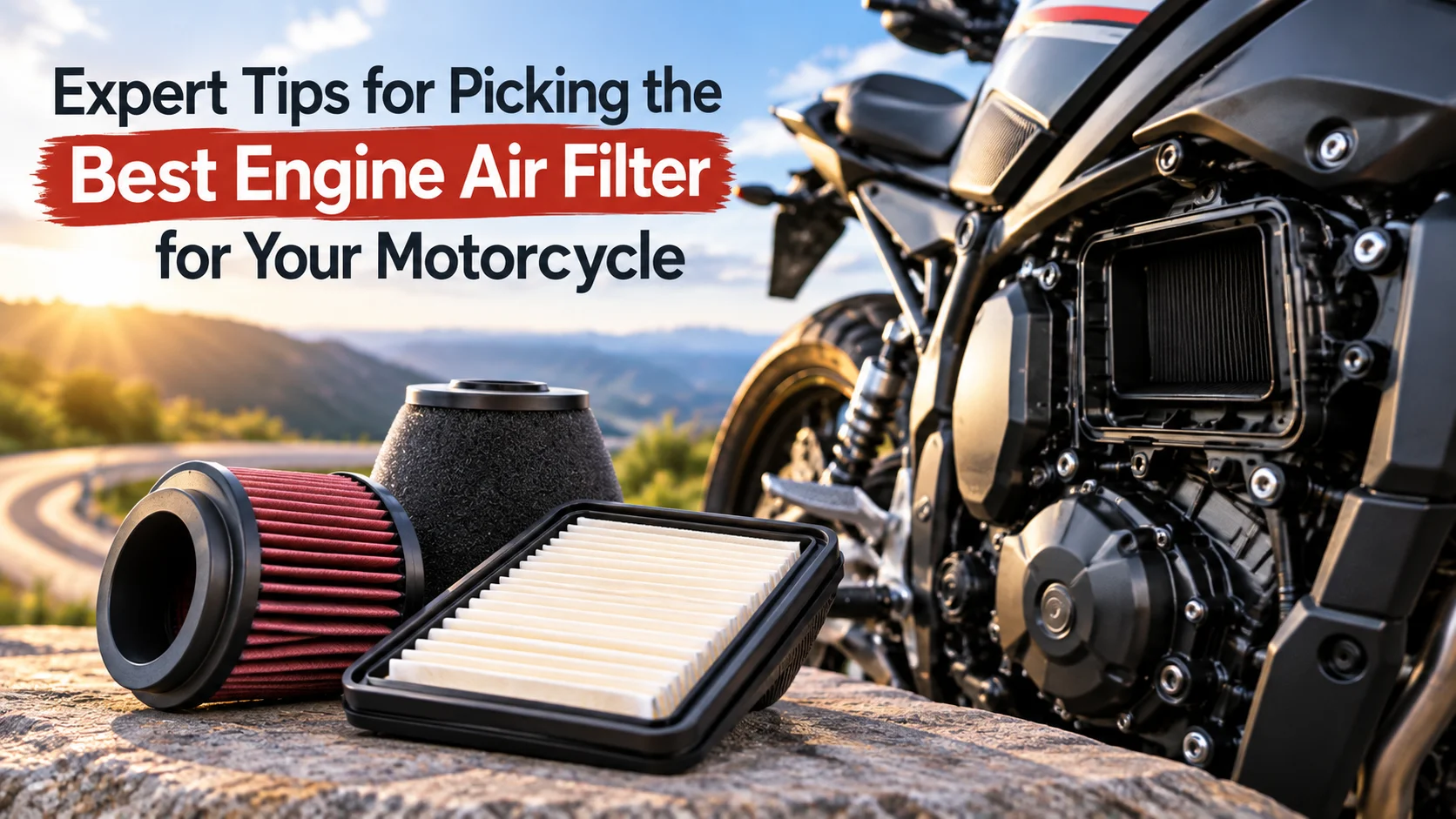
Did you know that there are currently around 9.2 million motorcycles in the US? With so many bikes on the road, keeping your motorcycle properly maintained is essential for reliable performance. One small component that plays an important role in engine health is the air filter.
The engine air filter helps prevent dirt, dust, debris, and other unwanted particles from entering the engine. A clean, properly fitted filter allows the engine to receive the air it needs while helping protect its internal components.
Choosing the best engine air filter for your motorcycle isn’t simply about buying the most expensive option. You need to consider your motorcycle, riding conditions, filter material, maintenance requirements, and long-term cost. Here are some practical tips to help you make the right choice.
Consider the Filter Material
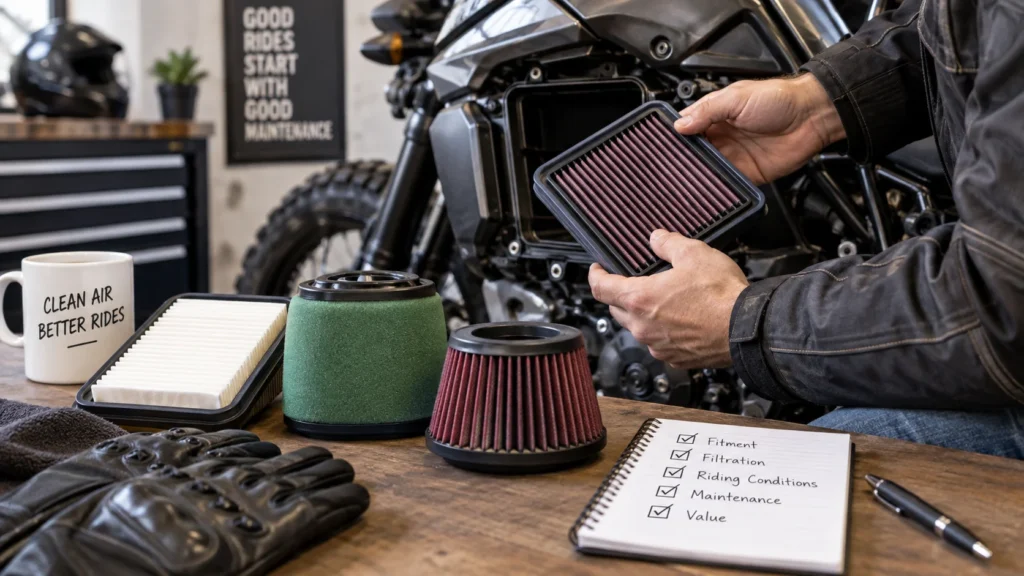
One of the first things to consider when choosing an engine air filter is the material it’s made from. Paper, foam, and cotton gauze are among the common types used in motorcycle air filtration. Each has different characteristics, so understanding the differences can help you choose an option that suits your riding needs.
Paper Filters
Paper filters are a common and affordable choice for many motorcycles. They are designed to trap dirt and other particles before they reach the engine and are generally convenient because they can simply be replaced when they become dirty.
One of their main advantages is their availability and relatively low cost. However, paper filters can become clogged more quickly when a motorcycle is regularly ridden in dusty or dirty environments.
For riders who mainly use their motorcycles on paved roads and follow the manufacturer’s recommended replacement schedule, a paper filter can be a practical option.
Foam Filters
Foam filters are washable and reusable, which can make them appealing to riders who want an alternative to disposable filters. They can also be suitable for motorcycles that are frequently used in dusty environments.
However, reusable filters require proper cleaning and maintenance. A foam filter that becomes heavily contaminated can restrict airflow, so it needs to be inspected and serviced regularly, particularly when riding conditions are harsh.
Before choosing a foam filter, make sure it is designed for your specific motorcycle and follow the manufacturer’s cleaning and maintenance instructions.
Cotton Gauze Filters
Cotton gauze filters are another reusable option and are often chosen by motorcycle enthusiasts who are interested in airflow and performance. They can be cleaned and reused when properly maintained.
However, performance should not be the only consideration when selecting a filter. Filtration efficiency, construction quality, fitment, maintenance requirements, and compatibility with your motorcycle are all important.
Cotton gauze filters may also cost more initially than conventional disposable filters and typically require regular maintenance to remain effective.
Check the Size and Fit
The correct size and fit are essential when choosing an engine air filter. A filter should sit securely in the air box and create a proper seal. If there are gaps around the filter, unfiltered air may enter the engine.
Always check your motorcycle manufacturer’s specifications before purchasing a replacement. Make sure the filter is designed for your motorcycle’s specific make, model, and year.
This is particularly important if your motorcycle has a modified or custom air intake system. Modifications can change the requirements of the original air filtration setup, so verify compatibility before making a purchase.
If possible, compare the replacement filter’s part number with the part number recommended for your motorcycle. This can help reduce the risk of ordering the wrong filter.
Consider Your Riding Conditions
Your usual riding environment should also influence your choice of motorcycle air filter.
If you frequently ride on dusty roads, unpaved surfaces, or other areas with a high concentration of dirt and debris, your air filter may become dirty more quickly. In these conditions, regular inspection and appropriate maintenance are especially important.
For riders who primarily travel on highways or in urban areas, a conventional paper filter may be sufficient when it is correctly fitted and replaced according to the appropriate maintenance schedule.
If you frequently ride off-road, your motorcycle may be exposed to considerably more dust and debris. In such situations, choosing a filter designed for those conditions and maintaining it properly can help provide better protection for the engine.
Wet riding conditions also deserve consideration. If water exposure is a concern, check that the filter and intake system are appropriate for the conditions in which you ride. The filter itself should not be treated as a guarantee against water entering the engine.
Research the Brand
When it comes to motorcycle air filters, the manufacturer and product quality matter. Look for a reputable brand with a track record of producing filters that are suitable for motorcycles like yours.
A higher-quality filter may cost more initially, but the purchase price shouldn’t be the only factor you consider. Build quality, fitment, filtration performance, maintenance requirements, and expected service life can all affect the overall value of a filter.
It’s also useful to read reviews from other motorcycle riders. Look for feedback from people who use the same or a similar motorcycle and ride in conditions comparable to yours.
Manufacturer warranties can also provide additional confidence when purchasing an air filter, particularly when you’re considering a more expensive option.
Factor in the Cost
Price is another factor to consider when choosing an engine air filter. Different filter materials and designs can have significantly different purchase prices.
However, don’t look only at the initial cost. Consider how often the filter needs to be replaced or cleaned and what maintenance products may be required.
A reusable filter may cost more at first but can potentially be used multiple times when properly maintained. On the other hand, a disposable filter may be less expensive and more convenient because you can replace it rather than clean it.
Think about your riding habits and maintenance preferences before deciding which option provides the best value for you.
Check the Air Filter Warranty
Although motorcycle air filters are generally not among the most expensive maintenance components, it’s still worth checking the manufacturer’s warranty before buying.
A warranty can provide peace of mind if the product has a manufacturing defect or experiences a problem covered by the manufacturer’s terms.
Warranty coverage varies between manufacturers and products, so read the conditions carefully. Don’t assume that every filter offers the same level of coverage.
A replacement or refund may be available in certain situations, but this depends on the specific warranty policy.
Consider the Environmental Impact
Environmental impact is another factor that some motorcycle owners consider when choosing an engine air filter.
Reusable filters can reduce the number of disposable filters that need to be discarded over time. However, reusable filters also require cleaning and maintenance, so it’s important to follow the manufacturer’s instructions and use the appropriate cleaning products.
Some manufacturers may also use materials or production methods designed with sustainability in mind. If environmental impact is important to you, research the manufacturer’s approach as well as the filter’s expected service life.
Evaluate Performance Reviews
Before buying an air filter, take some time to read performance reviews from other motorcycle riders.
Reviews can provide useful information about factors that aren’t always obvious from a product description, including fitment, durability, ease of installation, maintenance, and performance in different riding environments.
Pay particular attention to reviews from riders who have the same motorcycle or a similar application. A filter that performs well for one type of motorcycle or riding environment may not necessarily be the best choice for another.
You should also look for recurring complaints. If multiple riders report the same fitment or durability problem, it’s worth investigating further before making a purchase.
Understand the Filter’s Lifespan
Different engine air filters have different service lives. Some are disposable and need to be replaced when they become dirty, while reusable filters can be cleaned and returned to service when maintained correctly.
The filter’s lifespan can depend on several factors, including the type of filter, riding environment, amount of dust and debris, and motorcycle maintenance habits.
If you regularly ride in dusty conditions, don’t wait for a scheduled replacement interval without checking the filter. Inspect it regularly and follow the maintenance recommendations provided for your particular filter.
Understanding how long a filter is designed to last can also help you estimate the true cost of ownership rather than comparing products based only on their purchase price.
Seek Professional Advice
If you’re unsure which engine air filter is right for your motorcycle, seeking professional advice can save you time and prevent an incorrect purchase.
A motorcycle mechanic or experienced rider can help you identify the appropriate filter based on your motorcycle, intake system, and riding habits. A professional can also help with installation if you’re not comfortable doing the work yourself.
This can be especially useful when you’re dealing with a modified motorcycle or a custom air intake system where the original manufacturer’s specifications may no longer apply.
Best Engine Air Filter: Maximizing Performance
Choosing the right engine air filter is an important part of maintaining your motorcycle. The best choice isn’t necessarily the most expensive filter or the one that promises the highest performance. It is the filter that fits your motorcycle correctly, provides suitable filtration, matches your riding conditions, and can be maintained according to the manufacturer’s requirements.
Before making a purchase, consider the filter material, size and fit, riding environment, brand reputation, price, warranty, environmental impact, reviews, and expected lifespan.
A good air filter can help keep unwanted dirt and debris away from your engine, while regular inspection and proper maintenance can help ensure the filtration system continues to work effectively.
Remember that taking care of your engine air filter is only one part of motorcycle maintenance. Regularly following your motorcycle manufacturer’s maintenance recommendations can help keep your bike running reliably and performing at its best.
If you enjoyed this article and would like to read more, check out the articles from the rest of our blogs!