
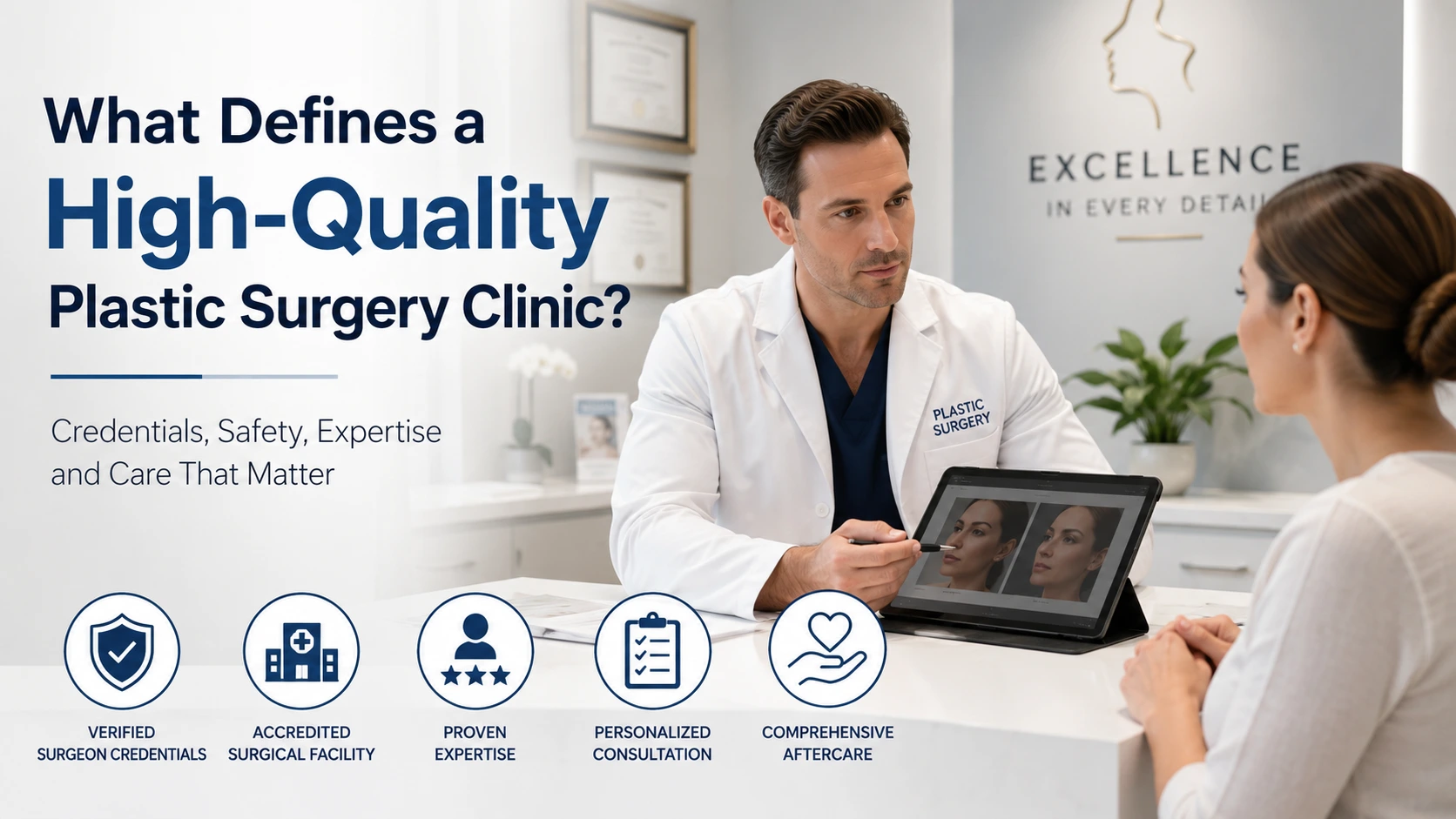
The decision to pursue plastic surgery leads most people through a research process that starts with procedure information and eventually arrives at the harder question — not what to have done, but where and by whom. That second question is where the stakes are highest and where the available information is often least useful. Clinic websites present carefully curated versions of their capabilities. Before-and-after galleries show selected results. Marketing language across most clinics converges on similar claims about quality, safety, and patient care that provide little basis for meaningful differentiation.
Identifying a genuinely high-quality plastic surgery clinic requires looking past the surface presentation toward the factors that actually predict good outcomes — credentials that can be verified, facility standards that can be confirmed, and a consultation process that demonstrates clinical judgment rather than simply validating whatever the patient came in expecting.
Surgeon Credentials as the Starting Point
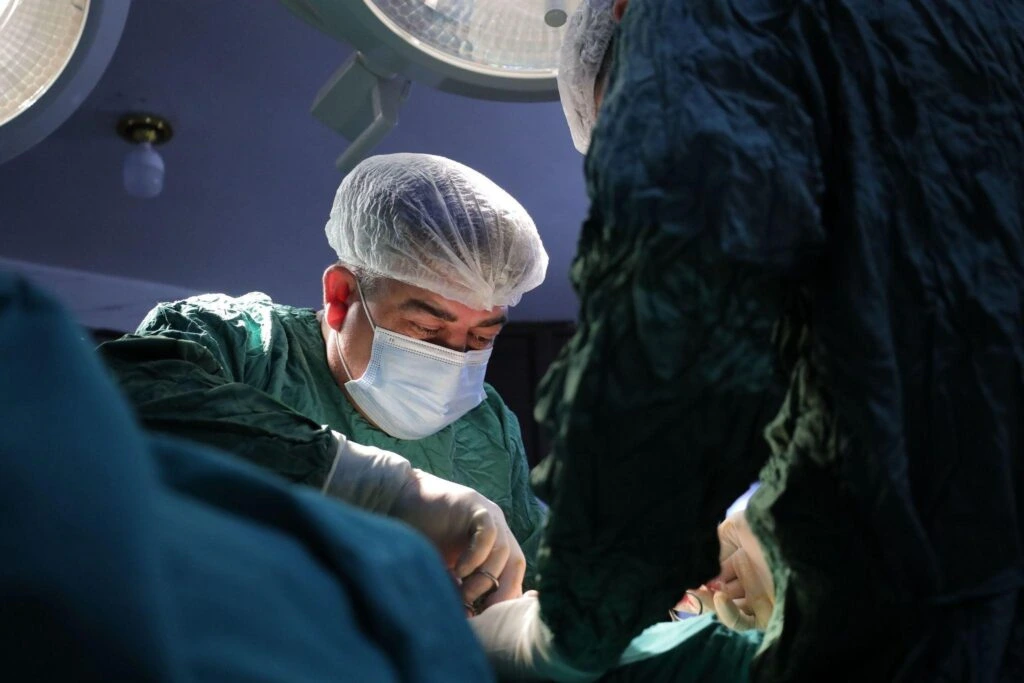
The quality of a plastic surgery clinic begins with the surgeons practicing within it, and surgeon credentials are the most important variable in that assessment. In Canada, Fellowship of the Royal College of Surgeons of Canada with plastic surgery certification — FRCSC — is the baseline credential that indicates completion of a recognized surgical training pathway. This credential is verifiable through the Royal College and through the provincial physician register, which is the appropriate starting point rather than accepting clinic marketing as credential documentation.
A Toronto plastic surgery clinic whose surgeons hold this certification, maintain active hospital privileges, and have completed fellowship or additional training in their specific areas of practice is in a meaningfully different category from one where practitioners have taken shorter pathways to cosmetic procedure training without the foundational surgical education that major procedures require. Hospital privileges matter specifically because they indicate that an independent credentialing process — conducted by a hospital’s medical staff committee — has reviewed and approved the surgeon’s qualifications. This verification exists independent of the clinic’s own claims.
Facility Accreditation and Safety Infrastructure
Where surgery takes place carries as much weight as who performs it, and accreditation is the standard that distinguishes surgical facilities operating under externally verified safety standards from those that aren’t. In Ontario, accreditation through the College of Physicians and Surgeons of Ontario requires facilities to meet defined standards covering anesthesia protocols, emergency preparedness, equipment maintenance, and infection control. These aren’t administrative formalities — they’re the infrastructure that makes complications manageable rather than catastrophic when they occur.
A high-quality clinic performs surgical procedures only in accredited facilities, and confirms this to patients directly rather than requiring them to ask. Clinics that perform surgical procedures in non-accredited settings, or that are vague about where specific procedures take place, are operating below the safety standard that patients undergoing any procedure requiring anesthesia deserve.
The Range and Depth of Surgical Expertise
High-quality plastic surgery clinics tend to have defined areas of focus rather than offering every available cosmetic procedure across every body area. Surgical expertise concentrates through volume and repetition, and a surgeon who performs a specific procedure regularly — whether facial surgery, body contouring, or breast surgery — develops the technical precision and aesthetic judgment that occasional performers of the same procedure haven’t had the opportunity to build.
Evaluating whether a clinic’s advertised expertise reflects genuine surgical focus requires asking direct questions about procedure volume during the consultation. How many of this specific procedure does the surgeon perform annually? What proportion of the practice does it represent? These questions produce information that’s more diagnostically useful than any gallery or testimonial, and the willingness to answer them specifically is itself a signal about how the clinic approaches patient communication.
The Consultation as a Quality Indicator
The consultation process reveals clinic quality in ways that no website or marketing material can. A thorough consultation involves a detailed clinical assessment of the specific concern, an explanation of the proposed approach and why it suits this patient’s anatomy specifically, and an honest conversation about realistic outcomes that includes limitations and recovery requirements alongside anticipated results.
Clinics where the consultation feels rushed, where the surgeon’s recommendation arrives before a thorough assessment has occurred, or where every patient concern is met with the same solution regardless of individual anatomy are demonstrating something important about how clinical judgment operates within the practice. The consultation is where a qualified surgeon’s assessment should diverge from generic recommendations — because individual anatomy, skin quality, age, and specific goals produce different appropriate approaches for different patients.
Continuity of Care Through Recovery
High-quality clinics don’t end their patient relationship at the operating table. The follow-up care structure — how post-operative appointments are scheduled, how patients reach the surgical team with concerns between appointments, how complications get identified and managed — is a dimension of clinic quality that affects outcomes in ways that the pre-operative assessment can’t fully predict.
Asking specifically about the follow-up care structure during the consultation — who conducts post-operative appointments, what the after-hours contact process is, how long the follow-up relationship extends — provides information about how the clinic manages the recovery period that’s as relevant to the overall quality assessment as the credentials and facility standards.
What Quality Actually Predicts
A high-quality plastic surgery clinic produces good outcomes not as a result of any single factor but as the combined product of surgical expertise, facility standards, clinical rigor in the consultation process, and attentive follow-up care. Each element matters, and a clinic that excels on some dimensions while falling short on others is offering a partial version of the quality standard that patients undergoing surgical procedures deserve. The research required to identify the full picture is more involved than reviewing a gallery and reading testimonials — and it’s worth doing thoroughly before any other decision is made.