
E Find Anything
Thursday, May 7, 2026
  • Home
  • Health & Fitness
  • Technology
  • Pets
  • Business
  • Financial Services
  • Home Products & Services
  • Other Categories
    • Cars & Other Vehicles
    • E Money
    • Education
    • Entertainment
    • Foods
    • Games
    • Lifestyle
    • Other
    • People and Society
    • Relationships
    • Spirituality
    • Travel
  • About Us
  • Contact Us
No Result
View All Result
  • Home
  • Health & Fitness
  • Technology
  • Pets
  • Business
  • Financial Services
  • Home Products & Services
  • Other Categories
    • Cars & Other Vehicles
    • E Money
    • Education
    • Entertainment
    • Foods
    • Games
    • Lifestyle
    • Other
    • People and Society
    • Relationships
    • Spirituality
    • Travel
  • About Us
  • Contact Us
No Result
View All Result
E Find Anything
No Result
View All Result
Home Health & Fitness

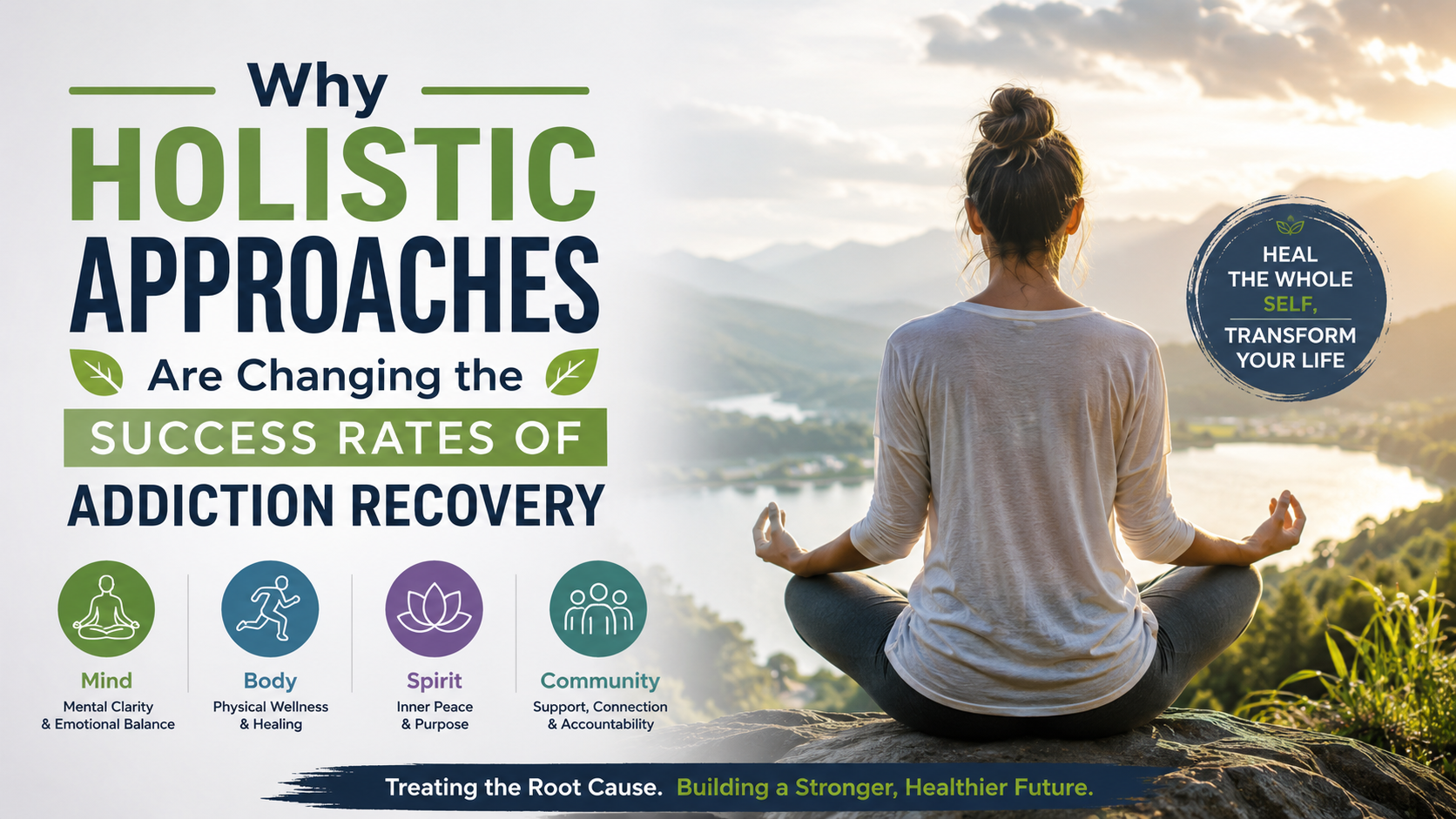
Why Holistic Approaches Are Changing the Success Rates of Addiction Recovery

Bryan Davis by Bryan Davis
May 7, 2026
in Health & Fitness
Reading Time: 4 mins read
0
0
SHARES
4
VIEWS
Share on FacebookShare on Twitter
holistic addiction recovery

Being sober is not the same as being in recovery. It’s a simple fact, but until recently, we’ve been slow to change our approach to addiction treatment. For far too long, we’ve assumed that sobriety is the same as recovery and that if we could just get someone to break free from drugs and alcohol, even temporarily, we could say they were successfully managing their addiction. It doesn’t take a scientist to tell us that didn’t (and hasn’t) work.

Table of Contents

Toggle
  • The Co-occurring Disorder Problem
  • Why Traditional Models Hit a Ceiling
  • The Nervous System Isn’t a Metaphor
  • From Compliance to Connection
  • The Full Picture

The Co-occurring Disorder Problem

According to the National Institute on Drug Abuse, about 7.7 million adults have both a mental health and substance use disorder, yet roughly 9% receive treatment for both conditions (NIDA). That treatment gap accounts for a substantial portion of the relapse cycle.

Untreated depression or anxiety doesn’t simply co-occur with substance use, it leads to it. When alcohol is used to mask a panic attack, or stimulants are used to alleviate the numbness of untreated depression, if you address the substance use without addressing the mental health disorder, you’ve left treatment incomplete. The return to drinking or using often follows.

For this reason, integrated treatment has become the standard of quality care for recovery. Programs that offer dual diagnosis treatment in New Hampshire, for example, no longer operate on the belief that mental health and addiction treatment can be handled by different teams, in different settings, with different plans. They should all be treated by the same clinical team, in a single care setting, addressing both disorders in a single, integrated care plan.

Trauma-informed care is another piece of this. Most people who come to treatment for substance use disorder will have a trauma history. Assuming this isn’t the case and only shifting care if and when a client discloses trauma is an outdated model of care. A trauma-informed program assumes that every client has trauma in their history and that the entire program, every part of counseling, group work, and even how staff greet and guide clients through the day, must be designed with this in mind.

Why Traditional Models Hit a Ceiling

Historically, conventional addiction treatment has emphasized detoxification and behavioral compliance. If you stop using and follow the rules, you can stay. This approach produces short-term sobriety, but not long-term recovery. The reason for this is that most people who develop a substance use disorder do not do so in a vacuum.

The bio-psycho-social model, developed after decades of clinical research, posits that addiction is, at the same time, a biological disease state, a psychological coping mechanism, and a social maladaptation. If you treat only one leg of that three-legged stool, the other two remain strong and one of them will eventually draw the patient back to substance use. Traditional treatment programs that relied on white-knuckle abstinence and simple group attendance were not organized to treat all three levels simultaneously.

The Nervous System Isn’t a Metaphor

Holistic therapies became part of the treatment mainstream after research proved they directly influence recovery outcomes. The data on yoga is particularly compelling (perhaps because it’s been around the longest). Yoga practice increases heart rate variability, a measure of the body’s overall fitness and resilience to stress. A meta-analysis of 29 separate studies found that yoga also reduces several of the most potent drivers of inflammation, one of the key components of both addiction and underlying mental health disorders. Anxiety, depression, and PTSD symptoms all decrease with regular practice.

Meditation yields its own list of quantifiable benefits: increased focus, longer attention span, and slower reaction time when faced with mental stressors. In short, meditation teaches itself how to suffer less. Neuroscientists last year even located 22 regions in the brain that grow larger with meditation, many of which relate directly to emotional regulation and processing changes.

From Compliance to Connection

One of the most important changes in comprehensive recovery models is that they have moved away from treatment based on what we could call “compliance”. The previous model rewarded compliance with the rules and penalized any deviation. The current model is based on something that is more difficult to develop: a real connection.

Community recovery, peer support groups, structured social environments, mentoring, helps to eliminate the isolation that often lies behind addiction, and that makes people who isolate themselves more likely to have a relapse after treatment. Reaching sobriety is an abstract goal. Having a sense of purpose and feeling like you belong are tangible goals. People are much more likely to care for something they are connected to.

This is not a soft science. Social connections are a protective measure that has been verified in both mental health and addiction cases. Designing this type of solution to deliberately help in treatment is strategic, not overly emotional.

The Full Picture

The best long-term outcomes are achieved with a continuous healing process that involves medical detox, residential treatment, long-term outpatient therapy, and holistic approaches. Holistic therapies must be integrated into the entire recovery process from the beginning, not added as an afterthought to conventional treatment.

Tags: addiction recovery success ratesaddiction treatmentholistic addiction recoveryholistic rehabholistic therapy for addictionmental health recoverynatural addiction treatmentrecovery healing methodssubstance abuse recoverywellness therapy
ShareTweetPin
Previous Post

Seasonal Pest Problems Homeowners Should Watch Out For

Next Post

How to Navigate the Hidden Executive Job Market for Leadership Roles

Bryan Davis

Bryan Davis

Bryan Davis is a professional writer and researcher specializing in health, wellness, pets, and technology. With years of experience producing accurate, evidence-based content, he combines thorough research with practical knowledge to provide readers with reliable guidance. Bryan is dedicated to creating trustworthy content that empowers individuals to make informed decisions about their health, lifestyle, and pets.

Related Posts

what does a day look like in a senior care community

What does a Day Look Like in a Senior Care Community?

by Bryan Davis
May 5, 2026
0

Whether your loved one wants a relaxing, slow-paced day or a fun-filled one, they can choose whatever they want in...

achieve your fitness goals

Finally Achieve Your Fitness Goals with This Guide

by Bryan Davis
May 2, 2026
0

Setting fitness goals is easy. Sticking to them is where most people struggle. Life gets busy, motivation dips, and routines...

Holistic Paths to Residential Recovery

Holistic Paths to Residential Recovery

by Bryan Davis
April 30, 2026
0

Key Takeaways Holistic recovery solutions address the whole person—mind, body, and spirit—to support comprehensive healing from addiction. Integrating therapies such...

physical and emotional benefits of detox programs

Physical and Emotional Benefits of Detox Programs

by Bryan Davis
April 30, 2026
0

Detoxification programs deliver a structured path for individuals seeking to overcome substance dependence, targeting both the physical and emotional challenges...

what does detox really mean for the human body

What Does “Detox” Really Mean for the Human Body?

by Bryan Davis
April 29, 2026
0

Key Takeaways Detoxification is a natural, continuous process carried out by organs like the liver, kidneys, and intestines. The body...

Next Post
hidden executive job market

How to Navigate the Hidden Executive Job Market for Leadership Roles

first years of primary education

What Parents Should Know About the First Years of Primary Education

Leave a Reply

Your email address will not be published. Required fields are marked *

RECOMMENDED

first home buyer financial milestones

Financial Milestones Every First Home Buyer Should Hit Before Entering the Property Market

May 7, 2026
first years of primary education

What Parents Should Know About the First Years of Primary Education

May 7, 2026

MOST VIEWED

  • What Is VACP Treas 310

    VACP Treas 310 Meaning: VA Payment Code Explained (2026 Guide)

    0 shares
    Share 0 Tweet 0
  • Babata Namak Sinhala – Babata Lassana Namak

    7374 shares
    Share 0 Tweet 0
  • 15 Best Sites to Download Paid Android Apps for Free

    1 shares
    Share 0 Tweet 0
  • Top 5 Trends in Sunglasses for 2026

    0 shares
    Share 0 Tweet 0
  • 42 Dugg Height Life, Career, Net Worth, and More

    0 shares
    Share 0 Tweet 0

Follow Us on Social Media

efindanything-logo

This is a lifestyle blog offering an everything about Health & Fitness,Financial Services,Insurance,Travelling and more.Join us. Dive in. Improve your Life

CATEGORY

  • Art & Design (1)
  • Business (302)
  • Careers (10)
  • Cars & Other Vehicles (137)
  • Construction (5)
  • Digital Marketing (6)
  • E Money (26)
  • Education (71)
  • Engineering (1)
  • Entertainment (17)
  • Environment (1)
  • Fashion (50)
  • Financial Services (161)
  • Foods (48)
  • Games (49)
  • Gear & Equipment (2)
  • Health & Fitness (464)
  • History (3)
  • Home Products & Services (399)
  • Insurance (16)
  • Law (153)
  • Lifestyle (42)
  • Other (24)
  • Parenting (3)
  • People and Society (34)
  • Pets (1,229)
  • Political (1)
  • Psychology (2)
  • Real Estate (63)
  • Relationships (49)
  • Safety (18)
  • Spirituality (51)
  • Sports (22)
  • Technology (242)
  • Travel (66)
  • Wishes (1)

RECENT POSTS

  • Financial Milestones Every First Home Buyer Should Hit Before Entering the Property Market May 7, 2026
  • What Parents Should Know About the First Years of Primary Education May 7, 2026
  • How to Navigate the Hidden Executive Job Market for Leadership Roles May 7, 2026
  • Why Holistic Approaches Are Changing the Success Rates of Addiction Recovery May 7, 2026
  • Seasonal Pest Problems Homeowners Should Watch Out For May 7, 2026
  • Home
  • About Us
  • Contact Us
  • Privacy Policy
  • Terms & Conditions
  • Disclaimer
  • Sitemap

© 2018- 2026 E Find Anything

No Result
View All Result
  • Home
  • Health & Fitness
  • Technology
  • Pets
  • Business
  • Financial Services
  • Home Products & Services
  • Other Categories
    • Cars & Other Vehicles
    • E Money
    • Education
    • Entertainment
    • Foods
    • Games
    • Lifestyle
    • Other
    • People and Society
    • Relationships
    • Spirituality
    • Travel
  • About Us
  • Contact Us

© 2018- 2026 E Find Anything

Go to mobile version