
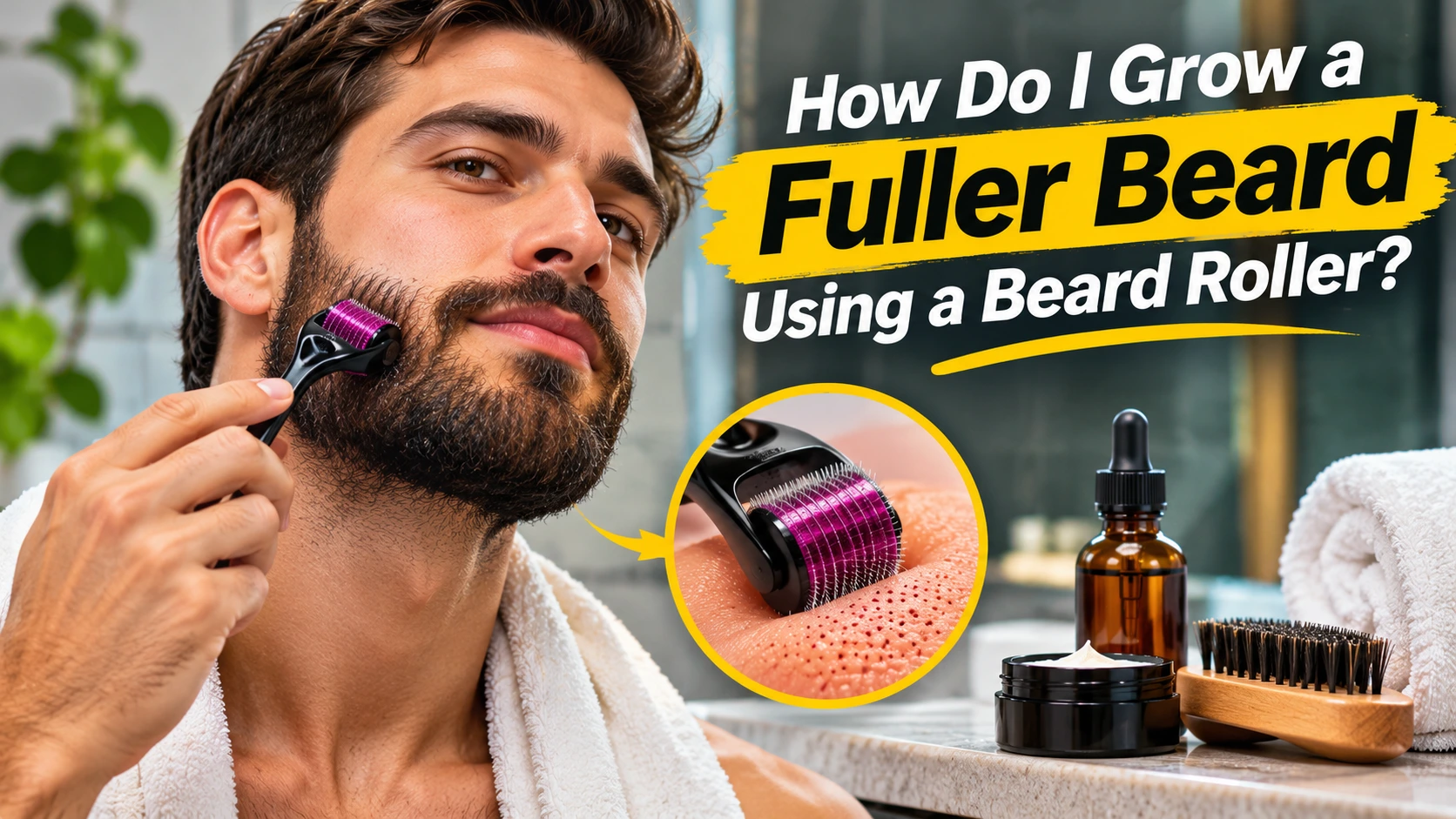
Growing a fuller beard can take time, patience, and a consistent grooming routine. If you have patchy facial hair or areas where your beard appears thinner, you may have come across a popular grooming tool called a beard roller. These devices are designed with tiny needles or projections and are commonly marketed as tools that may help improve beard growth.
But does a beard roller actually make your beard thicker? A beard roller uses a process called microneedling, which involves creating tiny punctures in the skin. Professional microneedling has established uses in dermatology, particularly for certain skin concerns. However, scientific evidence supporting the effectiveness of at-home beard rollers for increasing facial-hair density remains limited.
Beard growth is influenced by several factors, including genetics, age, hormones, nutrition, and overall health. A beard roller cannot change your genetic potential or guarantee that patchy areas will fill in.
In this guide, you’ll learn how beard rollers work, what results you can realistically expect, how to approach their use safely, and which everyday habits can help maintain a healthier-looking beard.
How Does a Beard Growth Roller Work?
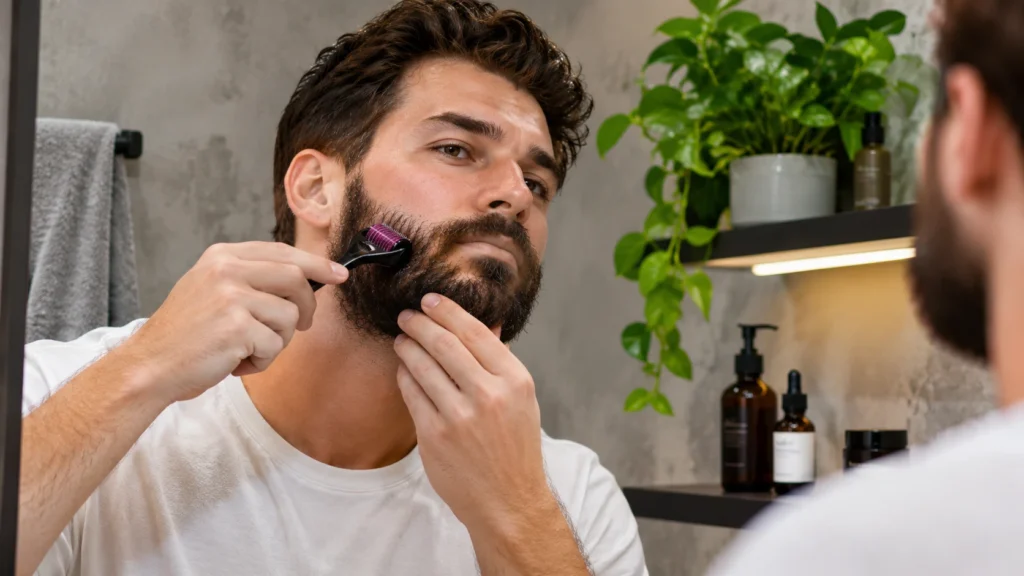
A beard growth roller is a handheld grooming device that contains a rolling head covered with tiny needles. When moved across the skin, these needles may create small punctures, depending on their length and design.
This process is known as microneedling. Professional microneedling works by creating controlled skin injuries that stimulate the body’s natural wound-healing response and collagen production.
However, there is an important difference between professional microneedling and inexpensive at-home beard rollers. At-home products may only affect the skin’s outermost layers, while professional treatments use specialized equipment and controlled needle depths.
Although microneedling is used for certain dermatological treatments, its effectiveness for growing a fuller beard has not been established through strong clinical evidence.
Can a Beard Roller Make Your Beard Fuller?
A beard roller is often promoted as a solution for men who want thicker facial hair, but the available evidence does not establish that using an at-home beard roller significantly increases beard density.
Microneedling has been investigated in some hair-loss treatments involving the scalp. However, findings from scalp hair-loss research should not automatically be applied to facial hair. The beard area has different characteristics, and there is insufficient clinical evidence to confirm that beard rollers produce similar results.
Several factors influence how full your beard naturally becomes:
- Genetics: Your genes play an important role in determining beard density, growth patterns, and the distribution of facial hair.
- Hormones: Androgens, including testosterone and dihydrotestosterone (DHT), influence facial-hair development.
- Age: Facial hair can continue developing throughout early adulthood, and beard density may change over time.
- Nutrition: A balanced diet provides nutrients needed for normal hair growth and overall health.
- Health conditions: Certain medical conditions and nutritional deficiencies can affect hair growth.
If your goal is a fuller-looking beard, focus on maintaining healthy skin, following good grooming habits, and understanding your natural hair-growth pattern. If you experience sudden or unusual patchiness, a dermatologist can help identify possible underlying causes.
How to Use a Beard Roller Correctly
Using a beard roller requires caution because some devices contain needles that penetrate the skin. Incorrect use can cause irritation, infection, scarring, and other complications.
Before using any beard roller, check its needle length, product instructions, and intended purpose. Do not assume that every device marketed for beard growth is suitable for home microneedling.
1. Understand Your Beard Roller’s Needle Length
Beard rollers are available with different needle lengths and designs. Shorter cosmetic rollers may be intended for superficial skin contact, while longer needles can penetrate deeper layers of the skin.
Longer needles are not automatically more effective or safer. Deeper microneedling involves greater risks and should not be attempted at home without appropriate medical guidance.
The U.S. Food and Drug Administration (FDA) recommends consulting a qualified healthcare professional before undergoing microneedling treatments. It has not cleared microneedling devices for over-the-counter use as hair-growth treatments.
2. Keep Your Skin and Device Clean
Hygiene is essential when using a grooming device that comes into contact with your facial skin.
Follow the manufacturer’s cleaning and storage instructions. Never share your beard roller with another person, and do not use a damaged, contaminated, or visibly worn device.
Do not use a microneedling device on active acne, cuts, open wounds, cold sores, infections, sunburn, or irritated skin.
3. Avoid Aggressive Rolling
Applying excessive pressure does not improve beard-growth results. Aggressive rolling can damage the skin and increase the likelihood of bleeding, inflammation, irritation, and scarring.
If you are considering a device with needles that penetrate the skin, consult a dermatologist rather than experimenting with deeper treatments at home.
4. Follow Appropriate Aftercare
After microneedling, the skin may become red, sensitive, or irritated. Follow the aftercare instructions provided by your healthcare professional or the manufacturer, depending on the type of device used.
Avoid applying irritating skincare products to freshly treated skin. The FDA has not cleared microneedling devices for delivering cosmetics, serums, or medications into the skin.
If you experience persistent redness, swelling, increasing pain, warmth, pus, or other signs of infection, stop using the device and seek medical advice.
What Should You Use With a Beard Roller?
Some men combine beard rollers with beard oils, moisturizers, serums, and other grooming products. A dedicated beard growth kit may contain several products designed to complement a regular beard-care routine.
However, using multiple products does not guarantee faster or thicker beard growth. The ingredients, formulation, and suitability of each product matter more than the number of products you use.
Beard Oils
Beard oils are commonly used to condition facial hair and moisturize the skin underneath. They may help reduce dryness, improve softness, and make an existing beard look better maintained.
Choose a product that suits your skin type. Fragrances and certain essential oils can irritate sensitive skin.
Beard Serums
Beard serums are marketed with different ingredients and claims. Before purchasing one, review its ingredient list and understand what the product is intended to do.
Do not assume that a cosmetic serum has been clinically proven to stimulate new facial-hair growth. Also, avoid applying ordinary serums or oils directly onto freshly punctured skin unless a qualified healthcare professional has specifically advised you to do so.
Moisturizers
A suitable facial moisturizer can help maintain the skin barrier and reduce dryness. Healthy skin is an important part of a comfortable beard-grooming routine.
If you have recently undergone microneedling, follow professional aftercare recommendations before returning to your usual skincare products.
How Often Should You Use a Beard Roller?
There is no universally recommended frequency for using a beard roller to stimulate facial-hair growth. The appropriate schedule depends on the device, its needle length, and whether it is intended for superficial cosmetic use or professional microneedling.
Using a roller more frequently does not necessarily produce better results. Repeatedly irritating the skin can interfere with its natural recovery and increase the risk of inflammation or injury.
Do not follow generic online schedules that recommend frequent use of longer needles. If a device penetrates the skin, ask a dermatologist whether it is appropriate for you and what precautions are necessary.
Stop using the device if you develop significant irritation, persistent redness, swelling, pain, or other unusual symptoms.
How Long Does It Take to See Results From Using a Beard Roller?
Many people want to know how long it takes for a beard roller to produce visible results. Unfortunately, there is no scientifically established timeline for beard growth from at-home microneedling.
Facial-hair growth is a gradual biological process influenced by genetics, hormones, age, and individual hair-growth cycles.
Some men may notice improvements in the appearance of their beard after establishing a consistent grooming routine. This may be related to better conditioning, trimming, and skin care rather than increased hair density.
Be cautious of products or advertisements promising dramatic beard growth within a few weeks. There is no guarantee that a beard roller will fill in patchy areas or produce additional facial-hair follicles.
Are Beard Rollers Safe?
Beard rollers are not completely risk-free. Devices that penetrate the skin can cause several complications, particularly when used incorrectly or without appropriate hygiene.
According to the FDA, potential microneedling side effects include:
- Skin redness and irritation.
- Temporary swelling and discomfort.
- Dryness, itching, and peeling.
- Bruising or bleeding.
- Skin discoloration.
- Infection and scarring.
At-home microneedling also presents risks when people use unsuitable devices, apply unapproved products to punctured skin, or perform treatments too aggressively.
Who Should Avoid Beard Rollers?
Microneedling may not be suitable for everyone. Speak with a dermatologist before using a beard roller if you:
- Have active acne, eczema, psoriasis, or another inflammatory skin condition.
- Have an active skin infection or cold sore outbreak.
- Have a history of keloid scars or abnormal scarring.
- Have a bleeding disorder or take blood-thinning medication.
- Have a weakened immune system or a medical condition that affects wound healing.
- Are using medications that may affect skin healing.
Professional advice is especially important if you have sensitive skin or are unsure whether microneedling is appropriate for your facial skin.
Tips for Supporting a Healthier-Looking Beard
A beard roller is only one of many products marketed for beard growth. You can also improve the appearance and maintenance of your existing facial hair by following a consistent grooming routine.
1. Maintain a Balanced Diet
Your body needs adequate nutrients to support normal hair growth. Include protein-rich foods, fruits, vegetables, whole grains, and healthy fats in your daily diet.
Important nutrients include protein, iron, zinc, and several vitamins. However, taking additional supplements will not automatically make your beard grow faster if you already meet your nutritional requirements.
2. Keep Your Beard and Skin Clean
Regularly clean your beard to remove accumulated dirt, sweat, and excess oil. Use a gentle cleanser that is suitable for your skin type.
A clean beard can look healthier and may help reduce irritation caused by product buildup.
3. Moisturize Regularly
Dry skin underneath facial hair can cause itching, flaking, and discomfort. Applying a suitable moisturizer can help maintain skin hydration and improve beard appearance.
4. Get Enough Sleep
Good sleep supports overall health and normal bodily functions. Maintaining a regular sleep schedule can contribute to a healthier lifestyle, although sleeping more does not guarantee increased beard density.
5. Trim Your Beard Regularly
Regular trimming can help create a more balanced and fuller-looking beard. A suitable beard style can also make naturally uneven areas less noticeable.
6. Be Patient With Natural Beard Growth
Not everyone’s beard develops at the same rate. Some men naturally have dense facial hair, while others have thinner or more uneven growth patterns.
Give your beard time to develop naturally and avoid relying on products that promise unrealistic results.
Frequently Asked Questions About Beard Rollers
Does a beard roller really help beard growth?
A beard roller may support a healthy skin-care routine by stimulating the skin, but strong evidence that at-home beard rollers directly produce substantial increases in beard density is limited. Genetics, hormones, age, and other factors remain important influences on facial-hair growth.
How often should I use a beard roller?
Follow the instructions provided with your specific beard roller. The appropriate frequency can vary depending on the device and needle length. Avoid using it more often than recommended because your skin needs time to recover.
Can I use beard oil after using a beard roller?
It depends on the ingredients in the product and the manufacturer’s instructions. Some beard oils or active skincare products may irritate freshly treated skin. Check the product instructions and avoid applying anything that causes burning or significant irritation.
How long does it take for a beard roller to show results?
There is no guaranteed timeline. Facial-hair growth is gradual, and results can differ significantly between individuals. Factors such as genetics, age, hormones, nutrition, and existing beard density can all affect the appearance of your beard.
Can I use a beard roller every day?
Daily use is generally not recommended unless the manufacturer specifically states that the particular device is designed for that frequency. Overusing a microneedling device can irritate or damage the skin. Always follow the instructions for your specific roller.
Can a beard roller fix a patchy beard?
A beard roller cannot guarantee that patchy areas will become fully covered. Patchiness is often related to genetics and the natural distribution of facial-hair follicles. A consistent grooming routine can, however, help your existing beard look cleaner and healthier.
What should I avoid when using a beard roller?
Avoid using the roller on cuts, open wounds, active acne, infections, sunburn, or irritated skin. Do not share your roller with anyone else, and always clean and store the device according to the manufacturer’s instructions.
Is a beard growth kit necessary when using a beard roller?
No. A beard growth kit is not necessarily required to use a beard roller. However, some people prefer using a complete grooming routine that includes products such as serums, oils, or other beard-care products. Choose products based on your skin type and follow their individual instructions.
Final Thoughts
Learning how to use a beard roller properly can be a useful addition to a consistent beard-care routine. However, it is important to understand that there is limited scientific evidence supporting the effectiveness of at-home beard rollers for significantly increasing facial-hair density.
If you decide to try one, prioritize skin safety, proper hygiene, and realistic expectations. Avoid aggressive treatments and consult a dermatologist before using devices that penetrate the skin.
You can also explore a beard growth kit if you want to build a more complete beard-care routine. Remember that healthy grooming habits, balanced nutrition, and patience are important parts of maintaining a good-looking beard.
For more practical health and personal-care information, explore the health and lifestyle guides on eFindAnything.