
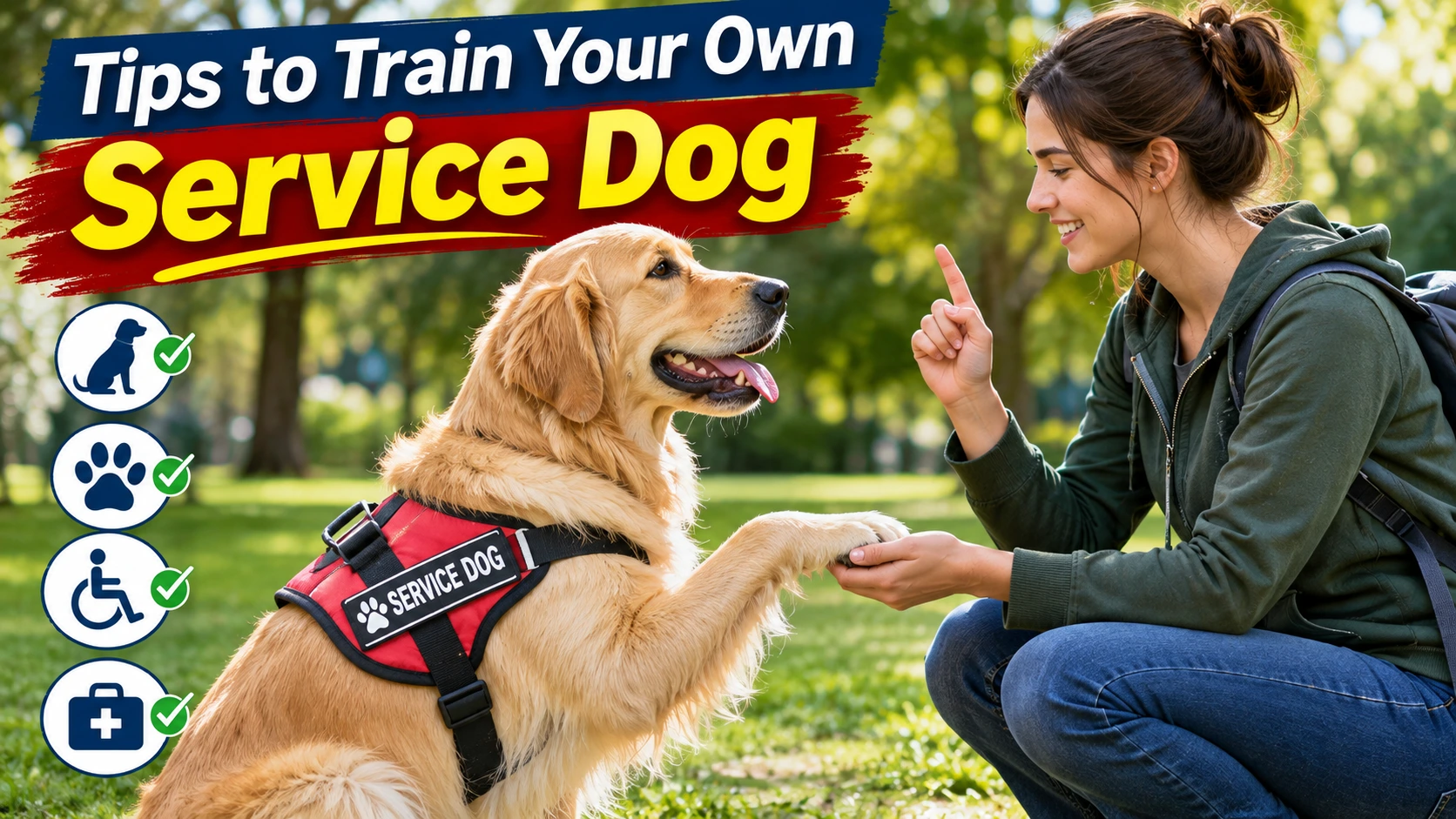
Dogs can make a meaningful difference in people’s lives, especially for individuals living with disabilities who need assistance with everyday activities. A properly trained service dog can help its handler perform specific tasks, improve independence, and navigate situations that might otherwise be difficult. From retrieving objects and opening doors to providing mobility assistance and responding to medical conditions, service dogs can perform a variety of disability-related tasks.
However, becoming a reliable service dog requires much more than teaching a dog a few basic commands. Service dog training involves developing good manners, building confidence, teaching specialized tasks, and ensuring that the dog can remain calm and focused in different environments.
If you are wondering whether you can train your own service dog, the answer is yes in some countries. For example, under the Americans with Disabilities Act (ADA) in the United States, individuals with disabilities are allowed to train their own service dogs and are not required to use professional training organizations. However, the dog must be individually trained to perform specific tasks directly related to the person’s disability.
Although professional service dog training programs can be expensive, owner training may provide an alternative for people who have the necessary time, knowledge, and commitment. The process requires patience, consistency, and an understanding of canine behavior. Here are seven important tips to help you train your own service dog successfully.
1. Choose a Suitable Dog for Service Dog Training
Choosing the right dog is one of the most important steps when planning to train your own service dog. Although the Americans with Disabilities Act does not restrict service dogs to particular breeds or sizes, not every individual dog will be suitable for this type of work.
A suitable candidate should have a stable temperament, good physical health, and the ability to learn and remain focused around distractions. Confidence, adaptability, and a willingness to work with a handler are also valuable qualities.
Before starting an extensive training program, consider the following characteristics:
- Stable temperament: The dog should be able to remain calm in unfamiliar situations.
- Trainability: It should respond positively to training and be motivated to learn new behaviors.
- Good health: The dog should be physically capable of performing its intended tasks without discomfort.
- Confidence: It should be able to handle ordinary environmental changes without excessive fear.
- Focus: The dog should gradually learn to concentrate on its handler despite distractions.
- Appropriate energy level: Its activity level should match the handler’s needs and lifestyle.
Puppies can be trained from an early age, but adopting an adult dog with a suitable temperament may also be an option. Rather than choosing a dog based only on its breed or appearance, evaluate its individual personality and abilities. A veterinarian or experienced service dog trainer can help assess whether a particular dog is a suitable candidate.
2. Build a Strong Foundation with Basic Obedience Training
Basic obedience training provides the foundation for developing a reliable service dog. Before introducing specialized tasks, your dog should learn to understand and respond to simple commands. These skills help establish communication between the dog and its handler.
If you are starting with a puppy, introduce basic training gradually using short, positive sessions. Adult dogs can also learn new commands, although their previous experiences and established habits may influence the training process.
Start by teaching these essential commands:
- Sit: Teaches your dog to sit calmly when requested.
- Stay: Helps your dog remain in a particular position until released.
- Come: Encourages your dog to return when called.
- Down: Teaches your dog to lie down calmly.
- Leave it: Helps prevent your dog from picking up unwanted objects or approaching distractions.
- Heel: Teaches your dog to walk beside you without pulling on the leash.
- Wait: Helps your dog pause before moving through doors or entering unfamiliar areas.
House training is another essential part of building a strong foundation. Establish a regular bathroom routine, reward appropriate behavior, and maintain a consistent schedule. Your dog should eventually learn to remain house-trained in different environments.
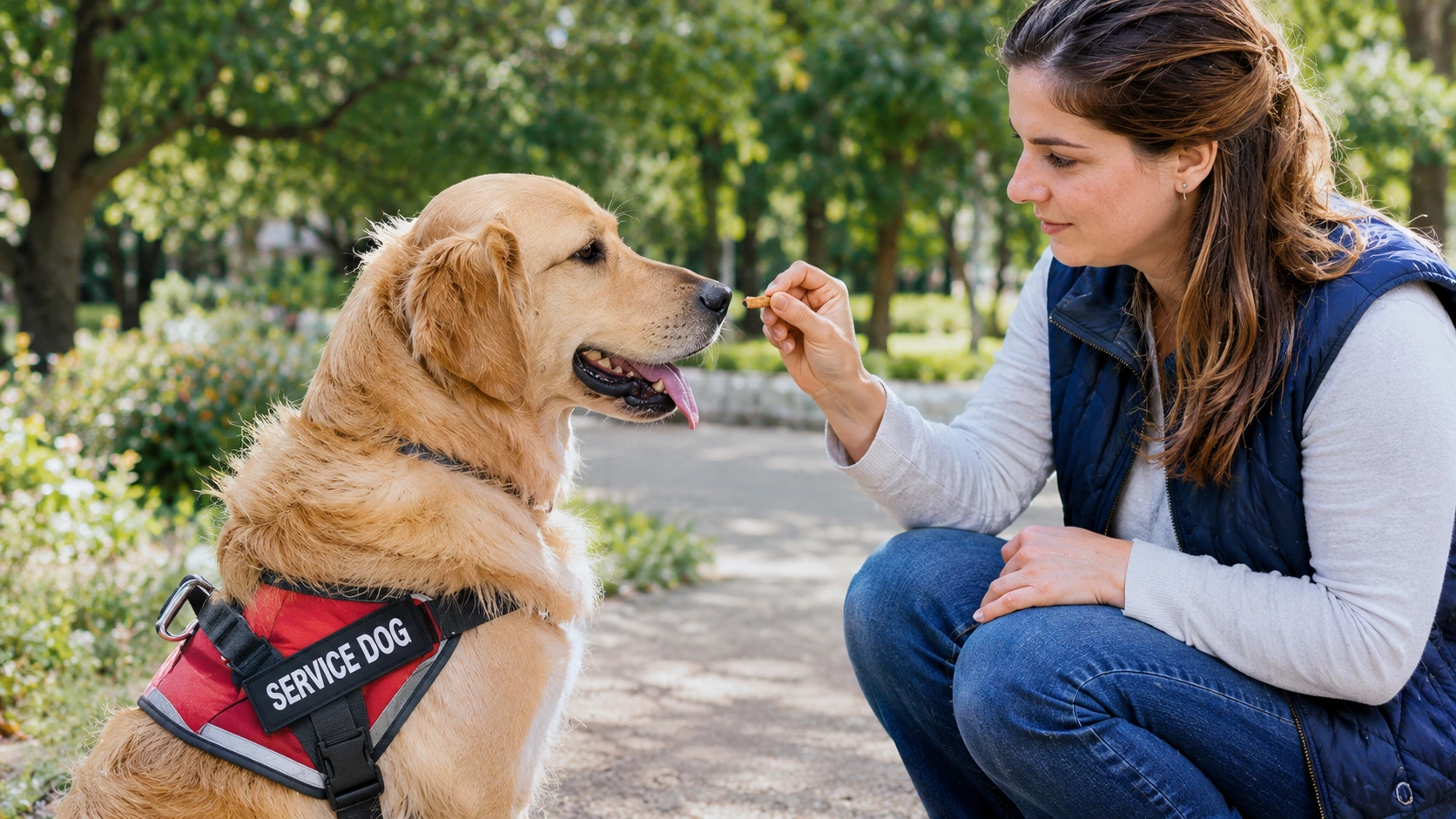
Use positive reinforcement by rewarding desired behaviors with treats, praise, or play. Keep training sessions manageable and gradually increase the difficulty as your dog becomes more confident.
3. Be Patient and Consistent Throughout the Training Process
Training a service dog is a long-term commitment. It requires time, patience, and consistent practice. Dogs do not develop reliable working skills in just a few days, and rushing through training can create confusion and unwanted habits.
As the handler, you need to establish a regular training schedule. Short, frequent sessions are often more effective than long sessions that leave your dog tired or frustrated.
Here are some practical ways to maintain consistency:
- Practice basic commands regularly.
- Use consistent verbal cues and hand signals.
- Reward desirable behavior immediately.
- Introduce new skills gradually instead of teaching too many things at once.
- Practice in different environments when your dog is ready.
- Allow sufficient time for rest, exercise, and play.
- Keep track of your dog’s progress and identify areas that need improvement.
Service dog training can take many months or longer, depending on the dog’s abilities, the complexity of the required tasks, and the handler’s experience. There is no universal six-month training period that guarantees a dog will become a qualified service animal.
If you need additional guidance, working with an experienced service dog trainer can help you identify training problems and improve your approach. Once your dog has completed the necessary training, you can also explore the register service dog process to learn about available registration services. However, remember that third-party registration or certification is not required under the ADA in the United States and does not establish service dog status.
4. Teach Good Behavior and Public Manners
A service dog must demonstrate reliable behavior in different environments. Good manners are especially important because service dogs may accompany their handlers to places where pets are generally not permitted.
Your dog should learn to remain calm around people, other animals, unfamiliar sounds, and everyday activities. It should not constantly seek attention, bark unnecessarily, jump on strangers, or become distracted by food and other environmental triggers.
Focus on developing the following behaviors:
- Walking calmly beside the handler without pulling the leash.
- Remaining settled when people walk nearby.
- Ignoring food dropped on the floor when appropriate.
- Avoiding unnecessary barking and jumping.
- Remaining focused on the handler around other dogs.
- Waiting patiently in public environments.
- Maintaining appropriate bathroom habits.
- Responding reliably to commands even when distractions are present.
It is important to understand that a service dog does not need to interact with every person or animal it encounters. Calm neutrality is often more useful than being overly friendly. The dog should be comfortable in public without constantly seeking attention or approaching strangers.
Address unwanted behaviors early using humane, reward-based training techniques. If your dog displays fear, anxiety, or aggression, consult a qualified trainer or veterinary behavior professional rather than attempting to correct serious behavior problems through punishment. You can also learn more about the difference between aggression and play in dogs.
5. Teach Your Dog Disability-Specific Tasks
One of the most important differences between a service dog and a well-behaved companion dog is its ability to perform specific tasks that assist a person with a disability.
Basic obedience is only the beginning. After your dog has developed reliable foundational skills, you can start teaching tasks that address your individual needs. The appropriate tasks will depend on your disability, daily routine, and the type of assistance you require.
Examples of disability-related service dog tasks include:
- Retrieving objects: Picking up dropped items, bringing a phone, or retrieving other necessary belongings.
- Opening doors: Learning to operate specially designed door handles or accessible mechanisms.
- Mobility assistance: Providing trained assistance with certain mobility-related activities, where appropriate and safe for the dog.
- Medical response: Responding to a trained medical alert or assisting during a medical episode.
- Medication reminders: Performing a trained behavior to remind the handler to take medication.
- Psychiatric assistance: Interrupting certain trained behaviors or performing specific actions during a psychiatric episode.
- Hearing assistance: Alerting a handler to specific sounds, such as a doorbell or alarm.
Choose tasks that directly address your needs rather than teaching random tricks. Break each task into smaller steps, reward successful attempts, and gradually combine the steps into a reliable behavior.
For physically demanding tasks, particularly those involving balance or mobility, consult appropriate healthcare and veterinary professionals. A dog should never be expected to perform activities that could cause injury or physical discomfort.
6. Socialize Your Dog and Introduce Different Environments
Socialization is an essential part of service dog training. A service dog may need to accompany its handler through shopping centers, restaurants, public transportation, medical facilities, and other everyday environments. Therefore, it must gradually become comfortable with different sights, sounds, surfaces, people, and surroundings.
Begin socialization in quiet, controlled environments. Introduce new experiences gradually and observe how your dog responds. Avoid overwhelming your dog by exposing it to too many unfamiliar situations at once.
Some useful socialization activities include:
- Taking short walks in different neighborhoods.
- Introducing your dog to people of different ages and appearances.
- Practicing around ordinary household and outdoor sounds.
- Walking on different surfaces, such as grass, pavement, and tiles.
- Visiting quiet outdoor locations and gradually introducing busier environments.
- Practicing calm behavior around bicycles, vehicles, and other distractions.
- Allowing appropriate, controlled interactions with other dogs.
You can also follow this guide to socialize a dog with other dogs for additional ideas about introducing your pet to new canine companions.
Remember that socialization is not about forcing your dog to greet everyone. The goal is to develop a confident dog that can remain calm and focused without becoming frightened, overly excited, or distracted by its surroundings.
7. Practice Public Access Skills and Evaluate Your Dog’s Progress
Once your dog has developed reliable obedience skills, appropriate behavior, and the necessary disability-related tasks, gradually practice working together in different environments where access is legally permitted.
Public access preparation helps determine whether your dog can remain under control and perform its trained tasks while encountering everyday distractions. It is important not to rush this stage. Your dog should first demonstrate reliable behavior in easier environments before progressing to more challenging situations.
During practice, evaluate whether your dog can:
- Walk calmly on a leash without pulling.
- Remain settled while the handler is sitting or standing.
- Ignore unfamiliar people and other animals.
- Respond to commands in distracting environments.
- Remain quiet and controlled in appropriate public settings.
- Perform its trained disability-related tasks reliably.
- Maintain appropriate bathroom behavior.
- Recover calmly from unexpected environmental changes.
In the United States, the ADA requires service dogs to be under the handler’s control and housebroken. A dog that is out of control and whose handler does not take effective action, or a dog that is not housebroken, may be excluded from a public establishment.
Training should be assessed continuously. If your dog struggles with a particular environment or task, return to an easier training situation and reinforce the necessary skills before progressing again.
Important Things to Know About Service Dog Registration and Certification
Many people believe that a dog must receive an official certificate, registration document, or special vest before it can be considered a service dog. However, requirements vary depending on the country and applicable laws.
For example, under the Americans with Disabilities Act in the United States:
- Service dogs do not need to be professionally trained.
- Individuals with disabilities may train their own service dogs.
- There is no federal requirement for service dog certification or registration.
- A service dog must be trained to perform work or tasks directly related to the handler’s disability.
- Emotional support or comfort alone does not qualify a dog as a service animal under the ADA.
Voluntary registration services may offer identification documents or other products, but these do not establish legal service dog status under the ADA. Normal local dog licensing and vaccination requirements may still apply.
Before taking your dog into public places, check the laws and requirements that apply in your country or region. For more information about United States requirements, consult the official ADA service animal guidelines.
How Long Does It Take to Train Your Own Service Dog?
There is no fixed training period for every service dog. Some dogs learn foundational obedience relatively quickly, while developing reliable public behavior and specialized disability-related tasks may require considerably more time.
The total training period depends on several factors, including:
- The dog’s age, temperament, and previous training experience.
- The complexity of the disability-related tasks.
- The handler’s training knowledge and consistency.
- The amount of time available for daily practice.
- The dog’s physical and emotional development.
- The ability to perform reliably in different environments.
Instead of focusing on a specific number of months, concentrate on measurable training goals. Your dog should demonstrate consistent skills and be capable of performing its required tasks safely and reliably before you consider its training complete.
Conclusion
Learning how to train your own service dog can be a rewarding experience, but it requires commitment, patience, and a clear understanding of your dog’s abilities. From choosing a suitable candidate and teaching basic obedience to developing disability-specific tasks and practicing public behavior, every stage contributes to building a reliable working partnership.
Remember that not every dog is suitable for service work, and successful training involves much more than teaching simple commands. Use positive reinforcement, introduce new experiences gradually, and seek professional guidance whenever you encounter difficult training or behavioral challenges.
Most importantly, prioritize your dog’s physical and emotional well-being throughout the process. A well-trained service dog should be confident, comfortable, and capable of performing its tasks without unnecessary stress. With the right preparation and consistent training, you can work toward developing a dependable partnership that supports greater independence and everyday quality of life.
Frequently Asked Questions (FAQs)
Can I train my own service dog?
Yes. In the United States, the Americans with Disabilities Act allows individuals with disabilities to train their own service dogs. They are not required to use professional training organizations. However, the dog must be trained to perform specific tasks directly related to the handler’s disability and meet applicable behavior requirements.
How long does it take to train your own service dog?
Service dog training can take many months or longer, depending on the dog’s temperament, training experience, required tasks, and the handler’s consistency. There is no universal training timeline that guarantees a dog will become a reliable service animal.
What is the best age to start training a service dog?
Basic training and positive socialization can begin when a puppy is young. However, adult dogs can also learn service-related skills if they have a suitable temperament and are physically and behaviorally capable of performing the required tasks.
What are the most important commands for a service dog?
Important foundational commands include sit, stay, come, down, heel, leave it, and wait. Service dogs also need specialized training to perform tasks directly related to their handlers’ disabilities.
Can any dog breed become a service dog?
Under the ADA in the United States, there are no breed or size restrictions for service dogs. However, individual dogs must have suitable temperaments, appropriate health, and the ability to perform their required tasks reliably and safely.
Do service dogs need to be registered or certified?
No. The ADA does not require service dogs to receive official certification or registration in the United States. Online registration documents and certificates do not establish legal service dog status under the ADA. Other countries may have different requirements.
What is the difference between a service dog and an emotional support animal?
A service dog is individually trained to perform specific tasks directly related to a person’s disability. An emotional support animal provides comfort through its presence but does not necessarily perform trained disability-related tasks. Under the ADA, emotional support animals do not qualify as service animals solely because they provide comfort.
Can I use treats to train my service dog?
Yes. Treats are commonly used as rewards during positive reinforcement training. You can also use praise, toys, or other rewards that motivate your dog. Reward-based training helps encourage desirable behaviors and supports a positive relationship between the dog and its handler.
Can a service dog go anywhere with its handler?
Access rights depend on the laws of the country or region. Under the ADA in the United States, service dogs generally have access to public places where their handlers are permitted to go, subject to specific legal exceptions. Dogs must remain under control and be housebroken.