
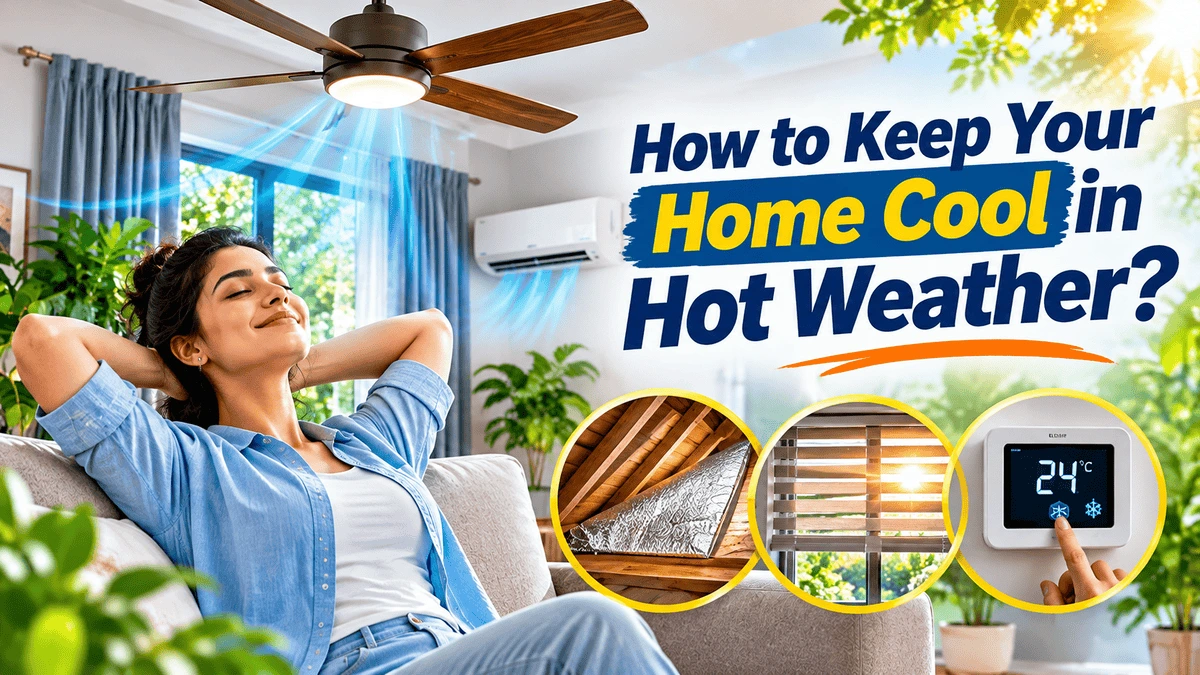
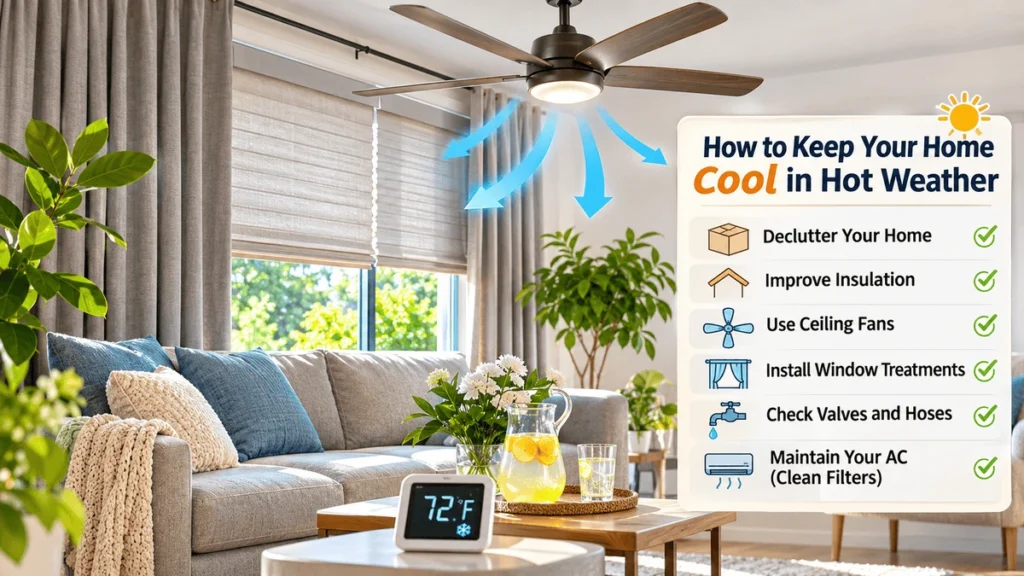
Keeping your home cool in hot weather can be challenging, especially when outdoor temperatures rise and humidity makes indoor spaces uncomfortable. Whether you experience long, hot summers or live in a tropical climate, maintaining a comfortable indoor temperature is essential for your health, sleep quality, and overall well-being.
Fortunately, you don’t always need to rely on expensive air conditioning systems to create a cooler living environment. Simple improvements such as installing blackout curtains, improving ventilation, sealing air leaks, maintaining ceiling fans, and upgrading insulation can help reduce indoor heat and improve energy efficiency.
If you’re wondering how to keep your home cool in hot weather without significantly increasing your electricity bills, these practical strategies can help. From affordable DIY solutions to professional home improvements, here are 12 effective ways to make your home more comfortable throughout the hottest months of the year.
1. Declutter Your Home to Improve Air Circulation
A cluttered home can feel stuffy and uncomfortable, particularly during periods of high humidity. Although furniture and household belongings do not necessarily increase the actual room temperature, overcrowded spaces can restrict airflow and make rooms feel warmer.
Start by removing unnecessary furniture, unused decorations, old boxes, and belongings that occupy valuable living space. Keep air vents, windows, and pathways clear to encourage better air circulation.
If you have valuable belongings that you don’t use regularly, consider renting a temperature-controlled storage unit. This allows you to keep important possessions in a suitable storage environment while freeing up space inside your home.
If you’re looking for additional storage space, search for terms such as ‘storage units near me’ or ‘Brandon MS storage units’ (or the equivalent in your local area). In humid climates, air-conditioned storage facilities can be particularly useful for protecting temperature-sensitive belongings.
2. Improve Your Home’s Insulation
Insulation isn’t just important during winter. It also plays an essential role in keeping indoor spaces cooler during hot weather by slowing the transfer of heat from outside into your home.
Roofs and exterior walls are particularly important because they receive significant amounts of solar heat throughout the day. Proper insulation can help reduce heat entering your living spaces and make your cooling system work more efficiently.
Consider these improvements:
- Roof insulation: Helps reduce heat entering your home through the roof.
- Wall insulation: Slows heat transfer through exterior walls.
- Attic ventilation: Helps remove accumulated hot air from roof spaces.
- Reflective roofing materials: Can reduce the amount of solar heat absorbed by your roof.
If you’re unsure whether your property has adequate insulation, consider hiring a qualified energy auditor. They can identify areas where heat enters your home and recommend improvements based on your building’s construction.
3. Use Ceiling Fans to Improve Air Circulation
Ceiling fans are among the simplest and most affordable ways to improve indoor comfort during hot weather. They circulate air throughout a room and create a wind-chill effect that helps people feel cooler without necessarily lowering the actual room temperature.
During warmer months, set your ceiling fan to rotate counterclockwise (when viewed from below) so that it pushes air downward. This creates a cooling breeze that makes indoor spaces more comfortable.
You can also use pedestal fans, floor fans, and portable fans to improve airflow in specific areas. Position them strategically to circulate air rather than directing them toward obstacles such as heavy furniture or curtains.
For additional ideas, explore these smart ways to make new homes more comfortable.
Remember to switch off fans when nobody is in the room because fans cool people rather than empty spaces.
4. Install Blackout Curtains and Other Window Treatments
Windows allow natural sunlight into your home, but they can also introduce significant amounts of unwanted heat. Direct sunlight entering through glass can quickly increase indoor temperatures, particularly in rooms with large windows.
Installing appropriate window treatments can help reduce solar heat gain and maintain a more comfortable indoor environment.
Consider the following options:
- Blackout curtains: Block sunlight and help reduce unwanted heat entering through windows.
- Reflective blinds: Reflect some sunlight away from indoor spaces.
- Exterior shutters: Provide additional protection against direct sunlight.
- Solar window films: Reduce solar heat entering through glass.
- Extendable blinds: Allow you to control sunlight throughout the day.
You can explore extendable blinds when considering suitable window treatments.
Pay attention to the direction of sunlight throughout the day. Close curtains or blinds before direct sunlight reaches your windows, especially during the hottest afternoon hours.
For better results, consider light-coloured or reflective window coverings that help reflect sunlight instead of absorbing it.
5. Check Water Valves and Hoses for Leaks
Preparing your home for hot weather involves more than controlling indoor temperatures. It’s also a good opportunity to inspect plumbing connections, water hoses, and valves to prevent unexpected leaks and water damage.
High temperatures, ageing materials, and regular use can contribute to deterioration in hoses and plumbing connections. Check washing machine hoses, outdoor water connections, garden hoses, and accessible valves for cracks, loose fittings, or signs of wear.
According to this guide to keeping your house cool in summer, preparing your home for seasonal conditions can help prevent avoidable problems.
Pay particular attention to washing machine connections and kitchen and bathroom faucets. If you notice leaking connections, damaged hoses, or worn valves, arrange repairs before the problem becomes more serious.
A professional plumber can inspect vulnerable connections, tighten loose fittings, and recommend replacement parts when necessary.
6. Clean or Replace Your HVAC Air Filters
If your home has an air conditioning or HVAC system, maintaining clean air filters is essential for efficient cooling. Over time, filters collect dust, pollen, pet hair, and other airborne particles that restrict airflow.
When filters become clogged, your cooling system may need to work harder to circulate air. This can reduce efficiency, increase electricity consumption, and affect indoor comfort.
Follow these maintenance tips:
- Check your air conditioning filters regularly.
- Clean reusable filters according to the manufacturer’s instructions.
- Replace disposable filters when they become dirty or reach their recommended replacement interval.
- Use the correct filter size and rating for your HVAC system.
- Arrange professional maintenance if your air conditioner is not cooling effectively.
Cleaning your air filters can help improve airflow and support more efficient air conditioning operation.
For additional maintenance guidance, consult a maintenance expert who can recommend an appropriate filter replacement schedule for your system.
7. Consider Upgrading Your Air Conditioning System
If your existing air conditioning system struggles to cool your home, upgrading to a more efficient unit may be worth considering. Older systems can become less efficient over time, particularly when components are worn or maintenance has been neglected.
Before purchasing a replacement, consider the size of your home, room layout, insulation quality, local climate, and cooling requirements. An appropriately sized system can provide more consistent cooling without unnecessary energy consumption.
Professional installation is equally important. Incorrect installation can affect system performance, airflow, and long-term reliability.
Finding a reliable service for AC installation near me can help you identify suitable cooling solutions for your property.
A qualified HVAC professional can assess your current system, recommend an appropriate replacement, and ensure that the installation meets the manufacturer’s specifications.
8. Seal Gaps Around Windows and Doors
Small gaps around windows and doors can allow unwanted outdoor air to enter your home. These openings can make it harder to maintain a comfortable indoor temperature and may increase the workload on your air conditioning system.
Weather stripping is an affordable solution for sealing gaps around movable components such as doors and windows. It is commonly available in foam, rubber, and other durable materials.
Here are a few practical ways to reduce air leakage:
- Install weather stripping around door frames.
- Apply suitable seals around windows that have noticeable gaps.
- Use caulk to seal small, stationary cracks around window and door frames.
- Inspect seals periodically for damage or deterioration.
- Replace worn weather stripping when it no longer provides an effective seal.
Before purchasing weather stripping, measure the gaps carefully to select the correct size and material.
You can also improve your home’s overall comfort with these subtle home cleanliness and comfort upgrades.
9. Keep Windows and Doors Closed During Peak Heat
Opening windows may seem like an obvious way to cool your home, but it isn’t always the best option during extremely hot weather.
When outdoor temperatures are higher than indoor temperatures, leaving windows open can allow additional heat to enter your living spaces.
Instead, keep windows and exterior doors closed during the hottest parts of the day. Open them during cooler mornings, evenings, or nighttime hours when outdoor conditions are more comfortable.
In humid climates, pay attention to outdoor humidity levels as well as temperature. Bringing in excessively humid air can make indoor spaces feel uncomfortable.
If you use air conditioning, keep windows and doors closed while the system is operating to prevent cooled air from escaping.
10. Reduce Heat-Producing Appliances and Electronics
Household appliances and electronic devices generate heat while operating. During hot weather, unnecessary heat from these sources can make indoor spaces less comfortable.
Although individual devices may produce relatively small amounts of heat, reducing unnecessary appliance use can help limit additional indoor heat.
Try these simple habits:
- Use ovens and stovetops less frequently during the hottest hours.
- Prepare meals using smaller appliances when appropriate.
- Turn off lights when they are not needed.
- Unplug electronic devices that are not being used, where appropriate.
- Use LED lighting instead of traditional incandescent bulbs.
- Run dishwashers and washing machines during cooler hours when practical.
These small changes can make your home more comfortable while helping you manage electricity consumption.
11. Add Shade Around Your Home
Outdoor sunlight can heat your roof, exterior walls, windows, and surrounding surfaces. Reducing direct sunlight around your property can help limit the amount of heat entering your home.
Consider adding natural or artificial shade to areas that receive intense sunlight.
Some useful options include:
- Plant shade trees: Strategically positioned trees can protect windows and exterior walls from direct sunlight.
- Install outdoor awnings: Awnings can reduce direct sunlight reaching windows and doors.
- Use pergolas: These structures can provide shade for outdoor living areas.
- Add shade screens: Exterior screens can help reduce solar exposure.
- Choose suitable landscaping: Plants and shaded outdoor spaces can improve the comfort of your surroundings.
When choosing trees or plants, consider their mature size, root systems, maintenance requirements, and distance from the building.
12. Try These Simple DIY Cooling Tricks
You don’t always need expensive equipment or major renovations to improve your comfort during hot weather. Several simple household techniques can provide temporary relief when temperatures rise.
Use a Damp Towel Near an Open Window
In suitable dry conditions, evaporation from a damp towel can provide some cooling. However, this technique may increase indoor humidity and is less effective in humid climates. Never obstruct ventilation or leave wet materials where they could create a safety or mould problem.
Keep a Spray Bottle of Cool Water
Fill a clean spray bottle with cool water and keep it in the refrigerator for a refreshing mist. Lightly spraying your skin can provide temporary relief from the heat.
Prepare Homemade Popsicles
Homemade fruit popsicles are a refreshing way to enjoy a cold treat during hot weather. Use fruit, water, or other suitable ingredients to prepare simple frozen snacks.
Place a Bowl of Ice in Front of a Fan
For a temporary cooling effect, place a stable bowl of ice or ice water in front of a fan. The moving air may feel cooler as it passes over the ice, although this method will not significantly reduce the overall temperature of a room.
Choose Lightweight Bedding
Heavy bedding can make sleeping uncomfortable during hot nights. Consider using lightweight cotton or breathable bedding materials that allow better airflow.
Additional Tips for Staying Safe During Hot Weather
Keeping your home comfortable is important, but protecting your health during periods of extreme heat should always be a priority.
- Drink water regularly throughout the day.
- Wear lightweight, breathable clothing.
- Avoid strenuous outdoor activities during the hottest hours.
- Use fans and air conditioning when necessary.
- Check on older adults, young children, and people who may be more vulnerable to heat.
- Never leave children or pets unattended in parked vehicles.
- Seek medical assistance if someone develops signs of heatstroke, such as confusion, fainting, or an altered level of consciousness.
Remember that fans alone may not provide adequate protection during extreme heat, particularly when indoor temperatures become dangerously high. Use an appropriately cooled environment whenever possible.
Frequently Asked Questions About Keeping Your Home Cool
1. What is the cheapest way to keep a house cool in hot weather?
Some of the most affordable ways to keep a house cool include closing curtains during peak sunlight hours, using ceiling fans, sealing gaps around windows and doors, reducing unnecessary appliance use, and improving natural ventilation during cooler periods.
2. How can I cool down a room without air conditioning?
You can improve comfort without air conditioning by using ceiling or portable fans, blocking direct sunlight with curtains, opening windows when outdoor air is cooler, reducing heat-producing activities, and using lightweight bedding.
3. Do ceiling fans actually reduce room temperature?
Ceiling fans generally do not lower the actual room temperature. Instead, they circulate air and create a wind-chill effect that helps people feel cooler. Turn them off when leaving a room to avoid unnecessary electricity consumption.
4. Should I keep windows open or closed during hot weather?
Keep windows closed when outdoor air is hotter than indoor air, especially during peak afternoon temperatures. Open them when outdoor conditions become cooler, such as early morning or late evening, to improve natural ventilation.
5. Do blackout curtains help keep a house cool?
Yes. Blackout curtains can reduce direct sunlight entering through windows and help limit solar heat gain. Light-coloured or reflective window coverings can be particularly useful for reducing the amount of heat absorbed indoors.
6. How often should I change my air conditioning filters?
The replacement schedule depends on the type of filter, air conditioning system, household conditions, and manufacturer’s recommendations. Check filters regularly and clean or replace them when necessary to maintain proper airflow.
7. How can I keep my bedroom cool at night?
Close curtains during the day, reduce unnecessary electronics, use breathable bedding, and open windows when outdoor temperatures become cooler. A ceiling or portable fan can also improve airflow and sleeping comfort.
8. Does roof insulation help keep a house cool?
Yes. Roof insulation slows the transfer of heat from the roof into indoor spaces. Combining suitable insulation with adequate roof ventilation and reflective roofing materials can improve indoor comfort during hot weather.
Final Thoughts
Learning how to keep your home cool in hot weather doesn’t necessarily require expensive renovations or constant air conditioning. Simple improvements such as decluttering, improving insulation, installing ceiling fans, using effective window treatments, and sealing air leaks can make a noticeable difference in indoor comfort.
Regular maintenance of your HVAC system, plumbing connections, and household equipment can also help prevent unexpected problems during hotter months.
Start with a few affordable changes and gradually invest in larger improvements when necessary. With the right combination of cooling strategies, you can create a more comfortable, energy-efficient, and healthier home throughout the hottest days of the year.