
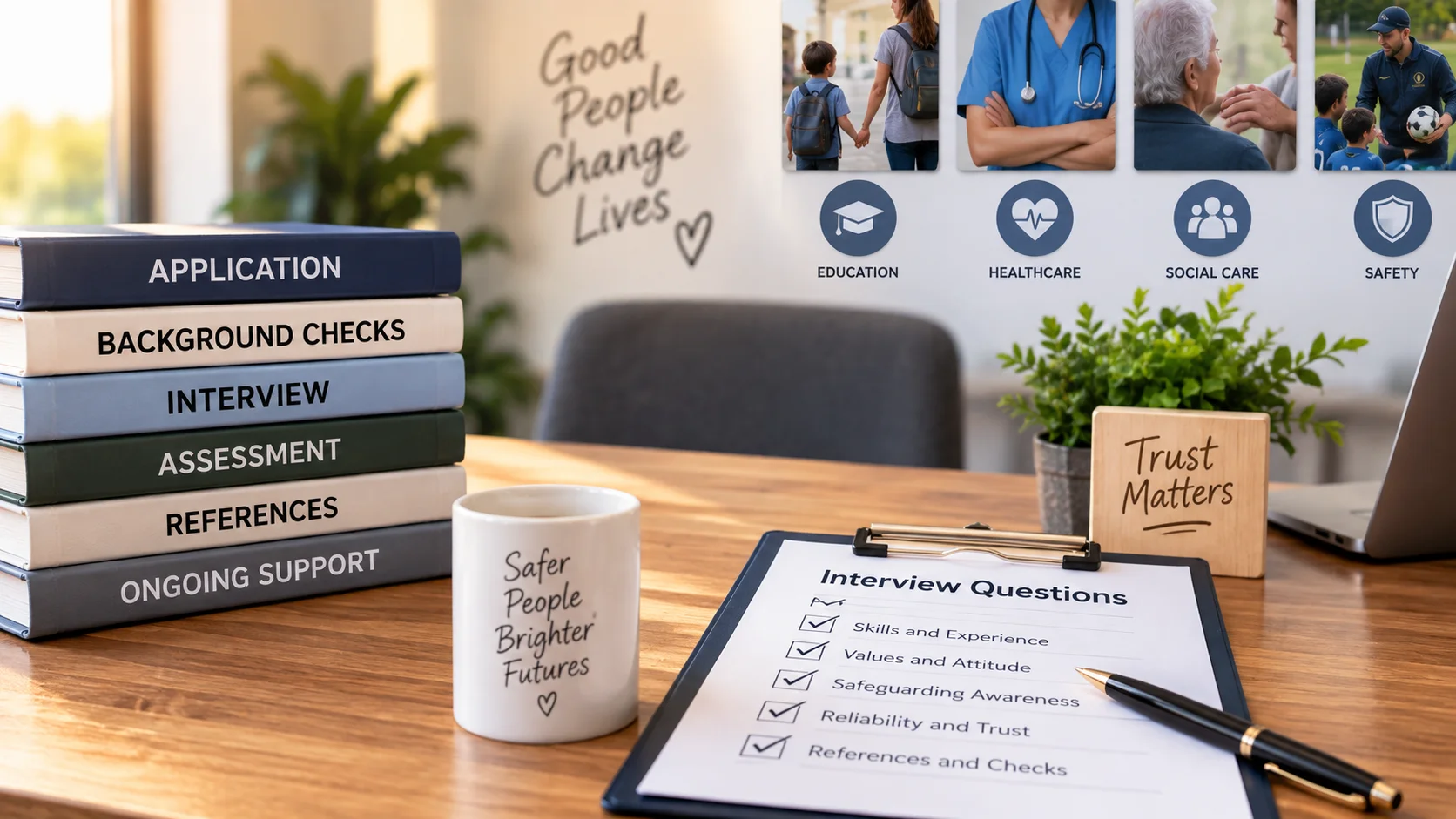

Jobs that involve looking after someone else’s safety, whether that is a child, a patient, or a vulnerable adult, come with an interview and assessment process that goes well beyond a normal job application. Employers are checking more than whether a candidate can do the work. They are trying to establish whether that person can be trusted with someone who has little power to protect themselves, and that shapes every stage of the process, from the first conversation through to checks that continue long after someone starts.
What counts as a job involving trust
Teaching, healthcare, social work, and foster care all sit in this category, along with less obvious roles such as home care work, coaching children’s sport, or driving a school minibus. What connects them is unsupervised access to someone who depends on the adult behaving well when nobody else is watching. Roles like this are legally defined as regulated activity in parts of the UK, which triggers checks that most other jobs, however senior, simply do not require.
Foster care shows how far the vetting can go
A fostering assessment can involve home visits spread across several months, interviews with everyone in the household, medical checks, and references that go back years rather than the usual two jobs. Candidates are also walked through the day-to-day side of the role before a decision is made, and by the later stages they understand how foster carer allowances work as well as everything the vetting has covered, so nobody reaches approval without knowing both what is expected of them and what support they will have.
Other trust-based roles lean on formal background checks
Most other trust-based jobs rely more on a single formal check rather than an extended home-based assessment. The Disclosure and Barring Service has issued more than 22 million disclosure certificates since it was created, each one meant to flag anything in an applicant’s history that would make them unsuitable for the role. A clear record check does not end the process, since most employers still expect references, a structured interview, and often a probationary period before someone is left unsupervised with the people they support.
Good vetting depends on records as much as the initial check
A check is only useful if there is a reliable record that it happened and nothing has changed since. Some schools have carried out the right checks but been unable to secure evidence that checks were made when asked, which is why record-keeping now gets as much attention as the checks themselves. Employers in regulated roles are expected to keep a running log of who has been checked, when, and to what level.
What this means for anyone going through it
For anyone going through this kind of assessment, the length of the process is not a sign that something is wrong with the application. It reflects how much responsibility the role carries and how little room there is for error. Understanding that from the outset makes the wait easier, since every stage exists to protect someone relying on the outcome.