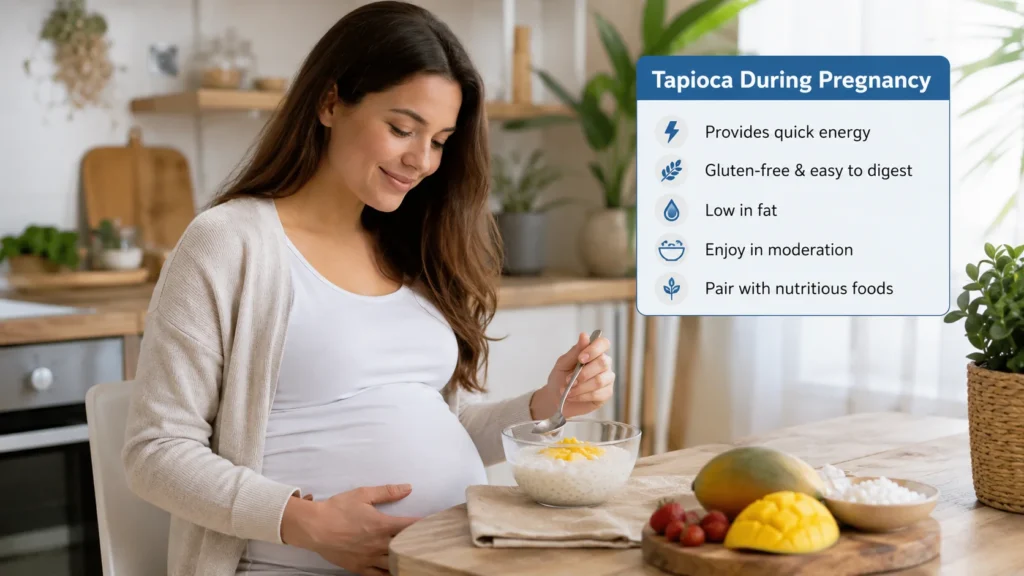
Pregnancy brings many questions about food choices, and one common concern is is tapioca safe during pregnancy. Tapioca is a popular starch used in puddings, bubble tea pearls, flatbreads, and many traditional dishes worldwide. While it can be part of a healthy pregnancy diet, there are important factors to consider, especially regarding how it’s prepared and consumed.
The good news is that properly processed and thoroughly cooked tapioca is generally considered safe during pregnancy when eaten in moderation as part of a balanced diet. However, raw cassava—the plant from which tapioca is made—contains naturally occurring compounds that can be harmful if not processed correctly.
In this guide, you’ll learn everything you need to know about eating tapioca while pregnant, including its nutritional value, health benefits, possible risks, and expert tips for safe consumption.
What Is Tapioca?
Tapioca is a starch extracted from the root of the cassava plant (Manihot esculenta). It is naturally:
- Gluten-free
- Grain-free
- Easy to digest
- Mild in flavor
Tapioca is commonly available as:
- Tapioca pearls
- Tapioca flour
- Tapioca starch
- Instant tapioca
- Tapioca pudding
Because of its smooth texture and neutral taste, it’s often used in desserts, soups, breads, and beverages.
Is Tapioca Safe During Pregnancy?
Yes, tapioca is generally safe during pregnancy when it has been properly processed and fully cooked.
Commercially sold tapioca products are processed to remove naturally occurring toxins found in raw cassava. Once processed and cooked, these products are considered safe for most pregnant women.
However, moderation is important because tapioca is primarily a source of carbohydrates and provides relatively few vitamins, minerals, protein, or fiber.
If you have gestational diabetes or have been advised to monitor your carbohydrate intake, discuss portion sizes with your healthcare provider or registered dietitian.
Nutritional Value of Tapioca
Tapioca mainly provides energy through carbohydrates.
Approximate nutrition per 100 grams of cooked tapioca pearls:
| Nutrient | Amount |
|---|---|
| Calories | 110–160 kcal |
| Carbohydrates | 26–38 g |
| Protein | Less than 1 g |
| Fat | Less than 1 g |
| Fiber | Very little |
| Calcium | Small amount |
| Iron | Small amount |
| Sodium | Very low |
Tapioca is naturally:
- Cholesterol-free
- Gluten-free
- Low in fat
It is not a significant source of:
- Protein
- Vitamin C
- Vitamin A
- Folate
- Iron
- Vitamin B12
These nutrients should come from other healthy foods in your pregnancy diet.
Benefits of Tapioca During Pregnancy
1. Provides Quick Energy
Pregnancy increases your body’s energy requirements.
Since tapioca is rich in carbohydrates, it provides a quick source of energy, especially if you’re experiencing fatigue.
2. Naturally Gluten-Free
Women with celiac disease or gluten sensitivity can safely enjoy tapioca as an alternative to wheat-based foods.
3. Gentle on the Stomach
Many pregnant women experience:
- Morning sickness
- Nausea
- Digestive discomfort
Plain cooked tapioca is easy to digest and may be more comfortable to eat when your stomach feels sensitive.
4. Low in Fat
Tapioca contains very little fat, making it a lighter option when prepared without excessive sugar, cream, or butter.
5. Versatile Ingredient
It can be incorporated into:
- Soups
- Healthy puddings
- Gluten-free baking
- Homemade snacks
- Traditional dishes
This versatility makes it easy to include in a balanced pregnancy meal plan.
Potential Risks of Eating Tapioca During Pregnancy
Although tapioca is generally safe, there are a few concerns to keep in mind.
1. High Carbohydrate Content
Tapioca has a high glycemic index, meaning it can raise blood sugar relatively quickly.
Women with:
- Gestational diabetes
- Type 2 diabetes
- Prediabetes
should consume it in moderation and pair it with protein or healthy fats to help reduce blood sugar spikes.
2. Low Nutrient Density
Unlike whole grains, tapioca contains very few essential nutrients.
Relying on tapioca as a major carbohydrate source may reduce the overall nutritional quality of your diet.
Instead, combine it with nutrient-rich foods like:
- Eggs
- Lean meats
- Fish low in mercury
- Vegetables
- Beans
- Dairy
- Nuts
3. Raw Cassava Can Be Harmful
This is one of the most important safety considerations.
Raw cassava naturally contains compounds called cyanogenic glycosides, which can release cyanide if the root is improperly processed.
Commercial tapioca products undergo processing that removes these compounds, making them safe when prepared according to package directions.
Never eat raw or improperly prepared cassava during pregnancy.
4. Added Sugar
Many tapioca desserts contain:
- Sugar
- Sweetened condensed milk
- Syrups
- Cream
Frequent consumption of sugary desserts can contribute to:
- Excess weight gain
- Blood sugar spikes
- Increased risk of gestational diabetes in susceptible individuals
Choose lower-sugar recipes whenever possible.
Can Pregnant Women Drink Bubble Tea?
Bubble tea often contains tapioca pearls, but pregnancy safety depends on the drink as a whole.
Consider these factors:
Caffeine
Many bubble teas contain black or green tea, which provide caffeine. Pregnant women are generally advised to keep total caffeine intake below 200 mg per day, unless their healthcare provider recommends otherwise.
Sugar
Many bubble tea drinks are high in added sugar.
Ordering:
- Less sugar
- No sugar
- Smaller size
may be a healthier choice.
Freshness
Buy bubble tea from reputable vendors that follow good food safety practices.
How Much Tapioca Is Safe During Pregnancy?
There is no official pregnancy-specific limit for tapioca.
A reasonable serving is generally:
- ½ to 1 cup of cooked tapioca, enjoyed occasionally as part of a balanced meal.
Moderation is key.
Balance your meals with:
- Fruits
- Vegetables
- Lean protein
- Whole grains
- Healthy fats
- Dairy or calcium-rich alternatives
Best Ways to Eat Tapioca While Pregnant
Healthy preparation methods include:
Homemade Tapioca Pudding
Use:
- Low-fat milk
- Less sugar
- Fresh fruit
Tapioca in Soups
Small tapioca pearls can naturally thicken soups while adding texture.
Gluten-Free Baking
Tapioca flour works well in:
- Pancakes
- Bread
- Muffins
when combined with other nutritious ingredients.
Traditional Dishes
Many cultures prepare cooked cassava or tapioca as part of balanced meals alongside vegetables and protein.
Foods to Pair with Tapioca
To create a more balanced meal, pair tapioca with:
- Greek yogurt
- Cottage cheese
- Eggs
- Chicken
- Fish low in mercury
- Beans
- Lentils
- Nuts
- Seeds
- Fresh fruit
These combinations help provide protein, healthy fats, vitamins, and minerals that tapioca alone lacks.
When Should You Avoid Tapioca?
Speak with your healthcare provider before eating large amounts of tapioca if you have:
- Gestational diabetes
- Poorly controlled diabetes
- Kidney disease requiring dietary restrictions
- Special pregnancy nutrition needs
Always follow individualized medical advice.
Tips for Safe Consumption
For the safest experience:
- Buy commercially processed tapioca products.
- Cook tapioca thoroughly according to package directions.
- Avoid raw cassava.
- Limit sugary tapioca desserts.
- Practice portion control.
- Pair tapioca with protein and fiber.
- Store cooked tapioca safely and refrigerate leftovers promptly.
- Maintain a varied, nutrient-rich pregnancy diet.
Frequently Asked Questions
Is tapioca safe during the first trimester?
Yes. Properly processed and fully cooked tapioca can be eaten during the first trimester as part of a balanced diet.
Can pregnant women eat tapioca pearls?
Yes. Fully cooked tapioca pearls used in foods or drinks are generally safe. Be mindful of added sugar and caffeine in beverages such as bubble tea.
Is cassava the same as tapioca?
Not exactly. Tapioca is the starch extracted from cassava. Raw cassava requires proper processing and cooking to remove naturally occurring toxic compounds.
Can tapioca cause gestational diabetes?
Tapioca does not directly cause gestational diabetes, but because it is high in carbohydrates, eating large portions or sugary tapioca desserts may contribute to elevated blood sugar levels. Women with gestational diabetes should follow personalized dietary advice from their healthcare provider.
Is tapioca healthier than rice during pregnancy?
Neither is universally healthier. Tapioca is gluten-free and easy to digest but lower in nutrients and fiber than many whole grains. Brown rice generally provides more fiber and micronutrients.
Can I eat tapioca every day while pregnant?
Occasional moderate servings are generally fine, but eating a wide variety of nutrient-rich foods is important during pregnancy. Tapioca should not replace foods that provide protein, fiber, vitamins, and minerals.
Final Thoughts
So, is tapioca safe during pregnancy? In most cases, yes. Commercially processed and thoroughly cooked tapioca can be safely enjoyed during pregnancy when eaten in moderation. It offers an easy-to-digest, gluten-free source of carbohydrates that can provide energy, but it should be balanced with foods rich in protein, fiber, vitamins, and minerals.
Avoid raw or improperly prepared cassava, limit sugary tapioca desserts and sweetened beverages, and follow your healthcare provider’s advice if you have gestational diabetes or other medical conditions. With mindful preparation and sensible portions, tapioca can be a safe and enjoyable addition to a healthy pregnancy diet.
For more information visit this E find anything