
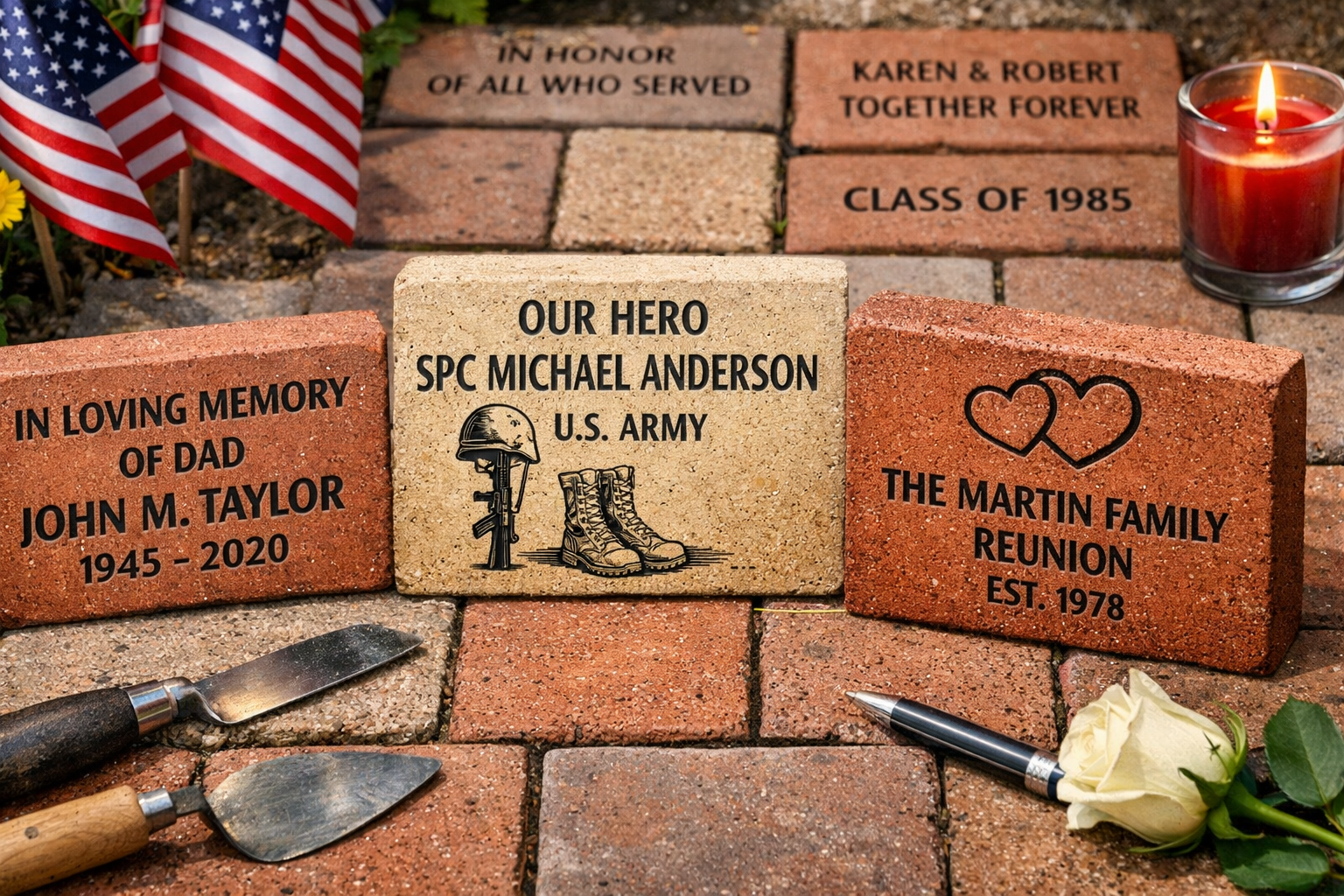
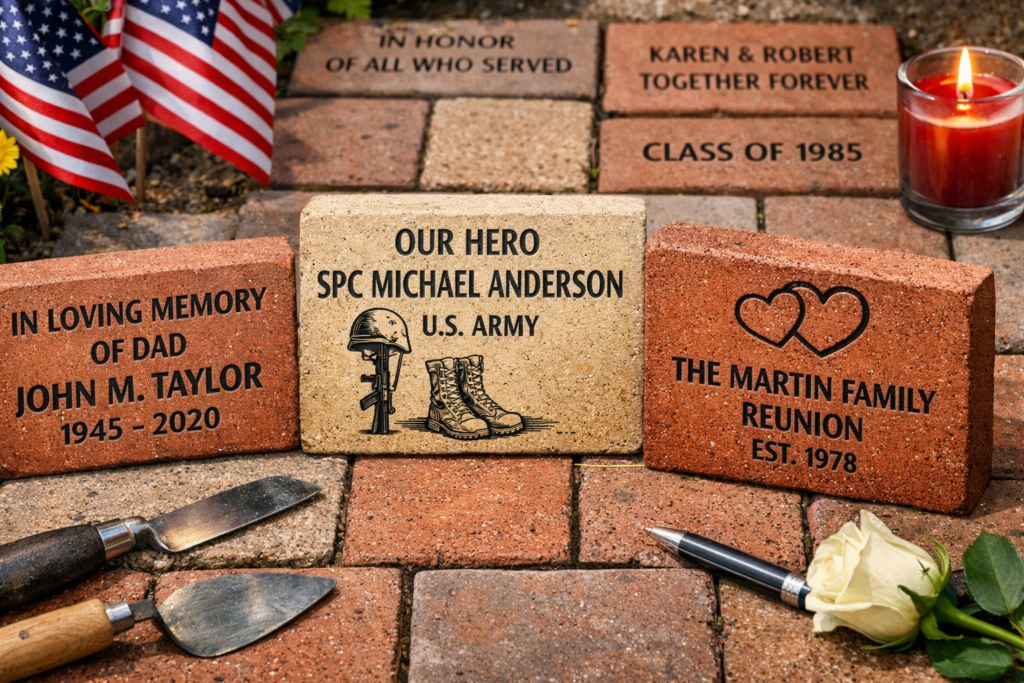
Taking on the role of a fundraising chair is a distinct honor, but it comes with a heavy weight of responsibility. You aren’t just tasked with balancing spreadsheets or hitting revenue targets; you are the steward of your community’s memories. When a donor gives to a capital campaign, they are often doing more than writing a check. They are commemorating a loved one, honoring a veteran, or cementing their family’s history within the physical landscape of your organization.
This emotional investment brings a specific fear to the forefront for any conscientious committee member: the fear of deterioration. We have all walked past fundraising walls where the names are chipped, the epoxy is peeling, or the text has faded into illegibility. Instead of inspiring pride, these dilapidated tributes signal neglect.
When asking donors to cement their legacy with your organization, the durability of that tribute is paramount. You need a partner that guarantees the inscription will withstand the elements for decades, ensuring your donors’ generosity is never eroded by time. This is why investing in high-quality engraved bricks is not merely a purchasing decision—it is a strategic move to protect your organization’s integrity.
In this guide, we will look beyond the surface of simple fundraising. We will verify the Return on Investment (ROI) of brick campaigns, explore the patented technology that prevents fading, and provide the data you need to get enthusiastic buy-in from your committee.
The ROI of Recognition: Why Bricks Beat Disposable Fundraising
When presenting a new fundraising initiative to a skeptical board, the first question is always about the bottom line. It is easy to fall into the trap of “consumable” fundraisers—selling cookie dough, wrapping paper, or popcorn. While these provide a quick influx of cash, they are transactional and fleeting. Once the product is consumed, the connection with the donor often evaporates.
In contrast, an engraved brick campaign is an “infrastructure” fundraiser. It physically improves your facility while offering a permanent testament to generosity. Financially, the numbers are compelling. Industry standards suggest that organizations can purchase high-quality bricks for approximately $20 to $30 (depending on volume and customization) and sell them for $100, $250, or even $500. This creates a profit margin that often exceeds 400%.
However, the financial value extends beyond the initial sale. The true ROI lies in donor retention. A brick is a permanent anchor that keeps the donor connected to the location. When a donor visits your walkway or wall and sees their name beautifully preserved, it reinforces their decision to support you.
An engraved brick serves as a perpetual “thank you,” constantly reminding the donor of their impact every time they walk by. It transforms a one-time giver into a lifetime supporter.
The Science of Permanence: Laser Engraving vs. Sandblasting
If you are pitching a brick campaign, a committee member will inevitably ask, “Won’t the letters just wear off?” This is a valid concern, and the answer depends entirely on the technology you choose. To make an informed decision, it is helpful to understand the difference between traditional sandblasting and modern laser vitrification.
The Problem with Sandblasting
For years, sandblasting was the standard. This process involves blasting abrasive material against a stencil to carve out a groove in the brick or stone. While it looks deep initially, it creates a rough, porous crevice.
- Dirt Traps: These crevices collect dirt, moss, and debris, making the text hard to read without constant power washing.
- Epoxy Failure: To make the text legible, sandblasted bricks are often filled with contrasting epoxy or paint. Over time, UV rays and weather fluctuations cause this filler to crack, peel, or fade, leaving you with an illegible brick and a disappointed donor.
The Solution: Patented Laser Engraving and Vitrification
To ensure longevity, you should look for “Patented Laser Engraving.” This process is fundamentally different. It doesn’t just cut into the brick; it changes the chemistry of the material.
Through a process called vitrification, a high-powered laser generates intense heat that converts the clay into a hardened, glass-like ceramic mark. This mark is not a surface coating; it is fused into the structural integrity of the brick itself.
The result is a tribute that is impervious to the elements. Because the laser creates a smooth, hardened surface, it doesn’t trap dirt. It requires no epoxy fillers, meaning there is nothing to chip or peel. Whether your walkway is subjected to the freezing snows of the north or the blistering sun of the south, the inscription remains as sharp and dark as the day it was installed. This is the technology that turns a simple brick into a maintenance-free legacy.
Protecting Your Organization’s Reputation with a Lifetime Warranty
Your organization’s reputation is one of its most valuable assets. It takes years to build and only a moment to damage. Imagine the scenario five years from now: You launch a second phase of your campaign, hoping to raise funds for a new playground or wing. But when potential donors look at the bricks from Phase One, they see faded names and cracked fillers.
That visual evidence tells a story of neglect. It suggests that the organization does not steward gifts well. This is why the “Fear of Deterioration” is not just about aesthetics; it is about future revenue protection.
When selecting a vendor, a Lifetime Warranty is non-negotiable. You should position this warranty to your board as an insurance policy. It signals that the manufacturer is confident enough in their vitrification technology to back it for the lifespan of the brick itself.
If a vendor only offers a limited warranty (e.g., 5 or 10 years), they are essentially telling you when they expect the product to fail. By investing in quality upfront, you prevent the expensive and embarrassing need to replace inferior bricks later. You are telling your donors, “We value your gift enough to ensure it lasts forever.”
Customization Capabilities: Beyond Simple Text
One of the most effective ways to maximize revenue in a brick campaign is to move beyond a simple list of names. Modern laser technology allows for a level of customization that can significantly increase the perceived value of the donation.
Creating Donation Tiers
You can structure your campaign to target different financial demographics by utilizing different brick sizes and design options:
- The Supporter Tier (4×8 Brick): Standard text-only options for families or individuals.
- The Patron Tier (8×8 Brick): larger bricks that allow for more lines of text or the inclusion of symbols.
- The Corporate Tier (Custom Logos): This is a massive revenue driver. Local businesses are often willing to donate significantly more (often $500 to $1,000+) to have their company logo permanently displayed on your grounds.
Emotional Customization
The capability to engrave complex designs opens the door for deeply emotional tributes. For schools, imagine the impact of allowing parents to engrave a brick with their child’s actual handwriting or a drawing. For veteran organizations, the ability to laser-engrave specific military branch emblems or unit insignias creates a powerful connection.
These options are made simple for volunteer committees through the use of free clipart libraries provided by top-tier manufacturers. You don’t need a graphic designer on your team to offer professional-looking symbols ranging from sports icons to religious symbols. This versatility ensures that every donor finds a way to express their personal connection to your cause.
Maximizing Campaign Success: Mini Bricks and Marketing Tools
A common hurdle in brick campaigns is the intangible nature of the product—the donor writes a check today but may not see the installed brick for months. To bridge this gap and boost sales, you can utilize Mini Bricks (replicas).
Replicas as Marketing Ambassadors
Mini bricks are exact, smaller-scale replicas of the actual brick being installed. They are powerful strategic tools.
- The Upsell: Offer a package where the donor buys a brick for the walkway and pays an extra $20-$30 to receive a replica for their home or office.
- The Conversation Starter: When a donor displays a high-quality laser-engraved brick on their desk at work, it becomes a conversation piece. It allows them to advocate for your campaign to their colleagues and friends naturally.
The Power of Samples
If you are struggling to get the final “yes” from your committee, nothing beats a physical prop. Encourage your board to order a Free Brick Sample from the manufacturer. Bringing a heavy, beautifully engraved brick to the meeting room changes the conversation. It allows the committee to feel the weight and see the precision of the laser engraving, moving the discussion from abstract costs to tangible quality.
Furthermore, consider offering Replica Packages that include Certificates of Authenticity. These add a layer of prestige to the donation, making it feel less like a transaction and more like an induction into an exclusive society of supporters.
Conclusion
Launching a customized engraved brick campaign is a decision that offers a dual victory. It provides the immediate, high-margin revenue your organization needs to fund its current goals, while simultaneously building a long-term stewardship tool that honors your donors.
However, the success of this legacy relies entirely on the durability of the materials you choose today. A faded brick is a broken promise. By prioritizing patented laser vitrification technology and securing a lifetime warranty, you ensure that the tributes you install will remain as permanent as the gratitude you feel.
Building a visual legacy is about creating a permanent emotional anchor for your community. Choose quality, and you will build a foundation of support that lasts for generations.