
Keeping your home warm during winter does not have to mean dealing with expensive utility bills. For homeowners in Abilene, Texas, improving energy efficiency in heating systems is an important way to maintain indoor comfort while controlling household energy expenses. Although winters in West Texas are generally milder than in many northern states, cold fronts and occasional freezing temperatures can still increase the demand for residential heating.
Whether your home uses a gas furnace, an electric heating system, or a heat pump, the way you maintain and operate your equipment can make a noticeable difference in its energy consumption. Regular HVAC maintenance, proper insulation, air sealing, efficient thermostat settings, and modern heating technology all contribute to better performance. Homeowners can also benefit from professional Abilene heating repair services when equipment develops problems or stops operating efficiently.
This guide explores practical ways to improve heating system efficiency, reduce unnecessary energy consumption, and maintain a comfortable indoor environment. By making informed improvements and adopting energy-conscious habits, Abilene homeowners can prepare their properties for colder weather without unnecessarily increasing their monthly utility costs.
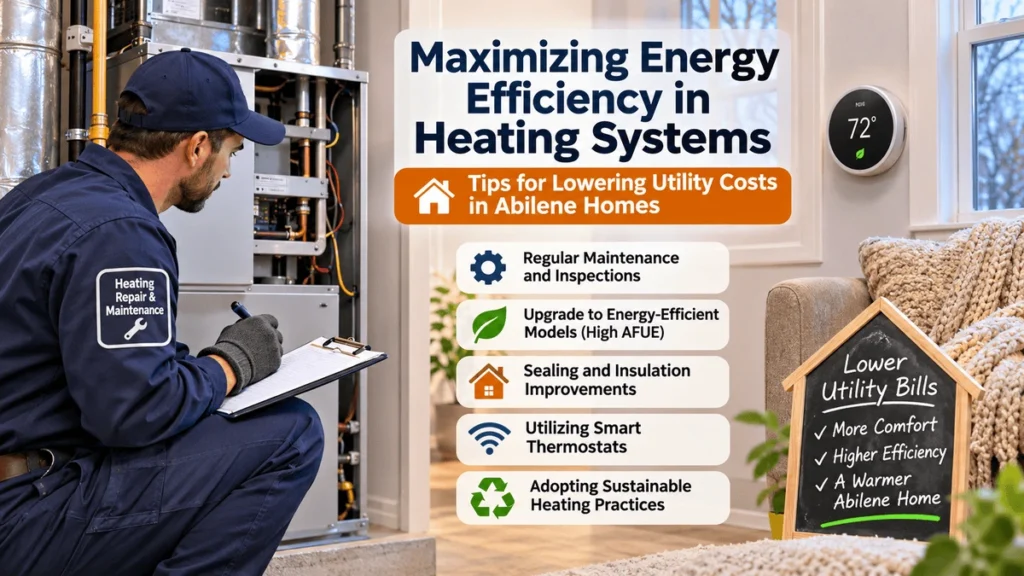
1. Schedule Regular Heating System Maintenance and Inspections
Regular maintenance is one of the most effective ways to keep a residential heating system operating efficiently. Dust accumulation, worn components, restricted airflow, and neglected mechanical problems can force heating equipment to work harder than necessary. This additional workload can increase energy consumption, reduce indoor comfort, and contribute to premature equipment failure.
Scheduling a professional HVAC inspection before the beginning of the heating season helps identify potential problems before they become expensive repairs. A qualified technician can evaluate the condition of your equipment, inspect electrical connections, check system controls, examine heat exchangers where applicable, and verify that the system is operating safely.
Homeowners should also make routine filter maintenance a priority. A dirty air filter restricts airflow, making the blower work harder and potentially reducing heating performance. Check your filter monthly during periods of heavy use and replace or clean it according to the manufacturer’s instructions. Some filters require more frequent replacement than others.
Other important maintenance tasks include:
- Inspecting heating equipment for unusual noises, odors, or performance problems.
- Checking supply and return vents for dust and obstructions.
- Inspecting accessible ductwork for disconnected or damaged sections.
- Checking thermostat operation and temperature accuracy.
- Cleaning or servicing components according to manufacturer recommendations.
- Checking condensate drainage on applicable heating and cooling systems.
- Inspecting gas connections and combustion components when a gas furnace is installed.
Professional maintenance is particularly important for gas furnaces because combustion problems or damaged heat exchangers can create serious safety risks. Annual inspections can help homeowners identify these issues and maintain reliable heating performance.
Consistent maintenance also helps prolong the equipment’s useful lifespan and maintains its efficiency, resulting in better long-term value. Taking care of small problems early can prevent more expensive repairs later. This is especially important when maintaining the system’s lifespan and performance.
For additional guidance, homeowners can consult the ENERGY STAR heating and cooling maintenance checklist.
2. Upgrade to an Energy-Efficient Heating System
If your existing heating equipment is old, requires frequent repairs, or struggles to maintain comfortable indoor temperatures, replacing it with a more efficient model may be worth considering. Modern heating systems incorporate improved components, advanced controls, and technology designed to deliver consistent indoor comfort while using energy more effectively.
However, choosing a new heating system involves more than selecting the model with the highest efficiency rating. Homeowners should consider their property’s size, insulation quality, local climate, existing ductwork, energy source, and household heating requirements.
Understand AFUE Ratings for Furnaces
When comparing gas furnaces, look at the Annual Fuel Utilization Efficiency (AFUE) rating. This measurement indicates how efficiently a furnace converts the energy in its fuel into usable heat over a typical heating season.
For example, a furnace with a 95% AFUE rating converts approximately 95% of its fuel energy into usable heat, while the remaining portion is lost through the combustion and exhaust process. A higher AFUE rating generally indicates better fuel efficiency, although actual operating costs also depend on fuel prices, installation quality, and usage patterns.
Consider Modern Heat Pumps
Heat pumps are another option worth considering for Abilene homes. Unlike conventional electric resistance heaters, heat pumps transfer heat rather than generating it directly through electrical resistance. During winter, they extract available heat from outdoor air and move it indoors.
Modern air-source heat pumps can provide efficient heating during many winter conditions. Some advanced models are specifically designed to maintain performance at lower outdoor temperatures. Because Abilene generally experiences a relatively moderate winter climate compared with colder regions, an appropriately selected heat pump may be a practical option for some properties.
Homeowners should compare the heating performance, operating costs, and installation requirements of different systems. Look at applicable efficiency ratings, including HSPF2 for heat pumps, and consider whether the equipment has been independently certified by ENERGY STAR.
Professional sizing and installation are essential. An oversized or undersized heating system can cause unnecessary energy consumption, uneven temperatures, and reduced comfort. A qualified HVAC contractor can perform a load calculation to determine the appropriate system capacity for your home.
3. Improve Home Insulation and Seal Air Leaks
Even an efficient heating system can waste energy if warm air continuously escapes from your home. Poor insulation and air leaks allow heated indoor air to escape while cold outdoor air enters. As a result, the heating system must operate longer to maintain the desired temperature.
Improving insulation and sealing gaps around the home can reduce heat loss, improve indoor comfort, and help lower utility expenses. These improvements are particularly useful in older Abilene properties where insulation may be insufficient or weather sealing may have deteriorated over time.
Focus on Attic Insulation
The attic is an important area to inspect because heat can escape through an inadequately insulated ceiling. Check for compressed insulation, exposed areas, gaps, and other signs of deterioration. Adding insulation where necessary can help maintain more consistent indoor temperatures throughout the year.
The appropriate insulation level depends on the home’s construction, existing insulation, and local building recommendations. A professional energy assessment can help determine whether additional insulation is worthwhile.
Seal Windows, Doors, and Other Openings
Small gaps around windows and doors can allow noticeable drafts into living spaces. Weatherstripping and caulking are relatively affordable ways to reduce unwanted air movement.
Pay attention to these common areas:
- Gaps around exterior doors and window frames.
- Openings around plumbing pipes and electrical wiring.
- Cracks around exterior wall penetrations.
- Attic access doors and ceiling openings.
- Gaps around fireplaces and unused chimneys.
- Areas where ductwork passes through walls, floors, and ceilings.
Use appropriate sealing materials and avoid blocking intentional ventilation openings or combustion-air supplies. Homes with fuel-burning appliances require proper ventilation for safe operation.
For additional information, the Texas Department of Housing and Community Affairs weatherization recommendations provide practical guidance on insulation, caulking, and weatherstripping.
4. Install a Smart or Programmable Thermostat
Heating an empty home or maintaining unnecessarily high indoor temperatures can increase energy consumption. A programmable or smart thermostat helps homeowners manage their heating schedules more efficiently by adjusting temperatures according to their daily routines.
Smart thermostats connect to a home’s Wi-Fi network and allow users to monitor and adjust indoor temperatures through a smartphone application. Depending on the model, some devices can learn household preferences, create automatic schedules, detect occupancy, and provide information about heating system usage.
For conventional furnaces and electric resistance heating systems, reducing the thermostat setting when everyone is asleep or away can help reduce unnecessary heating. Setting the temperature to the lowest comfortable level is a simple way to manage energy consumption.
However, heat pump owners should follow the manufacturer’s recommendations. Large thermostat setbacks on some heat pump systems can activate auxiliary electric resistance heating, which may consume significantly more electricity. A compatible thermostat and properly configured controls are important for efficient heat pump operation.
Before purchasing a smart thermostat, check whether it is compatible with your existing HVAC equipment. Some systems require specific wiring, additional adapters, or professional installation.
Homeowners can explore ENERGY STAR-certified smart thermostats to learn about available features and independently verified efficiency performance.
5. Inspect and Seal Heating Ductwork
Central heating systems depend on ductwork to distribute warm air throughout the home. Unfortunately, damaged, disconnected, or poorly sealed ducts can allow heated air to escape before it reaches the intended rooms.
Leaky ductwork is particularly problematic when ducts run through unconditioned spaces such as attics, garages, and crawl spaces. In these locations, escaping warm air may be lost to the surrounding environment instead of contributing to indoor comfort.
Homeowners should arrange for a professional duct inspection if certain rooms remain colder than others, airflow seems unusually weak, or energy bills increase without an obvious explanation.
Depending on the condition of the system, improvements may include:
- Sealing accessible duct joints and connections with appropriate materials.
- Repairing disconnected or damaged duct sections.
- Replacing deteriorated duct insulation.
- Correcting airflow restrictions.
- Checking return-air pathways and system balance.
Properly sealed ductwork helps deliver heated air where it is needed, reduces unnecessary system operation, and supports more consistent temperatures throughout the home.
Also, make sure furniture, curtains, rugs, and other household items do not block supply or return vents. Maintaining unobstructed airflow helps the heating system operate as intended.
6. Take Advantage of Natural Sunlight and Sustainable Heating Habits
Some of the simplest ways to reduce heating costs involve changing everyday household habits. Making better use of natural sunlight and reducing unnecessary heat loss can complement improvements to your HVAC equipment.
During sunny winter days, open curtains and blinds on suitable sun-facing windows to allow natural sunlight to warm indoor spaces. Close them again after sunset to provide an additional barrier against cold window surfaces and nighttime heat loss.
Other practical habits include:
- Wear comfortable winter clothing: Sweaters, socks, and warm indoor clothing can reduce the need to increase thermostat settings.
- Use area rugs: Rugs can make hard floors feel more comfortable during colder weather.
- Close fireplace dampers: Keep dampers closed when fireplaces are not in use, provided the fire is completely extinguished and it is safe to do so.
- Limit unnecessary exhaust fan operation: Kitchen and bathroom exhaust fans can remove warm indoor air. Use them when needed and switch them off afterward.
- Maintain ceiling fans properly: If your fan has a reversible winter setting, use the manufacturer’s recommended direction and a low speed to circulate warm air without creating an uncomfortable draft.
- Close unused rooms carefully: Follow your HVAC manufacturer’s recommendations before closing vents or changing airflow arrangements. Excessively restricting airflow can reduce system performance.
- Keep exterior doors closed: Avoid leaving doors open for extended periods during cold weather.
These small adjustments may seem insignificant individually, but together they can help reduce unnecessary heating demand and improve household comfort. Similar improvements can also contribute to the overall comfort of your home.
7. Understand Abilene’s Winter Weather and Heating Needs
Local weather conditions play an important role in determining how much energy a home needs for heating. Abilene experiences hot summers and cooler winter periods, with temperatures that can fluctuate considerably when cold fronts move through West Texas.
According to AEP Texas weather station data for Abilene, January, December, and February are among the months with the greatest heating degree-day totals. Heating degree days help illustrate how much heating demand a typical building may experience relative to a standard reference temperature.
For homeowners, this means preparing the heating system before the coldest months arrive is a sensible approach. Waiting until the first major cold front to discover a malfunctioning furnace or heat pump can result in uncomfortable indoor conditions and potentially more expensive emergency repairs.
Consider the following seasonal preparation steps:
- Schedule heating maintenance during the fall.
- Check air filters before periods of heavy heating use.
- Inspect weatherstripping around windows and exterior doors.
- Check attic insulation and accessible ductwork.
- Test thermostats and carbon monoxide alarms.
- Prepare for occasional freezing temperatures and winter power interruptions.
Abilene homeowners can also review AEP Texas monthly temperature and degree-day information for Abilene to understand seasonal heating demand.
For additional winter preparation guidance, the City of Abilene’s winter weather preparedness recommendations offer useful information about protecting households during severe winter weather.
8. Compare Energy Costs Before Replacing Heating Equipment
Purchasing a new heating system is a significant investment, so homeowners should compare more than the initial equipment price. A less expensive system may cost more to operate over time if its efficiency is considerably lower.
Before making a purchase, consider the following factors:
- Equipment efficiency: Compare AFUE ratings for furnaces and applicable efficiency ratings for heat pumps.
- Installation expenses: Include labor, electrical work, duct modifications, and other installation requirements.
- Energy source: Compare the local costs of electricity and natural gas where applicable.
- Maintenance requirements: Consider the recommended servicing and expected maintenance expenses.
- Equipment lifespan: Evaluate expected service life, warranty coverage, and replacement costs.
- System sizing: Ensure the equipment is correctly sized for the home’s heating requirements.
It is also worth checking whether local utility providers or applicable government programs offer rebates, incentives, or financing options for qualifying energy-efficiency improvements. Program availability and eligibility requirements can change, so verify current details before making purchasing decisions.
Comparing long-term operating expenses alongside the purchase price can help homeowners make better financial decisions and avoid investing in equipment that does not meet their household needs.
9. Prioritize Heating System Safety
Improving energy efficiency should never come at the expense of household safety. Heating equipment must be installed, operated, and maintained according to manufacturer instructions and applicable safety requirements.
Gas furnaces and other fuel-burning appliances require particular attention because malfunctioning combustion equipment can produce carbon monoxide, an odorless and potentially deadly gas.
To improve heating safety, homeowners should:
- Install carbon monoxide alarms in appropriate locations and test them regularly.
- Keep smoke alarms operational throughout the home.
- Arrange professional inspections of fuel-burning heating equipment.
- Never use an oven or outdoor grill as a substitute for indoor heating.
- Keep combustible materials away from furnaces and portable heaters.
- Never operate fuel-powered generators indoors or in enclosed spaces.
- Follow manufacturer instructions when using portable electric heaters.
If a gas appliance produces unusual odors, behaves abnormally, or shows signs of a possible combustion problem, stop using it when safe to do so and contact a qualified professional. If a carbon monoxide alarm sounds, move everyone outside immediately and contact emergency services.
Energy-efficient heating should always be combined with proper ventilation, professional maintenance, and reliable safety equipment.
10. Create a Practical Winter Energy-Saving Checklist
Homeowners do not need to complete every improvement at once. Starting with simple maintenance tasks and gradually addressing larger efficiency problems can make the process more affordable and manageable.
Use this checklist to prepare your Abilene home for the heating season:
- Schedule an annual professional heating system inspection.
- Inspect and replace dirty HVAC air filters.
- Check thermostat settings and programmed schedules.
- Seal air leaks around doors and windows.
- Inspect attic insulation for gaps or deterioration.
- Arrange ductwork inspections when necessary.
- Keep heating vents and return-air grilles unobstructed.
- Use natural sunlight to warm indoor spaces during the day.
- Check carbon monoxide and smoke alarms.
- Review energy bills and monitor monthly energy consumption.
Frequently Asked Questions About Heating System Energy Efficiency
1. How can I improve heating system energy efficiency in my Abilene home?
You can improve heating efficiency by scheduling annual HVAC maintenance, replacing dirty air filters, sealing air leaks, improving attic insulation, inspecting ductwork, and using a programmable thermostat. Choosing properly sized, energy-efficient heating equipment can also reduce unnecessary energy consumption.
2. How often should I service my home heating system?
Most residential heating systems should receive professional maintenance at least once a year, preferably before the winter heating season. Homeowners should also inspect air filters monthly during periods of heavy use and replace them according to the manufacturer’s recommendations.
3. Does a smart thermostat really help reduce heating bills?
Yes. A compatible smart thermostat can reduce unnecessary heating by automatically adjusting temperature settings when occupants are asleep or away. Actual savings depend on the heating system, household schedule, existing thermostat settings, and how the device is configured.
4. What is a good AFUE rating for a gas furnace?
A higher AFUE rating indicates that a furnace converts a greater percentage of its fuel into usable heat. For example, a 95% AFUE furnace converts approximately 95% of its fuel energy into heat. However, homeowners should also consider installation quality, equipment sizing, operating costs, and local energy prices.
5. Are heat pumps suitable for homes in Abilene, Texas?
Yes. Modern air-source heat pumps can be suitable for many Abilene homes because they provide both heating and cooling and can operate efficiently in relatively moderate winter conditions. The right model depends on the home’s heating requirements, insulation, equipment sizing, and the system’s performance at lower outdoor temperatures.
6. Does attic insulation help lower winter heating costs?
Yes. Proper attic insulation slows heat transfer between the living space and the attic. This helps retain warm indoor air during winter, reduces heating demand, and can also improve cooling efficiency during Abilene’s hot summers.
7. Why is my heating system running constantly?
A heating system that runs continuously may have a dirty filter, inadequate insulation, leaking ductwork, an incorrectly sized thermostat, or a mechanical problem. Extremely cold outdoor temperatures can also increase operating time. If the system cannot maintain the desired indoor temperature, arrange a professional inspection.
8. What temperature should I set my thermostat during winter?
The best setting depends on household comfort, health requirements, and the type of heating equipment installed. For conventional furnaces, reducing the thermostat setting while sleeping or away can save energy. Heat pump owners should follow equipment-specific recommendations because large temperature setbacks may activate less-efficient auxiliary heating on certain systems.
Conclusion
Maximizing energy efficiency in heating systems is a practical way for Abilene homeowners to improve indoor comfort while managing household utility expenses. Although winter temperatures in West Texas can vary, preparing your heating equipment for colder weather helps prevent unnecessary energy consumption and unexpected maintenance problems.
Regular HVAC inspections, efficient heating equipment, proper insulation, sealed ductwork, and smart thermostat settings all contribute to better home energy performance. Simple everyday habits, such as using natural sunlight, keeping vents unobstructed, and reducing unnecessary heating, can also make a difference.
Rather than focusing on just one improvement, homeowners should take a whole-home approach to energy efficiency. Combining equipment maintenance with insulation upgrades and responsible heating practices can deliver more consistent comfort and better long-term value. With proper planning and professional assistance when needed, Abilene residents can enjoy a warmer home while keeping avoidable utility costs under control.
For additional ideas on improving residential efficiency, explore our guide to maximizing energy efficiency and learn how modern technology can contribute to more efficient household operations through our article on digital-first connectivity solutions.
Additional Resources: