
A bright, natural-looking smile can make a significant difference in your confidence. Porcelain veneers are a popular cosmetic dentistry solution for improving the appearance of teeth affected by discoloration, chips, gaps, uneven edges, and minor alignment concerns. Although porcelain veneers are designed to resist stains and maintain their appearance, they still require consistent care to look their best.
Whether you already have veneers or are considering porcelain veneers in Trinity, understanding how to maintain them can help protect your investment and support long-term oral health. Daily brushing, flossing, choosing suitable dental products, avoiding damaging habits, and attending regular dental appointments all contribute to maintaining an attractive smile.
It is also important to understand that porcelain and composite veneers do not behave exactly the same way. Porcelain is highly resistant to discoloration, while composite resin can be more susceptible to surface staining. In either case, the condition of your natural teeth and gums plays an important role in the overall appearance of your smile.
This guide explains how to keep your veneers looking white and natural, which everyday habits to follow, what products to avoid, and when professional dental care may be necessary.
Why Porcelain Veneers Are Popular
Porcelain veneers are thin, custom-made ceramic shells that dentists bond to the front surfaces of teeth. They are designed to improve the appearance of a smile while maintaining a natural-looking shape, color, and proportion.
Veneers can address several cosmetic concerns, including:
- Persistent tooth discoloration that does not respond adequately to conventional whitening.
- Small chips, cracks, and worn tooth edges.
- Minor gaps between teeth.
- Uneven tooth shapes and sizes.
- Minor cosmetic alignment concerns.
- Teeth with irregular appearances or surface imperfections.
One of the main advantages of porcelain is its resistance to everyday staining. Its smooth ceramic surface makes it less likely to absorb pigments from foods and beverages compared with some other dental materials. Porcelain can also be designed to reflect light similarly to natural enamel, helping create a realistic appearance.
However, veneers are not indestructible. They can chip, crack, loosen, or become damaged if exposed to excessive pressure or poor oral hygiene. The natural teeth underneath veneers can also develop cavities, and the surrounding gums can become inflamed.
Although the initial veneers price is an important consideration when choosing cosmetic dental treatment, long-term maintenance should also be part of the decision. Good oral care habits help protect both the veneers and the underlying teeth.
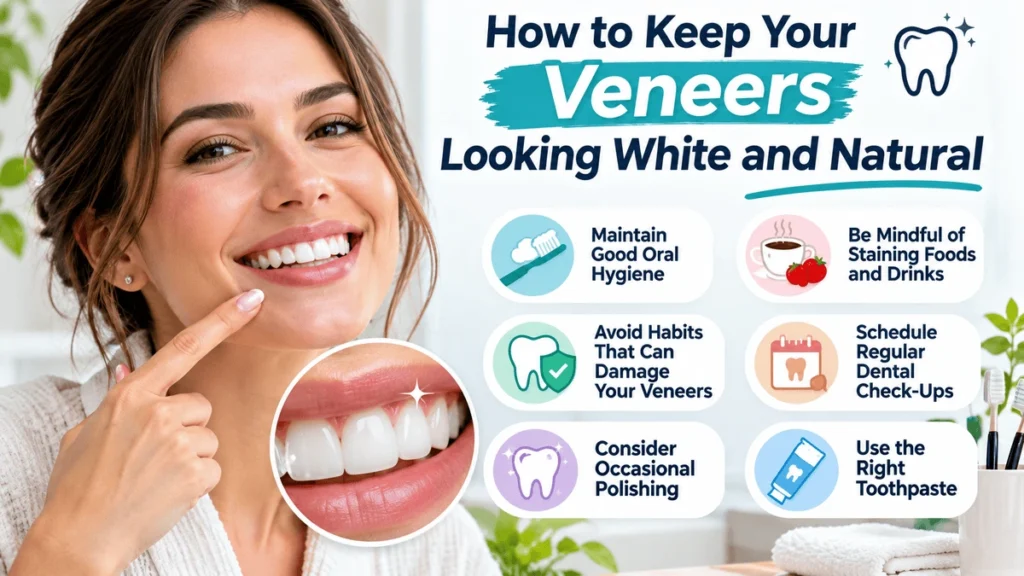
1. Maintain a Consistent Oral Hygiene Routine
Proper oral hygiene is one of the most important factors in keeping veneers looking attractive. Although porcelain itself does not develop tooth decay, the natural tooth structure underneath and around each veneer remains vulnerable to cavities and gum disease.
Plaque can accumulate along the edges where veneers meet natural teeth. If it is not removed regularly, it may contribute to gum inflammation, bad breath, and dental problems that affect the appearance and stability of your restorations.
Follow these daily oral hygiene practices:
- Brush twice daily: Brush for approximately two minutes using a soft-bristled toothbrush and fluoride toothpaste.
- Floss once a day: Carefully clean between your teeth and around the veneer margins to remove plaque and food debris.
- Use gentle brushing movements: Avoid applying excessive pressure, particularly around the gumline.
- Clean your tongue: Gently clean your tongue to help reduce odor-causing bacteria.
- Consider mouthwash: An appropriate mouthwash can complement brushing and flossing. Choose a product suited to your oral health needs and follow your dentist’s advice.
Electric toothbrushes with pressure sensors can also help people who tend to brush too aggressively. However, the most important factors are using a suitable brush, maintaining a consistent routine, and cleaning every tooth surface properly.
Remember that healthy gums are essential to an attractive smile. Gum recession, inflammation, and plaque buildup around veneer margins can affect the overall appearance even when the porcelain itself remains unchanged.
2. Choose the Right Toothpaste for Your Veneers
Choosing suitable toothpaste is another important part of porcelain veneer maintenance. Some whitening products contain abrasive ingredients or are formulated primarily to remove surface stains. Using an unnecessarily abrasive product or brushing too aggressively may contribute to surface wear on certain dental materials and natural teeth.
For everyday care, choose a fluoride toothpaste that is appropriate for your dental needs and is not excessively abrasive. Fluoride helps protect the natural tooth structure surrounding and beneath your veneers against tooth decay.
Consider the following when selecting dental products:
- Choose fluoride toothpaste for daily cavity prevention.
- Use products recommended by your dentist for cosmetic restorations.
- Avoid aggressive brushing with highly abrasive powders or homemade whitening mixtures.
- Be cautious with charcoal-based toothpastes and unverified whitening products.
- Look for products with recognized dental safety and effectiveness certifications where available.
It is worth remembering that whitening toothpaste does not change the underlying color of porcelain veneers. Some formulations can remove surface stains from natural teeth, but they cannot bleach the ceramic material to make it lighter.
If you are uncertain about a particular toothpaste, ask your dentist which formulation is appropriate for your veneers and natural teeth.
3. Be Mindful of Staining Foods and Drinks
Porcelain veneers are highly stain-resistant, but that does not mean every part of your smile is completely protected against discoloration. Natural teeth, composite restorations, and the bonding margins around veneers can be affected by staining substances and plaque accumulation.
Regular consumption of deeply pigmented foods and beverages may contribute to staining of natural teeth and certain dental materials. Some common examples include:
- Coffee: Contains dark pigments that can stain natural teeth over time.
- Tea: Particularly strong black tea can contribute to surface discoloration.
- Red wine: Contains pigments and tannins that may contribute to staining.
- Dark berries: Blueberries, blackberries, and similar fruits contain natural pigments.
- Cola and dark soft drinks: Some varieties contain coloring agents and acids.
- Tomato-based sauces: These can contribute to surface staining on susceptible dental materials.
- Soy sauce and balsamic vinegar: Their dark pigments can affect natural teeth and some restorations.
You do not necessarily need to eliminate these foods and drinks from your diet. Instead, maintain good oral hygiene and use a few simple habits to reduce unnecessary exposure to staining substances.
- Drink water after consuming coffee, tea, or dark-colored beverages.
- Rinse your mouth with water after strongly pigmented meals.
- Maintain regular brushing and flossing habits.
- Avoid sipping staining beverages continuously throughout the day.
- Limit frequent consumption of sugary and acidic drinks to support natural tooth health.
These habits help maintain the appearance of your natural teeth and support overall oral health, which is important for keeping your smile looking balanced and natural.
4. Avoid Habits That Can Chip or Damage Your Veneers
Porcelain veneers are strong enough to withstand normal chewing, but they can still fracture or become detached when exposed to excessive force. Certain everyday habits place unnecessary pressure on the front teeth and can shorten the lifespan of dental restorations.
To protect your veneers, avoid the following habits:
- Chewing ice cubes or other extremely hard objects.
- Biting fingernails or chewing pens and pencils.
- Using your teeth to open bottles, packages, or containers.
- Cracking nuts or hard shells with your front teeth.
- Biting directly into particularly hard foods with veneered teeth.
- Grinding or clenching your teeth.
Some hard foods can still be enjoyed safely by cutting them into smaller pieces and chewing with your back teeth when appropriate. Avoid placing unnecessary pressure directly on the veneered front teeth.
Protect Your Veneers if You Grind Your Teeth
Bruxism, commonly known as teeth grinding or clenching, can place significant pressure on dental restorations. People who grind their teeth during sleep may experience chipped veneers, cracks, discomfort, or damage to the underlying teeth.
If you notice morning jaw discomfort, frequent headaches, worn tooth edges, or signs of nighttime grinding, discuss these symptoms with your dentist.
Your dentist may recommend a custom-fitted nightguard to help protect your teeth and veneers from excessive grinding forces. A properly fitted appliance can provide an additional layer of protection while you sleep.
If you participate in contact sports or activities that could cause facial injuries, consider using a suitable mouthguard as well.
5. Schedule Regular Dental Check-Ups and Professional Cleanings
Regular dental appointments are essential for maintaining both the appearance and health of your veneers. Even if your smile looks perfectly normal, professional examinations can help identify problems that may not be noticeable at home.
During a dental check-up, your dentist may:
- Examine veneers for chips, cracks, or signs of loosening.
- Check the margins where veneers meet natural teeth.
- Evaluate gum health and look for inflammation or recession.
- Check natural teeth for cavities and other dental problems.
- Assess your bite and identify excessive pressure on restorations.
- Remove plaque and calculus buildup through appropriate professional cleaning.
- Recommend changes to your home oral hygiene routine when necessary.
Many people benefit from dental check-ups and professional cleanings approximately every six months. However, the ideal schedule depends on individual oral health, gum condition, and the dentist’s recommendations.
Professional cleaning is particularly valuable because plaque and hardened deposits can accumulate around the gumline and veneer margins. Removing these deposits helps maintain healthy gums and a clean-looking smile.
Always inform your dental hygienist that you have veneers. The dental team can select appropriate cleaning instruments and polishing materials for your particular restorations.
6. Understand the Limitations of Teeth Whitening Products
One common misconception about dental veneers is that they can be whitened in the same way as natural teeth. This is not the case. Conventional bleaching products containing hydrogen peroxide or carbamide peroxide do not change the intrinsic color of porcelain veneers.
In other words, if your porcelain veneers look darker than you expected, using additional whitening strips or bleaching gels will not make the ceramic material several shades lighter.
It is also important to understand that professional teeth whitening affects natural tooth enamel rather than porcelain restorations. If you whiten the natural teeth surrounding your veneers, their color may become lighter while the veneers remain unchanged. This can create an uneven appearance.
If you are considering teeth whitening after receiving veneers, consult your dentist first. They can evaluate your natural teeth, existing restorations, and overall smile before recommending an appropriate approach.
For more information, read our related guide: Is It Possible to Whiten Porcelain Veneers?
7. Ask Your Dentist About Professional Polishing
If your veneers appear dull or have developed surface deposits, professional cleaning and polishing may help improve their appearance. However, polishing is not the same as bleaching, and it cannot change the original shade of porcelain.
Your dentist can determine whether the appearance is caused by removable surface deposits, staining around the margins, changes in the surrounding natural teeth, or a problem with the restoration itself.
When appropriate, a dental professional may use polishing materials specifically designed for the restoration material. This is important because unsuitable instruments or abrasive products can damage the glaze or surface finish of certain veneers.
Professional polishing may be helpful for removing superficial deposits, but it will not repair a cracked veneer, reverse structural damage, or restore a permanently altered ceramic surface.
If a veneer has become visibly discolored, rough, damaged, or detached, arrange a dental examination rather than attempting to polish or repair it yourself.
8. Stay Hydrated and Support a Healthy Oral Environment
Drinking enough water is a simple habit that supports overall oral health. Saliva naturally helps wash away food particles, neutralize acids, and protect teeth against harmful bacteria. When your mouth becomes dry, these protective functions may be reduced.
Although drinking water does not directly whiten porcelain veneers, maintaining good hydration can support the natural oral environment surrounding your restorations.
To support a healthy mouth:
- Drink water regularly throughout the day.
- Choose water instead of frequently consuming sugary beverages.
- Maintain a balanced diet with limited added sugars.
- Avoid smoking and tobacco products.
- Maintain regular brushing and flossing habits.
- Discuss persistent dry mouth with your dentist or healthcare professional.
Good hydration, healthy eating habits, and consistent oral hygiene contribute to healthier gums and natural teeth, helping your veneers blend naturally with the rest of your smile.
9. Know the Difference Between Porcelain and Composite Veneer Care
Not all veneers are made from the same material. Understanding whether you have porcelain or composite veneers can help you choose suitable maintenance practices and realistic expectations.
Porcelain Veneers
Porcelain veneers are made from ceramic materials designed to provide a natural appearance and good resistance to staining. Their smooth, glazed surfaces generally make them less susceptible to discoloration from everyday foods and drinks.
Nevertheless, porcelain veneers can chip, crack, or become damaged. Their surrounding natural teeth and gum tissues also require regular care.
Composite Veneers
Composite veneers are made from tooth-colored resin materials. They can be applied directly to teeth or fabricated using composite material, depending on the treatment approach.
Compared with porcelain, composite resin is generally more susceptible to surface staining and wear. Professional maintenance and polishing may be recommended depending on the condition of the restoration.
Both types require proper brushing, flossing, regular dental examinations, and protection from excessive biting forces. Your dentist can recommend maintenance techniques based on the specific material and condition of your veneers.
10. Recognize When Your Veneers Need Professional Attention
Even with excellent maintenance, veneers may eventually require repair or replacement. Recognizing early warning signs can help prevent minor problems from becoming more complicated dental issues.
Contact your dentist if you notice any of the following:
- Visible cracks, chips, or rough edges.
- A veneer that feels loose or appears to be separating from the tooth.
- Persistent discomfort or increased tooth sensitivity.
- Swollen, bleeding, or receding gums around a veneered tooth.
- Discoloration developing along the edges of a veneer.
- A sudden change in your bite or the way your teeth fit together.
- Food frequently becoming trapped around a particular veneer.
Do not attempt to glue a loose veneer back into place using household adhesives. Avoid chewing on the affected tooth and arrange professional dental care as soon as possible.
Prompt attention can help determine whether the veneer can be repaired, rebonded, or needs replacement.
Frequently Asked Questions About Keeping Veneers White and Natural
1. Can porcelain veneers become yellow over time?
Porcelain veneers are highly resistant to staining and generally retain their original color well. However, the natural teeth surrounding them, composite bonding materials, and the margins between veneers and teeth may develop discoloration over time. Professional examination can help identify the cause.
2. Can I use whitening toothpaste on my veneers?
Whitening toothpaste does not bleach porcelain veneers or change their original shade. Some products contain abrasive ingredients designed to remove surface stains from natural teeth. For daily maintenance, choose a suitable fluoride toothpaste and ask your dentist before using highly abrasive whitening products.
3. How often should I brush my teeth with veneers?
Brush at least twice daily for two minutes using a soft-bristled toothbrush and fluoride toothpaste. You should also floss or use another appropriate interdental cleaner once a day to remove plaque between teeth and around veneer margins.
4. Can coffee and tea stain porcelain veneers?
Porcelain is highly resistant to coffee and tea stains. However, these beverages can stain natural teeth and some composite materials around the veneers. Drinking water afterward and maintaining good oral hygiene can help reduce surface discoloration.
5. Can a dentist polish porcelain veneers?
Yes, a dentist may use appropriate professional polishing techniques to remove certain surface deposits or stains. The materials and instruments must be suitable for the particular restoration. Polishing cannot bleach porcelain or repair structural damage.
6. How long do porcelain veneers last?
The lifespan of porcelain veneers varies depending on the material, quality of placement, oral hygiene, biting habits, and maintenance. Many porcelain veneers can last approximately 10 to 15 years or longer with appropriate care, although individual results vary. Regular dental examinations help identify problems that may affect their lifespan.
7. Do veneers require special mouthwash?
Most people with veneers do not need a special mouthwash solely because they have restorations. An appropriate mouthwash may complement brushing and flossing, depending on individual needs. Ask your dentist which product is suitable for your oral health.
8. Can veneers get cavities underneath them?
Yes. Although porcelain itself cannot develop cavities, the natural tooth underneath and around a veneer can still decay. Maintaining good oral hygiene, using fluoride toothpaste, and attending regular dental examinations help protect the underlying teeth.
9. Should I avoid all staining foods after getting veneers?
No. Most people do not need to eliminate coffee, tea, berries, or other pigmented foods completely. Porcelain is highly stain-resistant. Maintaining good oral hygiene and drinking water after consuming staining beverages are sensible habits for protecting natural teeth and surrounding dental materials.
10. What should I do if one of my veneers becomes loose?
Contact your dentist promptly if a veneer becomes loose or detached. Avoid chewing on the affected tooth and do not attempt to reattach it using household glue. Your dentist can determine whether the restoration can be safely rebonded or needs replacement.
Conclusion
Keeping your veneers looking white and natural requires more than simply choosing a high-quality cosmetic dental treatment. Consistent oral hygiene, appropriate dental products, healthy lifestyle habits, and regular professional check-ups all contribute to maintaining an attractive smile.
Although porcelain veneers are designed to resist everyday staining, the natural teeth and gums surrounding them still need attention. Avoid excessive biting pressure, protect your teeth if you grind at night, and consult your dentist before trying whitening treatments or polishing products.
Remember that porcelain veneers cannot be whitened using conventional bleaching products. If their appearance changes, a dental professional can determine whether surface cleaning, polishing, repair, or replacement is appropriate.
With the right maintenance routine and professional guidance, you can protect your dental restorations, support your natural oral health, and enjoy a beautiful, confident smile for years to come.
Additional Resources: