
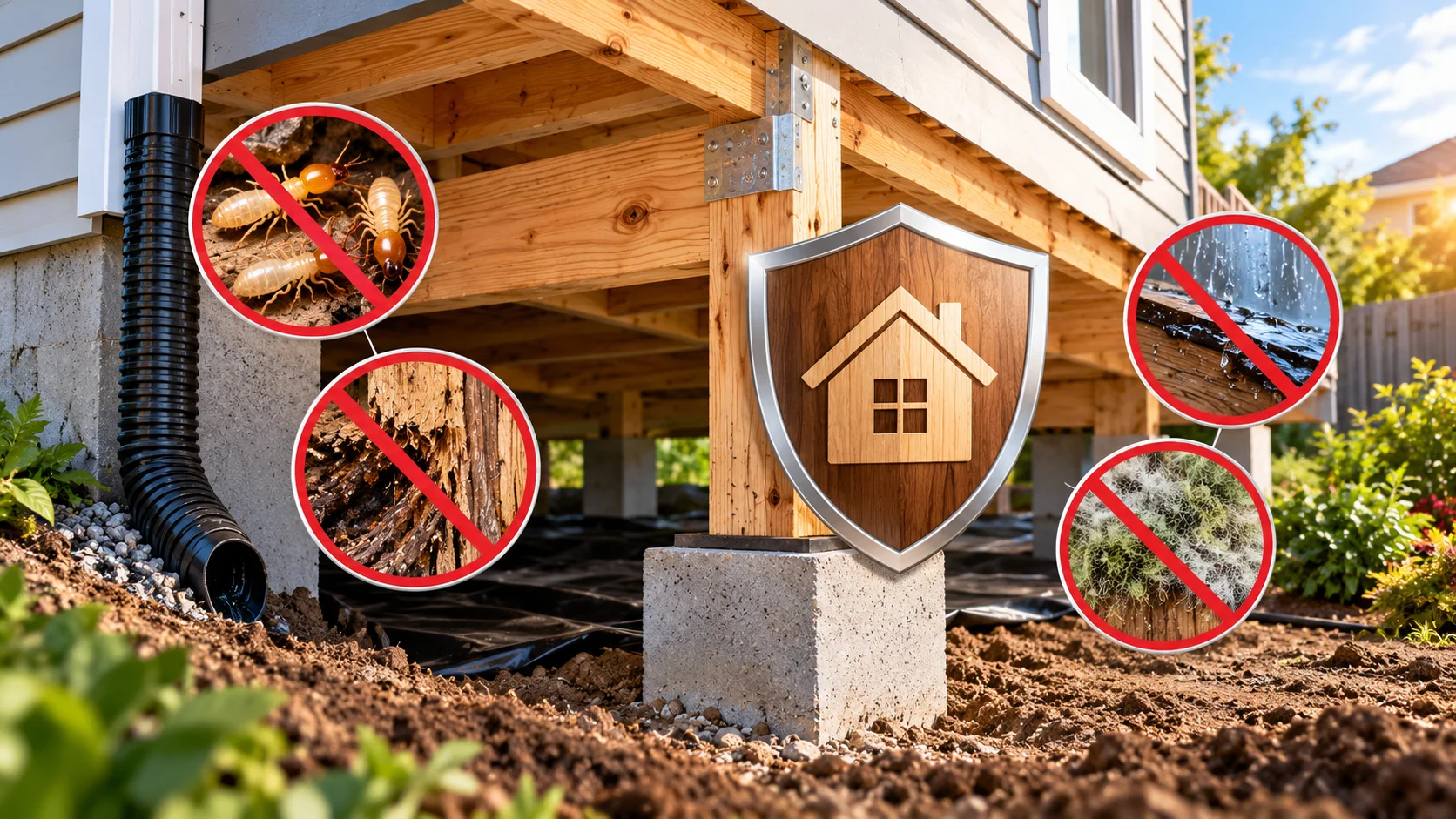
You have your roof inspected. You have your gutters cleaned. You have your HVAC serviced twice a year. Yet, the wooden bones of your house – the foundation framing, the floor joists, the sill plates – sit silently exposed, threatened by two menaces that move more slowly than a thunderstorm but ultimately cost more: moisture and termites. By the time either has become a visible problem, it’s almost certainly too late.
Why wood failure doesn’t announce itself
Termite colonies don’t knock on the door before they move in. A subterranean colony can feed on structural lumber for a year or more before a homeowner notices anything wrong, because the activity happens inside the wood or underneath the house, not on a visible surface. Fungal wood rot works on a similar timeline. Both processes are quiet, both are cumulative, and both get dramatically more expensive to fix the longer they go unaddressed. This is the core problem with treating termite pest control as something you deal with after you see damage. Reactive pest control means the framing has already been compromised.
The fix isn’t complicated, but it does require treating wood protection as a maintenance habit rather than an emergency response. That means managing water, eliminating the pathways pests use to reach your framing, and bringing in a professional set of eyes on a schedule – not just when something looks off.
Water is doing more damage than you think
Subterranean termites make their living by turning cellulose – an organic compound that is the main constituent of all plant cells – into sugar. If they find a food supply easy to reach that is also moist, they’ll happily work on it until they’ve done so much damage that the structure collapses. Dry wood, however, presents them with the same digestive challenge hay does to humans; it’s a lot of work for very little reward.
Rot fungi also have their requirements. The fungi are as necessary to the ecosystem as the insects are, because they break down the equally indispensable cellulose in decayed wood into nutrients that plants can use. But like termites, the fungi can’t work without water. A dry girder or floor joist can sit for ages without harm. Add a little chronic moisture, though, and the fungi will grow until the wood’s structural integrity is lost.
All of which adds up to one thing for the savvy homeowner determined to keep both wood-eating termites and fungi at bay: keep everything dry. Fix the drainage, keep the wood dry, install a bit of plastic, and it’s a good bet you won’t even need to think about pesticides.
Why DIY vigilance isn’t enough on its own
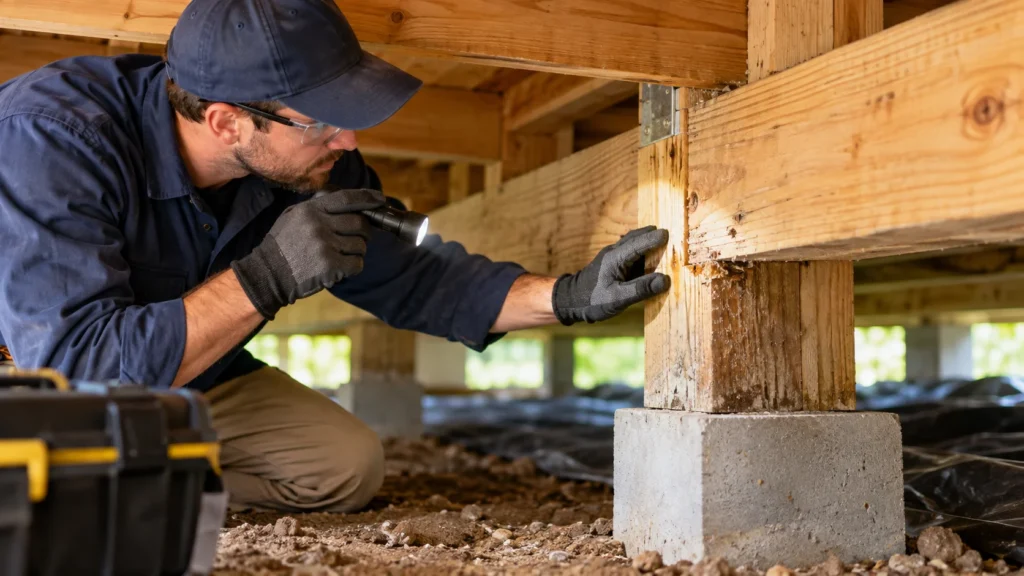
Homeowners, of course, can learn to spot mud tubes and hollow-sounding wood. What’s harder to do without training is checking every crawl space corner, every sill plate, every spot where plumbing penetrates the foundation – the exact places subterranean termites prefer because they’re dark, humid, and rarely disturbed. Professional inspectors use moisture meters to find damp wood before it’s visibly damaged, and they know the specific entry points that get missed in a casual walkthrough.
This is why residents in high-risk regions shouldn’t treat inspection as optional. Scheduling a termite inspection in St. Louis once a year gives you a documented, professional check before minor activity turns into framing damage that costs thousands of dollars to repair. An annual inspection isn’t about catching a problem that’s already obvious – it’s about catching the one that isn’t yet.
The financial stakes back this up. Termites cause roughly $5 billion in property damage across the United States every year (NPMA), and most standard homeowner insurance policies exclude termite damage entirely. That makes prevention and inspection the only real financial backstop most homeowners have.
Cut off the wood-to-soil highway
Subterranean termites thrive underground and must have contact with the soil to survive. When they discover a piece of wood making direct contact with the earth, they have discovered a way in that requires no effort on their part, poses no threat to them, and is highly unlikely to be disturbed. This makes wood-to-soil contact one of the most preventable vulnerabilities in the termite world when it comes to homeowner cooperation, and one of the most stubbornly ignored.
Common culprits to be on the lookout for include:
- Buried form boards left behind after construction, coming into direct contact with the foundation
- Wooden steps or porch posts sitting directly on the soil instead of on concrete footings
- A supply of firewood stacked against the exterior wall
- Siding or trim too close to the soil or extending below grade
The standard in the industry is a six-inch gap between the ground and all wood members of the structure. That gap isn’t arbitrary – it removes the direct highway and forces termites to build visible mud tubes to cross it, which makes an infestation far easier to catch early. Mud tubes are pencil-width earthen tunnels that subterranean termites construct to travel over exposed surfaces while staying protected from light and dry air. If you see them running up a foundation wall or a support pier, that’s an active colony, not a leftover sign from an old problem.
Landscaping choices you don’t think of as pest control
Many homeowners may consider mulch, shrubs, and sprinklers as decisions related to the appearance of a home, but they are also pest control decisions. Thick mulch beds piled against the foundation hold moisture against the wood and soil, and they double as excellent cover for mud tubes, hiding them from casual inspection. Dense shrubs planted right up against the siding block airflow and trap humidity against the exterior wall. Sprinkler heads aimed at the house instead of away from it soak the same six inches of soil you’re trying to keep dry.
None of this requires ripping out your landscaping. It requires a few adjustments: keep mulch to a couple of inches deep, pull it back a few inches from the foundation, trim shrubs so there’s airflow between the plant and the wall, and redirect sprinklers so they’re watering the lawn, not the house. The goal is a clear, visible inspection zone around the foundation perimeter where you or an inspector can actually see the wall without moving plants out of the way first.
Know which termite you’re actually dealing with
Termites are not all the same, and the differences are important for prevention. Drywood termites reside and feed entirely within wood, with no connection to the soil. Subterranean termites, the dominant species across much of the U.S., particularly the Midwest and the greater St. Louis region, are the exact opposite. They live underground in the soil and travel through mud tubes to get to food above ground. Moisture is a key component for their survival.
Given that subterranean termites are the primary threat in our region, prevention in the Midwest is almost exclusively soil-based. That includes minimizing wood-to-soil contact, ensuring proper site grading and moisture management, and implementing soil treatment (often highlighted by the use of liquid termiticides) rather than wood injections used for drywood termites. Knowing this also directs your attention differently when looking for warning signs – you’re unlikely to see mud tubes on attic beams if you’re in St. Charles or Chesterfield. Instead, focus on the foundation and crawl space.
The warning signs worth taking seriously
There are a few signs that reliably precede a termite infestation reaching a severe stage of structural damage:
- Mud tubes anywhere on or inside the structure
- Wood that’s got a hollow sound or feels particularly papery, regardless of the appearance of the wood’s surface
- Wood that seems blistered a bit, is dark stained, or seems to be slightly sagging. This last one can relate to either termite feeding or fungal rot.
- Doors or windows that are suddenly sticking; sometimes this is a result of water or moisture warping the wood, and sometimes it’s due to termite feeding.
- Small, pellet-like frass piling up near baseboards or windows. This is more typical of drywood termites, but it still doesn’t hurt to rule it out.
- Discarded wings near windowsills, in the attic, or caught in a light fixture after a swarm.
Treatment isn’t a one-time fix
If termites are found to be active, there are two common professional responses. Liquid termiticides will seep a chemical barrier into the soil surrounding the foundation that either repels termites or kills them as they pass through it. Termite bait stations are filled with a cellulose-based material containing an agent that is toxic to termites. These stations are placed in the ground around the outside of the structure and foraging worker termites carry the bait back to the colony, eventually leading to the elimination of the colony.
Both of these systems are relatively effective, but neither qualifies as a once-and-done type of treatment. Liquid barriers will eventually break down and require reapplication. Similarly, bait stations must be monitored and refilled at regular intervals. This is why even in a no-termites post-treatment scenario, annual checks are advised. This is how you know when – or if – the barrier or bait system is failing, rather than assuming it is still intact and working properly.
Treat the whole environmental picture, not just the insects
Termites, carpenter ants, and fungal wood rot love moisture and nest in damp wood that touches soil. Since they’re so attracted to the same conditions, if one of these pests has invaded your home, the others may follow. Carpenter ants aren’t as harmful as termites, but finding them is often a warning of an existing moisture issue. And where there’s enough moisture for carpenter ants, there may be enough for termites too. Pressure-treated lumber is a big help for any new construction, repairs, or replacement of deck posts and sill plates, since the preservatives are resistant to both insect feeding and decay.
A real protection plan has to address all of it together: Manage the water at its source, get rid of wood-to-soil contact, keep landscaping from trapping moisture against the house, and get a professional inspection yearly to catch what you can’t see. None of these steps is particularly radical on its own. Get them all, though, and you’ve got a standing foundation and framing that’ll keep standing for decades – instead of one that quietly fails from the ground up.