
Walk into a hospital’s utilization management office on any weekday morning and the scene looks calmer than it did a decade ago. That calm is not an accident. It is the product of small, cumulative changes in the tools that support staff use to move a patient’s case from admission to discharge without losing track of a single detail. Physicians who review complex cases still get most of the attention in conversations about hospital oversight, but the people who prepare those cases, track them, and keep them from falling through the cracks have quietly gained better tools of their own, and the daily work looks different because of it.
The Queue That Replaced the Spreadsheet
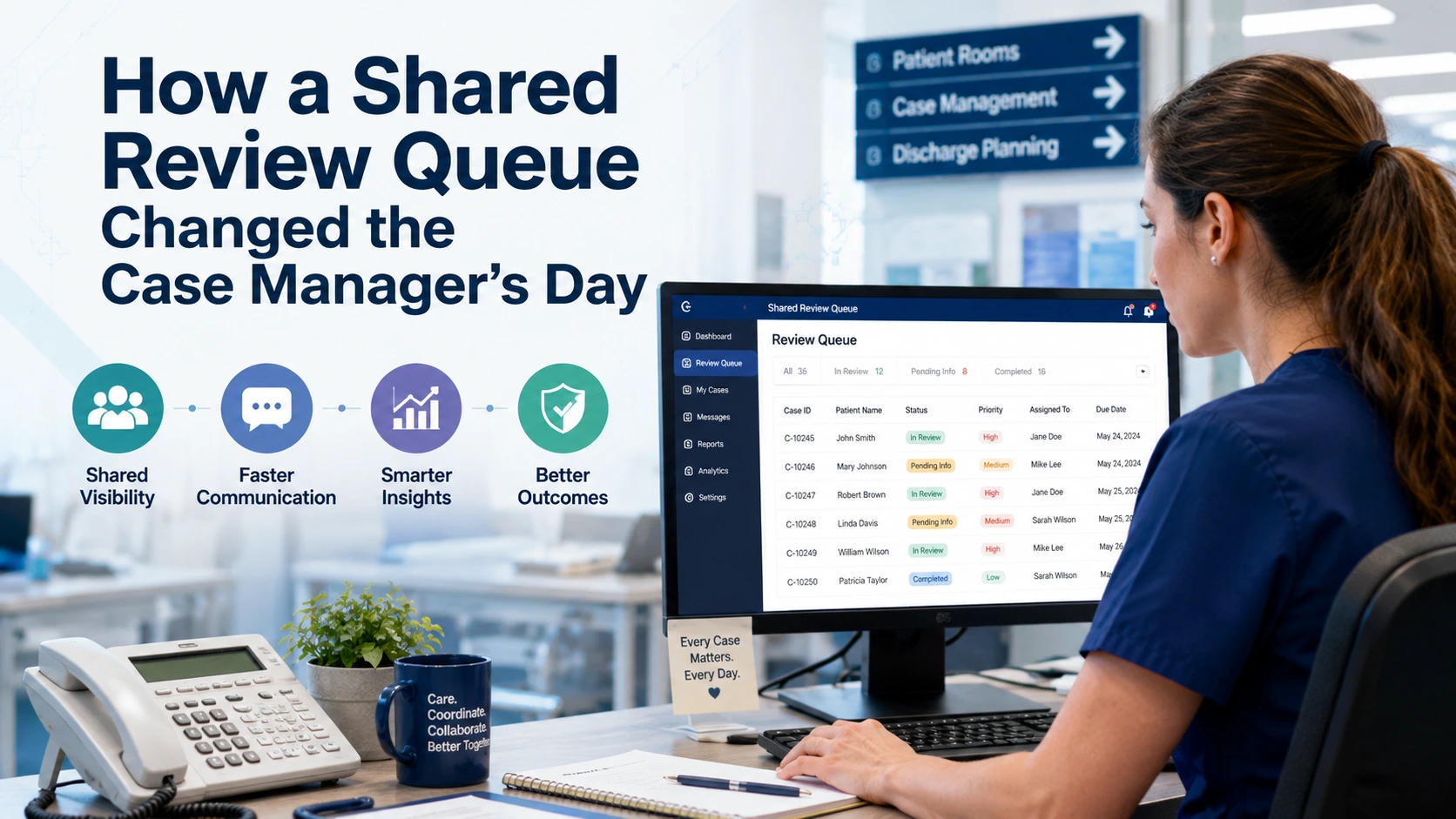
Not long ago, tracking which patient charts needed a secondary review, which were waiting on documentation, and which had already cleared meant juggling spreadsheets, sticky notes, and phone calls between shifts. Case managers and utilization review nurses often spent as much time hunting for status updates as they did actually reviewing cases. The shift to shared digital queues, built into or layered on top of the electronic health record, changed that. A case now moves through a visible pipeline that every relevant staff member can see in real time, from the admitting nurse flagging a chart for review to the discharge planner confirming a bed is ready at the next level of care. Nobody has to guess where a case sits, and nobody has to interrupt a colleague’s shift to find out.
This matters most for the support staff who never appear in a patient’s chart but who keep the whole system moving. Clinical documentation specialists, denial coordinators, and utilization review nurses have historically operated in the background, translating clinical detail into the language payers require and flagging gaps before they become costly problems. A shared queue gives that work visibility. Supervisors can see workload distribution across a shift instead of relying on anecdote, and staff can see their own throughput improve as friction disappears from the process.
Secure Messaging and the End of Phone Tag
Before secure clinical messaging became standard, getting a physician’s sign-off on a borderline admission often meant paging, waiting, and hoping the callback came before the end of a shift. That delay had real consequences for patients waiting on a level-of-care decision and for staff trying to close out a case before the next one arrived. Encrypted messaging platforms built specifically for utilization review changed the rhythm of that exchange. A case manager can now attach the relevant chart notes, flag the urgency, and route the question directly to the reviewing physician without leaving a workstation. Many hospitals that contract with physician advisory services rely on exactly this kind of platform to keep second-level reviews moving on the same shift they are requested, rather than carrying over to the next day.
The benefit extends well beyond speed. These platforms create a documented trail of every exchange, which protects the integrity of the review and gives support staff a defensible record of the clinical reasoning behind a decision. For denial coordinators building an appeal months later, that record is often the difference between a quick resolution and a drawn-out dispute. The tool did not replace human judgment. It simply removed the friction that used to sit between a good question and a timely answer.
Analytics Dashboards Show Where Time Goes
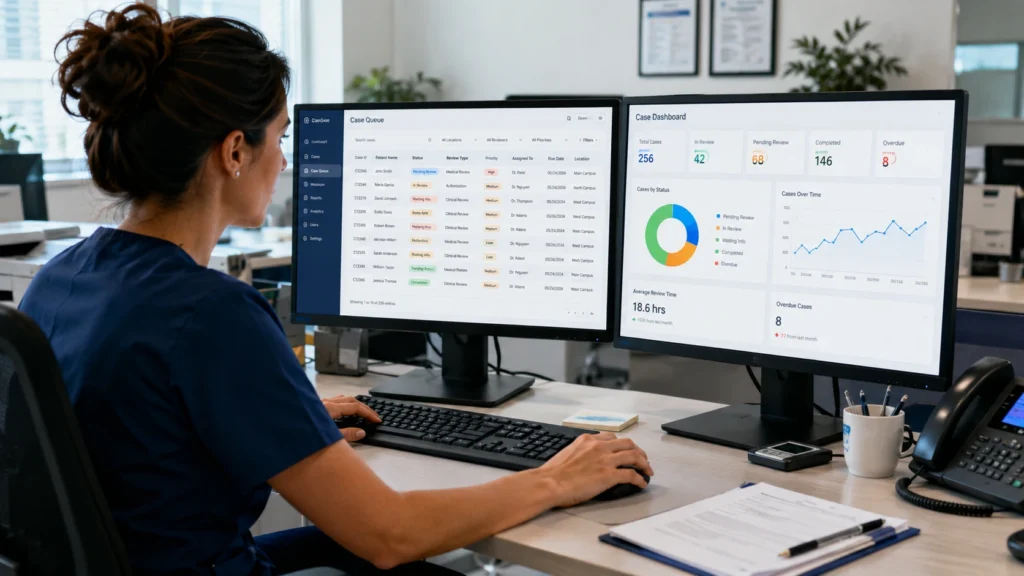
One of the quieter technological shifts has been the arrival of analytics dashboards that track review volume, turnaround time, and outcome patterns across a utilization management department. These dashboards were originally built to help administrators understand denial trends, but their most interesting effect has been on the support staff themselves. A utilization review nurse can now see, in a single glance, how many cases she cleared in a week compared to the department average, where bottlenecks tend to form, and which payer relationships require the most follow-up.
That visibility has changed how departments staff and train. Instead of assuming every case takes the same amount of time, supervisors can identify which chart types genuinely require more scrutiny and assign accordingly. The result is a workload that feels more predictable for the people doing the reviewing, even as the underlying cases remain as complex as ever. The Bureau of Labor Statistics tracks employment trends across healthcare support occupations, and the steady growth in roles like utilization review and clinical documentation reflects how central this behind-the-scenes work has become to hospital operations.
Training Support Staff on New Systems
New technology only helps if the people using it are trained well, and hospitals have gotten more deliberate about how they onboard support staff onto review platforms. Where training once meant a brief walkthrough during orientation, many departments now build ongoing refreshers into staff schedules, particularly as electronic health record systems update and integrate new features. This is unglamorous work, but it is where a lot of the daily improvement actually lives. A case manager who understands every shortcut in a queue system saves minutes on every case, and those minutes add up across a full shift.
Hospitals have also gotten better at soliciting feedback from the staff who use these systems every day rather than designing workflows from the top down. A denial coordinator who flags a recurring glitch in how documentation attaches to a case, or a utilization review nurse who suggests a clearer flagging system for urgent reviews, now has a more direct path to influencing how the software actually functions. That feedback loop has made the tools genuinely fit the work rather than forcing the work to fit the tools.
What the Change Looks Like in Practice
The cumulative effect of these changes is a support staff that spends less time chasing information and more time applying clinical judgment to the cases in front of them. A discharge planner can confirm placement without a dozen phone calls. A clinical documentation specialist can flag a gap the moment it appears rather than after a chart has already moved on. None of this replaces the expertise these roles require, and none of it diminishes the skill involved in catching a subtle documentation issue or anticipating a payer’s objection before it arrives. What has changed is the friction around that expertise, and friction, once removed, tends to stay gone.
The people who keep a hospital’s utilization management process running rarely make headlines, and their contributions are easy to overlook next to the more visible work of physicians and administrators. But the tools now available to them have made a demonstrable difference in how smoothly a hospital moves patients through care, closes cases, and defends decisions when questions arise later. That steady, mostly invisible improvement is exactly the kind of progress that deserves more attention than it usually gets.