
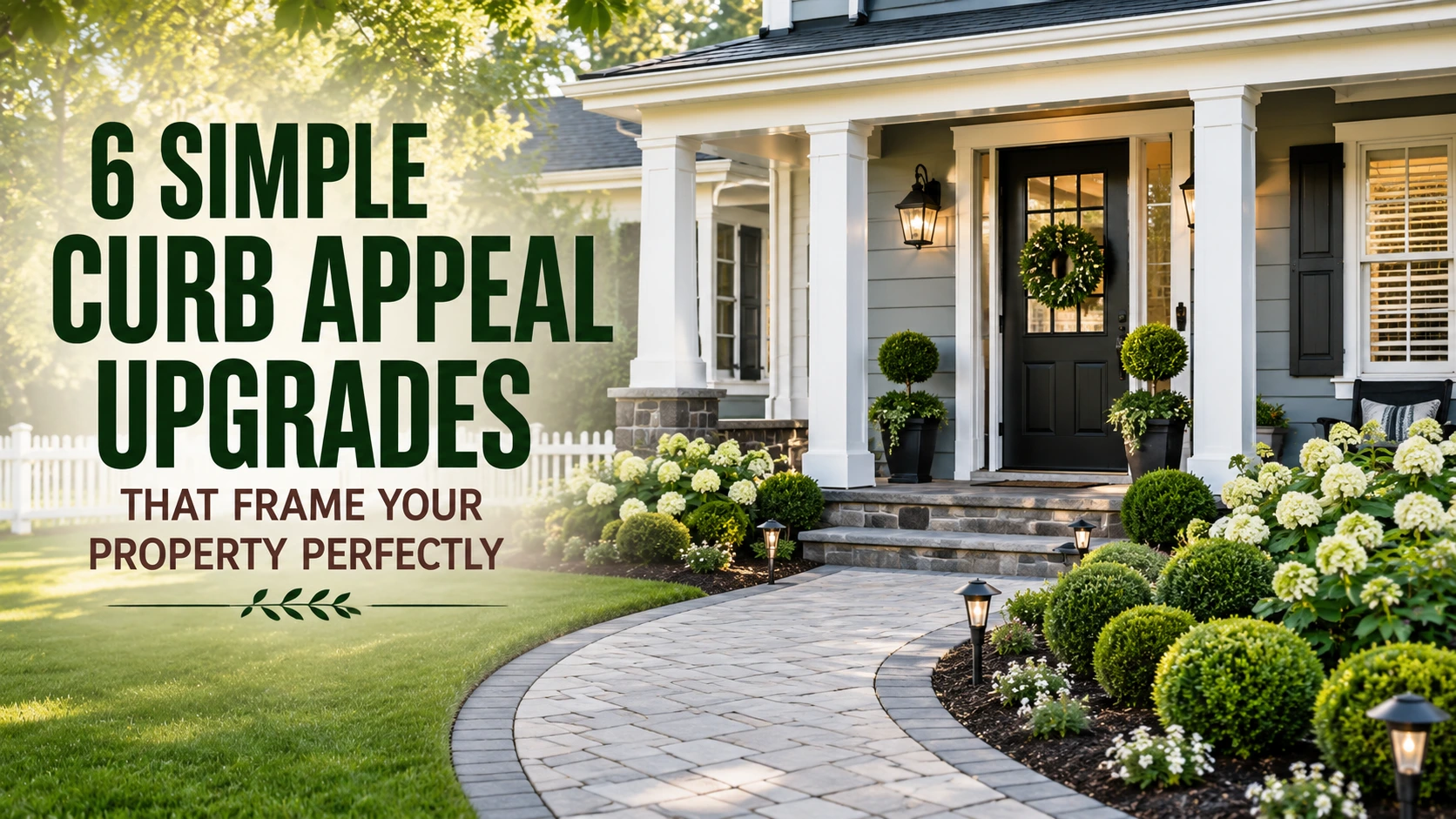
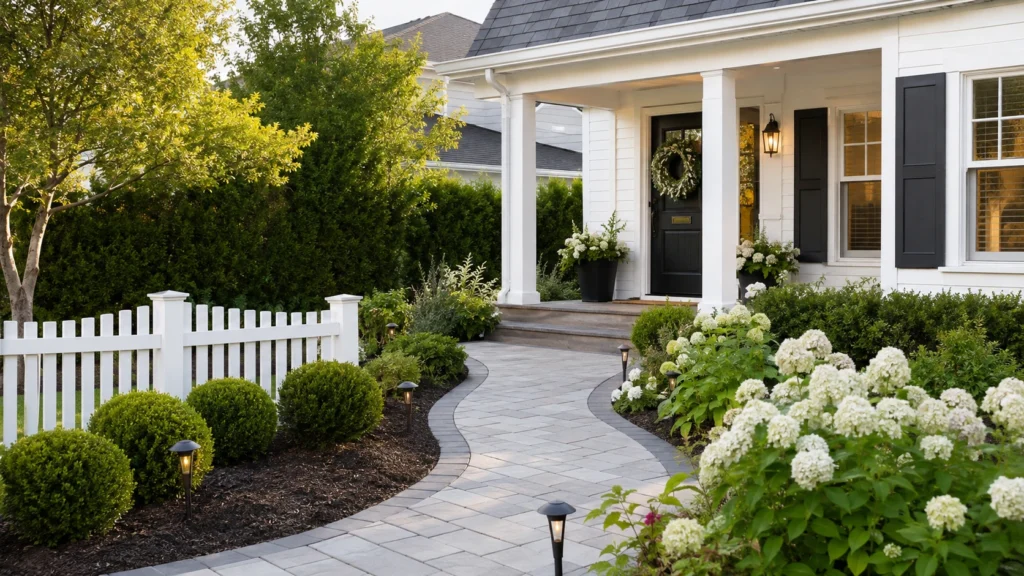
Imagine your property as a portrait. The house forms the focal point, while everything from the street to the front door acts as the mat and frame. If you perfect that frame, the entire image will appear intentional, well-proportioned, and will catch people’s attention.
Did you know that homes with high curb appeal can sell for about 7% more than similar ones lacking that (Zillow)? It’s a substantial percentage. Most of the improvements that make a difference are not costly – they are simply not acquired unintentionally.
1. Define The Boundary Without Walling It In
The most common error in front gardens is having no clear edge. The property just bleeds into the pavement. A low fence, a clipped hedge, or even a simple rail gives the eye a place to stop and says, firmly, “this is where the property begins.”
For front boundaries adjacent to a highway, permitted development rules cap fence height at 1 metre without planning permission. That’s not a limitation – it’s actually the right height for a front garden. Low enough to keep sightlines open to the house, tall enough to mark the line.
A Fencing company can handle the measurement, materials, and installation to make sure the structure sits plumb and within compliance, which is worth paying for when the boundary fence is the first thing anyone sees.
2. Replace Scattered Planting With Layered Beds
Scattered plants here and there will not be seen as a garden from the street. They will be seen as plants that haven’t died yet. The key to visible design and reduction of annual maintenance is both repetition and depth.
Choose two or three species of perennials that you already have and that you like. Buy enough of them to repeat them in groupings and drifts and flows across the bed, not just here and there. Then spread a 75mm-deep layer of your favorite mulch over the soil. The mulch cheaply unifies everything you did buy and plan and plant while tying the plants together in a continuous visual matrix. The mulch will continue to smother the weeds until fall.
Your beds will look finished and inviting all summer, with little work: you don’t need more plants or more work. You need less: you need to edit, mulch, and cover the ground.
3. Give Paths And Driveways A Proper Edge
A distinct edge on a path or driveway does for hardscaping what a picture frame does for a print: it separates the thing from its background and makes both look intentional.
Steel, brick, or natural stone edging along a path creates a visible line that draws the eye straight to the front door. Gravel driveways that have spread into the lawn look untidy and unfinished. Pull the boundary back, install an edge, and suddenly the same gravel looks considered.
This is one of the highest-ratio weekend jobs on the list: a few hours of work that changes the whole character of the front.
4. Build Symmetry Around The Entrance
Symmetry is what the brain reads as “designed.” It doesn’t have to be formal or grand – two matching planters either side of the door, a pair of clipped box balls flanking the gate, or simply a path centred on the entrance rather than off to one side. These are small calls that make a real difference.
If the front door is off-centre on the facade, you can use planting or paving to optically re-centre it. A wide path that leads to the door, flanked by low planting, creates a visual axis even if the architecture doesn’t give you one. The eye follows the path, not the brickwork.
5. Refresh The Entrance Details
The front door, house numbers, porch light, and door hardware are the things people get close to. Estate agents walk past them. Buyers stand at them while keys are found. These details carry a disproportionate amount of weight.
A freshly painted front door in a colour that coordinates with the fence stain and planting tones brings the whole scheme together. Replace tarnished house numbers. Swap a rusted porch light for something with a cleaner profile. None of this costs much, but the combined effect – a door that looks intentional, numbers that are easy to read, a light that works – tells anyone approaching that the property has been looked after.
6. Add Lighting For The Hours After Dark
Curb appeal doesn’t stop at sunset, especially in winter when viewings happen in the evening and buyers drive slowly past in the dark. Low-voltage path lights and uplights on a feature tree or shrub keep the property framed after dark and add a layer of perceived security.
The goal isn’t floodlights. It’s enough light to guide someone from the gate to the door, with a subtle uplight or two that shows the garden has depth. Solar path lights are easier to install than they were a few years ago and don’t require any cabling, which makes this one of the more accessible upgrades on the list.
None of these six things requires a full landscape redesign or a major budget. Taken together, they do something specific: they turn a house that people look past into one they look at. The boundary defines the frame, the planting fills it, the path directs attention, and the entrance delivers on the expectation the rest of the garden created. That sequence is worth thinking about before you start – because it’s the order that determines whether the upgrades feel like a coherent scheme or just a list of things you ticked off.