
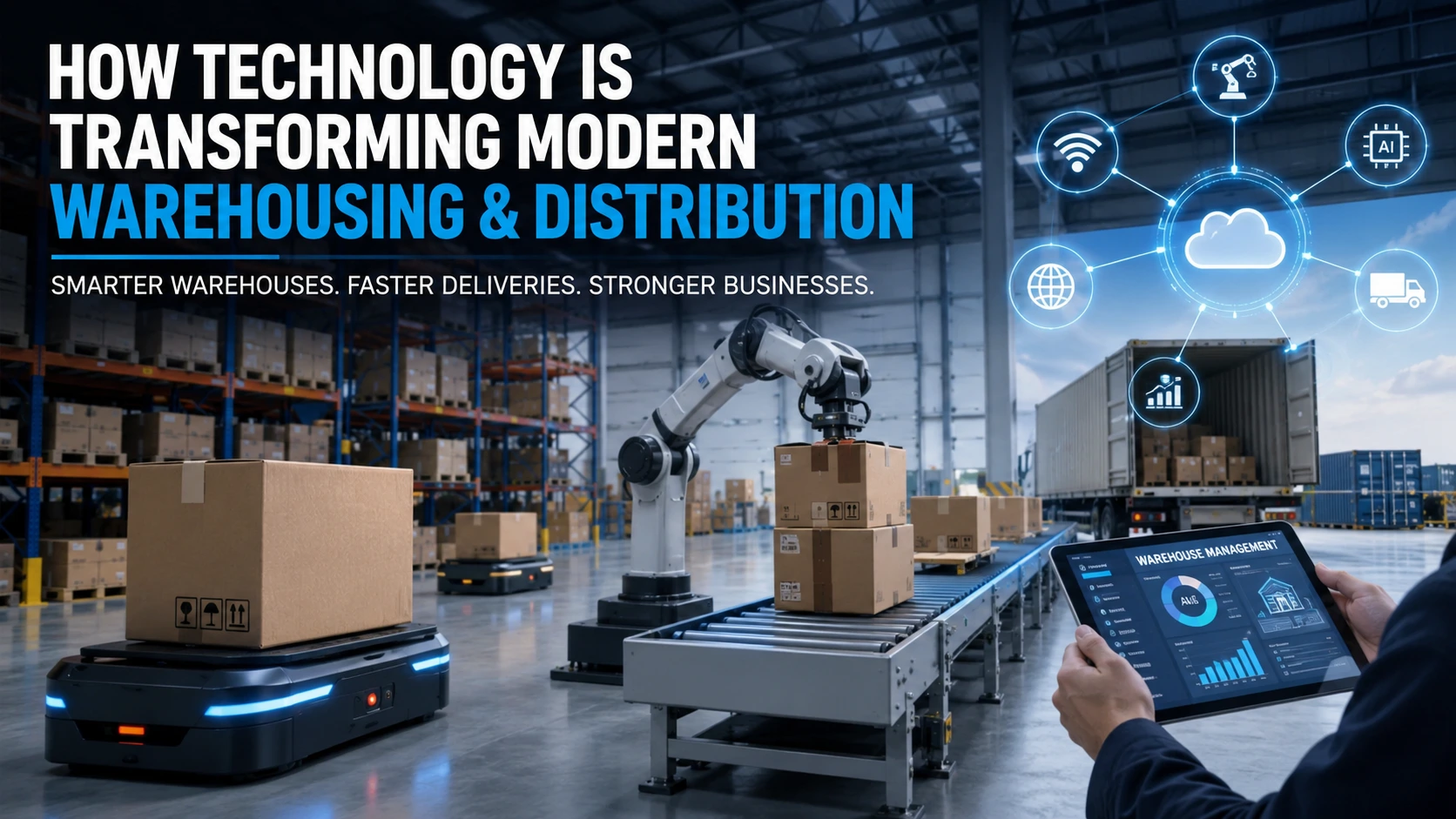
Warehousing has changed more in the past 5 years than in the previous 50.
Robots are fulfilling orders. AI is optimizing routing. And cloud platforms are processing customs documentation in minutes, not weeks.
Warehouse automation systems globally were valued at $29.98 billion in 2025. They are expected to reach $59.52 billion by 2030. This will be considerable growth. The main reason? Companies need to operate more quickly to meet customer expectations.
But it’s not just about the money. The way warehouses look, feel, and operate has completely changed. Manual labor is out. Smart systems are in. And the businesses adopting this tech early are already pulling ahead of the pack fast.
Here’s the thing:
Technology runs warehouse and distribution operations today. Whether it’s robots or real-time tracking or customs compliance freight software – the tools just keep getting better and smarter.
Time to break it all down.
What you’ll discover:
- Why Warehouse Technology Matters Today
- Warehouse Automation and Robotics
- Real-Time Data with IoT and AI
- Customs Compliance Freight Made Easy
Why Warehouse Technology Matters Today
Warehouses were designed for storage. They are now technological centers that must process products quickly and precisely.
Why the shift?
Customer expectations have evolved. Overnight (or same day) delivery is required. Online shopping has never been larger. Global shipping has forced every warehouse to manage complex customs compliant freight documentation to keep international orders flowing.
Digitally enabled warehouses working with the proper 3pl logistics services can automate customs documentation, provide shipment visibility, and clear international freight quicker than before. This is significant as trade enforcement has reached all time highs. In 2025, U.S. Customs collected over $200 billion in duties and tariffs.
Old-school warehouses just can’t keep up.
Here’s what today’s technology gives you:
- Faster order fulfillment
- Fewer errors
- Better inventory accuracy
- Lower operating costs
- Real-time shipment visibility
Cool right? Time to look at the biggest tech changes shaping warehousing today.
The Rise of Warehouse Automation
Warehouse automation is booming. Literally.
Per industry data, worldwide sales of logistics robots surpassed 450,000 units in 20 25 – yes up from 75,000 in 2019. That’s a 500% increase in six years.
But what is warehouse automation exactly?
Automation refers to completing a task through the use of machines, software, or robots rather than by human hands. Imagine:
- Robotic pickers moving products around the warehouse
- Automated storage and retrieval systems (AS/RS)
- Conveyor belts that sort packages by destination
- Software that plans routes and workflows
Why does this matter?
Warehouses are receiving record amounts of orders. Automation allows warehouses to process those orders faster and with less error. Automation also helps alleviate the huge labor shortage plaguing warehouses today.
Research indicates there is approximately a 76% talent gap within supply chain operations. Automation bridges that gap.
Real-Time Inventory Tracking with IoT
The Internet of Things (IoT) has changed inventory tracking forever.
Warehouses now track inventory with connected sensors, RFID tags and cloud software instead of spreadsheets and manual counts.
Here’s what that looks like in practice:
- Every product gets a digital “fingerprint”
- Sensors track where items are at all times
- Cloud software delivers instant reports
- Alerts trigger when stock runs low
The benefit?
Never run out of an item. Always know your inventory levels. And restock before you run out.
Pretty smart, right?
Warehouses without IoT technology are operating blindly. They are forced to depend on paper records or legacy software that does not know where things are. IoT enabled competitors can move products quickly and serve customers faster.
AI and Machine Learning in Distribution
Artificial intelligence is another game-changer for warehousing and distribution.
Here’s how AI is being used:
- Predicting demand for products
- Optimising warehouse layouts
- Planning delivery routes
- Spotting patterns in shipping data
- Automating customer service
For instance, instead of predicting how much stock you’ll need through guesswork, AI can analyze previous sales figures, seasonality, and weather forecasts to forecast future customer orders.
Better predictions = better stock levels = happier customers.
AI has also found significant applications in customs compliance freight processing. Machine learning models can identify products, assess duties, and highlight issues within seconds. This has massive implications for global logistics as previously, customs paperwork would take up hours (if not days) of a broker’s time.
Customs Compliance Freight and Digital Trade Tools
Speaking of customs…
Technology has transformed customs compliance freight processes beyond recognition. Just in time too.
International trade regulations continue to evolve every year. As tariffs are introduced and regulations shift, enforcement is only increasing. Staying compliant can be difficult without proper assistance. Enter automated customs platforms.
Here’s what modern customs software can do:
- Auto-classify products using HS codes
- Calculate duties and taxes in real time
- File paperwork electronically with customs authorities
- Flag compliance risks before shipment leaves the warehouse
- Keep audit-ready records
The global customs compliance automation platform market was worth $2.17 billion in 20 25 and is expected to grow to $5.56 billion by 20 34, according to recent market research. That’s a big indication that companies are investing money into these solutions.
Why does this matter for warehouses?
Delays at customs can bring your entire operation to a halt. If your goods are sitting at the border, your warehouse can’t distribute them. Digital solutions ensure freight clears customs as quickly and seamlessly as possible.
Cloud-Based Warehouse Management Systems
Cloud warehouse management systems allow warehouses to operate entirely from one central interface. Say goodbye to bulky premise programs or costly server updates annually.
Here’s what a modern cloud WMS can do:
- Manage inventory across multiple warehouse locations
- Sync with ecommerce platforms
- Track orders from receiving to shipping
- Integrate with carriers and third-party fulfillment partners
Cloud-based WMS platforms are quickly becoming the industry standard – and for good reason.
Why use the cloud? It’s cheaper to get started, scales easily, and can be accessed from anywhere with an internet connection.
Bringing It All Together
Technology is revolutionising warehouses and distribution centres. Robots. Artificial intelligence. Digital customs solutions. It’s transformational.
To recap:
- Warehouse automation is growing at record pace
- IoT is making real-time inventory tracking possible
- AI is improving demand forecasting and route planning
- Customs compliance freight tools are cutting paperwork time
- Cloud-based WMS platforms are the new standard
Companies who capitalize on these technologies today will be leaps and bounds ahead of their competitors. Those who don’t won’t.
The choice is simple: modernise or fall behind.