
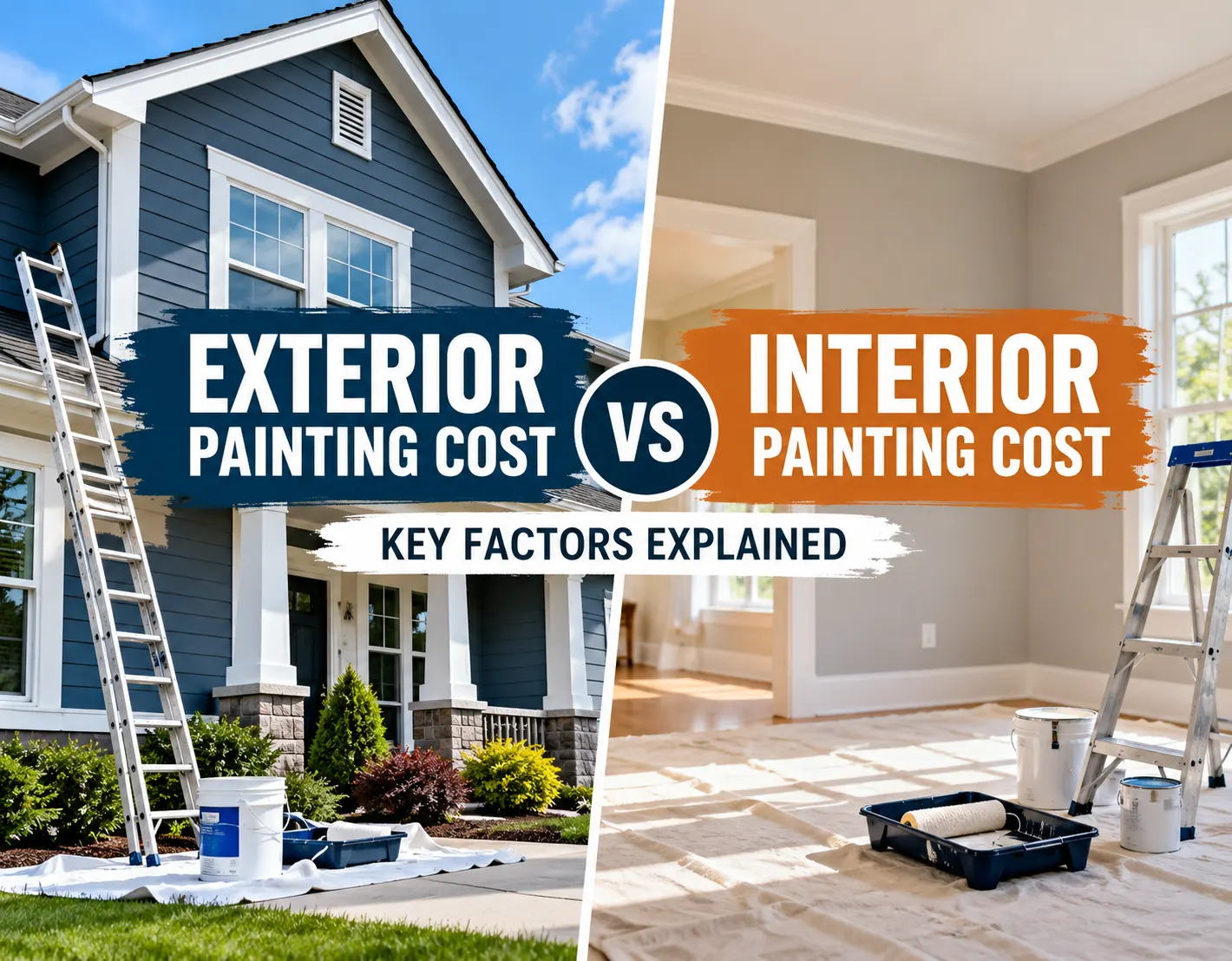
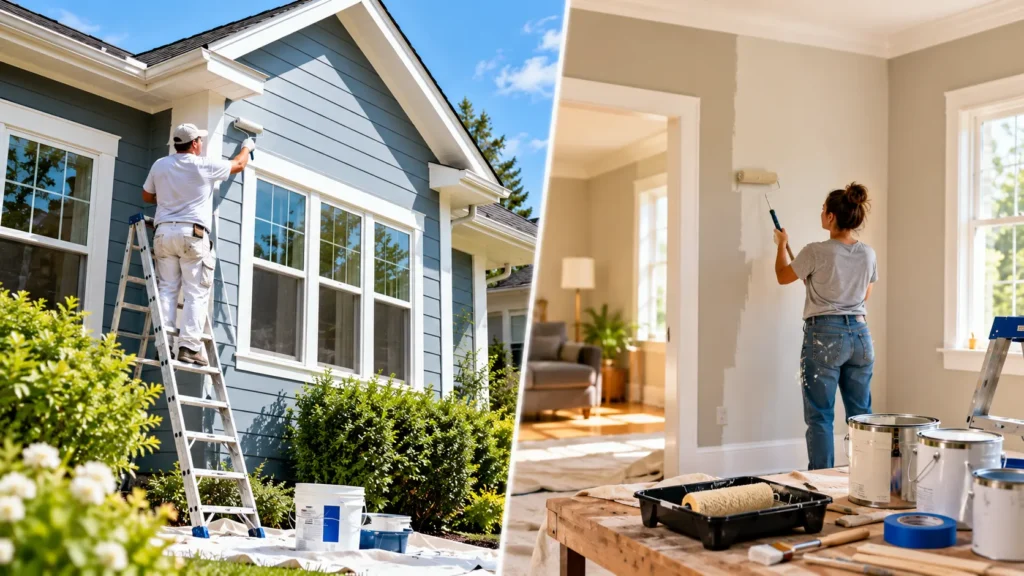
A fresh coat of paint can completely change the look and feel of a home. Whether you’re updating a living room, refreshing a bedroom, or giving your home’s exterior a much-needed facelift, painting is one of the most noticeable improvements you can make.
However, the exterior vs interior painting cost isn’t determined by the amount of paint you need alone. Several less obvious factors can influence the final price, including the type of paint, surface condition, preparation work, labor, project complexity, and even the time of year.
Understanding these factors before starting a project can help you create a realistic budget, compare quotes more effectively, and avoid unexpected expenses. Here’s what homeowners should know when comparing exterior and interior painting costs.
Types of Paint Can Affect the Overall Cost
One of the first differences between interior and exterior painting is the type of paint required. Although both are designed to provide an attractive finish, they are formulated for very different environments.
Exterior paint needs to withstand sunlight, rain, humidity, temperature changes, wind, and other outdoor conditions. Because of this, exterior formulas are generally designed with greater durability and weather resistance, which can make them more expensive than standard interior paints.
Interior paints, meanwhile, are typically designed with factors such as color, stain resistance, cleanability, and indoor air quality in mind. The best option depends on the surface and the room where the paint will be applied.
Paint prices can also vary based on quality and formulation. For example, the difference between water-based and oil-based paint can affect both material costs and application requirements.
Surface Preparation Can Increase Painting Costs
One of the biggest factors homeowners sometimes overlook is surface preparation. A painting contractor cannot simply apply a new coat of paint over every existing surface and expect a professional result.
Exterior surfaces often require more preparation because they are exposed to the elements. Depending on the condition of the property, preparation may involve power washing, scraping loose paint, repairing damaged areas, caulking gaps, sanding, and applying primer.
Small cracks, peeling paint, moisture damage, or deteriorated wood may not be obvious at first glance. Once the contractor begins preparing the surface, these problems can add both time and expense to the project.
Interior painting usually involves less intensive preparation, but it still matters. Walls may need to be cleaned, sanded, patched, or primed before the new paint is applied. Nail holes, dents, cracks, stains, and uneven surfaces can all become more noticeable if they aren’t properly addressed.
In other words, spending more on preparation isn’t necessarily a bad thing. Proper preparation can help the paint adhere better, look smoother, and last longer.
Labor Costs Differ Between Exterior and Interior Projects
Labor is another major component of the total exterior vs interior painting cost. The amount you pay for professional painting services can depend on the size of the job, local labor rates, the experience of the contractor, and the difficulty of the work.
Exterior projects can require additional equipment and safety measures, particularly when painters need to work on second stories, tall walls, roofs, or other difficult-to-reach areas. Ladders, scaffolding, lifts, and additional preparation can increase the number of labor hours required.
Interior painting may be easier to access, but labor costs can still rise when rooms contain detailed trim, high ceilings, built-in features, multiple colors, or furniture that needs to be moved and protected.
When hiring a professional painting company, don’t choose a contractor based solely on the lowest quote. Look at experience, preparation methods, materials, reviews, project timelines, and what is actually included in the estimate.
Project Size and Layout Matter
The size of the area being painted is one of the easiest factors to understand. A larger home or larger number of rooms generally requires more paint, preparation, equipment, and labor.
However, square footage isn’t the only consideration. The layout and design of the property can also influence the final price. A large open wall may be relatively straightforward to paint, while a smaller area with lots of corners, trim, windows, doors, and architectural details may take considerably longer.
Exterior surfaces can have similar challenges. Decorative trim, shutters, balconies, multiple stories, steep sections, and hard-to-access areas can increase the amount of work involved.
Special Finishes and Multiple Colors Add to the Budget
A standard single-color paint job is usually easier to estimate than a project involving several colors or decorative techniques.
Interior projects may include accent walls, murals, stenciling, textured finishes, faux finishes, or detailed trim work. Each additional design element can require more preparation, precision, and labor.
Exterior projects can also become more expensive when homeowners want multiple colors for siding, trim, doors, shutters, or other architectural features. Changing from a dark color to a much lighter color, or vice versa, may also require additional coats for proper coverage.
Seasonality Can Influence Exterior Painting Costs
Weather is an important consideration when estimating the cost of exterior painting. Temperature, rain, humidity, and other environmental conditions can affect how paint dries and how well it performs.
Because exterior painting generally requires suitable weather conditions, contractors may have busier schedules during periods when conditions are ideal. High demand can affect availability and, in some markets, pricing.
Interior painting is much less dependent on outdoor weather and can usually be completed throughout the year. However, demand can still increase around holidays, home sales, renovations, and other popular remodeling periods.
The Condition of the Existing Paint Makes a Difference
The condition of the existing surface can have a significant impact on painting costs. A wall or exterior surface that is already smooth, clean, and well-maintained requires less preparation than one with peeling paint, stains, cracks, holes, or other damage.
Exterior surfaces may have additional problems caused by prolonged exposure to moisture and sunlight. Wood siding, for example, may require repairs before it can be painted properly. If the underlying material is damaged, painting alone won’t solve the problem.
For interior surfaces, water stains, smoke damage, grease, mold, and heavily marked walls may require additional cleaning, sealing, or priming. These extra steps can increase the project’s total cost but may be necessary for a quality result.
Accessibility and Safety Requirements
How easily painters can reach the surfaces is another hidden factor in painting costs. Exterior walls that are several stories high or surrounded by landscaping may require specialized equipment and additional safety precautions.
Interior spaces can have accessibility challenges too. High ceilings, stairwells, narrow areas, and difficult-to-move furniture can make an otherwise simple painting project more time-consuming.
These considerations are easy to miss when looking at an initial estimate based only on square footage. A professional contractor should account for accessibility before providing a final quote.
Primer and the Number of Coats Can Change the Price
Another factor that can affect painting costs is the amount of product required to achieve the desired finish. Some surfaces may need primer before the paint is applied, while others may require multiple coats of paint for consistent coverage.
Primer can be particularly useful when covering stains, bare materials, patched areas, or dramatic color changes. Although it adds another step to the project, it can improve adhesion and help produce a more consistent finish.
Similarly, choosing a high-quality paint may reduce the number of coats needed in certain situations. Your contractor can recommend the appropriate combination of primer and paint based on the existing surface and desired result.
How to Get a More Accurate Painting Estimate
If you’re comparing exterior vs interior painting cost, getting several detailed estimates is one of the best ways to understand what you’re actually paying for.
Ask each contractor to explain whether the estimate includes surface preparation, primer, paint, labor, equipment, cleanup, repairs, and the number of coats. A quote that appears cheaper may not include services that another contractor has already included.
It’s also worth asking about the type and quality of paint being used. Comparing two estimates based only on the final price isn’t very useful if one contractor is using significantly different materials or providing a different level of preparation.
Exterior vs Interior Painting Cost: What Should You Expect?
There isn’t one universal price for exterior or interior painting because every property and project is different. Exterior painting can cost more when the job involves weather-resistant materials, extensive preparation, multiple stories, specialized equipment, or difficult access.
Interior painting can also become expensive when a project involves many rooms, detailed trim, high ceilings, significant wall repairs, multiple colors, or decorative finishes.
The most important point is to look beyond the basic cost of paint. Preparation, labor, accessibility, surface condition, project complexity, and timing can all influence the final price.
Frequently Asked Questions About Exterior vs Interior Painting Cost
Is exterior painting usually more expensive than interior painting?
Exterior painting can be more expensive because it often requires weather-resistant paint, extensive surface preparation, specialized equipment, and additional safety measures. However, the actual cost depends on the size, condition, accessibility, and complexity of the property.
What is the biggest factor affecting painting costs?
There isn’t a single factor that determines painting costs. Project size, labor, surface preparation, paint quality, the condition of the existing surface, accessibility, number of coats, and project complexity can all affect the final price.
Why does exterior paint cost more than some interior paint?
Exterior paint needs to perform in challenging outdoor conditions, including sunlight, rain, temperature fluctuations, and moisture. Its formulation is therefore designed for durability and weather resistance, which can increase the material cost.
Does surface preparation really affect the cost of painting?
Yes. Cleaning, sanding, scraping, repairing cracks, filling holes, caulking, and priming can add labor and material costs. However, proper preparation is important because it helps the new paint adhere properly and improves the finished appearance.
Can the time of year affect exterior painting prices?
It can. Exterior painting depends on suitable weather conditions, so contractors may be in higher demand during favorable painting seasons. Availability and local demand can influence scheduling and pricing.
How can I reduce the cost of a painting project?
Start by getting multiple detailed estimates and comparing what each quote includes. Keeping the existing color when practical, completing necessary repairs before painting, choosing a suitable finish, and planning the project during less busy periods may also help control costs.
Should I hire a professional painter for exterior and interior work?
Professional painters can be particularly valuable for large projects, difficult-to-access areas, extensive surface repairs, or jobs requiring specialized finishes. Before hiring a company, check its experience, reviews, scope of work, and what is included in the estimate.
Final Thoughts
Understanding the exterior vs interior painting cost involves looking at much more than the price of a gallon of paint. The condition of the surface, preparation requirements, labor, accessibility, paint quality, project size, number of coats, and seasonal demand can all influence your final budget.
Before starting your project, take time to compare detailed estimates and make sure you understand exactly what each contractor is offering. Choosing the right materials and an experienced painting professional can help you achieve a better finish while avoiding unexpected costs.
Did you find this article helpful? Then check out the rest of our site for more home improvement and practical homeowner tips.