
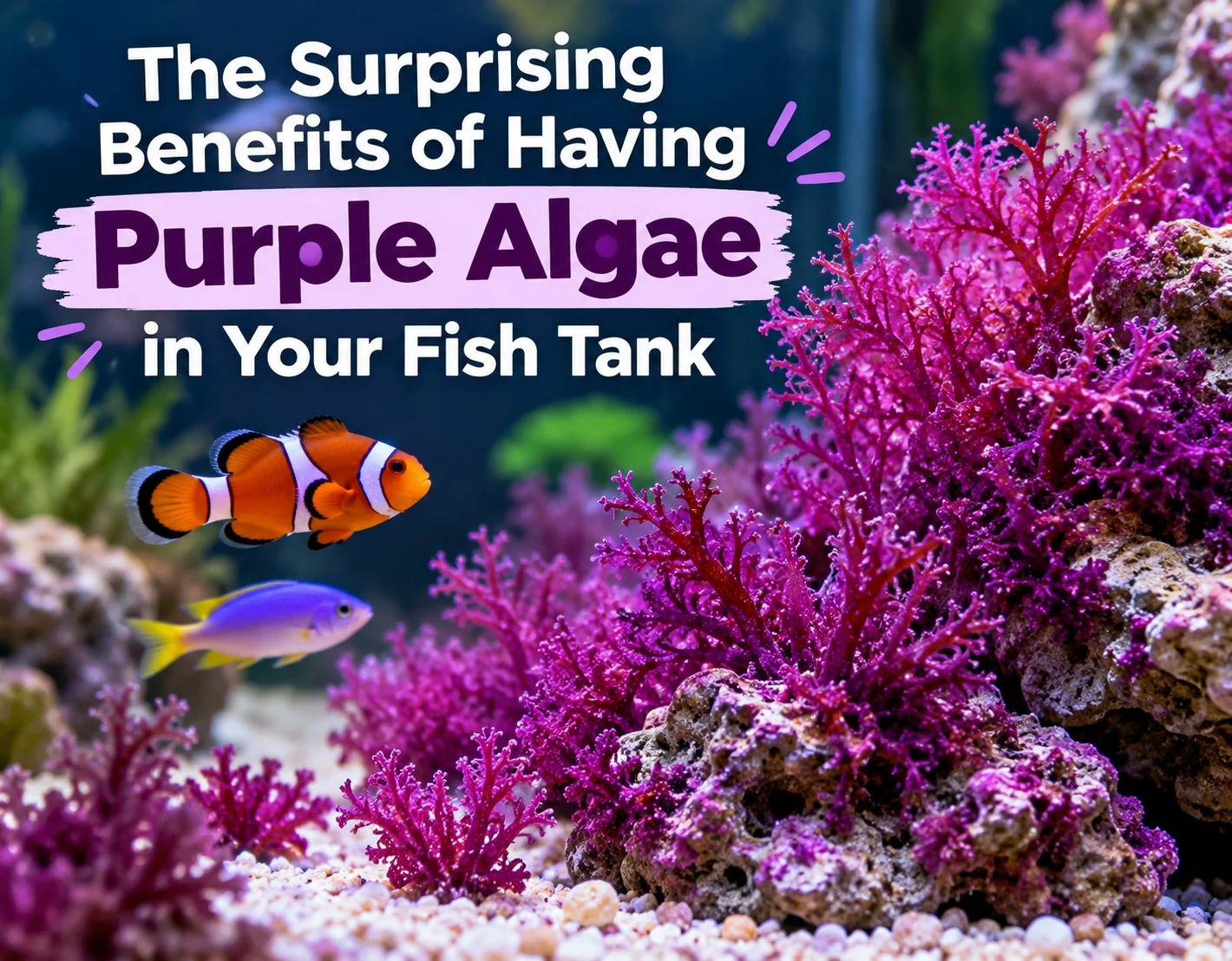
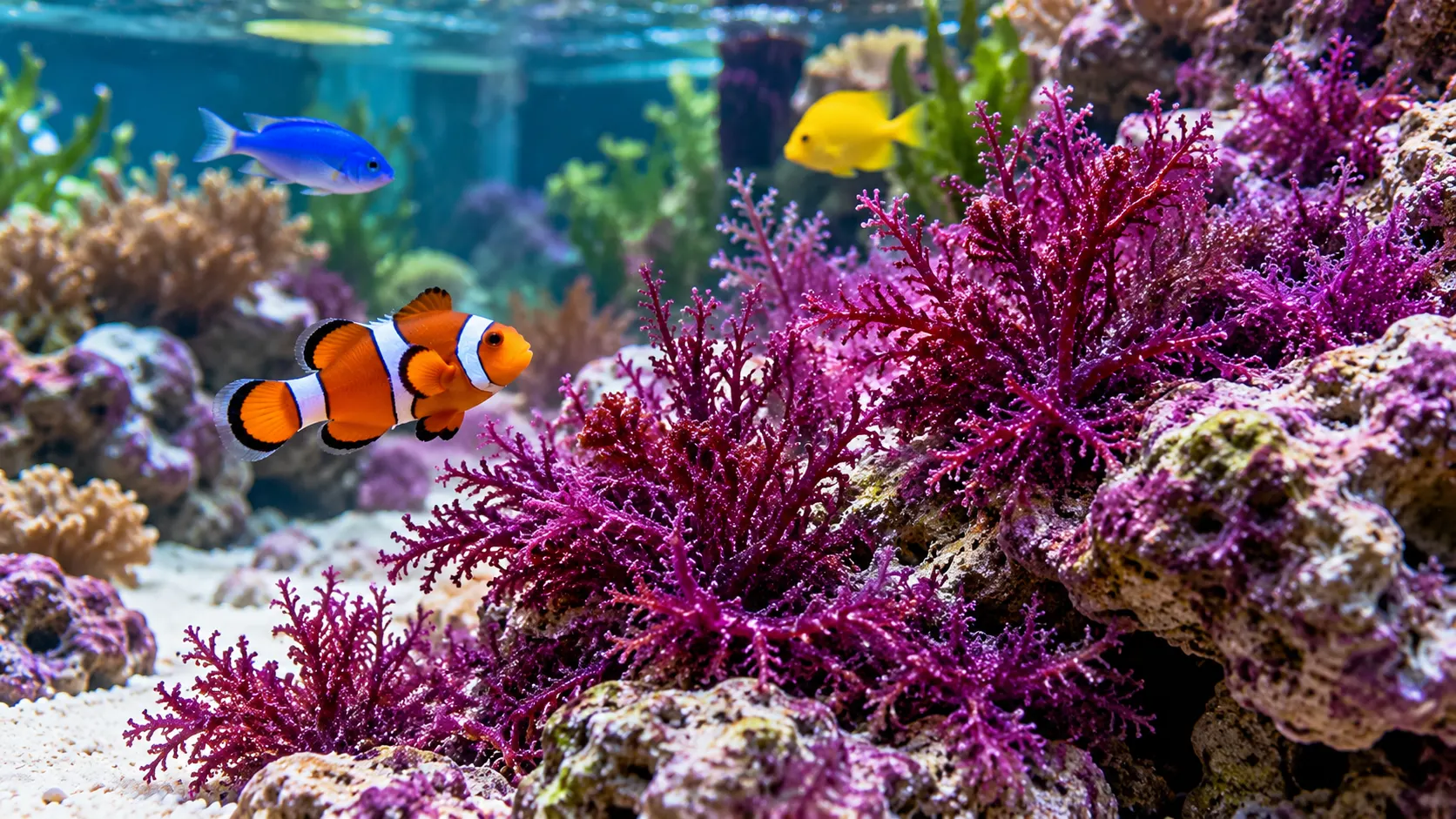
When most people think about aquarium algae, they probably imagine something they need to clean away. However, not every type of algae is necessarily a problem. Purple algae in a fish tank can add visual interest and, depending on the species and aquarium setup, may provide useful habitat and grazing opportunities for aquatic life.
From creating extra hiding places to giving algae-eating fish something natural to graze on, algae can play a role in a balanced aquarium ecosystem. The key is understanding what type of algae you have and keeping its growth under control.
Whether you’re setting up your first aquarium or have been keeping fish for years, understanding the potential benefits of purple algae can help you make better decisions about your tank’s appearance, habitat, and maintenance.
What Is Purple Algae in a Fish Tank?
The term “purple algae” is often used to describe algae or algae-like growths that have purple, reddish-purple, or violet tones. In marine aquariums, colorful algae can sometimes develop naturally on rocks and other surfaces. However, the exact organism matters because different types of algae behave differently and have different effects on an aquarium.
For that reason, aquarium owners should identify the growth before intentionally adding it to a tank. A healthy aquarium should always be managed around the needs of its fish, plants, invertebrates, water chemistry, lighting, and filtration system.
Purple Algae May Help Support a Natural Aquarium Environment
One potential benefit of algae in an aquarium is that it can become part of the tank’s natural ecosystem. Algae use nutrients and light to grow, and some types can contribute to nutrient cycling within an established aquarium.
However, algae should not be treated as a replacement for proper aquarium filtration or routine maintenance. Regular water changes, appropriate filtration, testing, and responsible feeding are still essential for maintaining good water quality.
Purple Algae Can Provide Shelter for Fish
Aquarium fish often benefit from having structures they can swim around, hide behind, or explore. Depending on how it grows, algae can add another layer of texture to rocks and other surfaces in the tank.
This extra cover can be particularly useful for smaller or more timid fish that naturally seek shelter. A tank with suitable hiding places can give fish opportunities to retreat when they feel threatened or simply need a quieter area.
In this way, one of the potential benefits of purple algae is that it can contribute to a more natural-looking habitat rather than leaving the aquarium completely bare.
Some Fish May Graze on Algae
Another interesting aspect of aquarium algae is that some fish and aquatic animals naturally graze on it. Algae-eating species may spend part of their day picking at algae growing on rocks, glass, decorations, or other surfaces.
You can learn more about algae-eating fish and their feeding habits through this resource on fish species that eat algae.
Keep in mind, though, that algae should not automatically be considered a complete food source. Most aquarium animals have specific nutritional requirements, so they should receive an appropriate diet in addition to any natural grazing they do in the tank.
Purple Algae Can Add Color and Character to an Aquarium
There is no denying that unusual colors can make an aquarium more visually interesting. Purple or violet-colored growth can create a striking contrast against rocks, sand, green plants, and colorful fish.
For aquarium keepers who enjoy a natural or reef-inspired appearance, carefully managed algae can add texture and character to the underwater environment.
The goal, however, should be balance. Too much algae can make an aquarium look untidy and may compete with desirable plants or organisms for light and nutrients. Regular observation and maintenance can help keep the appearance under control.
Where Can You Find Aquarium Algae?
If you’re interested in adding suitable algae or other aquarium organisms to your setup, it’s important to purchase them from a reputable aquarium supplier and confirm that the species is appropriate for your particular tank.
For aquarium products and algae-related supplies, you can explore Algae Barn. Before purchasing anything, check the care requirements and make sure the organism is compatible with your fish, water parameters, lighting, and overall aquarium setup.
Is Purple Algae Always Good for a Fish Tank?
No. The presence of algae is not automatically a sign of a healthy aquarium, and purple-colored growth should not be added simply because it looks attractive.
Some algae can spread quickly and become difficult to control. Excessive algae growth can also indicate an imbalance involving nutrients, lighting, maintenance, or feeding. That’s why aquarium owners should identify unfamiliar growth and monitor how quickly it is spreading.
A small, controlled amount of suitable algae may have a place in some aquariums, but uncontrolled growth can become a maintenance problem.
How to Keep Purple Algae Under Control
If purple algae appears naturally in your aquarium, don’t immediately assume that you need to remove every trace of it. Instead, observe its growth and consider what may be contributing to it.
- Monitor algae growth regularly.
- Avoid overfeeding your fish.
- Maintain an appropriate lighting schedule.
- Perform routine water changes.
- Test aquarium water when problems appear.
- Clean surfaces when algae becomes excessive.
- Make sure your filtration system is appropriate for the tank.
- Research unfamiliar algae before introducing it intentionally.
Frequently Asked Questions About Purple Algae in Fish Tanks
Is purple algae good for a fish tank?
It can have a place in some aquarium environments, particularly when it is a suitable species and remains under control. Algae can provide texture, habitat, and grazing opportunities for certain aquatic animals. However, excessive or unidentified algae should be investigated rather than automatically considered beneficial.
Do fish eat purple algae?
Some algae-eating fish and aquatic animals may graze on algae, but whether they will eat a particular purple-colored algae depends on the species. Always research the dietary requirements of your fish rather than assuming that they will eat every type of algae.
Can purple algae improve aquarium water quality?
Some algae absorb nutrients from aquarium water as they grow, so they can participate in nutrient cycling. However, algae should not replace filtration, water changes, or other aquarium maintenance practices.
Can purple algae give fish a place to hide?
Depending on its growth pattern, algae can add cover and structure that some fish may use for shelter or exploration. Fish should still have appropriately sized caves, plants, rocks, or other safe hiding areas suited to their species.
Why is purple algae growing in my aquarium?
The cause depends on the type of organism involved. Factors such as lighting, available nutrients, water conditions, and aquarium maintenance can influence algae growth. If you are unsure what the growth is, identifying it before treating or removing it is a good first step.
Should I remove purple algae from my fish tank?
Not necessarily. If the growth is limited and does not interfere with your fish, plants, equipment, or aquarium appearance, you may choose to manage it rather than remove it completely. If it spreads rapidly or causes problems, investigate the underlying cause and take appropriate steps to control it.
The Potential Benefits of Purple Algae in Your Aquarium
When properly identified and managed, purple algae can add an interesting element to an aquarium. It may contribute to the tank’s natural appearance, provide additional surfaces for grazing, and create extra texture and cover for aquatic life.
At the same time, successful aquarium keeping is about balance. Algae should complement your aquarium rather than take over it. Good filtration, suitable lighting, proper feeding, regular water changes, and appropriate stocking remain much more important to the overall health of your fish.
So, if you notice purple algae in your fish tank, take a closer look before reaching for the scraper. Identifying the growth and understanding why it is there can help you decide whether it belongs in your aquarium ecosystem or needs to be managed.
Did you find this article helpful? Check out our website for more useful aquarium, pet, and animal-related content.