
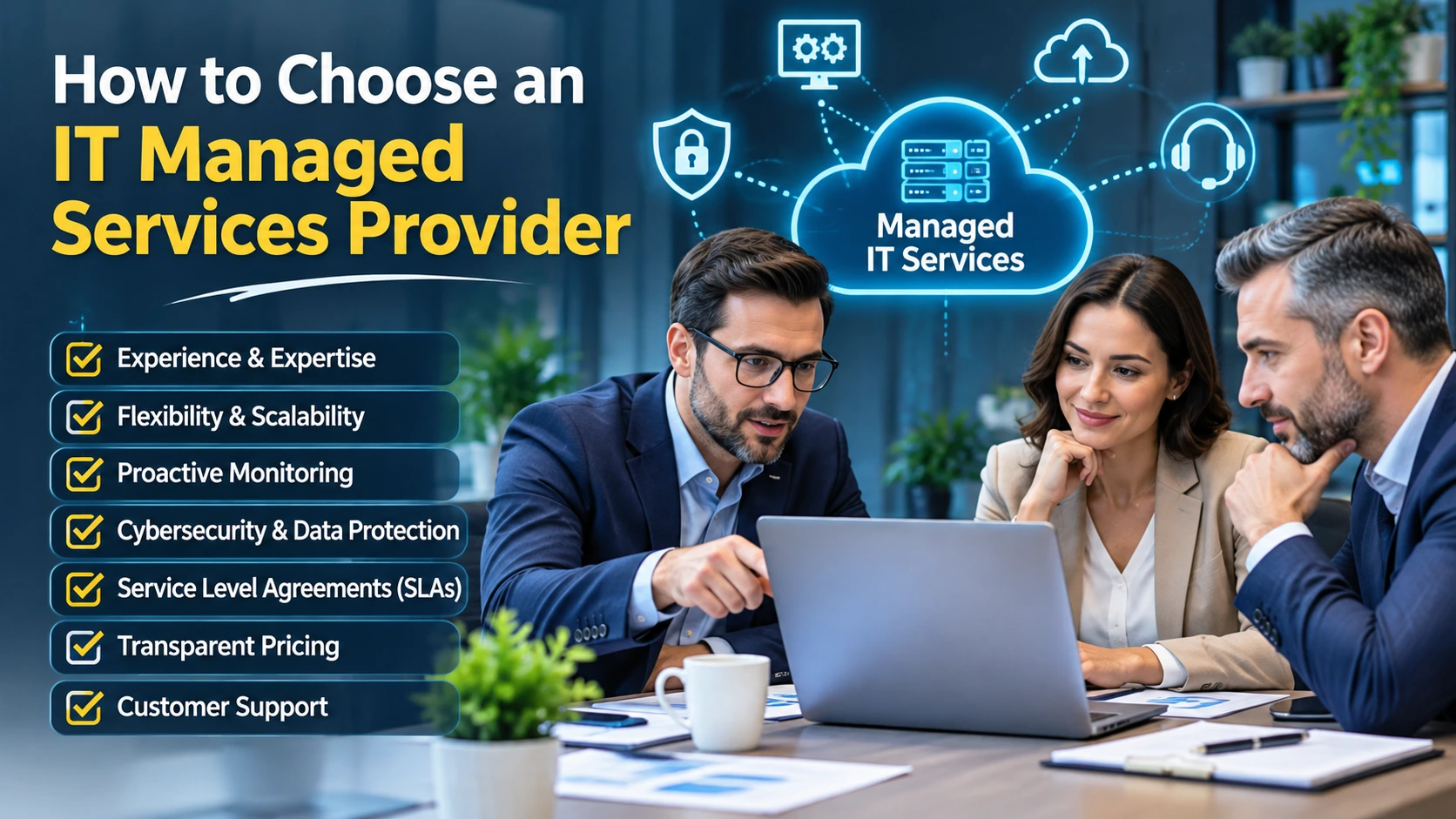

Choosing an IT managed services provider is an important decision for any business that depends on technology to manage daily operations, protect sensitive information, and maintain productivity. From network monitoring and cybersecurity to cloud infrastructure and technical support, the right managed services provider can help businesses maintain reliable IT systems while controlling operational costs.
As technology continues to evolve, maintaining an efficient IT environment has become increasingly challenging. Businesses must deal with cybersecurity threats, software updates, hardware maintenance, data protection, and changing technology requirements. Managing all these responsibilities internally can require significant financial investment and specialized expertise.
Traditionally, businesses have relied on an in-house IT team to handle these responsibilities. However, another increasingly popular option is partnering with a managed services provider (MSP). An MSP is an external company that takes responsibility for managing, monitoring, maintaining, and supporting some or all of a business’s IT infrastructure.
Working with an MSP can provide access to experienced IT professionals, advanced technology, proactive support, and predictable service costs. However, not every provider offers the same level of expertise, security, or customer support. Choosing the wrong partner could lead to unnecessary expenses, service interruptions, and security risks.
Before signing a contract, it is important to evaluate several factors to determine whether a provider can meet your current requirements and support your future business goals. Here are seven important things to consider when choosing an IT managed services provider.
1. Industry Experience and Technical Expertise
One of the first things to consider when selecting an IT managed services provider is its experience working with businesses similar to yours. Although technical knowledge is essential, understanding your industry’s specific challenges can make a significant difference in the quality of IT support you receive.
Different industries have different technology requirements, compliance obligations, operational processes, and security concerns. For example, a healthcare organization may require specialized data protection and regulatory compliance, while a retail business may depend heavily on payment systems, inventory software, and uninterrupted network connectivity.
An experienced MSP should understand these requirements and recommend appropriate solutions. Industry knowledge also helps providers identify potential technical problems before they disrupt business operations.
When evaluating a provider, consider asking the following questions:
- How many years of experience do you have providing managed IT services?
- Have you worked with businesses in our industry?
- What technical certifications and qualifications does your team hold?
- Can you provide relevant client references or case studies?
- What technologies and business systems do you specialize in?
Reviewing the provider’s qualifications, technical capabilities, and previous projects can help you determine whether its team has the expertise needed to support your organization.
2. Flexibility and Scalability
Every business has different IT requirements, and those requirements can change as the organization grows. Therefore, choosing a managed services provider that offers flexible and scalable solutions is essential.
A suitable MSP should be able to recommend technology solutions based on your existing infrastructure, operational needs, and available budget. It should also allow you to expand or adjust services when your business hires additional employees, opens new locations, or adopts new technologies.
For example, a small business may initially need basic IT support, network monitoring, and data backups. As the organization expands, it may require cloud migration, advanced cybersecurity, remote workforce support, and more comprehensive infrastructure management.
You should also consider how much control you have over the services provided. Some businesses need a fully outsourced IT department, while others only require specialized technical assistance to support an existing in-house team.
Before choosing a provider, check whether it offers:
- Customizable managed IT service packages.
- Scalable infrastructure and cloud solutions.
- Flexible support arrangements for in-house IT teams.
- Remote and on-site technical assistance.
- Support that matches your business operating hours.
If your organization operates around the clock, make sure the MSP can provide appropriate 24/7 monitoring and emergency support. A provider that cannot accommodate your operating schedule may leave your business exposed to unnecessary downtime.
3. Proactive IT Management and Monitoring
A reliable IT managed services provider should focus on preventing technical problems rather than simply responding after something goes wrong. This approach, known as proactive IT management, helps businesses maintain system reliability and reduce unexpected disruptions.
Traditional IT support often follows a reactive model. Employees report technical problems, and the IT team investigates and fixes them. Although this approach can resolve immediate issues, it does not always prevent recurring problems or identify potential system failures in advance.
Proactive managed IT services use continuous monitoring, automated alerts, regular maintenance, and system performance analysis to identify potential issues before they become serious problems.
For example, an MSP may monitor server performance, network activity, storage capacity, security alerts, and hardware health. If unusual activity or a potential failure is detected, the technical team can investigate and take corrective action before business operations are affected.
Ask potential providers whether they offer the following services:
- Continuous network and server monitoring.
- Automated system alerts and incident detection.
- Regular software updates and security patch management.
- Preventive hardware and infrastructure maintenance.
- Performance optimization and capacity planning.
- Routine IT health checks and reporting.
A proactive management strategy can help minimize downtime, improve productivity, and reduce the likelihood of expensive emergency repairs.
4. Cybersecurity and Data Protection
Cybersecurity should be one of your highest priorities when choosing an IT managed services provider. Businesses increasingly depend on digital systems to store customer information, financial records, employee data, and confidential business documents. A security incident can expose this information and seriously disrupt operations.
Your MSP should have a clearly defined cybersecurity strategy that protects your systems against malware, ransomware, phishing attacks, unauthorized access, and other digital threats.
It is also important to understand how the provider handles data backups, disaster recovery, access permissions, and security incidents. Having a backup system alone is not enough. Your provider should regularly test recovery procedures to confirm that critical business information can be restored when needed.
When assessing an MSP’s cybersecurity capabilities, look for services such as:
- Endpoint protection and threat detection.
- Firewall configuration and network security monitoring.
- Multi-factor authentication and access management.
- Regular security updates and vulnerability assessments.
- Encrypted data backups and disaster recovery planning.
- Security awareness training and phishing prevention.
- Incident response procedures and security reporting.
Ask the provider how it responds to security incidents, how quickly it investigates suspicious activity, and what responsibilities it accepts under the service agreement. You should also understand whether its security practices align with the regulatory requirements relevant to your industry.
For additional insights into modern business network protection, explore our article on how Secure Access Service Edge is simplifying network security for modern businesses.
5. Clear Service Level Agreements (SLAs)
A service-level agreement (SLA) is an important document that defines the services an MSP will provide, its responsibilities, and the performance standards it agrees to maintain. Before entering into a managed IT services contract, carefully review the SLA to understand exactly what you are paying for.
A professional SLA should explain how the provider measures service quality, handles technical problems, maintains network availability, and responds to support requests. It should also establish clear expectations for communication and incident resolution.
Some important SLA elements to review include:
- Response times: How quickly will the provider acknowledge support requests?
- Resolution targets: What are the expected timeframes for resolving different types of problems?
- System availability: What uptime commitment does the provider offer?
- Support availability: Is assistance available during business hours, after hours, or 24/7?
- Incident escalation: How are critical technical issues prioritized and escalated?
- Performance reporting: How frequently will the provider report on service performance?
- Contractual remedies: What happens if the provider repeatedly fails to meet agreed service standards?
Avoid agreements that use vague descriptions or unrealistic performance promises. Every important commitment should be measurable, clearly documented, and supported by appropriate contractual terms.
Understanding the SLA before signing can help prevent misunderstandings and establish accountability between your business and the managed services provider.
6. Transparent Pricing and Service Costs
Pricing is another important factor when comparing IT managed services providers. Different MSPs use different pricing structures depending on the services offered, the size of your organization, the complexity of your IT infrastructure, and the level of support required.
Common managed IT service pricing models include:
- Per-user pricing: A monthly fee based on the number of employees receiving IT support.
- Per-device pricing: Charges based on the number of computers, servers, or other managed devices.
- Tiered pricing: Different service packages with varying levels of support and features.
- All-inclusive pricing: A fixed monthly payment covering a defined range of managed IT services.
- Customized pricing: A tailored agreement based on your organization’s specific requirements.
There is no single pricing model that works for every business. The best option depends on your infrastructure, support requirements, expected service levels, and available budget.
Rather than choosing a provider based entirely on the lowest quotation, compare the actual services included in each package. A cheaper contract may exclude important services such as cybersecurity monitoring, backup management, software licensing, or after-hours support.
Ask potential providers to explain additional charges, contract renewal terms, equipment costs, project fees, and any expenses that may not be included in the monthly payment.
Transparent pricing makes it easier to plan your IT budget and evaluate the long-term value of the services. Your goal should be to find a provider that delivers dependable support and measurable business value rather than simply the lowest price.
7. Customer Support and Communication
Even with proactive monitoring and preventive maintenance, technical problems can still occur. When they do, you need an MSP that responds quickly, communicates clearly, and takes responsibility for resolving the issue.
Good customer support involves more than answering phone calls or responding to emails. Your provider should have an organized support process that makes it easy to report issues, track service requests, and receive updates until problems are resolved.
Before signing a contract, find out how the provider handles support requests and whether you will have access to a dedicated account manager or technical support team.
Consider checking the following:
- Availability of phone, email, and helpdesk support.
- Access to a dedicated technical support team.
- Clear communication during service interruptions.
- Regular service reviews and performance updates.
- Documented complaint handling and escalation procedures.
- Customer references and independently published reviews.
You can also arrange an introductory meeting to evaluate how the provider communicates and understands your business requirements. A company that listens carefully and explains technical solutions clearly is more likely to become a reliable long-term IT partner.
Questions to Ask Before Hiring an IT Managed Services Provider
Once you have shortlisted potential providers, asking the right questions can help you compare their capabilities and identify potential problems before entering into a contract.
- What managed IT services are included in your standard package?
- Do you provide 24/7 monitoring and emergency technical support?
- How do you protect client systems and confidential business information?
- What backup and disaster recovery solutions do you provide?
- How do you measure and report your service performance?
- Can your services scale as our business grows?
- Are there additional charges outside the agreed monthly fee?
- What happens if we decide to change providers?
- Who owns our business data, configurations, and documentation?
The answers will help you understand how each provider operates and whether its services align with your business objectives.
Final Thoughts
Choosing an IT managed services provider is a strategic business decision that can influence your organization’s security, productivity, technology costs, and long-term growth. The right MSP should offer more than basic technical support. It should act as a dependable technology partner that understands your business and helps maintain a secure, reliable, and efficient IT environment.
Before making your decision, compare providers based on industry experience, technical expertise, flexibility, proactive monitoring, cybersecurity, service-level agreements, pricing transparency, and customer support. Take time to review contracts, verify references, and understand exactly what each provider will deliver.
Ultimately, selecting a managed services provider that matches your business requirements can help reduce IT risks, minimize downtime, control technology expenses, and allow your team to focus on its core business activities.
Frequently Asked Questions (FAQs)
What is an IT managed services provider?
An IT managed services provider (MSP) is a third-party company that manages and supports business technology systems. Its services may include network monitoring, cybersecurity, cloud management, data backups, software maintenance, and technical support.
Why should a business hire a managed services provider?
Businesses hire MSPs to access specialized IT expertise, improve cybersecurity, reduce system downtime, and manage technology expenses. Outsourcing IT management can also allow employees to concentrate on essential business activities.
What services should a good IT managed services provider offer?
A reliable MSP should offer services such as proactive network monitoring, technical support, cybersecurity, data backup, disaster recovery, software updates, infrastructure management, and IT performance reporting. The exact services should match your business requirements.
How much does an IT managed services provider cost?
The cost depends on the number of users and devices, the complexity of your IT infrastructure, the services included, and the required support level. Common pricing structures include per-user, per-device, tiered, and customized monthly service plans.
What is an SLA in managed IT services?
A service-level agreement (SLA) is a contract that defines the services an MSP must provide and the performance standards it must meet. It typically covers response times, resolution targets, system availability, support hours, and incident escalation procedures.
How do I know if my business needs an MSP?
Your business may benefit from an MSP if you lack in-house IT expertise, experience frequent technical problems, need stronger cybersecurity, require continuous system monitoring, or want predictable IT support costs. An MSP can also supplement an existing IT department with specialized technical skills.