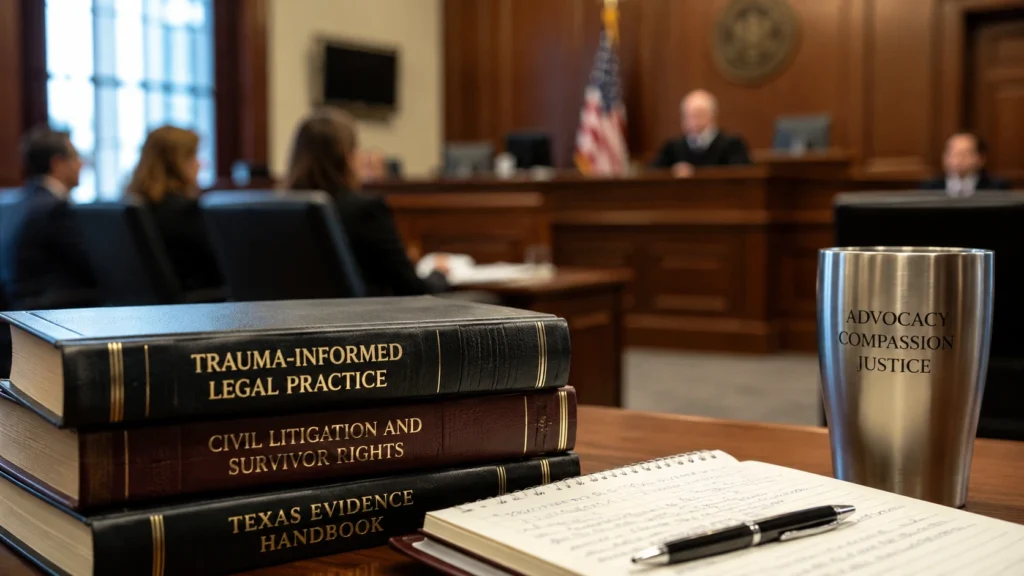
A decade ago, the standards governing how attorneys handled cases involving sexual violence looked very different than they do today. Continuing legal education on trauma was optional rather than expected, victim interview protocols varied widely from firm to firm, and courtroom procedures for survivors of sexual violence often mirrored the same rigid formats used in unrelated civil disputes. That has changed. Houston’s civil litigation community, like much of the legal profession nationally, has spent the last ten years building a more consistent and demanding set of standards for how these cases are prepared, argued, and resolved.
The Push Toward Specialized Standards
Civil litigation involving sexual assault survivors requires a distinct skill set that general personal injury practice does not automatically provide. Attorneys need to understand trauma responses, memory fragmentation, delayed disclosure patterns, and the ways survivors interact with institutions that may have failed to protect them. Ten years ago, few formal frameworks existed to teach these skills systematically. Today, bar associations and legal education providers across Texas have built out continuing education tracks specifically addressing trauma-informed practice, and Houston firms handling these cases have increasingly adopted internal training requirements that go well beyond what state licensing mandates on its own. The result is a profession that has effectively created its own internal certification culture, even where no single governing body issues a formal credential.
New Certification Programs Setting the Bar
Several national organizations now offer credentialing programs focused on trauma-informed advocacy, victim interviewing techniques, and institutional liability analysis in abuse cases. These programs did not exist in their current form ten years ago. Attorneys who complete them learn how to structure client interviews so survivors are not re-traumatized by the discovery process, how to build evidentiary timelines around delayed reporting, and how to identify the negligence patterns that make institutions such as schools, churches, and businesses legally responsible alongside an individual perpetrator. Houston firms that have invested in this training are increasingly transparent about it, listing certifications and specialized training on their websites and in client intake materials. The shift reflects a broader recognition that civil litigation in this area is its own discipline, not a subset of general injury law.
The change is also visible in how survivors search for representation. Ten years ago, someone in crisis might have called the first personal injury number they found. Today, a person searching for a sexual assault lawyer is far more likely to find firms that explicitly describe their trauma-informed training, their experience with institutional liability claims, and their approach to protecting a client’s privacy throughout litigation. That visibility did not exist at the same scale a decade ago, and it reflects a genuine change in how the profession presents its qualifications to the public.
How Courtroom and Discovery Procedures Have Adapted
Beyond training, the procedural landscape itself has evolved. Texas courts have adjusted how sensitive testimony is handled, expanded protective measures around depositions, and given judges more tools to limit the kind of aggressive cross-examination that once discouraged survivors from pursuing civil claims at all. Attorneys who practice in this space now routinely request protective orders, sealed filings, and structured deposition schedules designed to reduce unnecessary exposure for their clients. None of this happened overnight. It reflects years of incremental rule changes and judicial guidance shaped by attorneys, advocacy groups, and researchers who study the effects of litigation on trauma survivors. The Centers for Disease Control and Prevention tracks the broader public health dimensions of sexual violence, and its data has informed how policymakers and legal reform advocates understand the scale of the issue, which in turn has supported the case for procedural reforms inside courtrooms.
Documentation and Evidence Standards Have Grown More Rigorous
Ten years ago, civil cases involving sexual assault often relied heavily on testimony alone, with limited institutional documentation to support claims of negligence. Today, attorneys are far more sophisticated about building a documentary record. They request incident reports, prior complaint histories, security logs, employment records, and internal communications that can establish a pattern of institutional knowledge or negligence. This evidentiary rigor did not exist at the same level a decade ago, partly because fewer institutions kept the kind of records now considered standard, and partly because attorneys had not yet developed the investigative frameworks to request and interpret them effectively. The growth of this documentation standard has made civil claims considerably stronger and has pushed institutions across Houston to improve their own internal recordkeeping as a matter of practice.
What the Next Decade Is Likely to Bring
The trajectory over the last ten years suggests continued refinement rather than a plateau. Legal education providers continue to expand trauma-informed curricula, courts continue to adjust procedural protections, and firms continue to formalize internal training requirements that once existed only informally, if at all. Survivors considering civil action today benefit from a legal infrastructure that is measurably more developed than it was a decade ago, with clearer expectations for how attorneys should prepare cases and support clients throughout the process. That progress has not been dramatic or sudden. It has been steady, procedural, and built case by case, which is precisely the kind of change that tends to last.
Houston’s legal community has spent the last decade quietly raising its own bar, building certification pathways, procedural safeguards, and evidentiary standards that did not exist in their current form ten years ago. The result is a civil litigation practice better equipped than ever to handle these cases with the seriousness and precision they require, and a profession that continues to refine what quality representation actually looks like for the people who need it most.
For more information visit this E find anything