
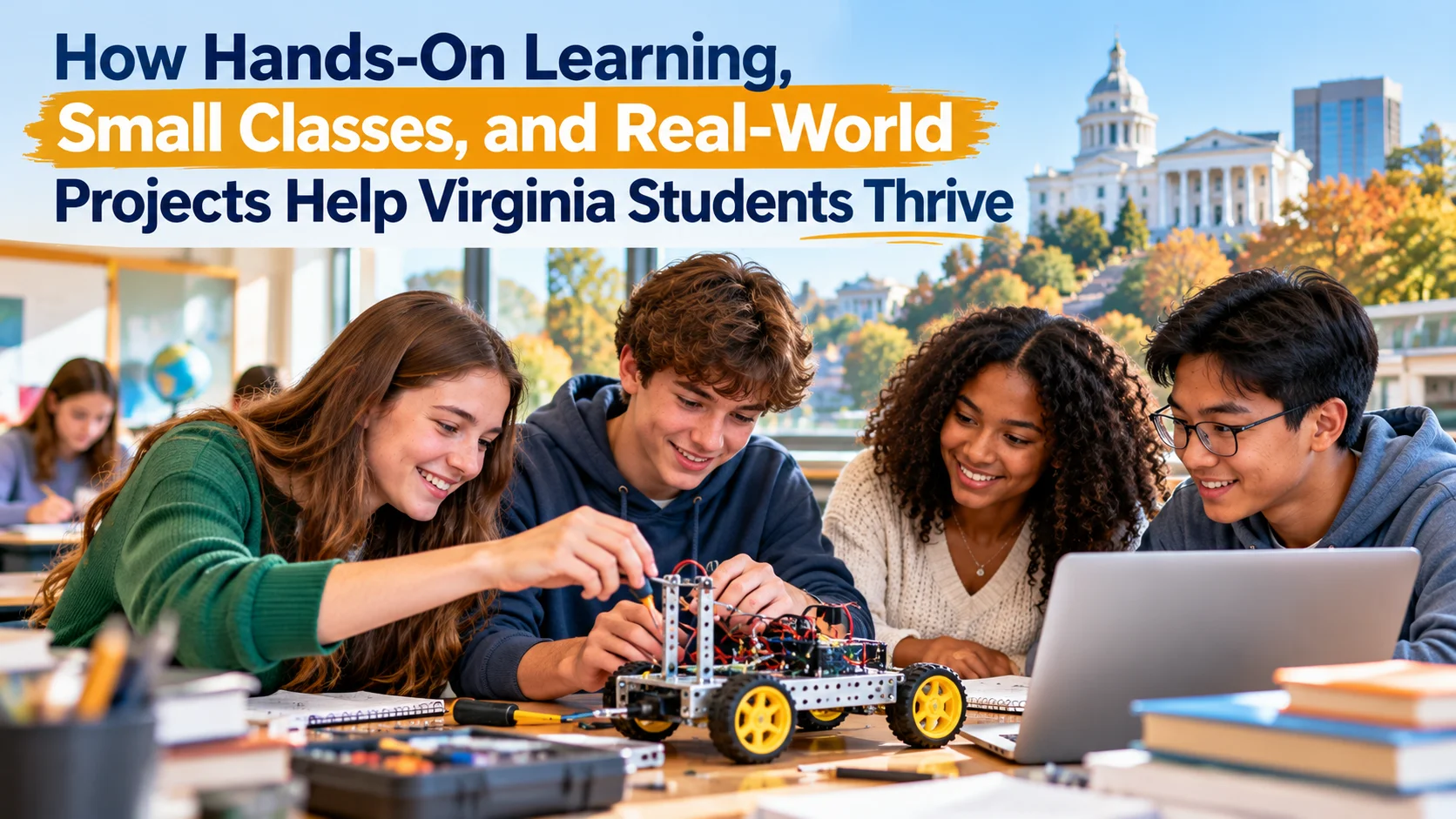
Families across Virginia want more than strong grades. They want learning environments where children feel known, challenged, and prepared to use what they learn. When comparing top private schools in Virginia, it can be helpful to look beyond facilities and course lists and consider how often students investigate questions, build solutions, explain their thinking, and receive meaningful feedback.
That focus matters because engagement is closely connected to how students view their future. A 2026 survey of found that students who reported relevant coursework, supportive adults, and stronger engagement were more likely to say they felt prepared for life after high school. For Virginia families, the question is not simply whether a school covers required material. It is whether students are actively becoming capable, curious learners.
Why Learning Design Matters in Virginia
Memorization has a place in education, but it should not be the finish line. Students also need opportunities to analyze information, test ideas, communicate clearly, and work through uncertainty. Virginia’s own graduation framework emphasizes academic knowledge alongside workplace skills, civic responsibility, career exploration, critical thinking, creative thinking, collaboration, and communication through the Profile of a Virginia Graduate.
These abilities become more meaningful when students practice them regularly. A science lesson can involve designing an investigation. A history unit can ask students to weigh evidence and present a recommendation. A writing assignment can require revision after peer feedback. Thoughtful learning design gives students reasons to participate instead of simply waiting for the next answer.
How Hands-On Learning Builds Useful Skills
Hands-on learning asks students to use knowledge, not only recall it. It may include experiments, model-building, coding challenges, research presentations, debates, writing workshops, or group investigations. The materials do not need to be expensive. What matters is that students have a clear question, a meaningful task, and time to think about the result.
What Students Practice During Active Work
- Testing an idea and noticing what does not work.
- Revising a plan after receiving new evidence.
- Making abstract concepts easier to see and discuss.
- Explaining choices to classmates, teachers, or families.
- Persisting through productive setbacks.
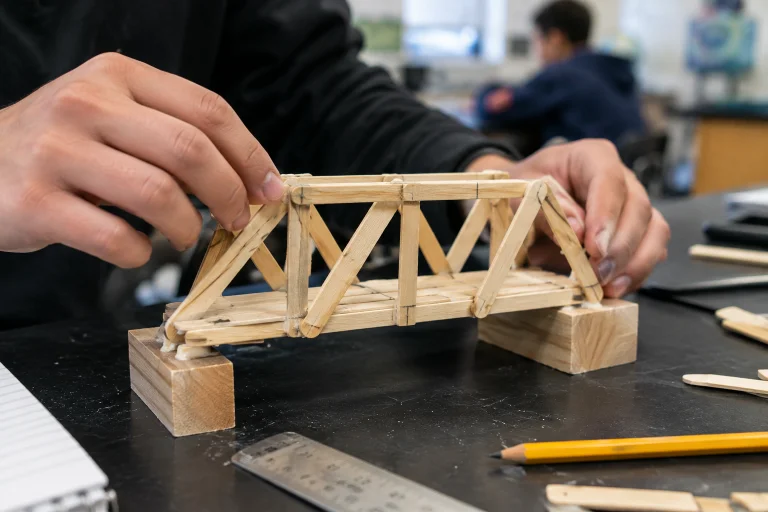
For example, a student building a small bridge model must use measurement, material constraints, and observation. If the bridge bends or collapses, the student can identify a weakness, adjust the design, and try again. The learning comes from the cycle of planning, testing, reflection, and revision.
What Smaller Classes Make Possible
Smaller classes do not automatically create excellent teaching, and a larger class can still be well run. Yet a smaller group can give teachers more opportunities to notice confusion early, hear each student’s voice, and offer feedback while work is still in progress. Those moments can be especially valuable during labs, discussions, and multi-step projects.
In a well-managed small-group setting, students may have more chances to ask follow-up questions, present ideas, collaborate with peers, and receive individual guidance. Families should look for evidence that class size supports relationships and responsive instruction, rather than treating a low number alone as a guarantee of quality.
The Link Between Curiosity and Confidence
Curiosity grows when students are allowed to ask worthwhile questions and are not expected to have every answer immediately. Confidence grows when they learn that an imperfect first attempt is part of the process. Teachers can support both by praising preparation, strategy, revision, and thoughtful questions, not only correct answers.
Consider a student whose first water-filter design fails to clear the sample water. With guidance, the student compares materials, changes the order of the filter layers, and tests a second version. The eventual improvement matters, but so does the realization that progress can come from careful adjustment rather than instant success.
Why Real-World Projects Improve Engagement
Students often invest more attention when they can see why a task matters beyond a worksheet. Virginia offers many local starting points, from Chesapeake Bay stewardship and weather patterns to transportation, public spaces, local history, and community service. A real-world project can connect academic standards to a problem students recognize.
Project Ideas With a Clear Purpose
- Design a water filter using limited materials.
- Plan a lower-waste school event and explain the choices.
- Create a digital tool that addresses a school or neighborhood need.
- Track local weather data and identify patterns over time.
- Build and test a model bridge.
- Write a proposal for improving a shared community space.
Strong projects do not need to be highly technical. They need a focused question, appropriate research, a process for testing ideas, and a chance for students to explain what they learned.
The Teacher’s Role in Active Learning
Active learning is not unstructured free time. Teachers set the learning goal, select materials, establish expectations, and provide enough support to keep students moving forward. They may ask guiding questions instead of supplying every answer, then adjust the challenge when a student needs more practice or greater independence.
At the end of a project, effective teachers help students reflect: What worked? What evidence supports that conclusion? What would you change next time? Without planning, feedback, and reflection, a project can become busywork. With those elements, it can become a meaningful learning experience.
What to Look for in a Learning Environment
- Students are encouraged to ask questions and explain their thinking.
- Lessons include discussion, practice, application, and reflection.
- Teachers can adapt support for different readiness levels.
- Feedback arrives before the final grade whenever possible.
- Projects connect to specific learning goals.
- Students work independently as well as collaboratively.
- Challenge is balanced with structure and encouragement.
- Respectful disagreement and curiosity are treated as strengths.
Questions Families Should Ask
- How often do students complete hands-on or project-based work?
- How are students supported when they need more challenge or more guidance?
- What happens when a student makes a mistake during a difficult task?
- How much individual feedback do students receive?
- How are academic progress, communication, and collaboration assessed?
- When do students get to present, defend, or revise their ideas?
- How does the school help students build both independence and teamwork skills?
Conclusion
Strong learning does not depend on hands-on projects or smaller classes alone. It grows from thoughtful teaching, meaningful challenges, steady feedback, and a culture where students feel safe enough to try, revise, and keep going. For Virginia families, the most useful question may be simple: Does this environment help students learn how to think, create, communicate, and persist when the answer is not obvious?