
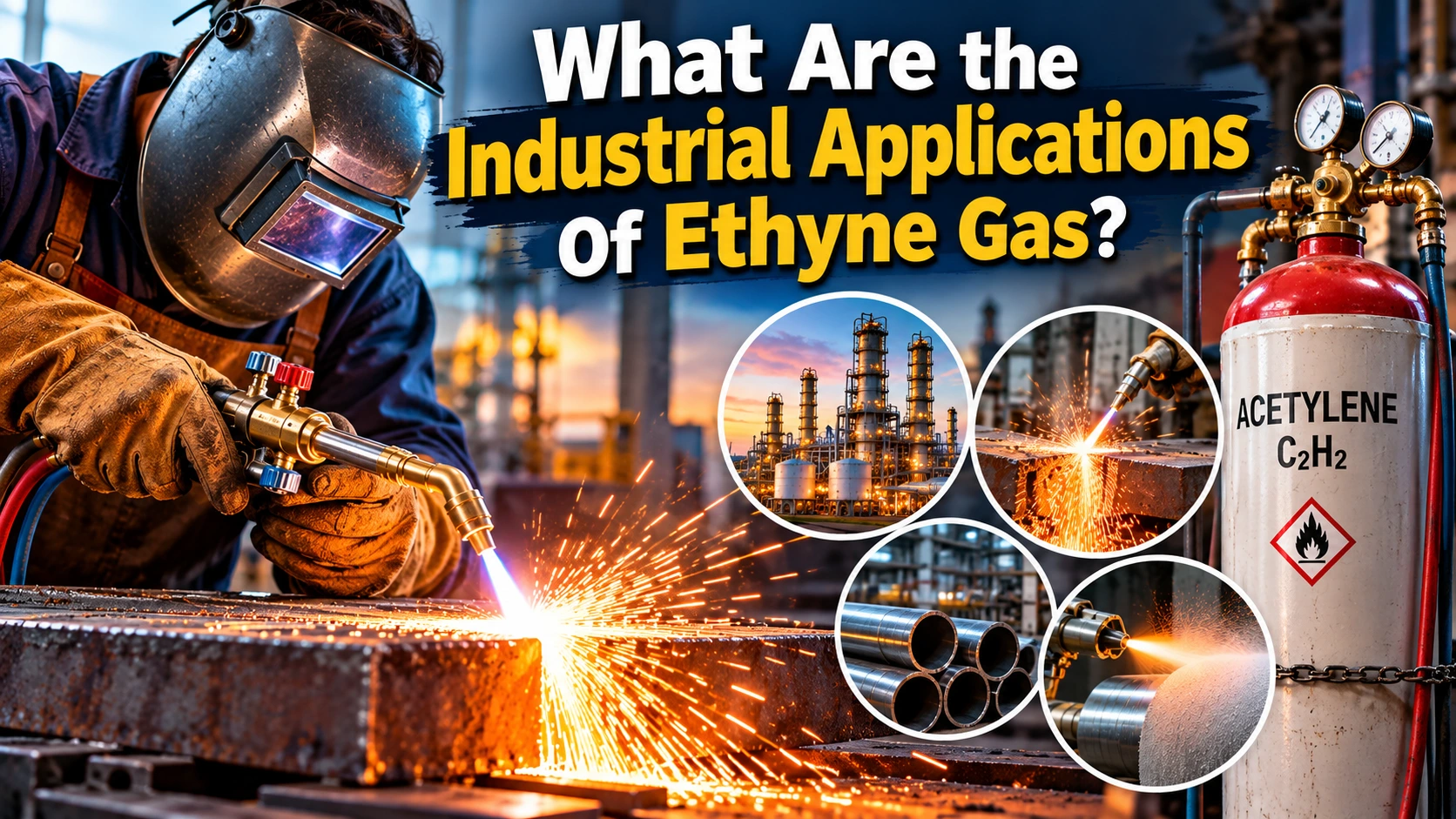
Ethyne gas, commonly known as acetylene, is a highly flammable hydrocarbon widely used in several industrial applications. Its ability to produce an extremely hot flame when combined with oxygen makes it particularly valuable for welding, metal cutting, and other high-temperature processes. Beyond metalworking, ethyne also serves as a chemical feedstock in the manufacture of selected industrial chemicals and materials.
For decades, ethyne gas has played an important role in industrial production, metal fabrication, and specialized manufacturing operations. Its unique chemical properties make it useful wherever controlled high-temperature heating or specific chemical reactions are required. Although some traditional applications have become less common, acetylene remains an important gas in many industrial settings.
Understanding the industrial applications of ethyne gas helps explain why this compound continues to be used in metalworking, surface treatment, chemical manufacturing, and specialized lighting. In this guide, we explore its major uses, practical advantages, and essential safety considerations.
What Is Ethyne Gas?
Ethyne, with the chemical formula C₂H₂, is the simplest alkyne and an unsaturated hydrocarbon. It is commonly called acetylene in industrial applications. The gas is colorless in its pure form and is highly flammable, requiring appropriate equipment and strict safety procedures during storage, transportation, and use.
One of its most important characteristics is its ability to produce a very high-temperature flame when burned with oxygen. This makes oxy-acetylene equipment useful for jobs that require intense, localized heat, including metal welding, brazing, heating, and cutting. Ethyne can also participate in chemical reactions that make it useful as a starting material for producing certain industrial compounds.
1. Welding and Metal Cutting
Welding and metal cutting are among the best-known industrial applications of ethyne gas. When acetylene burns in oxygen, the resulting flame can reach temperatures of approximately 3,100°C under suitable conditions. This intense heat allows workers to heat and join compatible metal components or perform specialized metalworking tasks.
Oxy-Acetylene Welding
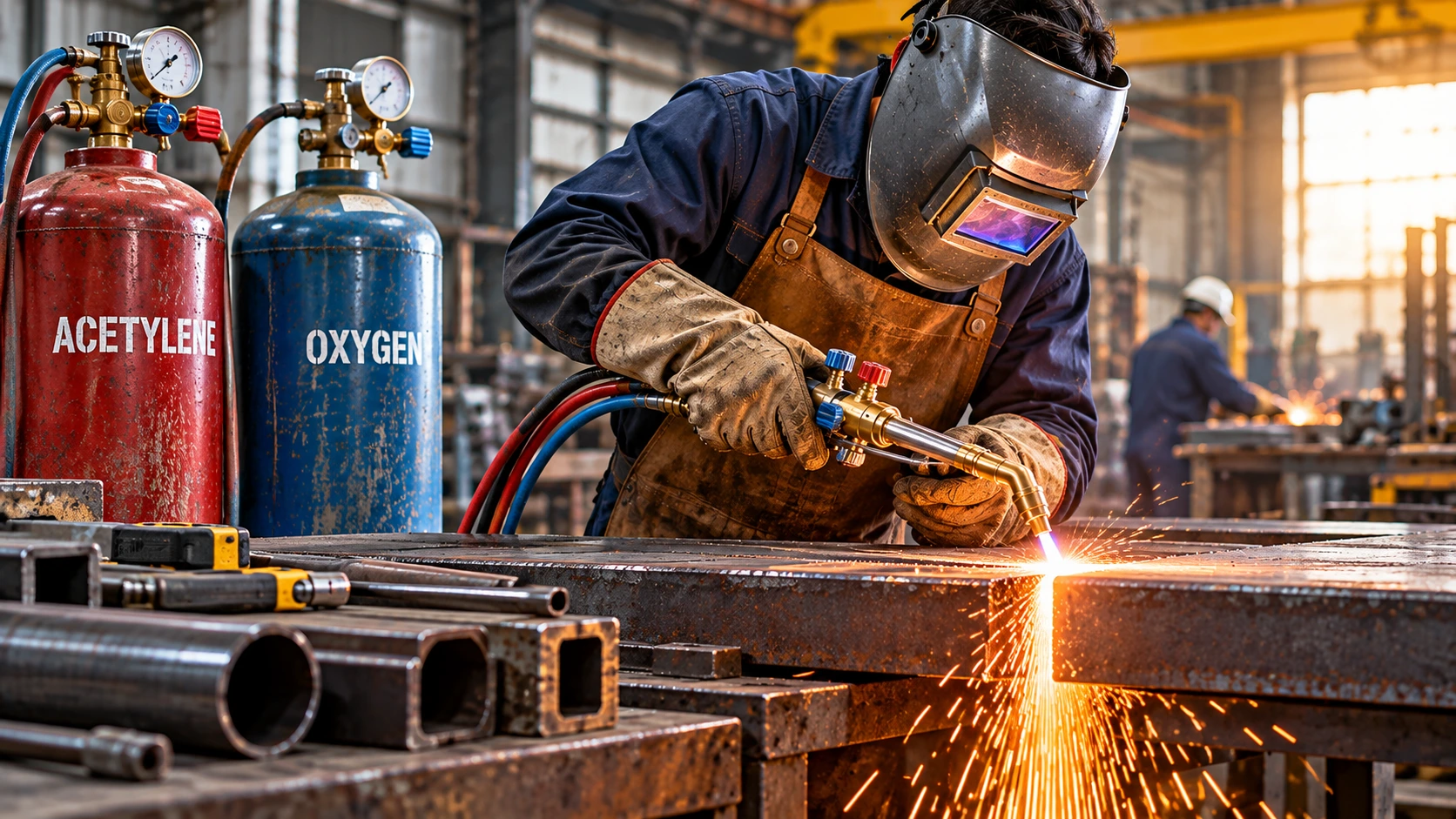
In oxy-acetylene welding, acetylene is combined with oxygen in a specially designed torch. The flame heats the edges of metal pieces until they can be joined, with filler metal added when required. The operator controls the flame and heat input to suit the material, thickness, and type of joint.
This method can be useful for repairing metal parts, working with relatively thin materials, and carrying out maintenance in workshops. Its portability can also make it practical for certain repair tasks where larger welding systems are less convenient.
Oxy-Acetylene Cutting
Acetylene is also used in oxy-fuel cutting. In this process, the flame preheats suitable metal, usually carbon steel, to the required ignition temperature. A stream of oxygen then reacts with the heated metal and removes the oxidized material, allowing the cut to progress through the workpiece.
This technique is used in metal fabrication, equipment dismantling, construction, and industrial repair. The actual cutting performance depends on factors such as the metal composition, thickness, torch setup, and operator skill.
2. Metal Fabrication and Industrial Heating
Metal fabrication involves shaping, assembling, repairing, and finishing metal components for use in machinery, buildings, vehicles, and industrial equipment. Ethyne gas can support several operations in this field because it provides a concentrated source of heat.
In suitable applications, oxy-acetylene equipment is used for localized heating, straightening, brazing, and preparing metal components for further work. Heating selected areas can help technicians adjust metal parts or carry out repairs without applying heat across an entire component.
Acetylene may also be used in certain surface-cleaning and preparation processes. However, the correct method depends on the material and the required finish. Appropriate procedures are necessary to avoid overheating, oxidation, distortion, or damage to the metal surface.
3. Thermal Spraying and Surface Coating
Thermal spraying is a surface-treatment process in which metals, ceramics, or other coating materials are heated and projected onto a prepared surface. The resulting coating can improve properties such as wear resistance, corrosion protection, and resistance to heat, depending on the coating material and application.
In some thermal-spraying systems, acetylene is used as a fuel gas alongside oxygen. The flame supplies heat to the coating material before it is propelled toward the workpiece. Specialized equipment controls the fuel mixture, material feed, and spray conditions to produce the required coating.
Thermal spraying is used in industries that maintain machinery, industrial rollers, engine components, and other equipment exposed to demanding operating conditions. Acetylene is not required for every thermal-spraying method; the selected fuel and process depend on the coating material and the desired surface properties.
4. Chemical Manufacturing
Ethyne has also been used as a raw material in the chemical industry. Its carbon-carbon triple bond makes it reactive and suitable for specific chemical transformations. Under controlled industrial conditions, acetylene can serve as a starting material for producing selected organic compounds and specialty chemicals.
Historically, acetylene has been important in manufacturing certain chemicals, including acetaldehyde and other organic intermediates. Some acetylene-based production routes have declined or been replaced by alternative processes because of changes in cost, efficiency, feedstock availability, and environmental requirements.
Today, the importance of ethyne in chemical manufacturing varies by product and region. Its industrial value depends on whether an acetylene-based process offers practical technical or economic advantages over available alternatives.
5. Specialized Lighting Applications
Before electric lighting became widely available, acetylene was used to produce bright light in specialized lamps. In these systems, acetylene was generated or supplied and burned in a controlled manner to provide illumination.
Carbide lamps, which produce acetylene when calcium carbide reacts with water, were historically used in mining lamps, caves, and some vehicles. These lamps provided portable lighting in locations where electrical systems were unavailable or impractical.
Electric lighting has largely replaced acetylene lamps in modern industrial and everyday settings. Nevertheless, carbide lamps remain of historical interest and may still be encountered in certain specialized or recreational environments. Their use requires careful attention to fire hazards, ventilation, and equipment condition.
6. Brazing, Soldering, and Localized Heating
Acetylene torches can also be used for brazing and other localized heating tasks. Brazing joins metal components by melting a filler metal that flows into the joint, while the base metals remain below their melting points. The concentrated heat from an oxy-acetylene flame can help bring the joint to the required temperature.
These techniques may be used in metal repair, pipework, maintenance, and selected manufacturing operations. The appropriate torch, filler material, and heating procedure depend on the metals being joined and the specifications of the job.
Acetylene is not necessary for every brazing or soldering application. Other fuel gases and heating methods may be more appropriate depending on the required temperature, workplace conditions, and material compatibility.
Safety Considerations When Handling Ethyne Gas
Despite its usefulness, ethyne gas presents serious safety risks because it is highly flammable and can form explosive mixtures with air. Acetylene cylinders and gas systems must be handled by trained personnel using approved equipment and procedures. Safe working practices are essential in workshops, manufacturing plants, and other industrial environments.
Safe Storage and Transportation
Acetylene should be stored and transported in approved cylinders designed specifically for the gas. Cylinders must be secured upright as required by applicable instructions, protected from physical damage and excessive heat, and kept away from ignition sources. Storage areas should have suitable ventilation and comply with local fire and hazardous-material regulations.
Personal Protective Equipment
Workers should use suitable personal protective equipment (PPE) for the task. Depending on the work, this may include appropriate eye and face protection, welding goggles or a suitable welding helmet, flame-resistant clothing, protective gloves, and safety footwear. Employers should assess the specific hazards and provide the correct equipment and training.
Ventilation, Leak Prevention, and Fire Safety
Work areas should have adequate ventilation, and gas connections, hoses, regulators, and torches should be inspected according to the manufacturer’s instructions. Suitable leak-detection methods must be used; a flame should never be used to check for a gas leak. Flashback arrestors and other protective devices should be selected and installed where required by the equipment specifications and applicable safety standards.
Ignition sources must be controlled, and appropriate fire-protection equipment should be available. If a leak, fire, or other emergency occurs, workers should follow the site’s emergency procedures and avoid attempting repairs unless they are trained and it is safe to do so. Understanding these precautions is crucial in preventing accidents and reducing the risk of serious injuries.
Advantages and Limitations of Ethyne Gas in Industry
One of the main advantages of ethyne gas is its ability to produce a very hot, concentrated flame when combined with oxygen. This makes it useful for portable metalworking equipment, repairs, brazing, and cutting suitable metals. Its role as a chemical feedstock also makes it valuable for certain manufacturing processes.
However, acetylene requires careful handling and specialized equipment. Its flammability, potential for hazardous decomposition under unsuitable conditions, and cylinder-storage requirements mean that it cannot be treated like an ordinary fuel gas. In addition, some industrial applications have shifted to alternative fuels or manufacturing technologies as costs, performance requirements, and environmental priorities have changed.
For these reasons, businesses should evaluate the technical requirements, safety controls, operating costs, and applicable regulations before selecting acetylene for an industrial process.
Conclusion
Ethyne gas, better known as acetylene, continues to serve important roles in selected industrial applications. Its high-temperature flame supports oxy-acetylene welding, metal cutting, brazing, and localized heating. It can also be used as a fuel in certain thermal-spraying systems and as a feedstock for producing specific chemicals. Historically, acetylene provided illumination in specialized lamps before electric lighting became widespread.
Although alternative technologies have replaced acetylene in some applications, it remains useful where its properties meet specific industrial needs. The key to using ethyne gas effectively is choosing the right process, using approved equipment, and following strict safety procedures.
Frequently Asked Questions (FAQs)
1. What is ethyne gas commonly known as?
Ethyne gas is commonly known as acetylene. It is a highly flammable hydrocarbon with the chemical formula C₂H₂ and is widely associated with oxy-acetylene welding and metal cutting.
2. What are the main industrial applications of ethyne gas?
The main applications of ethyne gas include oxy-acetylene welding, metal cutting, brazing, localized metal heating, certain thermal-spraying processes, and the manufacture of selected chemicals. It was also historically used in specialized lighting systems.
3. Why is acetylene used for welding and cutting?
Acetylene produces a very high-temperature flame when burned with oxygen. This concentrated heat makes it useful for welding, preheating, brazing, and oxy-fuel cutting of suitable metals.
4. Is ethyne gas used in chemical manufacturing?
Yes. Ethyne can serve as a feedstock for producing certain organic compounds and chemical intermediates. However, its use varies by product and region because some traditional acetylene-based processes have been replaced by alternative production methods.
5. What safety precautions are necessary when handling ethyne gas?
Important precautions include using approved cylinders and equipment, securing cylinders correctly, ensuring adequate ventilation, keeping the gas away from ignition sources, checking equipment for leaks using approved methods, wearing suitable PPE, and following applicable fire-safety procedures.
6. Is ethyne gas still used for lighting?
Acetylene was historically used in carbide lamps for mining, caving, and other situations where portable lighting was needed. Electric lighting has largely replaced these systems, although carbide lamps may still be used in some specialized settings.