

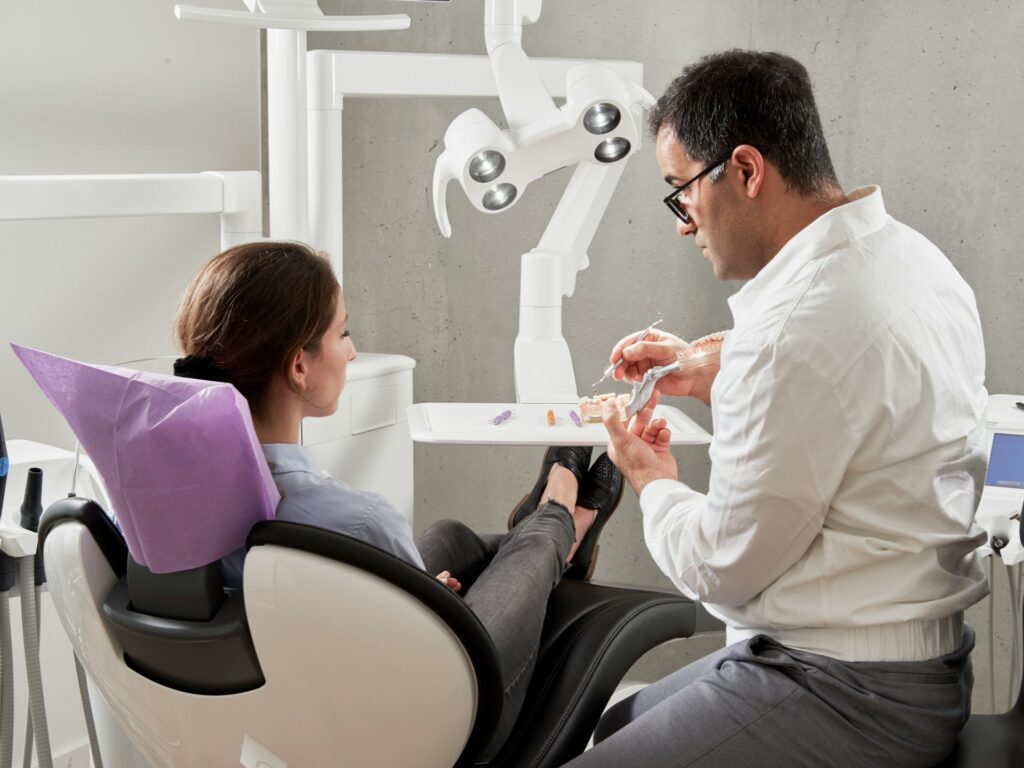
When you lose a tooth, there are a few options to replace it. There are dentures, bridges, and implants. They each can fill in the gap, but what’s not understood is that they all operate differently for reasons more profound than most people realize. What makes implants the best choice is something that people recognize after the fact, and it’s transformative in how someone approaches the replacement process to begin with.
The Key Difference: What’s Actually Going on in Your Mouth
They implant the full structure, not just the top of the tooth. A bridge and a denture sit on top of the gums with a bridge being cemented to the adjoining teeth and a denture just sitting on the gums or secured with denture adhesive. An implant goes into the jawbone and serves as an artificial tooth root. This may not sound like a big difference, but it honestly is and transforms how the “tooth” acts.
For example, the titanium post that gets implanted into the jawbone becomes one with the bone. It’s called osseointegration. The post essentially becomes surrounded by bone and cemented in position permanently. This means that what a natural tooth root provides is replicated as closely as possible in an implant. For anyone searching for a tooth implant near me, choosing a practice that can explain this process in detail is crucial. Dental professionals will fully understand the process and the benefits before they recommend it to you.
How They Feel (And Why That’s More Important Than You Think)
This gives it stability. A denture can get loose even when eating or talking, which makes people acutely aware that something’s off in their mouths. A bridge relies on adjoining teeth that now have double duty for reinforcement, meaning with each bite, those teeth are bearing more weight than they should on their own. An implant sits in the jawbone just like a natural tooth root would; it doesn’t move. It doesn’t shift. It simply becomes another tooth like every other tooth in its place because it’s held there the exact same way.
This makes eating and speaking seamless. There’s no double-check about whether something can be consumed or not. Biting into an apple isn’t a calculus involved with making sure some tooth doesn’t pop out. It becomes automatically something you can do because there’s nothing there to dislodge. The mental freedom from knowing that an implant won’t shift or come out gives cognitive clarity that no one considers until they no longer have it.
What Happens to Your Jawbone (The Part Nobody Talks About Enough)
Even without teeth, people still can chew. The jawbone gets activated from the pressure of solid food hitting teeth or tooth roots and provides stimulation to the jawbone every time this happens. This means the jawbone maintains its shape and strength. When a tooth is gone, there is no stimulation. Over time, this means nothing grows where a tooth used to be (bone resorption), a problem for both dental and aesthetic purposes.
When implants go into the jawbone and create that stability as a human tooth would, and the jawbone provides that same stabilization for the artificial root, this means that bone resorption will not happen in the same way. With dentures or bridges, there is still nothing there where there once was. As a result, it transforms the contour of the face and creates a sunken-in appearance because people will lose bone mass where things should have grown in, but instead recede.
How Long Do They Last
Dental bridges last ten to fifteen years. Dentures sometimes last ten to fifteen years, but often need to be adjusted over time as mouths change. Implants can last 30, 40, a lifetime, as long as the crown, visible part, needs replacement but typically the screw remains intact.
It’s fascinating to consider how many replacement crowns can be put on bridges that need to be replaced multiple times over twenty or thirty years because dentures are a quick fix. One implant may cost more as an upfront investment, but it makes more financial sense over time.
What They Don’t Impact
A bridge gets cemented to adjacent healthy teeth which means those teeth are grinded down and limit bite potential forever even though those teeth are perfectly healthy. An implant does nothing to any other teeth and requires each unit to be separate. Therefore, the rest of the mouth is perfectly preserved.
Dentures facilitate bone loss faster than anything else and can irritate soft tissue areas where they lie. Implants integrate with their bones and do not force pressure with the gums. Thus, preserving their natural structures and bones is why implants respect what already exists versus those other options that just apply pressure.
The Real Trade-Off
It takes longer to get implants than anything else, a matter of several months sometimes from start to finish, and sometimes there’s a surgery wherein bridges and dentures are non-invasive options. For some people, this is an absolute deal-breaker. However, for most people willing to undergo the process, it’s worth it and transforms how the tooth operates, feels, lasts, and with proper care, has less maintenance than others.
Implants don’t care if they’re replaced; they just want to be replaced with effective maintenance to last a lifetime. It’s not about filling a gap, it’s about replacing what was lost, structure, function and all. That’s the difference. That’s why implants are better, and that’s why they’ve become synonymous with permanent tooth replacement.