
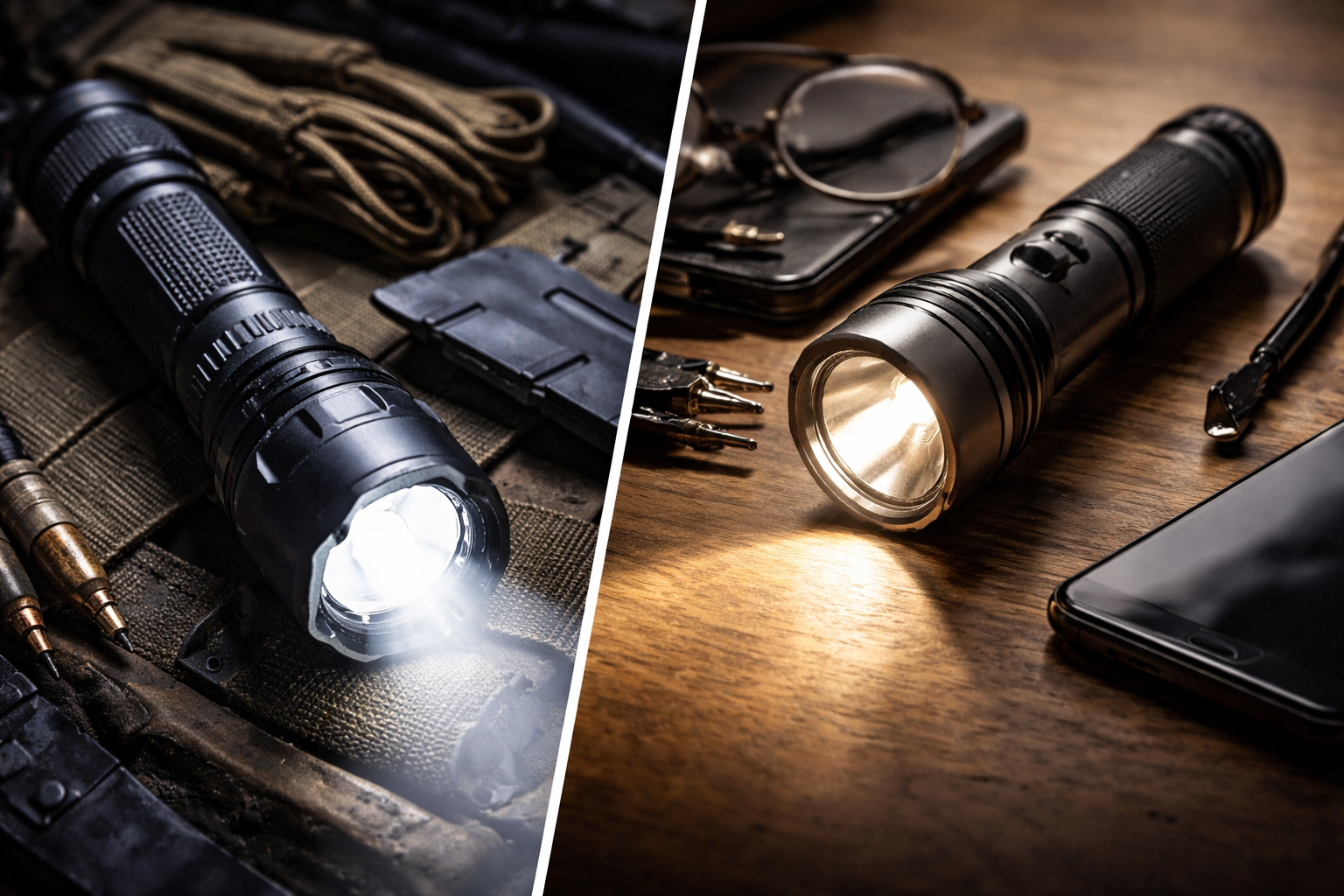

Most people don’t give much thought to flashlights until they actually need one. Then suddenly, whether it’s a power outage, a nighttime walk, or an outdoor adventure, the differences between a basic flashlight and something more substantial become pretty clear. Tactical flashlights represent a completely different category of lighting tool, and understanding what sets them apart can help anyone make better decisions about which type of light they actually need.
Build Quality That Changes Everything
The first thing that stands out with tactical flashlights is how they’re constructed. Regular flashlights often use lightweight plastic housings that work fine for occasional use around the house. They’ll help find something in a dark closet or guide someone to the circuit breaker during a blackout. But tactical models take construction to another level entirely.
These lights typically feature aerospace-grade aluminum bodies with anodized finishes that resist corrosion and wear. The difference becomes obvious when handling one. The weight feels substantial without being cumbersome, and the machining quality shows in every detail. Companies that specialize in tactical flashlights engineer their products to survive drops onto concrete, sustained pressure, and environmental conditions that would destroy standard models. This isn’t about making lights heavier for no reason—it’s about ensuring the tool works when it absolutely has to.
The sealing systems also separate tactical lights from everyday options. O-rings and gaskets create waterproof barriers that allow these flashlights to function underwater or in torrential rain. Most tactical models carry IPX-8 ratings, meaning they can handle submersion beyond one meter. Regular flashlights might claim water resistance, but that usually means they can tolerate a bit of rain, not actual immersion. The testing standards for tactical lights involve extreme conditions that go far beyond what most consumer products ever face.
Light Output and Control Options
Here’s where things get interesting from a performance standpoint. Tactical flashlights often produce significantly higher lumen outputs than standard models, but raw brightness only tells part of the story. The real advantage comes from how that light gets delivered and controlled.
Most tactical lights offer multiple output modes that can be switched instantly. A low mode might produce 50 lumens for extended runtime when navigating a dark trail. The high mode could blast out 1,000 lumens or more when maximum visibility becomes necessary. Some models include strobe modes that can disorient threats or signal for help. This versatility means carrying one tool that adapts to different situations rather than needing separate lights for different purposes.
The beam patterns also differ considerably. Tactical flashlights typically produce a focused hotspot with enough spill beam to maintain peripheral awareness. This combination allows users to illuminate distant objects while still seeing what’s nearby. Regular flashlights often create broader, less focused beams that work fine for general purposes but lack the throw distance that tactical models provide. The reflector design in tactical lights gets optimized for both reach and usability, creating beam patterns that perform well across various distances.
Operational Features That Matter
The way tactical flashlights operate reflects their intended use in demanding situations. Tail switches allow one-handed operation and momentary activation—pressing the button creates instant light without clicking it on permanently. This feature matters when someone needs quick illumination but wants to maintain darkness most of the time.
Many tactical models include crenellated bezels, those jagged edges around the lens. While they can serve defensive purposes, they also prevent the lens from contacting surfaces when the light gets set down, protecting the glass and maintaining beam quality. The knurling on the body provides grip even with wet or gloved hands, which sounds minor until trying to hold onto a smooth plastic flashlight in the rain.
Clip systems on tactical lights allow multiple carry options. They can attach to belts, pockets, or gear straps, keeping the light accessible without requiring a dedicated holster. Regular flashlights might include basic clips, but they’re often afterthoughts that break under regular use. The springs inside tactical flashlights also get designed to handle the shock from drops and impacts, maintaining electrical contact even after rough treatment that would disable cheaper models.
Battery Systems and Runtime
Power management separates tactical lights from everyday options in meaningful ways. Most tactical flashlights use rechargeable lithium-ion batteries that deliver consistent output throughout their charge cycle. Regular flashlights often rely on disposable alkaline batteries that gradually dim as they drain, which can be frustrating when maximum brightness becomes necessary.
The regulation circuits in tactical lights maintain constant brightness levels until the battery reaches a critical threshold, then the light typically drops to a lower mode rather than gradually fading. This predictable behavior helps users plan battery changes and prevents getting caught with insufficient light at crucial moments.
Runtime specifications also tend to be more honest with tactical models. Quality manufacturers provide accurate estimates for each output mode, accounting for real-world conditions rather than theoretical maximums. This transparency helps users make informed decisions about which light meets their needs. The battery indicators on many tactical lights provide clear warnings when power runs low, giving users time to swap batteries before complete darkness sets in.
When the Extra Investment Makes Sense
Not everyone needs a tactical flashlight, and that’s perfectly fine. For occasional household use, a basic light does the job without the additional expense. But certain situations make tactical lights worth considering seriously.
People who spend significant time outdoors—whether hiking, camping, or working—benefit from the durability and performance that tactical lights provide. The same goes for anyone who needs reliable lighting for professional purposes or emergency preparedness. When a flashlight becomes an essential tool rather than occasional convenience, investing in tactical-grade equipment makes practical sense.
The longevity factor also matters. A quality tactical flashlight can last for years or even decades with proper care, while regular flashlights often need replacement after relatively short periods. The initial cost difference shrinks considerably when accounting for long-term value and reliability. Many users find that buying one solid tactical light costs less over time than replacing multiple cheaper flashlights that fail or break.
Understanding these differences helps cut through marketing claims and identify what actually matters for specific needs. Tactical flashlights represent serious tools engineered for demanding applications, while regular flashlights serve different purposes effectively. Choosing between them comes down to honest assessment of how the light will get used and whether those advanced features translate to real benefits for the intended applications.