
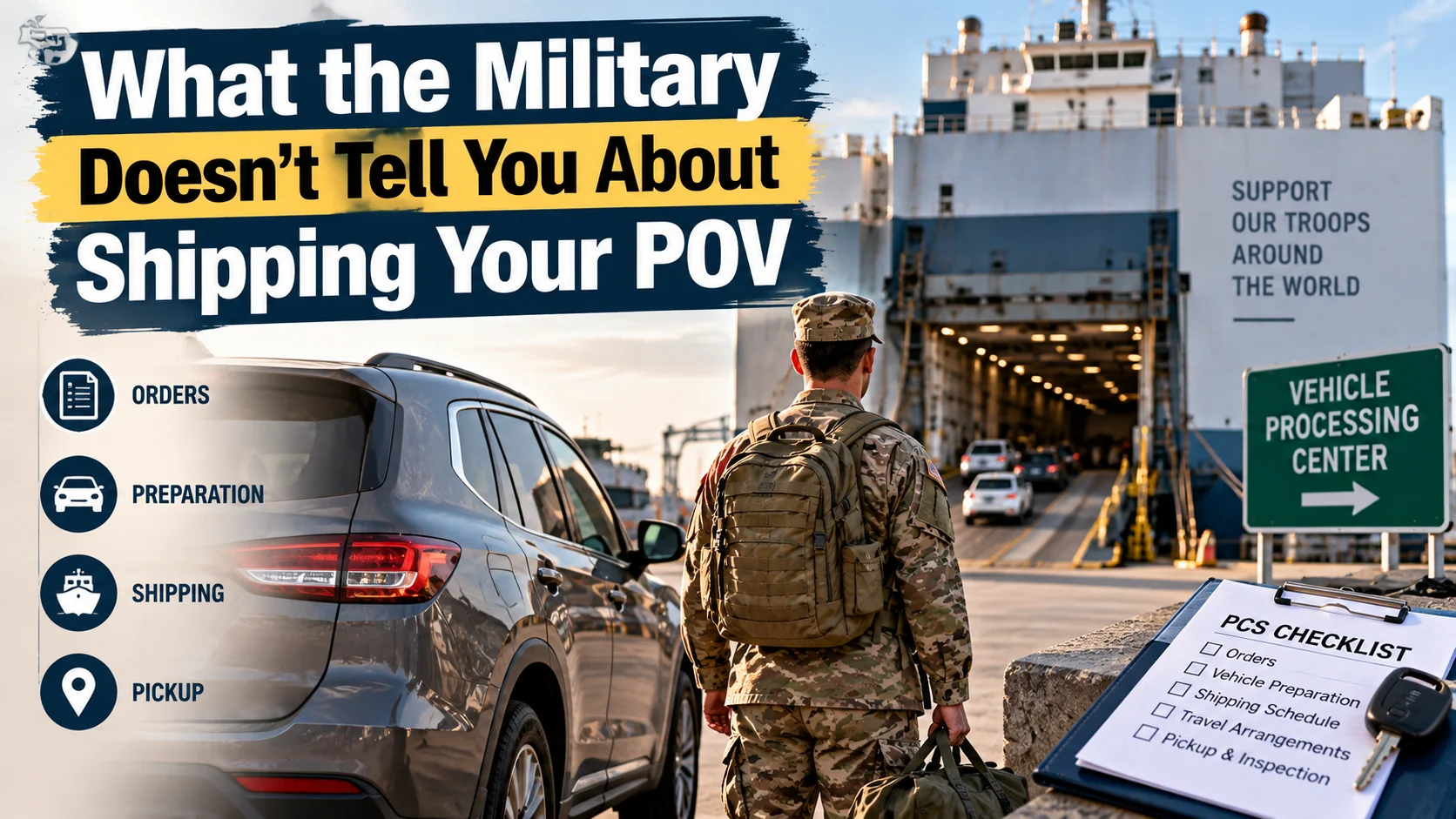
Your orders have a report date. Your car has a separate travel schedule. That mismatch is where a permanent change of station can become expensive: extra rides, another trip to a vehicle processing center, or a private shipping bill you assumed someone else would cover.
The rules are published, but knowing your entitlement is only part of planning a personally owned vehicle shipment. You also need to understand the handoffs, preparation requirements, and expenses between collection and delivery.
If your move includes privately paid transport, use Navi Auto Transport to explore pricing for the relevant U.S. route. A commercial estimate helps with budgeting; it does not establish military authorization or reimbursement eligibility.
Your Orders Matter More Than Someone Else’s Move
Military OneSource explains that government-funded POV shipping or storage may be available for an overseas assignment. For moves within the contiguous United States, privately arranged vehicle shipping is generally your expense. Exceptions and individual circumstances require confirmation with your transportation office.
Before paying a carrier, ask what your specific orders authorize, which booking channel to use, and whether any proposed expense requires advance approval. Keep the answer with your move paperwork.
For a second vehicle, request a separate entitlement review. Another family’s experience is not proof that your shipment qualifies.
The Processing Center Is Part of the Journey
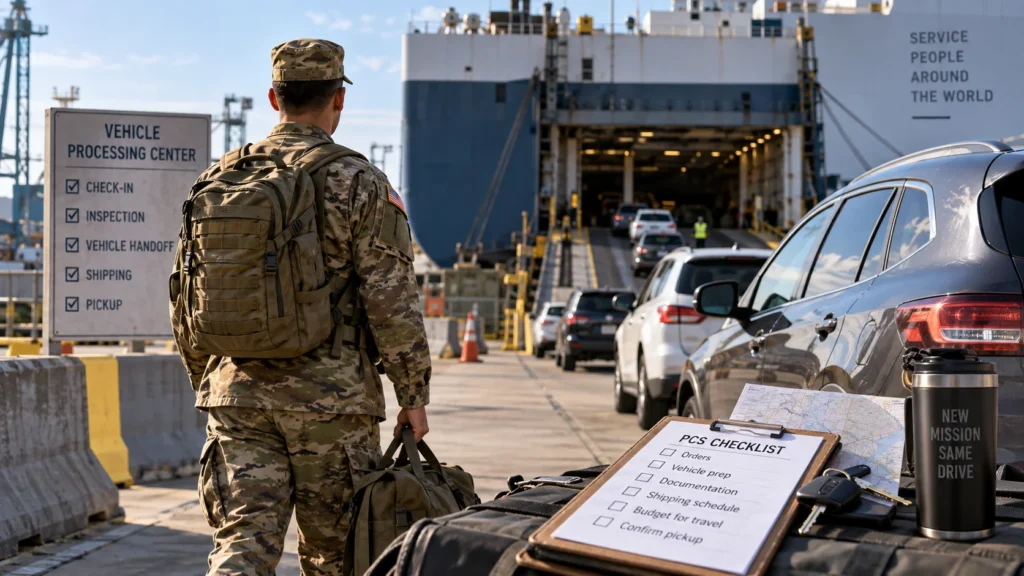
Government-arranged shipping uses vehicle processing centers, or VPCs. Official guidance directs members to PCSmyPOV for locations, requirements, and appointments.
Work out how you will get home after turn-in and reach the destination center for collection. Ask your transportation office which related travel expenses, if any, are authorized.
Also name a backup recipient if your duty schedule may prevent pickup. Confirm the required authorization documents before assuming a spouse or friend can collect the vehicle.
A Clean Car Can Still Fail Turn-In
Preparation involves more than washing the paint. Review the current checklist for your departure location and vehicle type, including fuel or battery requirements, recall status, mechanical condition, and paperwork.
- Documents: Have orders, amendments, identification, and ownership evidence ready.
- Leased vehicles: Confirm the required export authorization.
- Condition: Address leaks, brake problems, and other acceptance issues early.
- Contents: Follow the permitted-items list instead of packing the car as extra household-goods space.
Photograph the vehicle before handoff and review the inspection record carefully. Keep those images accessible during travel rather than only on a computer packed with your belongings.
Budget for the Gap Without Your Car
Suppose you receive a private shipping quote of $1,100 and expect five days of alternative transportation at an assumed $50 per day. Your working budget is $1,350 before any other expenses. Those figures are illustrative, but the calculation exposes a frequently overlooked cost.
Do not assume your report date guarantees vehicle availability. Ask for the expected shipping timeline and distinguish estimated arrival from readiness for pickup.
If your orders change, contact the shipping provider promptly. For private bookings, read the cancellation and rescheduling terms before committing.
Final Thoughts: Confirm the Benefit, Then Plan the Details
A successful POV shipment depends on matching your authorization with a workable collection and delivery plan. Verify the entitlement, complete the preparation checklist, and budget for transportation between handoffs. At pickup, inspect the car and document any newly observed damage before leaving.
Consult Military OneSource’s PCS entitlement guidance and the current PCSmyPOV instructions alongside advice from your transportation office.