
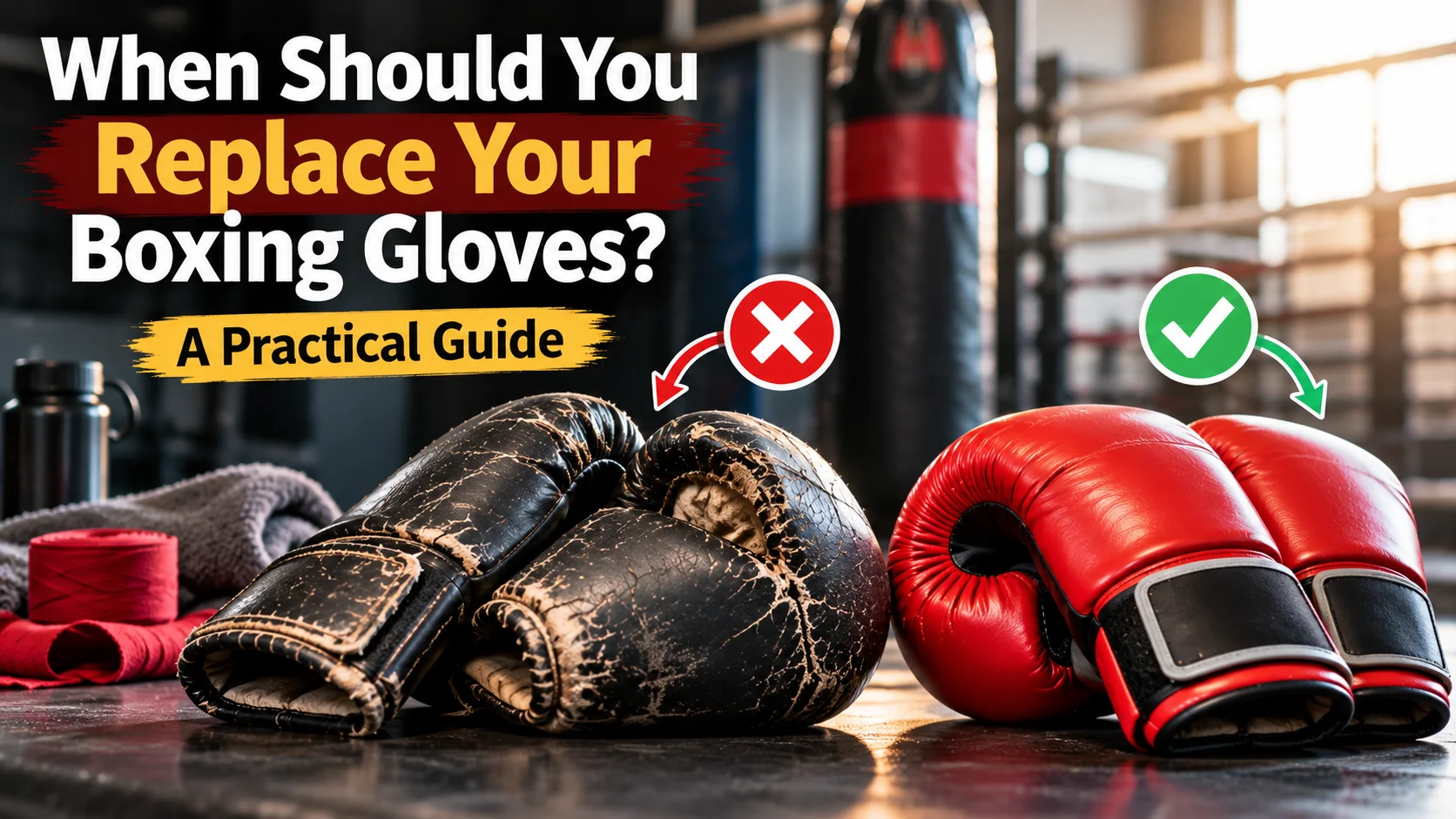
Most boxers get glove replacement wrong in one of two ways. They bin a good pair months too early, or they hang onto a worn-out pair that hurts their hands and annoys everyone in the gym. The better approach is simple: judge gloves by their condition and how much work they have done, rather than relying only on the date you bought them.
How often you train matters more than the calendar
Calendar time tells you very little on its own. A pair used five mornings a week has a very different working life from the same pair worn for one light class on Saturdays.
Training volume wears gloves out. Think about punches per round and rounds per week, along with the type of work you do. Heavy bag sessions can be harder on padding than pad work, while sparring adds clinches and grabs that put extra strain on seams. Sweat and heat also affect the lining and materials over time.
As a loose guide, some coaches start with this pattern. Someone boxing three to five times a week may need to consider replacement between six and twelve months. Someone boxing once or twice a week for fitness may get a year or more from a well-made leather pair with proper care and rotation. These are reference points, not fixed lifespans. The condition of the glove matters more than its age.
Your lead hand usually throws more jabs, while your rear hand takes the force of harder crosses. Bag gloves may break down faster around the knuckles. Sparring gloves can soften around the cuff through repeated fastening and clinch work.
New gloves add to the confusion. Fresh padding often feels stiff while it settles around your fist, although the amount of break-in varies by model and construction. Do not assume that early stiffness means the padding is poor. Four to six steady sessions may give you a clearer sense of the fit and feel, but stop sooner if the gloves cause pain, numbness or obvious pressure points.
If you train often, rotation can help more than another spray or deodoriser. Two pairs used in turn have more time to dry fully between sessions, which may help the foam and lining remain in better condition.
The knuckle squeeze test
Padding rarely fails all at once. It tends to pack down gradually until you begin to notice more of the bag through the glove.
Boxing puts high force through a small area. Good padding spreads and absorbs some of that force, while tired or displaced padding offers less protection. Worn gloves can therefore become a safety concern as well as a comfort problem. Your hands may feel more shock, and sparring partners may notice that the gloves feel harder.
You can make a basic check at home. Take the glove off your hand, hold the knuckle area between your palms and press gently and evenly. Foam in good condition should push back and feel broadly consistent across both gloves. Worn foam may feel noticeably thinner in certain places. You may find a dead spot where there is far less resistance than in the surrounding area.
Place the glove on a table and press the knuckle area with your thumbs without crushing or sharply folding it. If the dent remains, or you can feel hard folds, lumps or gaps underneath, the padding may be spent or displaced. A faint creak from leather is generally normal. A crunching or hollow sensation deserves a closer look.
If regular partners say your sparring gloves feel hard, take the comment seriously. Do not wait for sore knuckles to confirm that something has changed. Check the gloves when they are dry, compare the left and right sides, and ask a coach or reputable equipment specialist if you remain unsure.
Wrist support and closures fail first
The cuff can lose support while the knuckle area still looks serviceable. This is easy to miss, and poor wrist control can make it harder to keep the hand properly aligned.
Lace or strap the glove as normal, then gently flex your wrist forward and back. A supportive cuff should resist excessive movement and feel secure around the joint. A spent cuff folds too easily. The wrist shifts inside the glove, or the padding and body of the glove move away from the hand.
Hook-and-loop straps usually show clear wear. If the strap needs two or three attempts to catch, or it opens during a round, the hooks may be worn or clogged. Sweat, fibres and general dirt can reduce their grip when gloves are used regularly. Clean the closure according to the maker’s guidance, but if it still will not hold securely, the glove no longer provides reliable wrist support.
Lace-ups wear differently. Laces fray, eyelets stretch and loops can tear where they are repeatedly pulled tight. Fresh laces and careful re-lacing may restore some hold. A fight equipment repairer may also be able to assess damaged loops or edges, depending on the construction and extent of the damage. A cuff that has permanently lost its shape is a different matter. If the internal support remains sharply creased or collapsed, changing the lace pattern is unlikely to restore it.
Don’t ignore it.
A loose wrist can affect alignment and change how force travels through the hand. It may place extra strain on the wrist or thumb, particularly when technique starts to slip under fatigue. Replace or professionally assess the glove rather than training through discomfort and risking time away from the gym.
Why buying once often costs less than buying twice
Price tags can mislead when you only look at the till. It is more useful to consider your cost per session.
Say a budget synthetic pair costs £40 and begins to flatten after six months at three sessions a week. That would be roughly seventy sessions. A well-kept leather pair costing £150 may remain sound through more seasons of steady pad and bag work, spreading its price across many more sessions. The maths can favour the better build, although this is an illustration rather than a lifespan promise. Construction, care, training volume and punch output all affect how long a glove lasts.
Materials help explain some of the difference. Dense, layered foam can retain its shape better than thin single-density foam. Good leather generally handles abrasion and routine cleaning better than cheaper synthetics that may split around folds. Strong seams around the thumb also help keep the glove’s structure and padding in place.
Rotation can improve value as well. Keep durable bag gloves for the heavy bag and pads, then reserve softer sparring gloves for sparring. This reduces the weekly workload placed on each pair and stops dense bag padding from being used against training partners.
Bag, sparring, training and fight gloves use different builds
Bag gloves generally use denser padding intended for repeated impact. Sparring gloves use softer padding to reduce the force felt by a partner. Training gloves sit between the two and are designed for broader gym use. Professional fight gloves are built to a different specification for bouts and are not intended for routine sparring.
If your current pair is near retirement and you want leather gloves suited to regular work, the Cleto Reyes range at Fight Gear includes Velcro and lace-up sparring gloves. The same collection includes Safetec and horsehair/foam professional fight gloves for bouts.
What the outside of the glove tells you
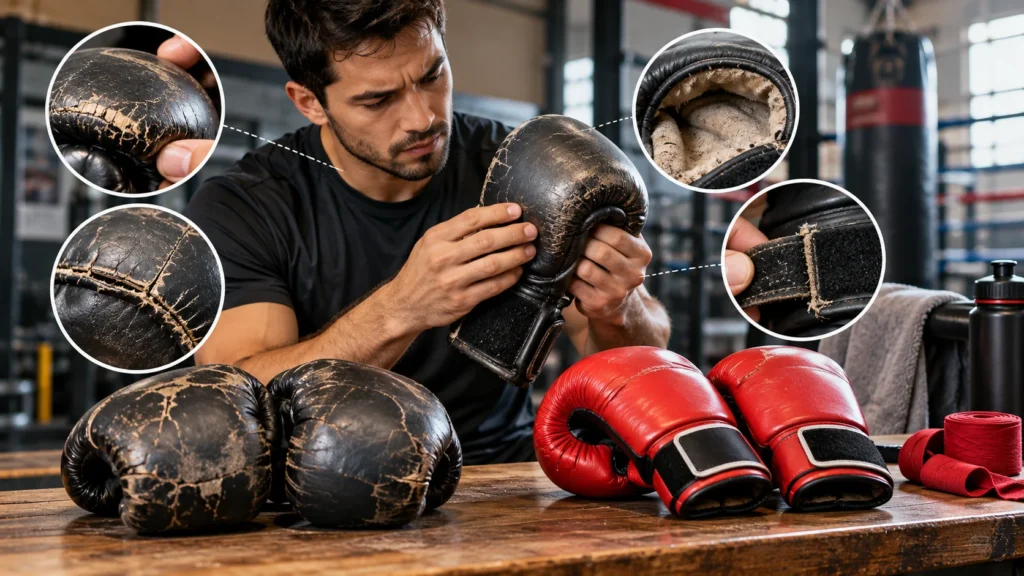
Leather shows its age clearly if you check the right places. Look at the thumb seam and the main seam running along the knuckles. Small surface creases are part of normal use. Deep cracks that open when you bend the glove indicate more serious wear. If a structural seam splits, the padding can shift and the glove may lose its shape quickly.
The palm side can reveal how the gloves have been stored and maintained. Dry leather may feel papery and look pale around the edges. A light application of suitable leather conditioner every few weeks can help keep it supple, but conditioner cannot repair a tear. A repairer may be able to deal with a small nick at the cuff edge. A split across the knuckle line is structural damage and is a clear reason to stop using the glove.
Now ease the opening apart and inspect as much of the lining as you can without forcing or turning the glove fully inside out. A healthy lining should feel reasonably smooth and should dry between sessions. A worn lining may remain clammy, feel rough or begin to peel. Frayed internal seams can expose the foam to more sweat, while damp padding may become firm or lumpy over time. Once padding loses its even structure, it cannot spread force as effectively.
Wraps help here more than many boxers realise. Clean, dry wraps absorb a substantial amount of sweat before it reaches the glove lining. Wash them after every session and let the gloves air with the cuffs open where air can move around them. Never place gloves directly on a radiator or in an airing cupboard that runs hot. Excessive heat can dry leather and affect adhesives. Room air and enough drying time are safer.
When damp and smell won’t shift
Fresh sweat has relatively little smell. The familiar sour kit-bag odour develops when gloves are repeatedly left closed and damp between sessions.
Make drying part of your routine. Open the cuffs wide after training and place the gloves on a dry towel or rack where air can circulate around them. Remove them from your bag as soon as you get home. If you use inserts, cedar blocks can absorb some surface damp, while activated charcoal bags may help control odour between sessions. Use one approach at a time and follow any care instructions for the glove.
Wash your hands before wrapping them and keep your nails short to protect the lining. Air wraps fully before using them again. These habits reduce the sweat, oils and dirt transferred into a warm lining. An older glove with a torn or rough lining may irritate the skin, which is enough reason to stop and inspect it.
A useful routine is to clean the outside with a damp cloth and mild soap, provided the manufacturer allows it, then air the gloves for a full day. If a deep, sharp smell returns within a day or two of normal use, the gloves need closer inspection and more thorough drying. Smell alone cannot confirm the condition of hidden foam, but a persistent odour may indicate that routine surface cleaning is no longer enough. If it appears alongside damp lining, damaged seams or deteriorating padding, replacement is the safer choice.
Trust your nose, but use touch and sight as well. Persistent smell combined with flat, hard or uneven padding is a clear reason to replace the gloves.
Repair or retire: your two-minute check
You do not need to bin gloves at the first loose thread. Fresh laces can improve fastening, and a replacement hook-and-loop strap may restore cuff hold if the rest of the structure is sound. Suitable leather conditioner can help prevent dry edges from worsening. A fight equipment repairer can advise whether a small cuff nick or lifting edge is repairable. Minor fixes may extend safe use when the padding and support remain intact.
Padding is the line you should not cross. If the knuckle layer remains flat after the glove is fully dry, or the cuff support stays bent, a cosmetic repair will not make it safe again. Retire the glove from training rather than using it for lighter drills. Sparring with dead padding is unfair on your partner and hard on your hands.
Run this check every month or two:
- Press the knuckles gently. Even spring from left to right is reassuring, while obvious thin spots, lumps or folds are not.
- Flex the wrist in the fastened glove. Firm, comfortable resistance is good. Folding, slipping or excess movement is bad.
- Look at the thumb and knuckle seams. Normal creasing is acceptable, but open cracks or separating seams are not.
- Feel the accessible lining a day after training. Dry and smooth is good. Persistent dampness, roughness or peeling needs attention.
- Air the gloves for a day and check the smell. A faint gym smell is common. A sharp smell that returns quickly calls for inspection alongside the other checks.
- Ask about hardness. If regular partners say your sparring gloves feel hard, take action.
We all want more life from good kit. Check it often, dry it properly and use the right pair for the job. Replace any glove once its padding, structure or wrist support can no longer do that job safely.