
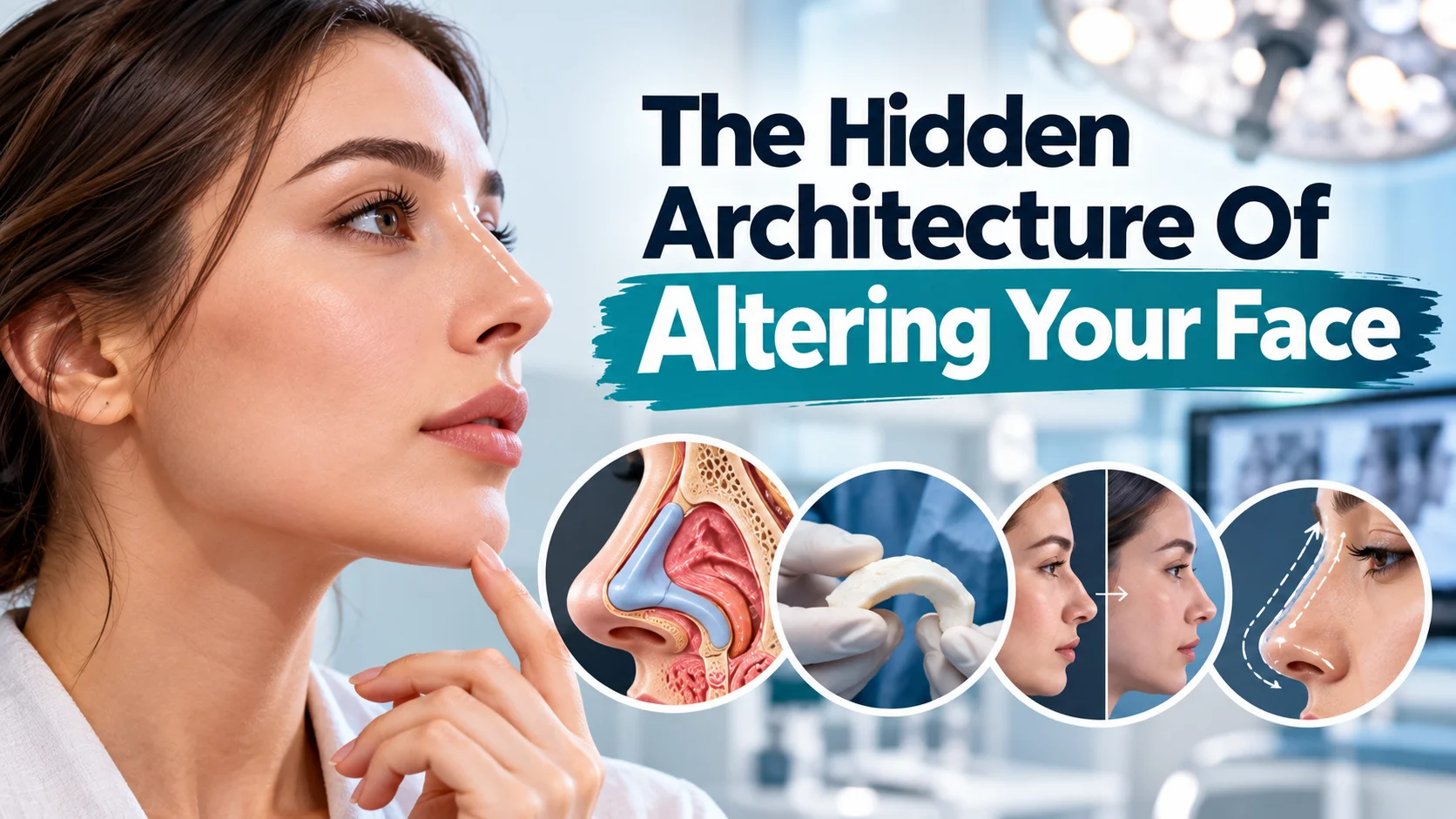

The human face is a delicate structure built on hidden foundations. When you decide to alter its central pillar, you are not simply changing a visual aesthetic. You are entering a complex architectural puzzle where living flesh, bone, and cartilage must be meticulously reconstructed to match a very specific blueprint.
The stakes are incredibly high, and the clues to a successful outcome are buried beneath the skin. If you are exploring the intricate process of Singapore Nose Surgery to reshape your profile, you must act as your own lead investigator. You must closely examine the physical materials your doctor intends to use. A hasty choice leaves behind evidence that can compromise your breathing for decades.
The Danger Of Foreign Materials
The most common and costly mistake patients make is choosing silicone implants simply because they are cheaper and offer a much faster surgical time. Silicone sits neatly under the skin, instantly providing a high, sharp bridge. But the human body is deeply hostile to foreign objects.
Because silicone never integrates with your own tissue, it remains a separate, heavy mass. Over time, gravity and the constant tension of your skin pull tightly across this foreign object. In many cases, the silicone eventually thins the skin from the inside out, leading to a visible, shiny white edge at the tip of the nose that can eventually tear right through the flesh.
Harvesting Your Own Scaffolding
If you wish to avoid the long-term dangers of synthetic implants, you face a significant physical trade-off. Most basic guides will tell you to use autologous cartilage, meaning tissue taken directly from your own body. What they often omit is the gritty reality of where that cartilage comes from.
To build a strong, permanent nasal bridge, a surgeon usually needs a substantial piece of your own rib cartilage. This means you must endure a second surgical site on your chest. You trade the long-term risk of implant rejection for the immediate, sharp pain of a chest incision that makes taking a deep breath uncomfortable for several weeks.
Assessing Your Tissue Thickness
Before you allow a surgeon to map out a grand structural change, you must understand the limits of your own biological canvas. You can apply a simple decision rule at home using the pinch test.
Gently pinch the skin on the bridge of your nose. If the skin feels incredibly thin, almost like the skin on the back of your hand, you cannot support aggressive structural grafts without camouflage. Sharp edges of carved rib cartilage will show right through thin skin like tent poles under a thin sheet. Patients with this tissue type require the surgeon to wrap the new cartilage in a layer of soft fascia, usually taken from the scalp, to hide the harsh edges.
The Brutal Timeline Of Swelling
We are conditioned to expect immediate results from modern medical procedures. However, facial reconstruction does not obey our impatience. When the cast comes off after the first week, the nose you see is absolutely not the nose you will ultimately keep.
The fluid retention in traumatised facial tissue is incredibly stubborn.
- At one month post-surgery, you still retain roughly forty percent of the surgical swelling.
- At six months, the bridge may look refined, but the tip will remain stiff and bulbous.
- The true, final architectural result does not appear until twelve to eighteen months have passed.
Protecting The Human Airway
Aesthetic changes must never override biological function. The nose is primarily a breathing apparatus. The internal cartilage acts like the rigid walls of a tent, keeping the airway completely open when you inhale sharply.
If a surgeon aggressively shaves down the lateral cartilages to give you a narrower tip, those tent walls lose their structural integrity. Two years later, when the internal scar tissue contracts, the sides of your nose will literally suck inward every time you try to take a deep breath. A competent reconstruction always involves placing tiny strips of cartilage, called spreader grafts, to permanently prop the airway open against the forces of inhalation.
When you decide to alter the centre of your face, you are committing to a serious engineering project. You cannot simply cut corners with cheap materials or rush the biology of healing. By choosing your own tissue and respecting the structural mechanics required to breathe properly, you ensure that the face you see in the mirror remains safely intact for the rest of your life.