
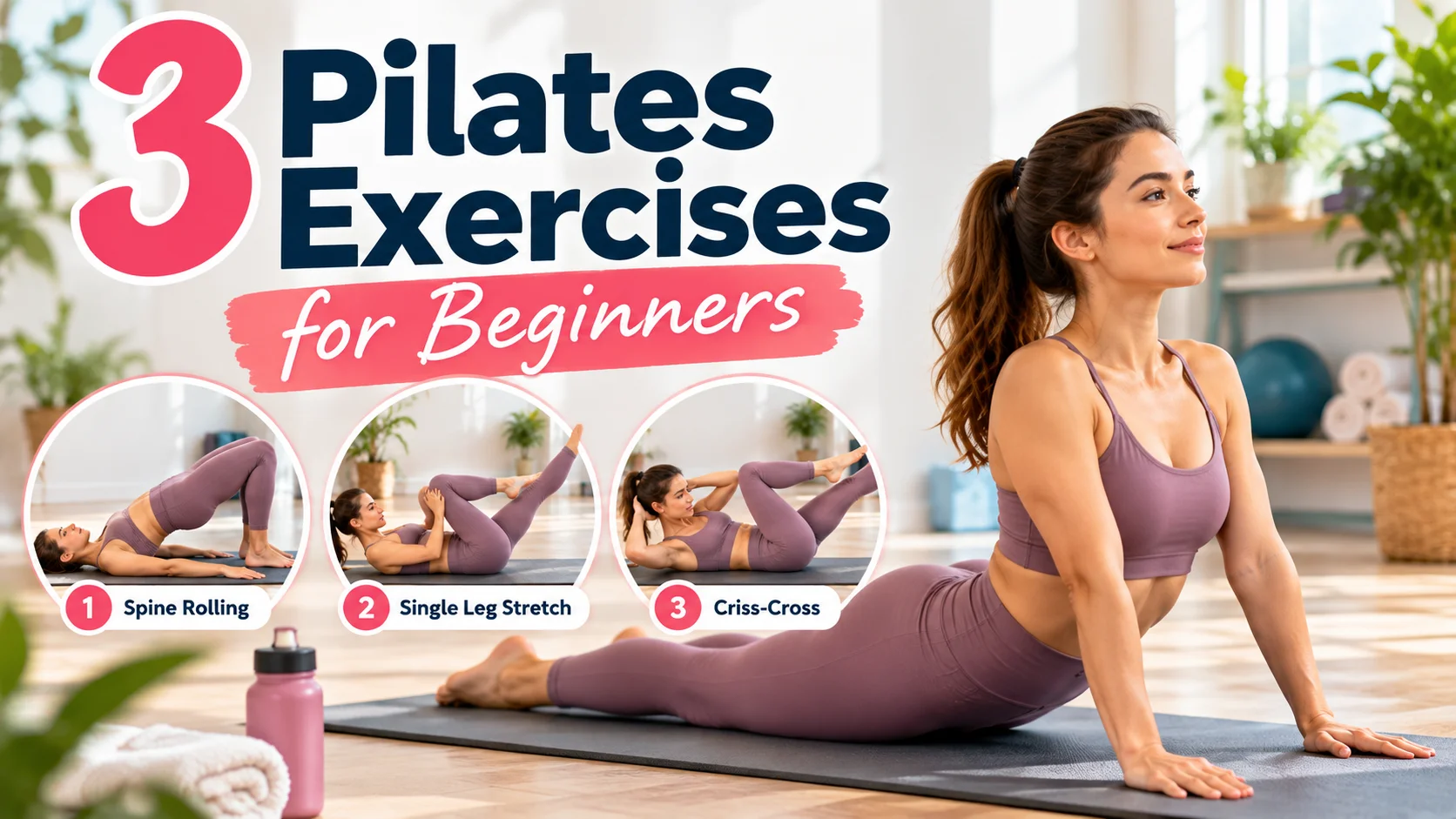
Are you looking for Pilates exercises for beginners that you can try at home? Pilates is a low-impact form of exercise that focuses on controlled movements, core engagement, posture, balance, flexibility, and body awareness. Because many Pilates exercises can be modified to match your fitness level, beginners can use them as a starting point for building strength and confidence.
If you are completely new to working out, knowing where to begin can feel overwhelming. The good news is that you do not need complicated equipment or advanced movements to get started with Pilates. Learning a few basic exercises can help you become familiar with proper breathing, controlled movement, and core activation.
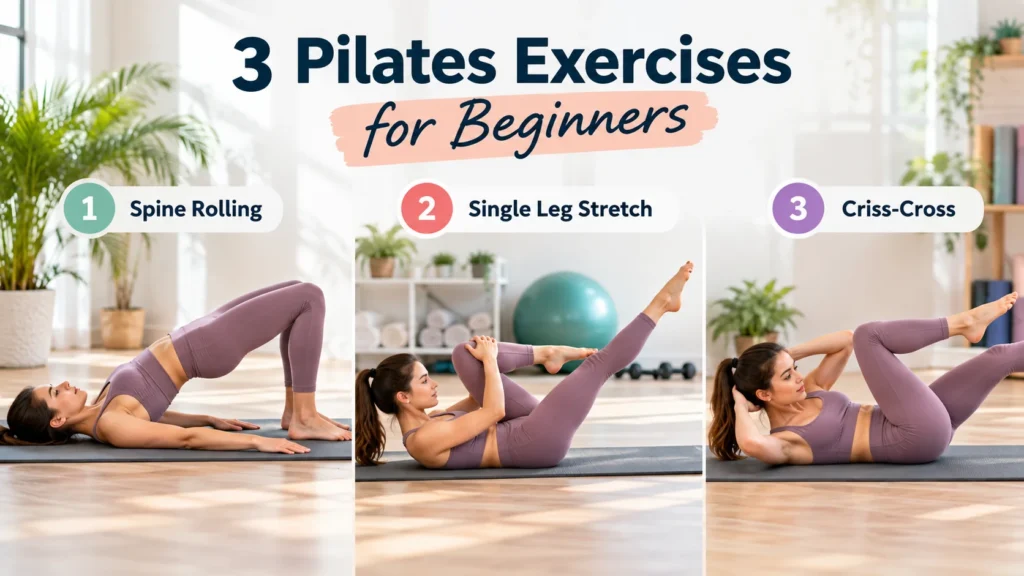
In this guide, we will look at three Pilates exercises for beginners: Spine Rolling, Single Leg Stretch, and Criss-Cross. These movements can be incorporated into a beginner-friendly routine and adjusted as your strength and coordination improve.
What Is Pilates?
Pilates is an exercise method that emphasizes controlled movements, breathing, posture, balance, flexibility, and core strength. Rather than performing movements quickly, Pilates encourages you to pay attention to how your body moves and maintain control throughout each exercise.
For beginners, Pilates can be a useful way to develop body awareness and gradually build strength. Many exercises can be performed on a mat, making it possible to practice at home without a large amount of equipment.
1. Spine Rolling
Spine rolling can be included in a beginner Pilates routine to encourage controlled spinal movement and greater awareness of the core. The exercise requires you to move slowly rather than relying on momentum, making control an important part of the movement.
To perform this exercise, begin by lying on a mat with your feet flat on the floor and your knees bent. Keep your movements slow and controlled as you engage your abdominal muscles. Gradually roll through the spine, lifting the hips into a comfortable bridge position while keeping the feet grounded.
Then slowly reverse the movement and return your spine to the mat. Try to avoid using momentum or forcing your body into a position that feels uncomfortable. Focus on maintaining steady breathing and controlled movement throughout the exercise.
Spine rolling can help beginners practice core control while becoming more familiar with moving the spine in a deliberate and coordinated way. If the movement causes pain in your back or neck, stop and consider speaking with a qualified fitness or healthcare professional.
2. Single Leg Stretch
The Single Leg Stretch is one of the classic Pilates exercises that beginners can learn as they develop core control and coordination. The movement involves alternating the legs while maintaining a stable position through the torso.
Start by lying on your back on a comfortable mat. Bring your knees toward your chest and keep your shoulders relaxed. Engage your abdominal muscles and slowly extend one leg while keeping the other leg bent. Bring the extended leg back toward you and switch sides.
Keep the movement slow and controlled instead of rushing through each repetition. Try to maintain a stable torso while breathing naturally. Beginners can keep the movements smaller if extending the legs fully feels too challenging.
This fundamental Pilates exercise can help you practice core engagement, coordination, and controlled leg movement. As you become more comfortable, you can gradually increase the number of repetitions while continuing to prioritize good form.
Incorporate Pilates exercises into your routine, starting with beginner-friendly moves like the single leg stretch, and experience the benefits of enhanced flexibility and core strength with Castleflexx.
3. Criss-Cross
Criss-Cross is another popular Pilates movement that can introduce beginners to controlled rotational movement and core-focused exercise. It involves coordinating the upper and lower body while maintaining awareness of your breathing and abdominal engagement.
Begin by lying on your back with your knees bent. Place your hands gently behind your head without pulling on your neck. Engage your abdominal muscles and bring your upper body into a comfortable lifted position if you can do so without straining.
Slowly rotate your torso toward one side while bringing the opposite knee toward you. Return to the starting position and repeat the movement on the other side. Continue alternating sides while keeping the movement controlled.
Beginners should focus on maintaining good technique rather than trying to move quickly or achieve a large range of motion. Keep your neck relaxed, breathe steadily, and stop if you experience pain or discomfort.
As you become more experienced with Pilates, exercises can sometimes be progressed or modified to increase the challenge. However, beginners should first learn the basic movement pattern and develop good control before adding additional resistance. Visit https://www.americansportandfitness.com/products/pilates-certification to learn more about Pilates workout options.
How to Start a Beginner Pilates Routine
If you are new to Pilates, you do not need to complete a long workout immediately. Start with a comfortable amount of exercise and concentrate on learning the correct movement patterns. A short routine can be enough to help you become familiar with Pilates.
- Choose a comfortable, non-slip exercise mat.
- Wear clothing that allows you to move freely.
- Begin with gentle movements and gradually increase the challenge.
- Focus on controlled movements instead of speed.
- Pay attention to your breathing throughout the exercises.
- Stop an exercise if you experience pain or unusual discomfort.
- Allow your body enough time to recover between challenging workouts.
Consistency is more important than trying to do too much during your first session. As your coordination and strength improve, you can gradually build a more complete Pilates routine.
Benefits of Pilates for Beginners
Pilates can provide a range of physical benefits when practiced consistently and with appropriate technique. Beginner-friendly Pilates exercises can help develop core strength, body awareness, balance, flexibility, coordination, and controlled movement.
Another useful aspect of Pilates is that many exercises can be modified. This allows beginners to start with simpler variations and progress gradually as they become more comfortable with the movements.
Common Mistakes Beginners Should Avoid
When learning Pilates, beginners sometimes focus on completing as many repetitions as possible instead of learning proper technique. This can make exercises less effective and may increase the risk of discomfort.
- Moving too quickly: Pilates emphasizes controlled movement, so rushing can reduce your ability to maintain proper form.
- Holding your breath: Try to breathe steadily instead of holding your breath during challenging movements.
- Using momentum: Use your muscles to control each movement rather than swinging or jerking your body.
- Ignoring discomfort: Muscle effort can be normal, but sharp or persistent pain should not be ignored.
- Progressing too quickly: Learn the basic version of an exercise before attempting a more difficult variation.
Key Pilates Exercises for Beginners
Pilates exercises are adaptable to different fitness levels and can be modified according to your experience and physical abilities. For beginners, exercises such as Spine Rolling, Single Leg Stretch, and Criss-Cross can provide an introduction to controlled movement, core engagement, coordination, and body awareness.
Remember that good technique is more important than completing a large number of repetitions. Start slowly, focus on your breathing, and give yourself time to become comfortable with each movement.
Pilates is also accessible through online classes, tutorials, and fitness apps, which can make it easier to practice at home. If you have an existing injury, medical condition, or significant pain, consider getting appropriate professional guidance before starting a new exercise program.
Frequently Asked Questions About Pilates Exercises for Beginners
Is Pilates good for beginners?
Yes. Pilates can be adapted for beginners by using simple movements, a comfortable range of motion, and an appropriate level of resistance. Beginners should focus on learning proper technique before progressing to more challenging exercises.
What Pilates exercises should beginners start with?
Spine Rolling, Single Leg Stretch, and Criss-Cross are three exercises that can introduce beginners to core engagement, controlled movement, coordination, and body awareness. They should be performed at a comfortable level and modified when necessary.
Can I do Pilates at home?
Yes. Many beginner Pilates exercises can be performed at home using an exercise mat and comfortable clothing. Make sure you have enough clear space to move safely and follow reliable instructions when learning new exercises.
How often should a beginner do Pilates?
The appropriate frequency depends on your current fitness level, goals, and overall activity. Beginners can start with manageable sessions and gradually increase their routine as their body becomes accustomed to the exercises.
Can Pilates help strengthen the core?
Many Pilates exercises emphasize the abdominal and other muscles involved in stabilizing the trunk. Regular practice can help develop core strength and improve awareness of how you control your body during movement.
Should I feel pain when doing Pilates?
Pilates exercises can require muscular effort, but sharp, severe, or unusual pain is not something you should try to push through. Stop the exercise if you experience pain and seek appropriate professional advice when necessary.
For more great articles on health, fitness, and more, be sure to check out the rest of our blog!