
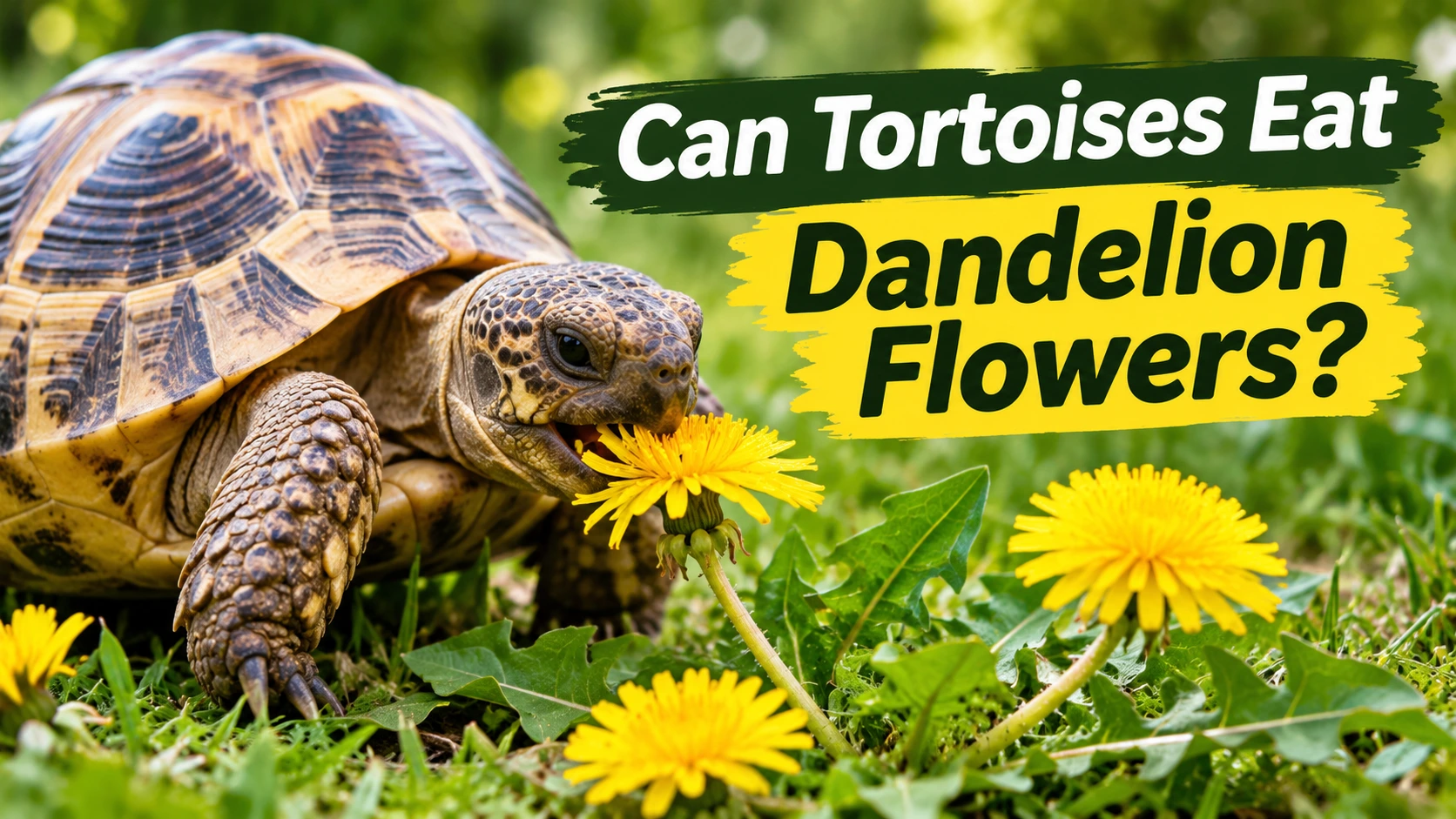
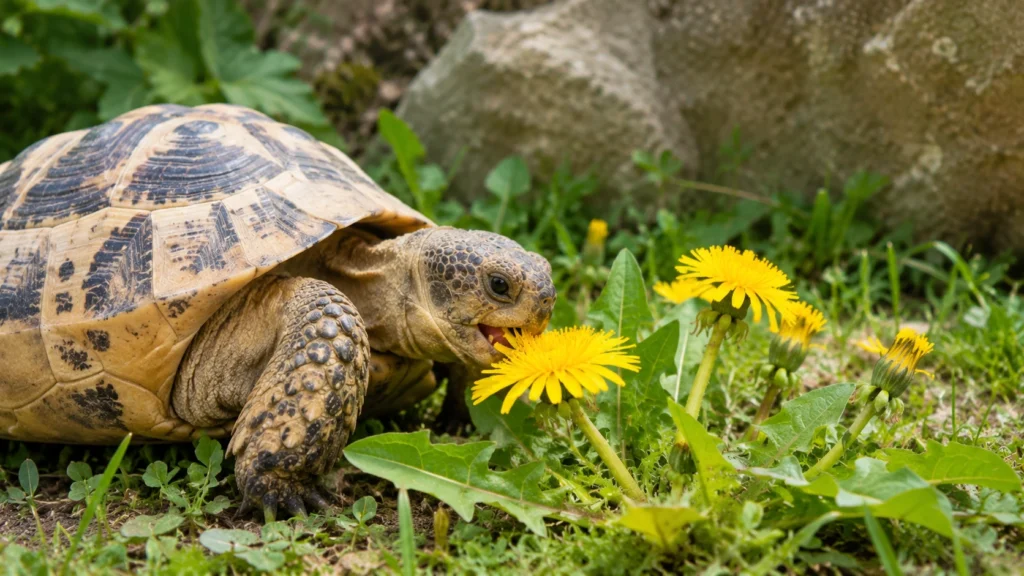
Can tortoises eat dandelion flowers? Yes! Dandelion flowers are generally safe for many tortoise species and can be a nutritious addition to their diet when offered in appropriate amounts. These bright yellow wildflowers contain fiber and several vitamins and minerals that contribute to a tortoise’s overall nutrition. However, dandelions should not be the only plant your tortoise eats.
Dandelions (Taraxacum officinale) are commonly found in gardens, lawns, meadows, and fields. They are particularly useful for tortoise owners because different parts of the plant, including the leaves, stems, and flowers, can be suitable food for many species.
Nevertheless, there are a few important precautions to understand before adding dandelions to your pet’s feeding routine. Their natural oxalate content, potential pesticide exposure, and the nutritional requirements of different tortoise species all matter.
In this guide, we’ll explain whether tortoises can eat dandelion flowers, their nutritional benefits, which plant parts are suitable, how often to offer them, and how to prepare them safely.
Can Tortoises Eat Dandelion Flowers?
Yes, most commonly kept herbivorous tortoises can eat correctly identified, pesticide-free dandelion flowers. Dandelions are widely recognized as suitable forage for several tortoise species, including Mediterranean tortoises and sulcata tortoises.
Dandelions are particularly useful because they provide variety in a natural, plant-based feeding routine. Their leaves, stems, and flowers can all be offered as part of a varied diet, depending on the nutritional requirements of your tortoise species.
However, dandelions should be fed in moderation rather than becoming the only food available. They contain oxalic acid and oxalates, natural plant compounds that can interfere with calcium absorption when consumed in excessive amounts.
Follow these basic feeding guidelines:
- Offer correctly identified dandelions from pesticide-free areas.
- Wash the flowers and other edible plant parts before feeding.
- Include dandelions as part of a varied selection of suitable plants.
- Avoid feeding large quantities of dandelions every day.
- Introduce new plants gradually.
- Provide fresh drinking water at all times.
Remember that different tortoise species have different dietary requirements. A grazing species such as a sulcata tortoise needs a diet with substantial grass and hay, while Mediterranean species generally require a varied selection of edible weeds and leafy plants.
Understanding a Tortoise’s Natural Diet
Tortoises are herbivores, meaning their natural diet consists primarily of plant material. Depending on their species and natural habitat, they may eat grasses, leaves, flowers, weeds, and other vegetation.
Providing a suitable diet in captivity involves understanding what your particular tortoise would naturally eat. Simply offering the same vegetables or flowers every day may not provide the nutritional variety it needs.
Some important principles of tortoise feeding include:
- Dietary variety: Offer different suitable plants rather than relying on one food source.
- High fiber: Many tortoise species require a diet rich in natural plant fiber.
- Appropriate calcium: Calcium is important for healthy bones and shell development.
- Limited sugars: Avoid excessive amounts of sweet fruits, particularly for species adapted to grazing on grasses and weeds.
- Clean food: Only provide plants that are free from pesticides, herbicides, and other harmful chemicals.
Fresh dandelions can contribute to this variety, but they should be included according to the dietary requirements of the individual species.
Nutritional Benefits of Dandelion Flowers for Tortoises
Dandelions are more than ordinary garden weeds. They contain several nutrients and plant compounds that can contribute to a tortoise’s varied diet.
1. Dietary Fiber
Fiber is an important part of the diet of herbivorous tortoises. It supports normal digestive function and provides suitable plant material for their digestive systems.
Dandelion plant material contains dietary fiber, making it a useful addition to a varied selection of edible weeds and leafy plants.
2. Vitamins
Dandelions contain several vitamins, including vitamins A, C, and K. These nutrients contribute to different biological functions.
- Vitamin A: Supports normal vision, skin, and tissue health.
- Vitamin C: Participates in normal antioxidant and tissue functions.
- Vitamin K: Plays an important role in normal blood clotting.
The exact nutrient composition can vary depending on the plant part, growing conditions, and maturity of the dandelion.
3. Minerals
Dandelions contain minerals such as calcium, potassium, and iron. Calcium is particularly important for tortoises because it supports normal bone and shell development.
However, eating dandelions does not automatically meet all of a tortoise’s calcium requirements. A suitable overall diet, appropriate UVB exposure, and species-specific supplementation may still be necessary.
4. Natural Plant Variety
Offering different safe plants helps prevent a tortoise’s diet from becoming unnecessarily repetitive. Dandelion flowers provide a different texture and taste from ordinary leafy greens and grasses.
They can therefore be included in a varied feeding routine alongside other suitable weeds, flowers, and vegetation.
Which Parts of the Dandelion Plant Can Tortoises Eat?
One common misconception is that tortoises should only eat dandelion flowers. In reality, the leaves, stems, and flowers of correctly identified common dandelions can all be suitable food for many tortoise species.
Dandelion Flowers
The bright yellow flowers are commonly enjoyed by tortoises. They can be offered fresh after being carefully washed and checked for contamination.
Use them as part of a varied diet rather than feeding large quantities as the main food source.
Dandelion Leaves
Dandelion leaves are also edible for many tortoises. They contain fiber and various nutrients that contribute to a plant-based diet.
However, older leaves may contain higher concentrations of oxalates. Avoid relying heavily on dandelion greens and combine them with other appropriate plants.
Dandelion Stems
The stems can also be eaten by many tortoises. They provide additional plant material and can be included in a suitable feeding selection.
Make sure the stems are clean, fresh, and free from chemical contamination.
Dandelion Roots
Dandelion roots are not generally necessary as a regular food item for pet tortoises. Most feeding routines focus on the leaves, flowers, and stems. If you are considering offering roots, check their suitability for your tortoise species with a reptile veterinarian.
Potential Risks of Feeding Dandelions to Tortoises
Although dandelions are generally suitable for many tortoises, they are not completely free from potential dietary concerns. Understanding these risks helps you offer them responsibly.
1. Oxalates and Calcium Absorption
Dandelions naturally contain oxalic acid and oxalates. These compounds can bind with calcium and reduce its availability for absorption.
Small amounts of oxalate-containing plants can be included in a varied diet, but regularly feeding excessive quantities may contribute to nutritional imbalances.
To reduce this risk:
- Avoid making dandelions the only regular food source.
- Rotate different suitable plants and weeds.
- Do not combine several high-oxalate foods as the main part of every meal.
- Follow an appropriate calcium supplementation plan.
2. Pesticides and Herbicides
One of the most important precautions is avoiding chemically treated plants.
Dandelions growing beside roads, public lawns, agricultural areas, or treated gardens may have been exposed to pesticides, herbicides, fertilizers, or other contaminants.
Even washing a contaminated plant cannot guarantee that harmful chemicals have been removed. Collect dandelions only from areas where you can confidently establish that no harmful chemicals have been applied.
3. Excessive Feeding
Feeding too many dandelions can reduce dietary variety and increase exposure to their naturally occurring oxalates.
Instead of offering large quantities of the same plant, provide a selection of suitable weeds, grasses, and leafy vegetation based on your tortoise’s species.
4. Incorrect Plant Identification
Not every yellow-flowering plant is a dandelion. Some wild plants look similar but may have different nutritional properties or toxic compounds.
Before collecting wild plants, make sure you can correctly identify Taraxacum officinale. If you are uncertain about a plant’s identity, do not feed it to your tortoise.
How to Safely Feed Dandelion Flowers to Tortoises
Preparing dandelions properly is important for reducing contamination risks and maintaining good feeding practices.
Step 1: Select Fresh Dandelions
Choose healthy-looking dandelions from a location that has not been treated with pesticides or herbicides. Avoid plants growing near busy roads, industrial areas, or places where chemical contamination is possible.
Step 2: Identify the Plant Correctly
Make sure the plant is a common dandelion (Taraxacum officinale). Do not rely on flower color alone when identifying wild plants.
Step 3: Wash Thoroughly
Rinse the collected flowers, leaves, and stems under clean running water. Remove visible dirt, insects, and other debris.
Step 4: Prepare Suitable Portions
Offer an appropriate quantity based on your tortoise’s size, species, and normal diet. Smaller tortoises may need their food cut into manageable pieces.
Step 5: Combine With Other Suitable Plants
Mix dandelions with other appropriate foods to provide nutritional variety. Depending on the species, these may include grasses, hay, plantain weeds, clover, and other safe leafy plants.
Step 6: Observe Your Tortoise
When introducing dandelions for the first time, start with a small amount. Monitor your tortoise’s appetite, droppings, and general behavior.
If you notice persistent digestive changes or other unusual symptoms, stop offering the new food and consult a reptile veterinarian.
Other Safe Food Options for Tortoises
Dandelion flowers are only one of many suitable plant foods available for tortoises. Providing different safe plants helps create a more varied diet.
1. Hibiscus Flowers
Hibiscus flowers and leaves can be suitable food for many tortoise species. They provide variety and are commonly included in tortoise feeding plans.
Read our related guide: Can Tortoises Eat Hibiscus Flowers?
2. Rose Petals
Untreated rose petals can be offered to many tortoises as part of a varied diet. Always ensure that the flowers have not been sprayed with pesticides or other chemicals.
Read more: Can Tortoises Eat Rose Petals?
3. Plantain Weeds
Plantain weeds are different from the banana-like fruit commonly called plantain. The leaves of suitable Plantago species are useful forage for many herbivorous tortoises.
4. Clover
Some clover varieties can be included in a tortoise’s diet. However, clover should be offered in appropriate amounts and should not replace the main foods recommended for the species.
Read our guide: Can Tortoises Eat Clover?
5. Grasses and Hay
Grasses and hay are especially important for grazing species such as sulcata tortoises. They provide the fiber and roughage needed to support their natural feeding habits.
The exact proportion of grasses, weeds, and leafy vegetation should depend on the species being kept.
How Often Can Tortoises Eat Dandelion Flowers?
There is no single feeding frequency that is suitable for every tortoise species. Dandelions can be included in a regular rotation of appropriate plants, but their contribution should be balanced with other foods.
Consider the following general guidance:
- Mediterranean tortoises: Dandelion flowers and leaves can be included in a varied selection of edible weeds and leafy plants.
- Sulcata tortoises: Dandelions can provide variety, but grasses and hay should remain central to their diet.
- Red-footed tortoises: Dandelions may be included as part of a species-appropriate varied diet that accounts for their different nutritional requirements.
Do not use one universal feeding schedule for every tortoise. Age, species, health, and overall diet all influence how much of a particular plant should be offered.
Final Thoughts
So, can tortoises eat dandelion flowers? Yes. Correctly identified, pesticide-free dandelion flowers are suitable for many herbivorous tortoises and can provide useful nutritional variety.
The leaves and stems can also be suitable food for many species, although the oxalate content means that dandelions should not dominate the diet. A balanced feeding routine should include a variety of appropriate weeds, grasses, flowers, and leafy vegetation.
Always wash collected plants, avoid chemically treated areas, and introduce new foods gradually. Most importantly, understand the dietary requirements of your particular tortoise species.
With proper food selection and responsible feeding practices, dandelions can be a useful addition to a healthy and varied tortoise diet.
Frequently Asked Questions (FAQs)
1. Can tortoises eat dandelion flowers every day?
Dandelion flowers can be included regularly as part of a varied diet, but they should not be the only food offered every day. Their oxalate content makes dietary variety particularly important.
2. Can tortoises eat dandelion leaves?
Yes. Dandelion leaves are suitable for many tortoise species. However, older leaves can contain higher concentrations of oxalates, so they should be included as part of a varied feeding routine.
3. Can baby tortoises eat dandelion flowers?
Many baby tortoises can eat correctly identified, pesticide-free dandelion flowers. Offer appropriately prepared portions and follow a diet designed for the specific species and its growth stage.
4. Are dandelions good for tortoises?
Yes. Dandelions provide fiber and various vitamins and minerals. They can contribute to dietary variety when combined with other suitable plants.
5. Can sulcata tortoises eat dandelion flowers?
Yes. Sulcata tortoises can eat dandelion flowers and leaves. However, grasses and hay should form the foundation of their diet, with dandelions included as part of a varied selection of suitable vegetation.
6. Can red-footed tortoises eat dandelion flowers?
Yes. Red-footed tortoises can generally eat dandelion flowers. However, their dietary requirements differ from those of many grazing tortoise species, so dandelions should be included within an appropriate species-specific feeding plan.
7. Are dandelion stems safe for tortoises?
Yes. The stems of correctly identified common dandelions can be eaten by many tortoise species. Make sure they are fresh, clean, and free from pesticides or other harmful chemicals.
8. Do dandelions contain oxalates?
Yes. Dandelions naturally contain oxalic acid and oxalates. These compounds can bind to calcium and reduce its absorption. Feeding dandelions as part of a varied diet helps avoid excessive dependence on one plant.
9. Can tortoises eat dandelions picked from the garden?
Yes, provided the plants are correctly identified and the garden has not been treated with pesticides, herbicides, or other potentially harmful chemicals. Wash the plants thoroughly before offering them.
10. What other flowers can tortoises eat?
Depending on the tortoise species, suitable flowers can include hibiscus, untreated rose petals, and certain other edible wildflowers. Always check the plant’s identity and safety before feeding it to your pet.
11. Can tortoises eat dried dandelion flowers?
Dried dandelion flowers may be suitable if they are correctly identified, naturally dried, and free from pesticides, mold, and additives. Fresh, clean plant material is also a useful option. Introduce dried foods gradually and maintain access to fresh water.
12. Should dandelions replace a tortoise’s regular food?
No. Dandelions should not replace the entire diet. Tortoises need a varied selection of suitable plants, and grazing species also require appropriate grasses and hay. The correct balance depends on the tortoise’s species.