
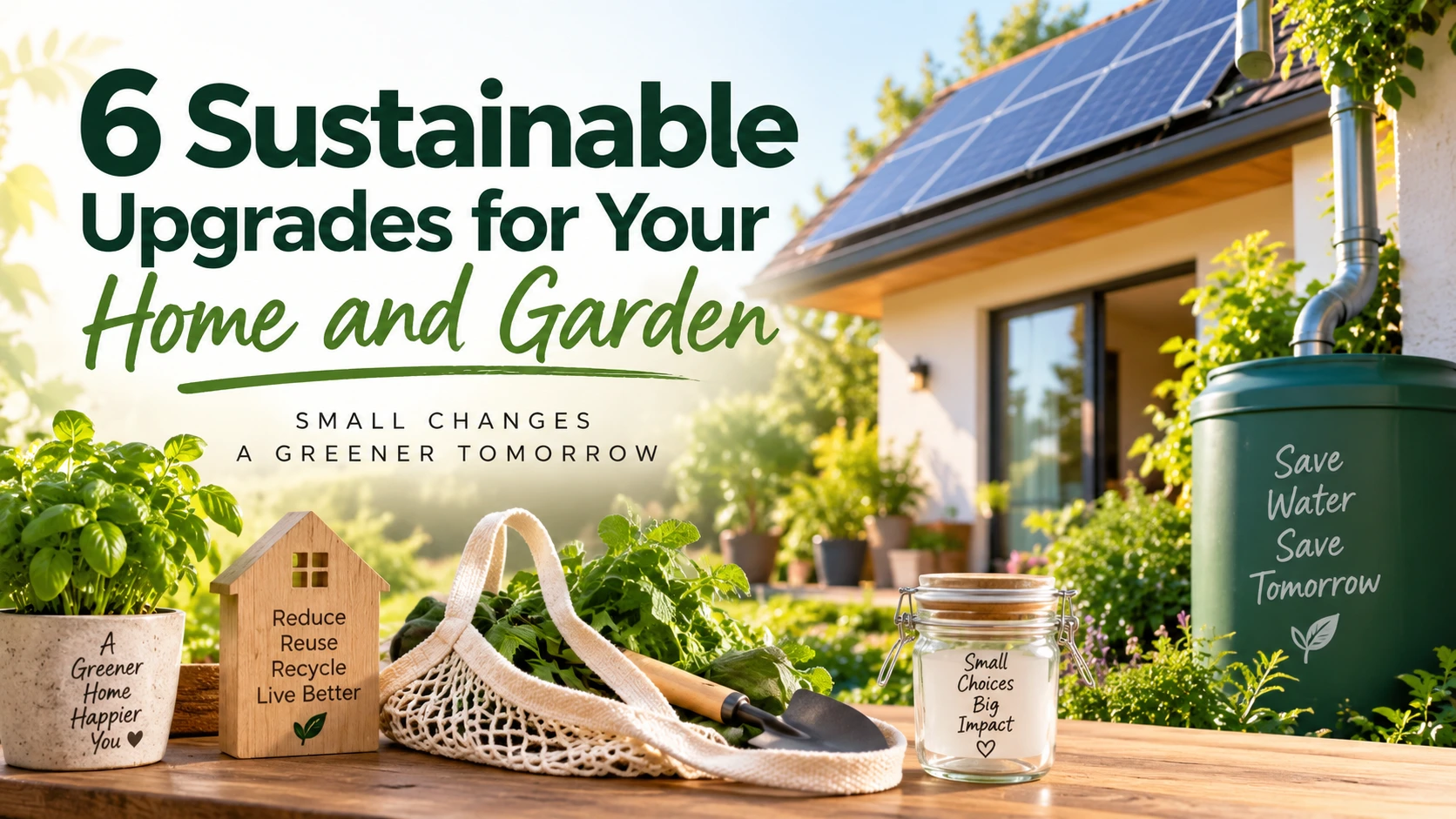
Making your home more sustainable doesn’t have to mean taking on a huge renovation project. Even a few thoughtful changes can reduce waste, conserve energy and water, improve your indoor environment, and potentially lower your household bills.
A more sustainable home can also be a healthier place to live. Choosing materials with fewer harmful chemicals, improving energy efficiency, and being more mindful about how you use resources can all make a difference over time.
The good news is that you don’t have to change everything at once. Start with a few practical improvements and build from there. Here are six sustainable upgrades for your home and garden that are worth considering.
What Makes a Home Sustainable?
A sustainable home is designed and maintained with efficiency, resource conservation, and long-term environmental impact in mind.
One important area is the materials you bring into your home. Choosing durable, responsibly sourced, and lower-toxin materials can help create a healthier living environment. Energy efficiency is another major factor. Appliances, lighting, windows, insulation, and other features that use less energy can reduce waste while helping you save money.
It’s also important to think about what happens to the things you already have. Reusing, repairing, repurposing, and recycling materials can keep unnecessary waste out of landfills.
Water conservation matters too. From the way you water your garden to the fixtures you use inside your home, small changes can reduce how much water you consume.
With those principles in mind, let’s look at some practical upgrades you can make around your home.
1. Upgrade Your Windows and Doors
Well-sealed windows and doors can make it easier to control the temperature inside your home while reducing unnecessary energy use. They can also help prevent drafts and unwanted heat transfer.
If your windows or doors are old or damaged, replacing them with more efficient options can be a worthwhile long-term investment. Depending on your budget and the design of your home, you might consider materials such as wood, glass, or vinyl. Choosing locally sourced materials where possible can make the upgrade even more environmentally responsible.
However, replacing everything isn’t always necessary.
A simpler and less expensive option is to improve the windows and doors you already have. You can reseal gaps using caulk, glazing, weather stripping, or similar materials. Curtains, blinds, and other window treatments can also help with temperature control.
If you’re considering additional improvements, options such as window glazing can help improve the performance of your windows.
Before making a major change, inspect your existing windows and doors carefully. Sometimes a few relatively inexpensive repairs can make a noticeable difference.
2. Improve Your Home’s Insulation
Windows and doors aren’t the only parts of your home that affect energy efficiency. Heat can also move through the roof, walls, ceilings, and other parts of the building envelope.
Good insulation helps slow that heat transfer. In the right climate and application, insulation can help your home stay more comfortable while reducing the amount of energy needed for heating or cooling.
There are several insulation materials available, including aerogel, sheep’s wool, polystyrene, cork, and others. The best option depends on your home’s construction, climate, budget, and the area you’re insulating.
Rather than choosing a material simply because it is marketed as eco-friendly, consider its overall performance, durability, environmental impact, and suitability for your home.
Improving insulation can be particularly useful when combined with other energy-saving measures. A more efficient home generally needs less energy to maintain a comfortable indoor temperature.
3. Consider a Green Roof
If you’re looking for a more ambitious way to make your home greener, a green roof is an interesting option.
A green roof is a roof that is partially or completely covered with vegetation along with the appropriate waterproofing and growing layers. Besides adding greenery to a building, a properly designed green roof can provide insulation, help manage rainwater, and reduce the amount of heat absorbed by the roof.
Green roofs can also contribute to the appearance of a property and create an attractive connection between the home and its surrounding environment.
Another roof improvement worth considering is installing solar panels. Solar energy allows you to generate electricity from a renewable source and can reduce your reliance on conventional grid electricity.
Solar panels generally require relatively little maintenance, although they should still be inspected and cleaned when necessary to keep the system operating properly.
When planning either a green roof or solar installation, make sure the existing roof is structurally suitable and have the work assessed by an appropriately qualified professional.
4. Make Your Kitchen More Sustainable
A kitchen renovation can become one of the most expensive home improvement projects, but you don’t necessarily need to replace everything to give your kitchen a fresh look.
One of the most sustainable approaches is to work with what you already have.
For example, if your cabinets are still in good condition, consider refreshing them with an eco-friendly paint instead of replacing them. You can also replace worn handles and knobs to give existing cabinetry a completely different appearance.
If you do need a new kitchen, consider second-hand or ex-display units. Reusing a kitchen that is still in good condition can reduce the amount of usable material that ends up being discarded.
When buying new appliances, look for energy-efficient models and pay attention to the efficiency labels. Using less energy for the same everyday tasks can reduce both resource consumption and running costs.
For larger renovations, working with experienced kitchen remodeling services can help you plan the project around your budget and avoid unnecessary waste. A phased renovation can also make sense. Instead of removing everything at once, you could update the cabinets, countertops, flooring, or other elements as needed.
This approach can reduce material waste while allowing you to keep usable parts of the existing kitchen out of the landfill.
Another easy improvement is changing the cabinet hardware. Replacing handles and knobs can modernize a kitchen without requiring new cabinets. Choosing durable hardware, such as the products available at Wood n Wax, can also mean fewer replacements over the years.
The most sustainable kitchen isn’t necessarily the newest one. Often, it’s the one where you find ways to extend the life of what you already own.

5. Collect Rainwater
If your home receives plenty of rainfall, rainwater harvesting can be a practical way to make better use of a resource that would otherwise run off your roof.
A basic rainwater collection system can direct water from your roof into storage barrels or tanks. With suitable filtration and a properly designed system, collected rainwater can be used for appropriate household purposes, particularly outdoor tasks such as watering lawns, plants, and gardens.
Before installing a system, check local requirements and make sure the setup is designed correctly. Proper installation and maintenance are important for getting the most from a rainwater collection system.
For lawn and garden care, professionals at peakservices.com recommend using collected rainwater for outdoor vegetation.
Rainwater harvesting can reduce your dependence on treated water for suitable uses, conserve a valuable resource, and potentially help lower water consumption.
6. Switch to LED Lighting
Lighting is one of the easiest areas of your home to improve.
Walk through your house and count how many bulbs you use indoors and outdoors. If many of them are older, less-efficient types, replacing them with LED bulbs can reduce electricity consumption.
LED lighting uses considerably less energy than traditional incandescent lighting and generally lasts much longer. That means you may save both energy and money over the lifetime of the bulbs.
You don’t necessarily have to replace every bulb in the house at once. Start with the lights you use most often, then replace the others as they reach the end of their useful life.
For an even more efficient lighting setup, make use of natural daylight whenever practical and switch lights off when rooms aren’t being used.
Bonus: Create an Indoor Garden
You don’t need a large backyard to start growing some of your own food.
An indoor garden can be a simple project for the whole family. Start with a few easy-to-grow herbs or spices near a sunny kitchen window and gradually expand as you become more comfortable caring for plants.
Growing some of your own food can encourage healthier eating habits while giving everyone in the household an opportunity to learn more about where food comes from.
If you’re looking for something a little different, you can also try organic mushroom growing kits. They’re compact, beginner-friendly, and can be a good option when you don’t have much space.
Build your indoor garden little by little, involve your family, and enjoy the process. It doesn’t have to be perfect to be worthwhile.
Conclusion
Making your home more sustainable is a gradual process. You don’t need to complete a major renovation or change every habit overnight. Even simple improvements, such as sealing drafty windows, improving insulation, switching to LED lighting, collecting rainwater, or growing a few herbs at home, can be a good place to start.
The most effective approach is to focus on changes that make sense for your home, budget, and lifestyle. Look for opportunities to use less energy and water, reuse what you already own, and choose durable products that won’t need to be replaced frequently.
Over time, these small decisions can add up to a more efficient, comfortable, and environmentally conscious home that the whole family can enjoy.