You know that weird moment when your house starts behaving slightly differently and you convince yourself it’s probably nothing?
Yeah. Most homeowners do that.
A tiny crack above the doorway suddenly appears after winter. One kitchen cabinet won’t close correctly anymore. The hallway floor feels just a little slanted, but only if you really pay attention and walk across it holding coffee like a nervous Olympic balancing act.
Nothing dramatic. That’s the problem.
Foundation stress usually arrives quietly. Homes don’t typically throw tantrums right away. They drop hints. Small clues. Odd little behaviors that seem unrelated until somebody connects the dots later and realizes the house has been politely asking for help for years.
If you’ve started noticing subtle changes around your home, companies like Acculevel often explain how moisture problems, shifting soil and structural settling can gradually create warning signs long before major foundation damage becomes obvious. And honestly, most homeowners miss the early symptoms because life’s busy and the clues don’t seem urgent yet.
That “yet” part tends to matter.
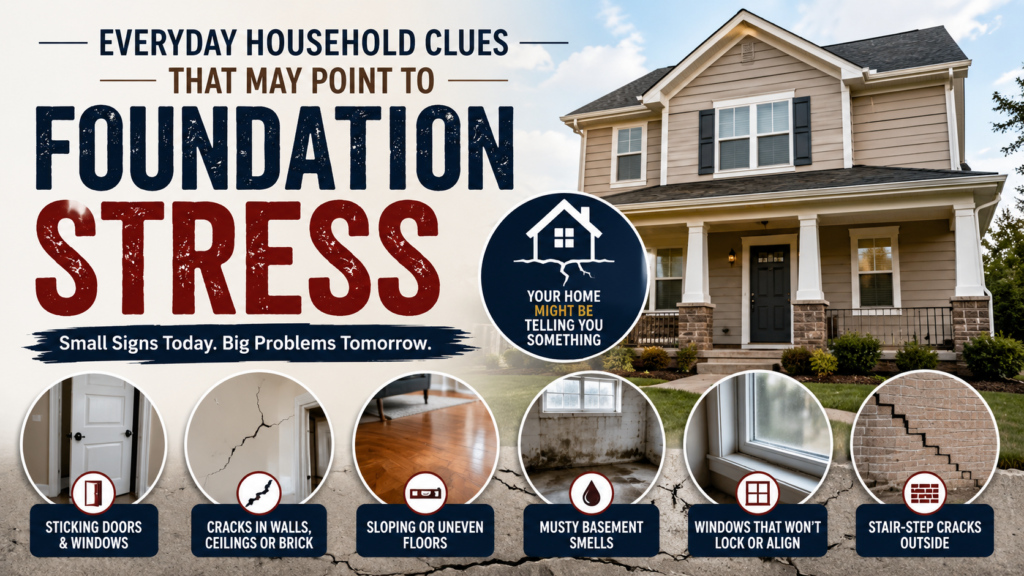
Doors That Suddenly Start Acting Difficult
This one catches people constantly.
At first maybe the bathroom door sticks during humid afternoons. You blame the weather because humidity makes everything weird anyway. Hair frizzes. Wood swells. Human patience evaporates instantly inside grocery store parking lots.
But when several doors or windows throughout the home suddenly become harder to open or close, the issue may involve subtle structural movement underneath the house itself.
Foundations shift gradually over time. That movement affects framing alignment throughout the structure. Tiny shifts downstairs eventually create crooked pressure upstairs.
I remember a homeowner once joking that her pantry door had “developed an attitude problem” because it kept swinging open randomly no matter how often she adjusted the hinges. Turns out uneven settling had slightly shifted the frame alignment after years of drainage problems near one side of the home.
The pantry door was innocent the whole time.
Tiny Wall Cracks Usually Mean More Than People Think
Hairline cracks happen naturally in many homes eventually. Drywall ages. Paint settles. Seasonal weather changes cause materials to expand and contract slightly.
That part’s normal.
But recurring cracks deserve attention, especially diagonal cracks around windows, ceilings or doorways. Those patterns often suggest structural stress redistributing unevenly through the home itself.
And honestly, some cracks just feel suspicious.
You patch them once. Fine.
Patch them twice? Mildly annoying.
By the third repaint, the wall basically starts feeling personally committed to chaos.
One friend spent months repeatedly fixing the same dining room crack until an inspection revealed shifting soil beneath the foundation had been gradually affecting that section of the house for years.
The crack kept returning because the structure underneath never stopped moving.
Floors Start Telling the Story Early
Floors are weirdly honest.
At first maybe your office chair rolls sideways during Zoom calls. Maybe guests subtly adjust their balance walking through one hallway. Maybe your dog suddenly prefers sleeping in the same corner because apparently even pets notice slopes before humans do.
People adapt incredibly fast to gradual structural changes.
One family I visited had a living room floor that dipped slightly near the fireplace. Nobody living there noticed anymore because their brains had fully recalibrated over time. Meanwhile every visitor entering the room instinctively slowed down for half a second like the floor felt emotionally suspicious.
Turns out long term crawlspace moisture had weakened support beams underneath the room.
The floors knew long before the homeowners did.
Basement Smells Usually Matter More Than People Realize
People dismiss basement odors constantly.
“Basements always smell weird.”
Sure. Maybe a little. But persistent musty smells often reveal moisture buildup happening somewhere underneath the home. And moisture problems rarely stay politely downstairs forever.
Humidity spreads upward. Mold develops quietly behind walls. Wooden supports absorb moisture gradually over time.
The whole house eventually feels it.
According to the Environmental Protection Agency, controlling indoor moisture is one of the most important factors in preventing mold growth and protecting indoor air quality. Makes perfect sense honestly because mold absolutely loves dark damp spaces the way raccoons love unsecured garbage cans.
One homeowner described her basement smell as “wet cardboard mixed with forgotten towels,” which honestly painted an alarmingly vivid picture immediately.
Windows That Refuse to Cooperate
Windows become surprisingly dramatic when homes settle unevenly.
Suddenly they stick halfway open. Locks stop lining up properly. Frames feel tight during certain seasons. Homeowners usually blame aging hardware at first, which honestly seems reasonable because windows are already complicated little chaos rectangles.
But when multiple windows throughout the home start behaving differently at the same time, foundation movement may be affecting frame alignment underneath the structure.
Homes reveal stress through patterns.
One isolated issue? Maybe nothing.
Several appearing together? Different conversation entirely.
Crawlspaces Quietly Create Structural Trouble
Crawlspaces are deeply underappreciated sources of household nonsense.
Dark. Damp. Full of mystery pipes and abandoned holiday decorations nobody’s touched since Obama’s first term. And unfortunately, crawlspaces often hide structural issues extremely well because homeowners understandably avoid crawling around underneath the house recreationally.
Excess moisture beneath the structure weakens support systems gradually over time. Wooden beams absorb humidity. Mold spreads quietly. Floor joists soften.
Then the symptoms appear upstairs:
- Uneven flooring
- Increased squeaking
- Soft spots beneath carpet
- Humidity indoors
- Persistent musty smells
Everything underneath eventually affects everything above.
That’s the frustrating part.
Outside Clues Often Get Ignored Too
Foundation stress doesn’t limit itself to indoor symptoms.
Outside the home, warning signs sometimes include:
- Standing water near the foundation
- Soil pulling away from exterior walls
- Stair step cracks in brickwork
- Tilting porches or patios
- Gutters overflowing constantly
The challenge is that homeowners usually treat these as unrelated maintenance annoyances instead of recognizing them as connected structural clues.
And honestly, homes are complicated ecosystems pretending to be simple buildings.
One drainage problem outside eventually affects soil stability underneath. That movement affects framing above. Then doors shift. Floors slope slightly. Cracks spread.
Everything talks to everything else structurally.
Seasonal Weather Makes Foundation Stress Worse
Weather patterns lately feel absolutely unhinged.
Heavy storms followed by long dry stretches create major fluctuations in soil moisture around homes. Freeze thaw cycles during winter create even more underground movement as moisture expands and contracts repeatedly beneath the foundation.
Homes absorb all of it.
Clay heavy soil especially reacts dramatically to changing moisture levels. One rainy month it expands aggressively. Then summer heat dries everything out and the soil contracts again beneath portions of the home.
The structure above eventually responds.
Some homeowners notice fresh cracks after unusually wet seasons. Others discover sticking doors during humid summers. The clues vary, but the underlying stress patterns often stay surprisingly similar.
Cosmetic Fixes Rarely Solve Structural Problems
This catches homeowners constantly.
People repaint walls. Replace flooring. Rearrange furniture. Install decorative trim. Meanwhile the actual issue underneath the house continues progressing quietly in the background.
It’s kind of like spraying cologne on gym clothes instead of washing them.
Technically something improved. Just not the actual problem.
Companies like Acculevel Foundation Repair Experts often encourage homeowners to investigate recurring structural symptoms early because addressing underlying moisture or settling issues usually prevents larger repairs later on.
Waiting rarely helps foundations stabilize magically on their own.
Unfortunately.
Why Homeowners Ignore the Early Clues
Because life happens.
People convince themselves maybe the floor always leaned slightly. Maybe the basement’s “supposed” to smell damp. Maybe the sticking door just needs another hinge adjustment.
And honestly? Sometimes those explanations are true.
But recurring patterns matter.
Foundation stress usually develops gradually enough that homeowners normalize the symptoms long before realizing the house may already be shifting underneath them.
That’s why small clues deserve attention early. Not panic. Just attention.
Because homes almost always whisper before they start shouting.