
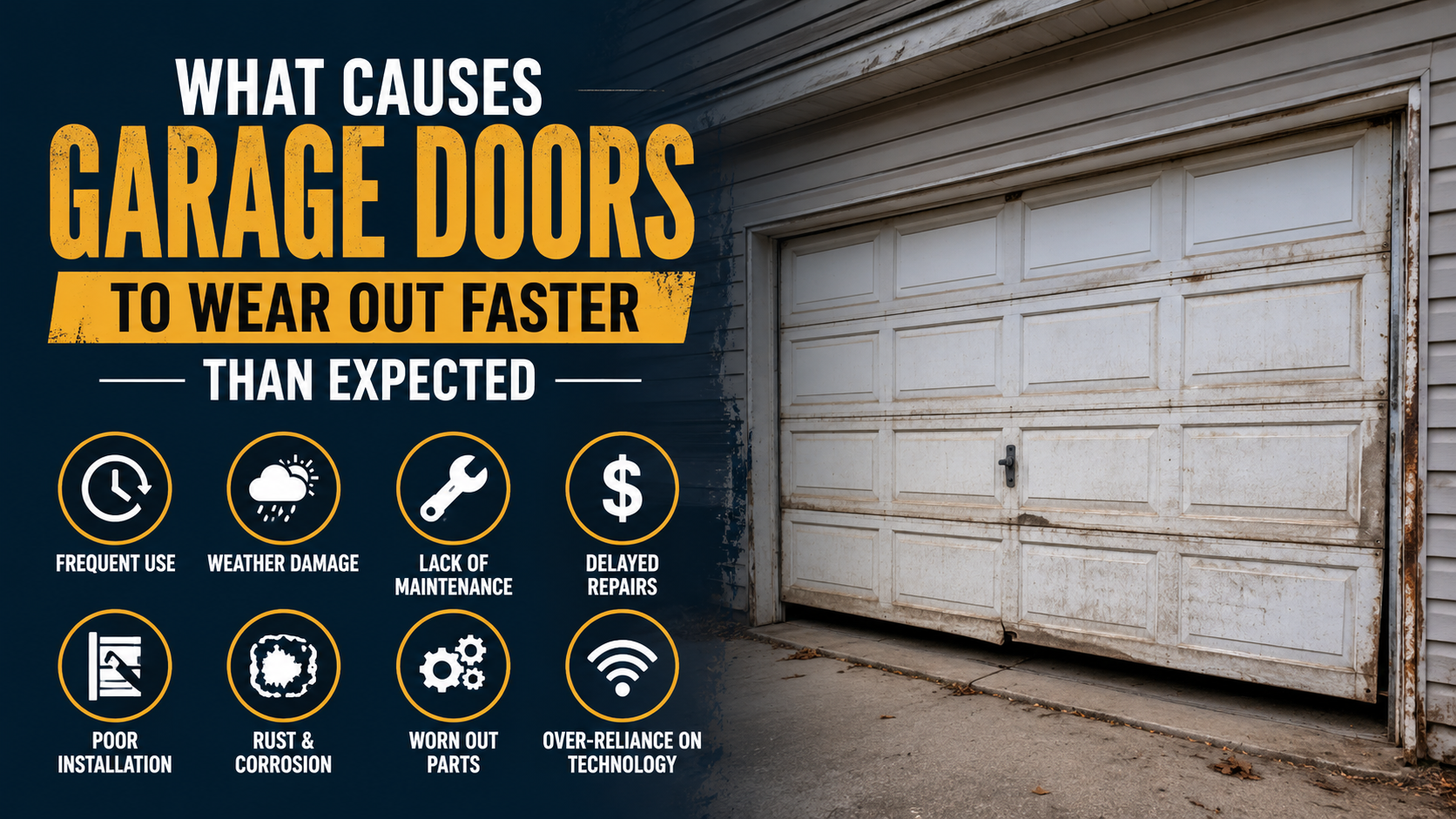
Most homeowners barely notice their garage door until it starts sounding off somehow. Maybe it shakes harder than usual, hesitates halfway up, or groans during colder mornings. Since it still opens, people usually ignore it for a while. That tends to continue right up until the system quits.
Garage doors handle more daily use than many front doors now, especially in busy households. They open early before work, close after errands, and repeat that cycle constantly throughout the week. Over time, smaller issues build quietly inside the system long before anything fully breaks down.
Why Door Maintenance Gets Overlooked
A lot of homeowners assume garage doors are mostly maintenance-free because they seem simple from the outside. The panels go up, the opener responds, and everything appears fine until parts begin wearing down underneath the surface. What people usually miss is that garage systems rely on several moving components working together under constant tension. Springs stretch repeatedly, rollers move along tracks every day, and cables absorb stress each time the door opens or closes.
Without regular attention, those smaller parts begin aging faster than expected. Dirt builds up inside tracks, hardware loosens gradually, and lubrication dries out over time. The changes happen slowly enough that many people adjust to them without noticing. The garage becomes louder. The movement gets rougher. Sometimes the opener strains slightly longer before the door fully lifts. This is why you should not take door maintenance for residential garage systems lightly.
Small preventive checks often cost far less than replacing major components after sudden failure. Regular inspections can help identify worn rollers, weakened springs, track misalignment, and motor strain before the entire system starts breaking down unexpectedly.
Frequent Use Adds More Wear Than People Expect
Garage doors are built for repeated use, but constant daily cycling still creates gradual wear over time. Families with multiple drivers often open and close the garage far more than they realize. Add deliveries, school schedules, weekend errands, and remote work routines, and some systems end up operating dozens of times every single day.
Each movement places tension on springs, cables, hinges, and the opener motor. None of these parts fail immediately. Instead, they wear down little by little until something starts slipping out of alignment or losing strength. Springs are especially vulnerable because they carry much of the door’s weight during operation. Once they weaken, the entire system begins working harder than it should.
This becomes even more noticeable in homes where the garage functions as the primary entrance. People rarely think about usage cycles while pressing a remote button half asleep in the morning, but the system eventually notices.
Weather Conditions Quietly Speed Things Up
Temperature changes affect garage doors more than many homeowners expect. Cold weather can stiffen metal parts and reduce lubrication effectiveness, while heat and humidity may cause expansion, warping, or increased strain on certain materials. In regions with harsh winters, salt and moisture can also accelerate rust around tracks, hinges, and springs.
Weather seals wear down, too. Once seals crack or loosen, moisture and debris enter more easily, which creates additional stress on moving parts. Some homeowners only notice the issue after seeing water near the garage floor or feeling colder air moving inside during the winter months. The problem is that weather damage often develops gradually. A door may still function while internal parts slowly corrode or weaken underneath everything else. People usually notice the symptom first, not the actual cause.
Small Problems Often Turn into Bigger Repairs
A small garage door issue rarely stays small for very long. A loose hinge, uneven track, or weak spring might not stop the system immediately, so people keep putting repairs off because the door still technically works. The problem is that garage systems depend heavily on balance. Once one part struggles, nearby components start carrying extra stress too. Rollers wear unevenly, motors work harder, and strain spreads quietly through the system over time.
Homeowners also get used to warning signs faster than they realize. Grinding sounds, slower movement, or shaking during operation often get ignored for months. Then one morning, the door suddenly refuses to open when somebody already needs to leave.
Poor Installation Can Shorten Lifespan Early
Sometimes wear begins much earlier because the original installation was rushed or improperly balanced. Garage doors need correct spring tension, stable track alignment, and properly adjusted openers to operate smoothly over time. Even small setup mistakes can create long-term strain on the system.
Improper balance forces motors to work harder during every cycle. Misaligned tracks create friction that slowly damages rollers and hinges. Cheap hardware may loosen faster than higher-quality parts designed for heavier use. These problems do not always show up immediately, either. A garage door can appear functional for years while internal wear develops faster than expected. Homeowners usually discover the issue only after repeated repairs start happening unusually early compared to the age of the system itself.
Technology Has Added Convenience but Also More Dependence
Modern garage doors do a lot more than simply open and close now. Smart apps, motion sensors, battery backups, and remote access features make daily routines easier, but they also increase how often these systems get used. People open these doors for deliveries, visitors, or package drop-offs without really thinking about the extra wear happening each day. More technology also means more parts that occasionally need adjustment or maintenance. Sensors drift out of place, software glitches happen, and backup batteries weaken over time. None of these problems seems major alone, but together they add stress to systems homeowners still tend to treat like simple mechanical equipment until something finally stops working.
Delaying Repairs Usually Costs More Later
A lot of homeowners wait until the garage door completely stops working before dealing with repairs. By that stage, one worn part has usually started affecting several others, which turns smaller fixes into more expensive ones. Garage doors almost always give warning signs first. Slower movement, shaking, odd noises, or uneven closing patterns tend to show up earlier than people realize. The problem is that gradual changes are easy to ignore during busy routines.
Most garage systems last for years when maintained properly, but constant daily use, weather changes, and delayed repairs slowly wear parts down over time. Damage usually builds quietly until the system finally forces attention.