

The modern corporate landscape is facing a severe leadership crisis today. A 2026 data analysis on executive health revealed that 58 percent of C-suite leaders are currently reporting active symptoms of severe burnout across major industries. This crisis is directly impacting corporate retention. Recent industry surveys show that 43 percent of organisations have lost at least half of their leadership teams due to chronic stress. For many founders and executives, this level of pressure has long been accepted as a standard occupational hazard. However, high-achieving professionals are increasingly recognising that a quick weekend getaway is no longer sufficient to reverse the deep physiological impacts of long-term exhaustion. Instead, business leaders are looking across the globe for immersive, clinical recovery solutions.
The Medical Reality of Executive Exhaustion
It is crucial to understand that burnout is not simply feeling tired after a busy quarter. The condition physically compromises electrical brain function and significantly alters resting states, leaving individuals constantly fatigued. No longer dismissed as just a bad week, the World Health Organization officially recognises severe corporate stress as a legitimate occupational phenomenon, noting that it is characterised by feelings of energy depletion, increased mental distance from one’s job, and reduced professional efficacy.
The toll is particularly heavy on business owners and solo founders, who exhibit a burnout rate of approximately 52 percent. While many organisations attempt to implement a healthier work culture to address employee stress and prevent high turnover, leaders experiencing severe chronic exhaustion often require a complete separation from their daily triggers. Trying to recover in the exact corporate environment that caused the stress in the first place is incredibly difficult, which is why taking a step back is often the most productive business decision an executive can make.
Why Overseas Retreats Offer a Strategic Advantage
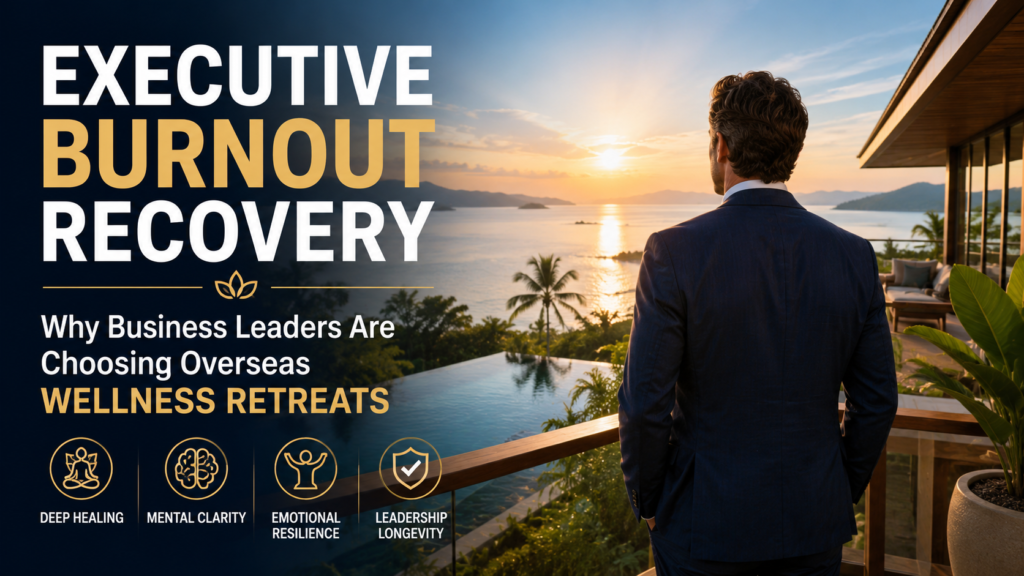
Getting away from the constant demands of emails and board meetings is the first step toward true nervous system regulation. Southeast Asia has quickly emerged as a premier global hub for this type of deep therapeutic work. Thailand’s wellness economy reached an impressive $42.7 billion in recent years, maintaining its status as a top-tier destination in the region. Spending specifically on wellness tourism in the country surged by 36.4 percent in a single year. For professionals seeking comprehensive and confidential care, a luxury rehab Thailand provides an ideal environment to fully disconnect from corporate pressures while receiving world-class medical support.
The anonymity provided by international travel is another major draw for high-profile individuals. Many executives feel they cannot show vulnerability in their home cities due to public stigma or potential business repercussions. Travelling abroad ensures absolute privacy, allowing leaders to focus entirely on their recovery without fear of judgement from peers, competitors, or shareholders.
Clinical Therapies That Go Beyond Basic Relaxation
What sets these modern executive wellness retreats apart is their strong clinical foundation. Traditional talk therapy or mindset coaching often falls short when a person’s nervous system is stuck in chronic overdrive. To properly heal, leaders need targeted, evidence-based treatments that address both the mind and the body. Top-tier wellness centres integrate several advanced modalities to achieve this successfully:
- Neurofeedback: This is a non-invasive therapy that successfully retrains the brain’s electrical patterns. Clinical studies show that incorporating neurofeedback into treatment protocols significantly improves executive functioning and helps reset overloaded nervous systems.
- EMDR Therapy: Eye Movement Desensitisation and Reprocessing is widely used for severe stress and trauma. When combined with other holistic treatments, it creates a highly effective protocol for professionals who have not found relief through conventional stress management strategies.
- Holistic Health Integration: Alongside clinical treatments, these facilities offer targeted nutritional support, physical fitness programming, and mindfulness practices to rebuild the individual’s physical resilience from the ground up.
A Valuable Investment in Leadership Longevity
The global wellness tourism market is experiencing unprecedented demand across the board. The Global Wellness Institute projects the sector will reach a valuation of $1.35 trillion by 2028. This growth is largely driven by a major shift in consumer preferences toward destination-based mental and emotional wellness. Business leaders are rapidly realising that their most valuable asset is not their stock portfolio or their real estate, but their own cognitive health and wellbeing.
Taking time away to participate in an immersive overseas wellness programme is no longer seen as a luxury holiday. It is a necessary medical intervention. By stepping out of the boardroom and into a structured, clinical recovery environment, executives can return to their organisations with renewed clarity, emotional resilience, and the capacity to lead effectively for years to come.