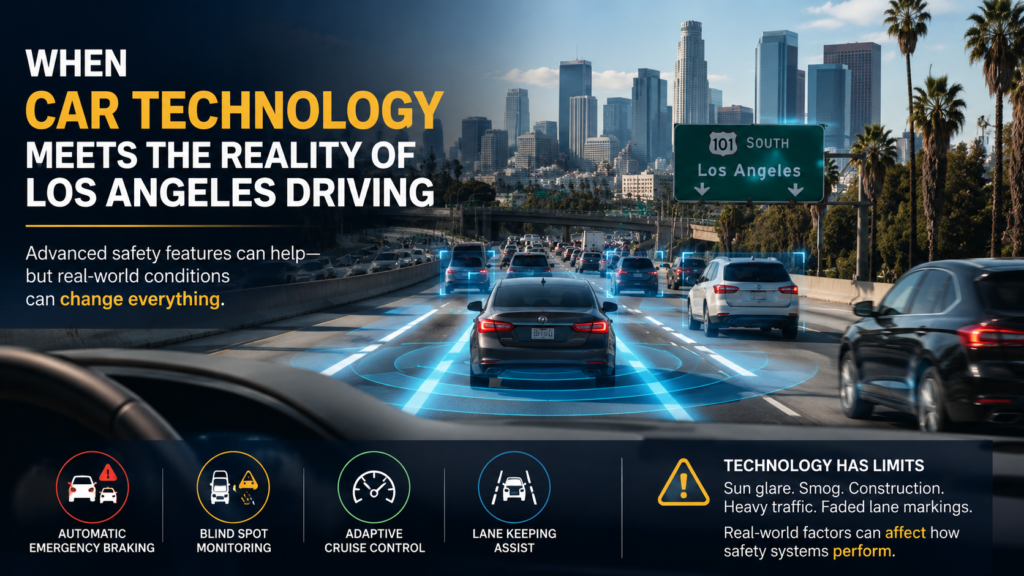
Modern vehicles are increasingly equipped with Advanced Driver Assistance Systems (ADAS), a collection of technologies designed to help drivers avoid collisions and improve road safety. Features such as Automatic Emergency Braking, Blind Spot Monitoring, Adaptive Cruise Control, and Lane Keeping Assist have become common in many new vehicles.
While these systems can provide valuable assistance, they are not immune to real-world driving conditions. In a busy city like Los Angeles, environmental factors, traffic patterns, and roadway conditions can affect how these technologies perform.
Why Car Safety Sensors Sometimes Fail
Advanced safety systems rely on cameras, radar sensors, and software to interpret the environment around a vehicle. When these components encounter challenging conditions, performance may be affected.
Environmental Conditions
Los Angeles drivers frequently encounter bright sunlight, glare, smog, and occasional fog. These conditions can interfere with camera-based systems that depend on clear visibility to detect lane markings, vehicles, and pedestrians.
Heavy rain, dust, or debris on sensors may also reduce the effectiveness of certain safety features.
Construction Zones and Changing Road Conditions
Major roadways such as Interstate 5 and Interstate 405 regularly undergo maintenance and construction projects. Temporary lane markings, shifted traffic patterns, and faded striping can create challenges for lane-tracking systems.
When road markings become difficult to identify, some driver-assistance features may disengage or provide inaccurate guidance.
Sensor Misalignment
Even a minor collision can affect the alignment of cameras and radar equipment. A sensor that is only slightly out of position may not detect surrounding vehicles correctly, potentially affecting features such as Blind Spot Monitoring and Automatic Emergency Braking.
Professional recalibration is often necessary after repairs to ensure these systems continue functioning properly.
How Technology Can Complicate Accident Investigations
When a collision involves advanced vehicle technology, determining exactly what happened may require a more detailed investigation.
Questions that investigators may examine include:
- Was a driver-assistance feature active before the crash?
- Did the system provide a warning?
- Did the technology respond as intended?
- Were environmental conditions affecting sensor performance?
- Did the driver rely too heavily on the system?
These factors can add layers of complexity that are not typically present in traditional accident claims.
What Evidence Matters After a Technology-Related Crash?
Modern vehicles generate significant amounts of electronic data.
Investigators may review information from Event Data Recorders (EDRs), onboard vehicle systems, repair records, and diagnostic reports. This information can help establish vehicle speed, braking activity, steering inputs, and whether certain safety features were activated before impact.
In some cases, preserving this evidence early can be important, particularly when questions exist regarding system performance or potential vehicle defects.
Why Early Investigation Can Be Important
Accidents involving advanced vehicle technology often require analysis beyond the standard police report and insurance documentation.
Because electronic records, repair data, and vehicle diagnostics may play a role in understanding what occurred, early investigation can help preserve important evidence and provide a clearer picture of the circumstances surrounding the crash.
Individuals who have been injured in a collision involving driver-assistance technology may benefit from speaking with an experienced Los Angeles car accident lawyer who can evaluate the available evidence and explain potential legal options.
Final Thoughts
Vehicle technology continues to evolve and plays an increasingly important role in everyday driving. While advanced safety systems can help reduce certain risks, they are not designed to replace driver attention or eliminate every hazard on the road.
When accidents occur, understanding how these systems function—and where their limitations exist—can provide valuable insight into what happened and what steps may be available moving forward.