

Introduction
A successful sports venue is about much more than an impressive design. Long before the first event is scheduled, every planning decision affects how efficiently the facility will operate, how much it will cost to maintain, and whether it can deliver a positive experience for athletes and visitors. Unfortunately, many projects focus heavily on construction while overlooking the people who will eventually manage the venue.
That oversight can be expensive. The estimated cost of the Buffalo Bills’ new stadium has climbed beyond $2 billion, highlighting how quickly large-scale sports projects can exceed expectations when challenges arise.
Creating a successful facility requires more than talented architects and experienced contractors. The most effective projects combine design expertise with operational insight from the earliest planning stages. When operations influence every major decision, the result is a venue that performs just as well behind the scenes as it looks on opening day.
Why Operational Planning Should Start Early
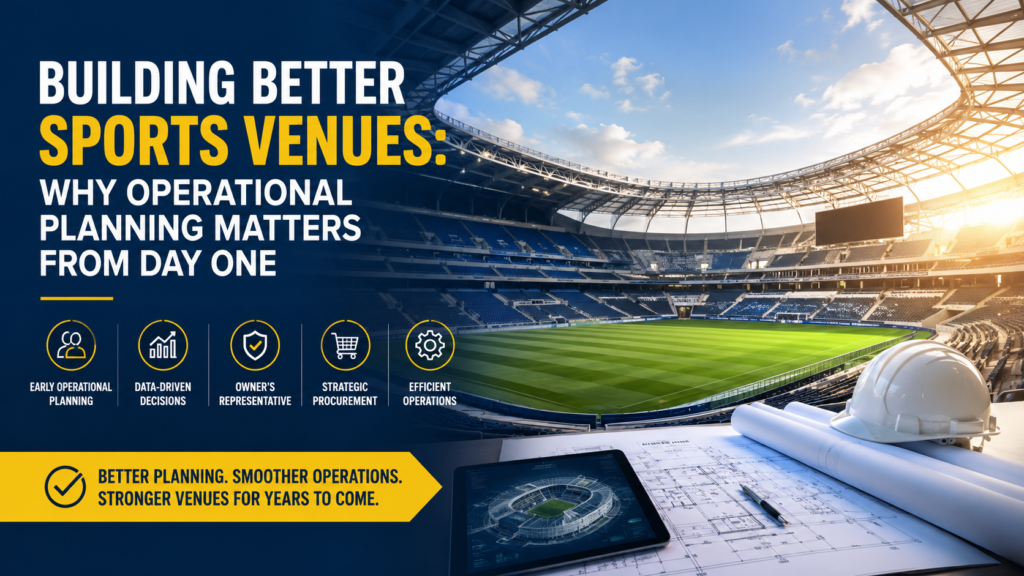
Every major decision made during planning influences how a sports venue functions for years after construction ends. Bringing operators, designers, and project managers together early helps avoid costly redesigns, improves daily workflows, supports better guest experiences, and creates a facility that remains financially sustainable over time.
The Coordination Gap: Why Beautiful Designs Don’t Always Work
Many sports facilities look exceptional in architectural renderings but become difficult and expensive to operate once they open. This often happens because traditional design-bid-build projects separate the planning, construction, and operations teams throughout the process.
Architects focus on aesthetics, code requirements, and available space. Contractors concentrate on building according to the plans. Only after construction is complete does the operations team begin working in a facility they had little input in creating.
The consequences quickly become apparent. Storage areas may be located far from concession stands, forcing employees to spend unnecessary time moving supplies. Security checkpoints may lack adequate power or infrastructure for modern screening equipment. Guest traffic can become congested because crowd flow was never tested from an operational perspective.
These issues rarely require rebuilding an entire venue, but they create ongoing operational costs that continue long after construction finishes.
Instead of treating operations as an afterthought, many organizations now work with firms specializing in sports program development. An integrated approach helps align planning, construction, and future operations so every phase supports the next.
Data-Driven Venue Planning: Connecting Design with Daily Operations
The best venue designs are informed by real operational data rather than assumptions.
Looking at comparable facilities provides valuable insights into crowd movement, concession performance, staffing patterns, ticketing operations, and event logistics. Rather than estimating the ideal concourse width or concession placement, planners can make informed decisions based on facilities already serving thousands of guests.
Including experienced venue operators during design discussions helps architects understand how the building will function during busy tournaments or championship events.
As Andrew Sampson of Ross Video explains:
“Most venues are not designed around their biggest day… New technology can make you more flexible, but it also quickly exposes any gaps in planning, interoperability, or workflow design.”
Planning around peak demand produces facilities that remain efficient under pressure. Operators can recommend better locations for food service areas, improve security circulation, minimize congestion, and support a smoother visitor experience.
| Traditional Planning | Data-Driven Planning |
| Prioritizes appearance and basic space requirements. | Balances appearance with operational efficiency. |
| Limited operational input during design. | Facility operators contribute throughout planning. |
| Technology often added later. | Technology integrated from the beginning. |
| Workflow issues discovered after opening. | Operational challenges addressed before construction. |
| Higher risk of costly modifications. | Better long-term efficiency and lower operating costs. |
Why an Owner’s Representative Matters
Large sports facility projects involve hundreds of moving parts, making independent oversight extremely valuable.
An Owner’s Representative works exclusively for the project owner, protecting the project’s budget, schedule, and long-term goals. Unlike a contractor, whose responsibility is construction, an Owner’s Representative focuses on ensuring every decision benefits the client.
Their responsibilities include reviewing change orders, monitoring quality standards, managing communication between project teams, and identifying potential issues before they become expensive problems.
Unexpected delays, supply chain disruptions, or design changes are common during construction. Having an experienced advocate helps municipalities and developers make informed decisions while maintaining control over costs.
As Rowan Alkaysi of Brailsford & Dunlavey notes:
“Delivering on time and on budget is baseline… What elevates the pros from the amateurs is the ability to deliver on the next set of goals, like creating new revenue opportunities [and] improving the fan experience.”
An effective Owner’s Representative ensures those long-term goals remain a priority throughout construction.
Strategic Procurement Supports Long-Term Success
Purchasing equipment is often treated as one of the final steps in development, but waiting until construction is nearly complete can significantly increase costs.
Planning Furniture, Fixtures, and Equipment (FF&E) alongside Operating Supplies and Equipment (OS&E) much earlier gives project teams more flexibility when evaluating vendors, comparing products, and coordinating deliveries.
Experienced facility operators often maintain relationships with national suppliers, allowing projects to benefit from better pricing and improved product availability. Early procurement planning also reduces the likelihood of delays caused by unavailable equipment.
The long-term benefits extend well beyond opening day. Durable equipment, efficient layouts, and carefully planned workflows help reduce maintenance expenses, improve staff productivity, and support stronger financial performance.
Some of the biggest advantages include:
- Smarter purchasing: Bulk buying and vendor relationships reduce capital costs.
- Improved staff efficiency: Well-designed workspaces minimize unnecessary movement.
- Greater revenue potential: Optimized concession layouts and integrated technology improve customer service and transaction speed.
Conclusion
Developing a successful sports venue requires more than exceptional architecture. The facilities that perform best over time are those designed with daily operations in mind from the very beginning.
Bringing operational experts into the planning process, incorporating data-driven decision-making, utilizing an Owner’s Representative, and planning procurement strategically all help reduce risk while improving long-term performance.
A sports venue should not simply impress visitors on opening day. It should continue operating efficiently for years to come, supporting athletes, staff, and the surrounding community while delivering lasting financial value.