Living with piles that keep coming back can be frustrating, embarrassing, and quietly exhausting. Many people try to ignore the problem for months, hoping it will settle on its own, only to find that the bleeding, pain, or swelling returns at the worst times. It is a sensitive topic, but it is also a very common one, and there are now many treatment options that can help.
Persistent piles usually need more than just a quick cream or a random home remedy. When symptoms keep flaring up, it is often a sign that the veins in the anal area are under constant strain, or the underlying cause has not been properly treated. Understanding what is happening in the body can make it easier to decide what to do next.
There is a full range of care, from simple lifestyle changes to minimally invasive procedures and, when necessary, surgery for more advanced cases of haemorrhoids. In many situations, seeing a colorectal specialist for a proper assessment can be the first step towards long term relief and, when appropriate, formal piles removal through clinic based treatments or surgery.
Understanding Why Piles Persist
When piles do not settle despite creams or over the counter remedies, it is often because the root causes are still present. Straining during bowel movements, chronic constipation, prolonged sitting on the toilet, and ongoing pressure in the rectal veins can all keep the problem going. Pregnancy, obesity, and even frequent bouts of diarrhoea can also contribute, since they repeatedly increase pressure in the lower rectum.
Over time, this repeated strain causes the normal vascular cushions in the anal canal to swell and become problematic. Internal piles may start with mild bleeding during bowel movements, while external ones may cause painful swelling or a feeling of fullness around the anus. When these symptoms occur often, they can affect daily comfort, work focus, and even social confidence.
Internal and external piles
Persistent piles can be internal, external, or a combination of both. Internal haemorrhoids develop inside the rectum, and early on they may only appear up as bright red bleeding on the toilet paper or in the bowl, often without much pain. As they progress, they may prolapse out of the anus during bowel movements and need to be pushed back in, or they may remain prolapsed and cause ongoing discomfort.
External piles sit just under the skin around the anus. They are more likely to cause pain, especially if a clot forms inside the swollen vein, which can lead to sudden, intense discomfort and a tender lump. In some cases, internal and external components occur together, which can make symptoms feel confusing and more persistent.
When lifestyle changes are not enough
For early or mild piles, many doctors recommend conservative measures as the first step. Increasing fibre intake through fruits, vegetables, and whole grains, drinking more water, and avoiding straining are simple but powerful changes that can make bowel movements easier and reduce irritation to the haemorrhoidal veins. Some people also benefit from fibre supplements that help bulk and soften the stool when diet alone is not enough.
Topical creams, ointments, and suppositories can offer short term relief from itching or mild discomfort, while oral medications like laxatives or venous tonics may be used to ease constipation and support venous circulation. However, when piles are already moderate to severe, or when they keep returning despite these efforts, conservative measures may no longer be enough on their own, and more targeted interventions are usually considered.
When to see a specialist
It is important to seek medical advice when bleeding is recurrent, when there is significant pain, or when there is a lump that does not go away. Persistent symptoms should never be diagnosed without medical advice, because other conditions such as anal fissures or even colorectal polyps and cancers can sometimes mimic piles. A colorectal surgeon or specialist can perform a proper assessment, which may include a physical examination and sometimes a scope to rule out other causes of bleeding.
Once the diagnosis is clear, the doctor can then create a treatment plan based on the severity and type of haemorrhoids. For some patients, this may mean continuing with lifestyle changes plus medication, while others may benefit from minimally invasive procedures or surgery that provide a more lasting solution.
Treatment Options For Persistent Piles
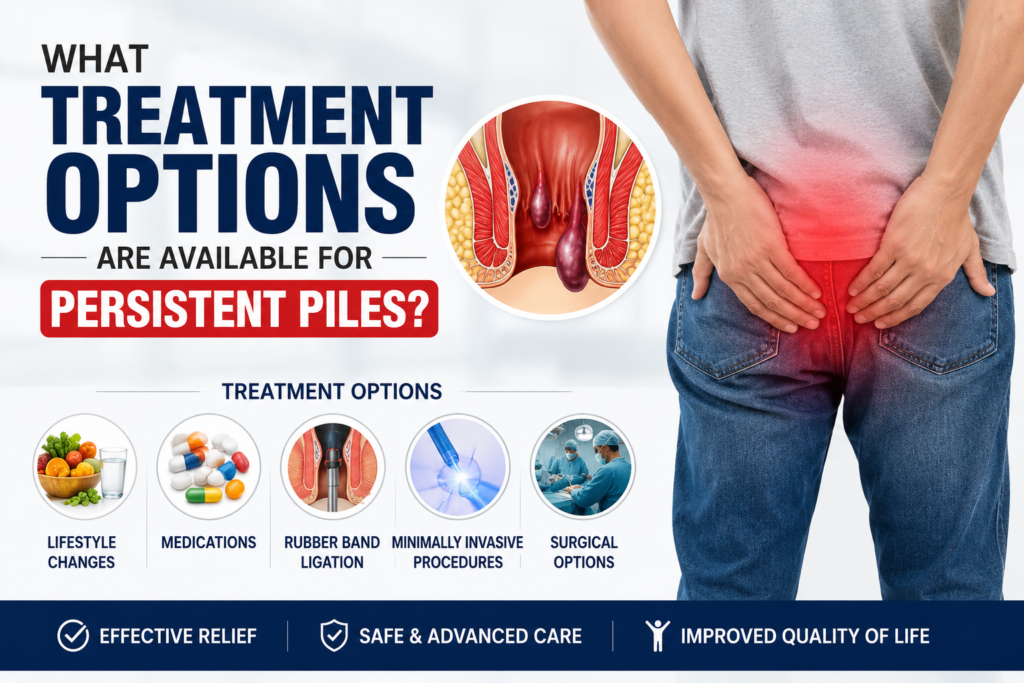
For piles that do not respond well to simple measures, several clinic based and surgical options are available. These treatments aim to shrink, ligate, or remove the affected veins so that symptoms are reduced and the risk of recurrence is lower. The choice depends on the grade of haemorrhoids, the patient’s overall health, and their preferences regarding recovery time and discomfort.
Specialists usually start with less invasive options when suitable. Local treatments such as rubber band ligation, heat based therapies, or injection techniques can often be done in the clinic and do not require a hospital stay. When piles are large, prolapsing, or complicated, formal surgery may be recommended to achieve a more lasting result.
Clinic based procedures
Rubber band ligation is one of the most common minimally invasive treatments for internal piles. Using a small device, the doctor places a tiny rubber band at the base of the haemorrhoid, cutting off its blood supply so that it shrinks and falls away over a few days. This technique is usually reserved for small to moderate internal piles and can be performed in the clinic without general anaesthesia, with most patients experiencing only mild discomfort and a brief feeling of fullness.
Other local treatments, such as sclerotherapy or newer energy based options like heat therapy, may also be used in selected cases to shrink piles by damaging the blood vessels and tissue. These approaches aim to reduce symptoms while keeping the procedure time and downtime relatively low. They are not suitable for every situation, but they can be helpful for people whose haemorrhoids are too persistent for medication alone yet not severe enough to require surgery.
Surgical options for advanced piles
When piles are larger, significantly prolapsed, or have failed to respond to other treatments, surgery is often the most effective option. Conventional haemorrhoidectomy involves cutting away the affected piles and adjacent tissue, leaving a wound that heals gradually over several weeks. Although the recovery period can be longer and there may be more discomfort, this method is proven and can be very effective for advanced disease.
Stapled haemorrhoidectomy, sometimes called stapled hemorrhoidopexy, is another technique where a circular stapling device is used inside the anal canal to remove and reposition tissue, reducing blood flow to the piles and helping them to shrink. Because the stapling is done higher up in the rectum where there are fewer pain sensitive nerves, patients may experience less postoperative pain and a quicker return to normal activities compared to conventional surgery. A newer method known as transanal haemorrhoidal dearterialization uses ultrasound guidance to locate and tie off the arteries supplying the haemorrhoids, again aiming to reduce blood flow and prolapse with minimal cutting. A specialist will usually explain the pros and cons of each approach so that the patient can choose the method that best matches their condition and comfort level.
Moving Towards Long Term Relief
Persistent piles can slowly affect a person’s quality of life, but they do not have to be a permanent burden. By combining practical lifestyle measures, medications, and treatment options, many people can find lasting relief from their symptoms and feel more confident in their daily lives. The key is not to ignore ongoing bleeding or discomfort, and to seek a proper evaluation instead of relying only on self-medication instead of obtaining proper medical advice.
Each person’s situation is unique, and what works for one patient may not be the best choice for another. Working with a doctor who understands both the medical side and the personal concerns around this sensitive condition can make the decision making process less stressful and more reassuring. For someone who has been living quietly with recurrent piles, taking that first step to speak with a specialist could be the beginning of a more comfortable, less stressful life.