
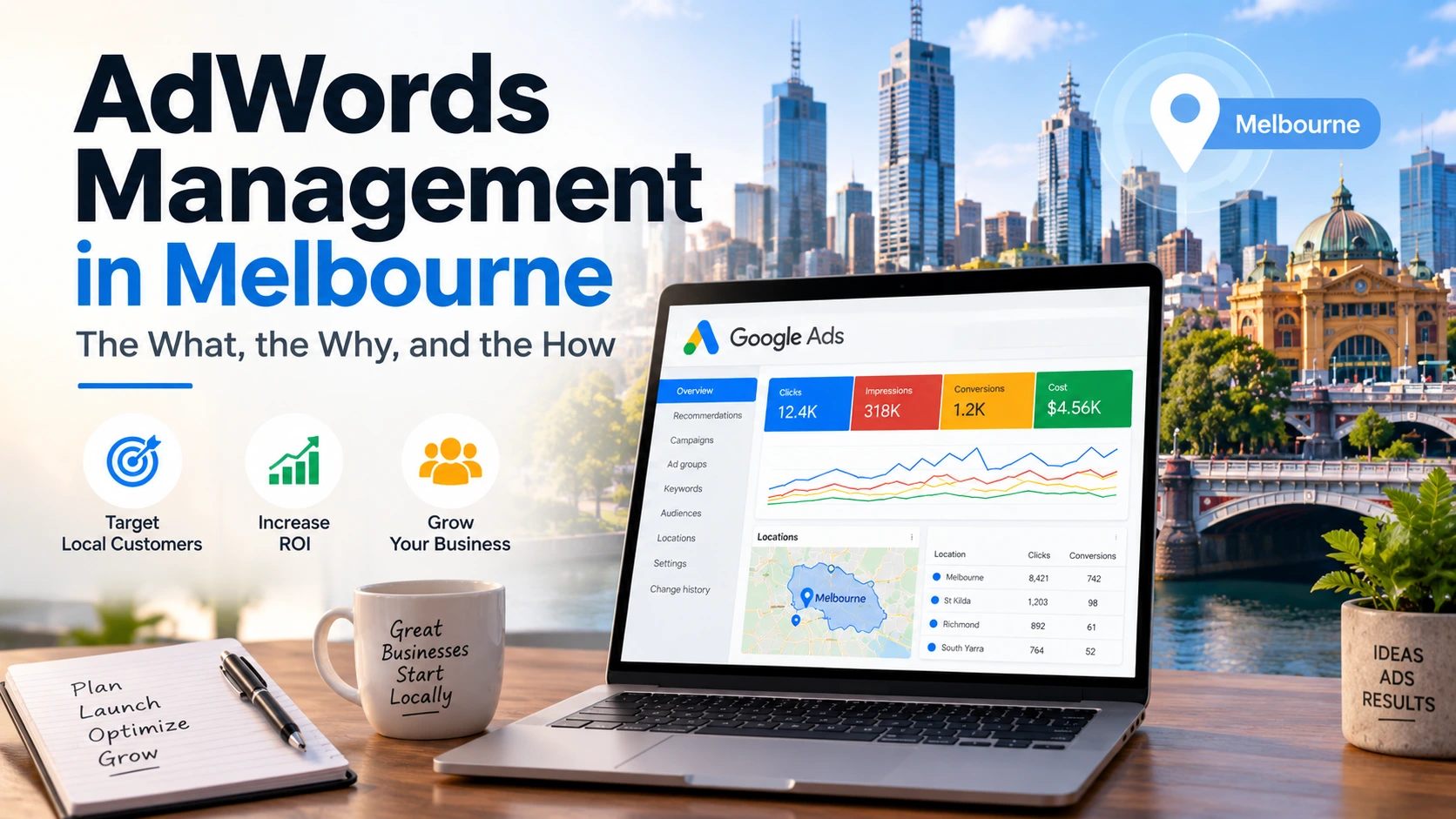
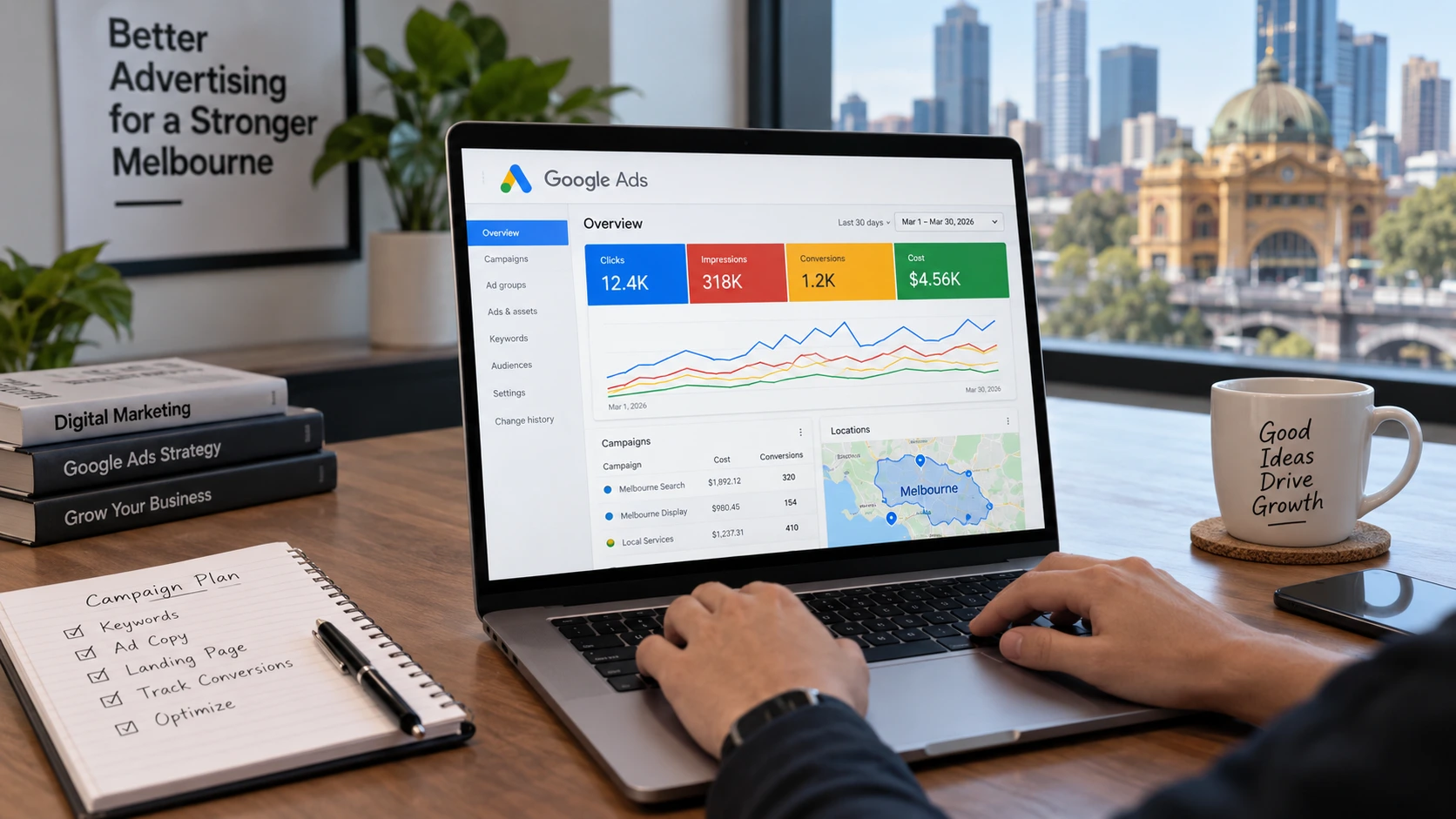
If you run an online business or manage digital marketing campaigns, you have probably come across Google Ads (formerly known as Google AdWords). It remains one of the most widely used platforms for reaching people who are actively searching for products and services online.
However, simply running Google Ads does not guarantee profitable results. Campaign structure, keyword selection, audience targeting, ad messaging, landing pages, location settings, bidding, and ongoing optimization all play an important role in performance.
For businesses that mainly serve customers in Melbourne, targeting the entire country—or even a much larger geographic area than necessary—can lead to wasted advertising spend. A carefully planned local PPC strategy can help you focus your budget on the areas and customers that matter most.
If your audience primarily belongs to Melbourne, adopt a well-planned local Adwords Management in Melbourne strategy to reach the radius you want.
What Is Location-Specific AdWords Management?
Location-specific PPC, often called geo-targeted or local PPC, allows advertisers to focus their campaigns on particular geographic areas. Google Ads can target locations such as cities, regions, and other defined areas, while radius targeting can also be used around a specific location.
The idea is straightforward: if most of your customers are located in Melbourne, there may be little reason to spend your entire advertising budget reaching people who cannot realistically use your products or services.
Effective AdWords Management in Melbourne therefore starts with understanding where your customers are located and how they search. Campaign settings can then be designed around the locations that are most relevant to the business.
Location targeting can also be refined over time. By reviewing performance by geographic area, advertisers can identify locations that generate stronger results and adjust their budgets or campaign strategy accordingly.
Why Use Location-Specific Google Ads?
Local targeting can be particularly useful for businesses that serve a specific city, suburb, region, or service area. Two of the biggest advantages are more relevant messaging and better control over advertising spend.
1. Your Message Can Resonate More Strongly With Local Customers
When your advertising is created with a specific audience and location in mind, your message can feel much more relevant to the people seeing it.
For example, a Melbourne-based business can make its ads more useful by highlighting its local service area, delivery coverage, appointment availability, or other benefits that matter to customers in the region.
A relevant ad can make it easier for potential customers to understand what you offer and why your business is suitable for them.
2. Better Ad Relevance Can Support Stronger Performance
Google evaluates ad quality using several factors, including expected click-through rate, ad relevance, and landing page experience. Quality Score is reported on a 1–10 scale at the keyword level and is primarily a diagnostic tool that can help advertisers identify areas for improvement.
That means advertisers should not focus simply on achieving a higher Quality Score. Instead, the goal should be to create relevant ads, choose appropriate keywords, and provide landing pages that match what users are looking for.
Improving these elements can contribute to better overall ad quality and performance. Google notes that stronger ad quality can generally lead to better performance, including improved ad positions and lower costs.
Tips for Smarter Geo-Specific PPC With Google Ads
The success of any advertising campaign depends on preparation, testing, measurement, and continuous improvement. Here are some practical ways to strengthen a local Google Ads strategy in Melbourne:
1. Use Relevant Location Terms in Your Ad Copy
People often include a city, suburb, neighbourhood, or other location when searching for a local product or service. Understanding these search behaviours can help you create advertising messages that are more closely aligned with user intent.
For example, a business serving specific Melbourne suburbs may be able to create more relevant campaigns around those service areas rather than treating the entire city as one audience.
However, avoid adding locations simply for the sake of inserting keywords. The location should genuinely relate to the service, offer, or audience you are targeting.
Ensuring your ad copy and landing page reflect what potential customers are actually searching for can help reduce irrelevant traffic and improve the overall user experience.
2. Use Language That Feels Familiar to Your Local Audience
Local advertising works best when it sounds natural rather than forced. Think about the words your customers actually use when searching for your products or services and incorporate that language into your campaigns where appropriate.
Research local customer behaviour, search trends, competitors, and community interests before creating your ad messaging. This can help you understand what matters to people in your target market and make your campaigns more useful.
Similar terms familiar to local customers can help establish a stronger connection, but relevance should always come before keyword insertion. Conduct thorough research to discover what’s trending in the local communities (you also need to stay up-to-date!).
3. Choose Your Geographic Targeting Carefully
One of the most important parts of local PPC management is choosing the right geographic settings. Google Ads allows advertisers to target specific locations and, where available, use radius targeting around a selected point.
For a Melbourne business, this could mean targeting the entire metropolitan area, selected suburbs, specific regions, or a defined radius around a business location, depending on the company’s service area.
It is also important to review geographic performance regularly. If certain locations generate conversions at a better rate than others, the campaign can be adjusted based on actual performance rather than assumptions.
4. Make Sure Your Landing Page Matches the Ad
Getting someone to click your advertisement is only the beginning. Once visitors arrive on your website, the landing page should clearly deliver what the ad promised.
If your ad promotes a Melbourne-based service, for example, the landing page should make it easy for visitors to understand your service area, pricing or offer, benefits, and next step.
Landing page experience is one of the three main components used in Google’s Quality Score diagnostic system, alongside expected click-through rate and ad relevance.
5. Track Conversions Instead of Focusing Only on Clicks
A large number of clicks does not necessarily mean a campaign is successful. For most businesses, the more important question is whether those clicks result in meaningful actions such as enquiries, phone calls, bookings, purchases, or form submissions.
Monitor conversion rate, cost per conversion, search terms, geographic performance, and other relevant business metrics. Google also recommends considering metrics such as click-through rate, conversion rate, and site engagement alongside Quality Score when evaluating performance.
Do Not Hesitate to Ask for Help!
Managing Google Ads successfully involves much more than creating an advertisement and choosing a few keywords. Location targeting, campaign structure, keyword strategy, ad messaging, landing pages, conversion tracking, bidding, and ongoing testing all need to work together.
It is also important to remember that local PPC is not a “set it and forget it” marketing channel. Search behaviour, competition, costs, and campaign performance can change over time, so regular analysis and optimization are essential.
If managing everything internally becomes too time-consuming, working with an experienced PPC professional or agency can make the process more manageable. Top Adwords Management in Melbourne agencies are available to make things more streamlined.
Choose a reliable provider that focuses on measurable business outcomes rather than simply generating clicks. With the right strategy, ongoing optimization, and accurate conversion tracking, a Melbourne-focused Google Ads campaign can become a valuable part of your digital marketing strategy.
Ultimately, successful AdWords Management in Melbourne comes down to reaching the right people, in the right locations, with the right message—and then continually improving the campaign based on real performance data.