
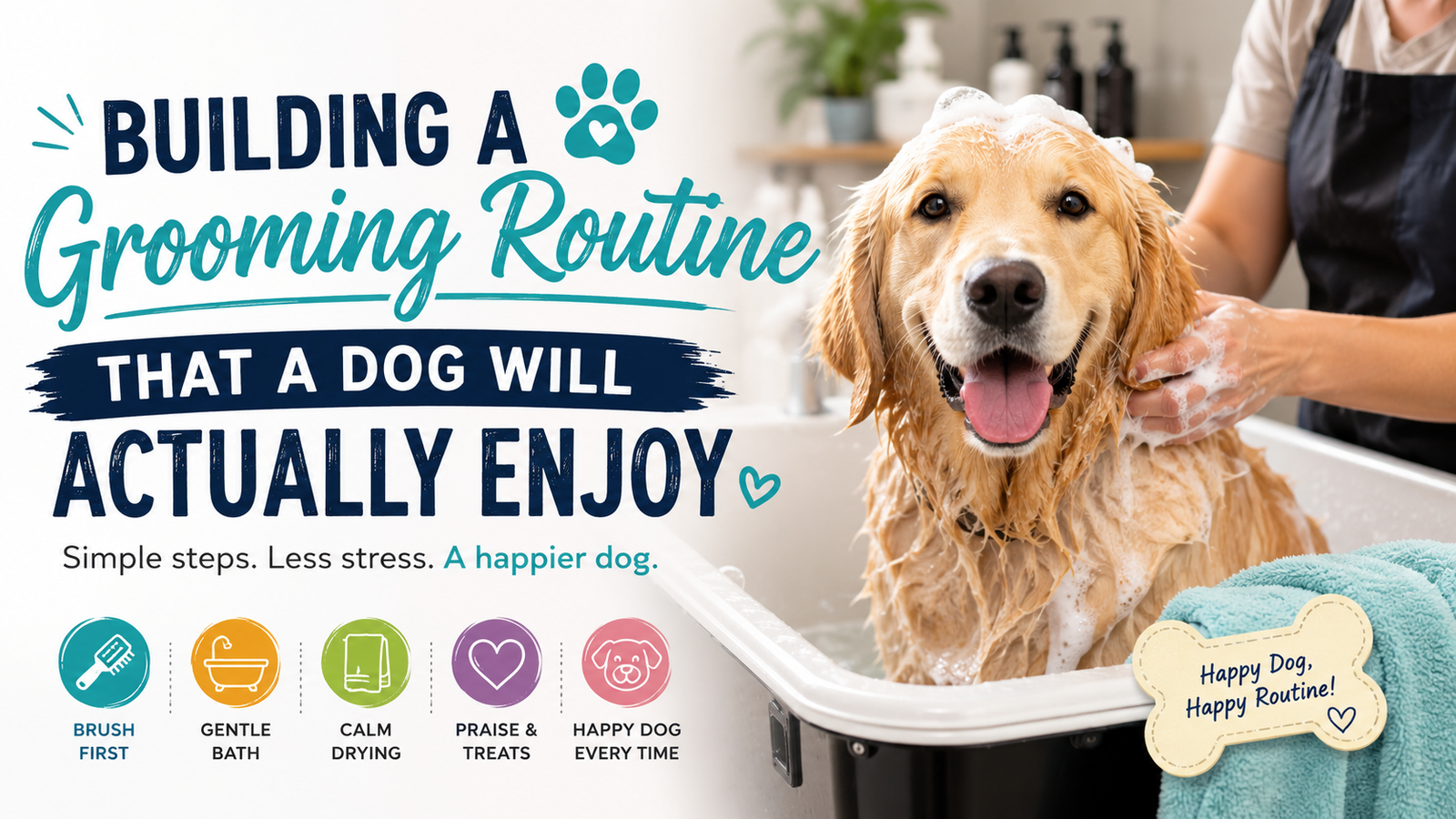
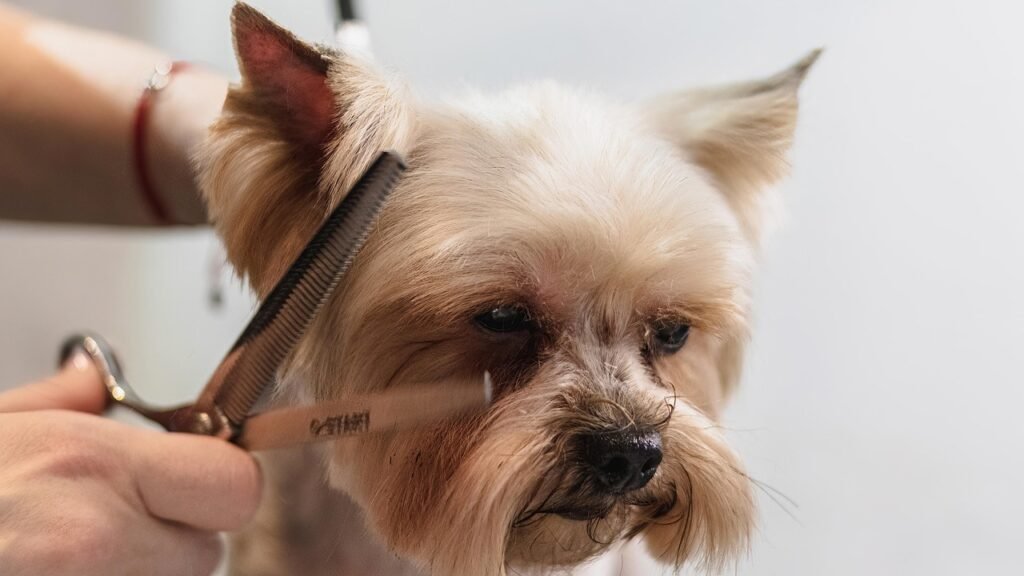
Most dogs do not love bath time.
Many dogs see the bathtub as a lava pit and the brush as an instrument of torture. Sounds like yours? Good news – grooming doesn’t have to be a fight. With a little know-how and the proper environment your frazzled Fido can learn to love grooming day.
Here is how to build that routine…
Inside this guide:
- Why Most Dogs Hate Grooming (And What To Do About It)
- The Core Steps Of A Dog-Friendly Grooming Routine
- Tools And Setup That Make Bath Time Easier
- Tips To Keep The Routine Stress-Free Long Term
Why Most Dogs Hate Grooming (And What To Do About It)
Bath time anxiety is way more common than most owners realise.
Statistics indicate that approximately 70% of dogs suffer from general anxiety. Get that pupper into a grooming appointment and you’re boosting that anxiety level even more. Noisy dryers, slick floors, unfamiliar odors… it can become overwhelming.
Here is the kicker:
If a dog experiences one scary grooming session it can fear EVERY grooming session after that. This means that every bath time becomes more difficult. This is why it is crucial to start off with a relaxing routine.
The solution? Slow down. Use proper equipment. And ensure every ride feels safe.
It’s precisely for this reason why an easily accessible, walk-in dog grooming bath can make such a monumental impact on grooming nervous dogs. A mobile groomer bath with front access allows even the largest and/or nervous dogs to simply walk right in at ground level, rather than trying to hoist themselves up over the side of a tub. No terrifying elevation. No slipping or sliding entry. One stress-free step in and an easy bath. That one piece of equipment can change the game for groomers and pet parents who work with fearful canines.
The Core Steps Of A Dog-Friendly Grooming Routine
A good routine is structured. Dogs crave predictability and an order of operations lets them know what to expect.
Here is the basic flow most professional groomers follow:
- Brush first — always brush before water touches the coat
- Ear and nail check — get the fiddly bits done while the dog is dry
- Bath — warm water, gentle shampoo, calm voice
- Rinse twice — shampoo residue is a top cause of skin irritation
- Towel and dry — put your anxious dog in the dryer on low heat or no heat at all
- Treat and praise — end every session on a high note
Easy-peasy-peasy, huh? No, it’s all in executing that same sequence each time. Consistency breeds confidence.
Brushing Before The Bath
This step gets skipped a lot, and that is a mistake.
Brushing out knots before getting wet prevents mats from tightening. Once they get wet, mats hold together like rope. Tight mats cause discomfort for your dog and require hours of patience to remove. Brushing quickly before bath time also allows you to check for ticks, lumps, hot spots or any other abnormalities that should be seen by a veterinarian.
The Bath Itself
This is where most of the stress happens.
The water should be tepid. Dogs jump in cold water. Hot water will burn and cause hysteria. Check it on the underside of your wrist like you would a baby’s bath. Use a hypoallergenic shampoo for dogs and massage gently with slow soothing hands. Stay away from the face with the spray nozzle… No dog likes having water shot in their eyes.
Something else that’s non-negotiable? A non-slip surface. Slipping is one of the number one ways dogs develop a fear of bathing.
Drying Done Right
Drying can actually be more stressful than bathing for a lot of dogs.
The sound of a high-speed dryer is noisy, hot and chaotic. Frazzled puppies respond so much better to towel drying or a quiet dryer on the lowest heat setting. Slow and steady wins the prize.
Tools And Setup That Make Bath Time Easier
The right gear separates a smooth grooming routine from a chaotic one.
Here are the essentials every grooming setup should include:
- A walk-in or low-entry tub
- Non-slip floor mats
- Adjustable shower head with gentle spray
- Soft, absorbent microfiber towels
- A low-noise dryer (or just air drying)
- High-value treats kept within reach
A professional-grade tub will make the biggest difference. 47% of pet owners in the US now groom their pets at home, so more dogs are being bathed in tubs, garden hoses or tight-fitted sinks. Not ideal situations. A tub that’s designed for the job allows your dog to walk in the front entrance, get shampooed, and walk out. No lifting. No struggling. No back injuries to you.
This is even more important when it comes to older dogs, giant breeds and puppies suffering from joint problems. Lifting a 40kg Labrador up into the bathtub is hard on everyone involved.
Tips To Keep The Routine Stress-Free Long Term
After you have your routine established you want it to stay positive. Make every groom feel like a training session and not a punishment.
A few tricks that work…
Start Young (Or Start Slow)
Puppies accustomed to baths will become thoroughly unfazed about grooming as they mature. If your dog is already bath-phobic, the same principle holds true. Acclimate them to it slowly. Allow your dog to sniff around and investigate the tub when it’s empty and dry. Reward any calm behavior. Gradually build upon this.
Use Treats Strategically
Treats are not bribes — they are paychecks.
Rewarding your dog with tasty treats when he holds still during a rinse quickly builds positive associations with bath time. Sticky peanut butter licked mats on the tub wall are doggie magic!
Keep Sessions Short
Long grooming sessions emotionally exhaust dogs. Split up your grooming sessions even if a full groom only takes one hour. Brush in the morning, bathe in the afternoon and your anxious dog will have time to recover between.
Watch The Body Language
Tucked tail. Lip licking. Whale eye. These are all signs a dog is overwhelmed.
Insisting past these signals conditions the dog that grooming is frightening. Stopping, giving a treat, and starting over conditions the opposite.
Final Thoughts
You can have a grooming routine your dog loves. It doesn’t happen overnight, but rather one peaceful grooming at a time.
Quick recap:
- Brush before bathing
- Use lukewarm water and gentle shampoo
- Invest in a low-entry, non-slip tub
- Skip the loud dryer for nervous dogs
- Reward every win with treats and praise
- Watch body language and slow down when needed
Grooming is one of those tasks that really pays dividends in trust, comfort, and a healthier dog. Get it set up properly, maintain a routine and even the most anti-bath dog can learn that grooming day can be okay.