
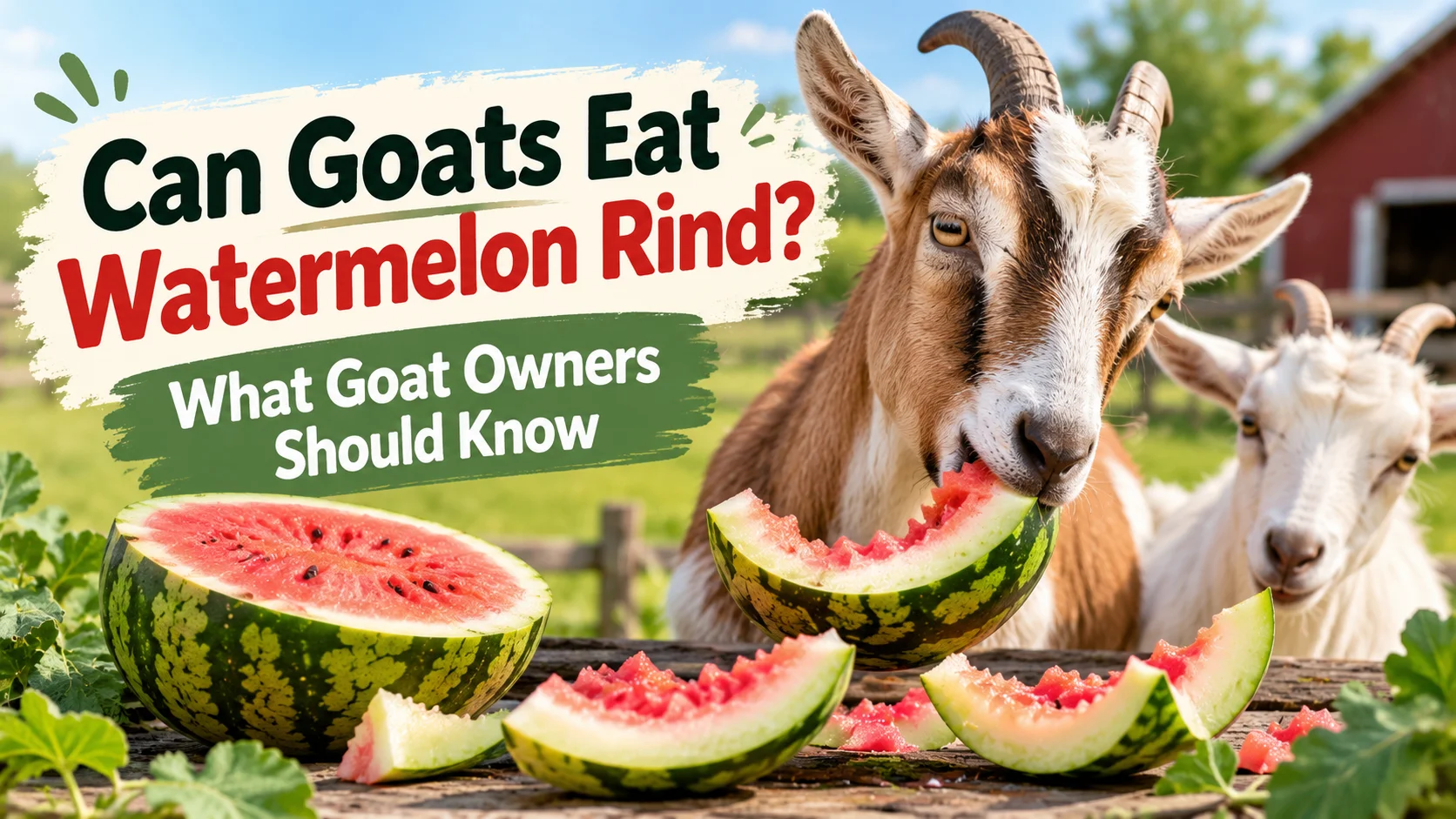
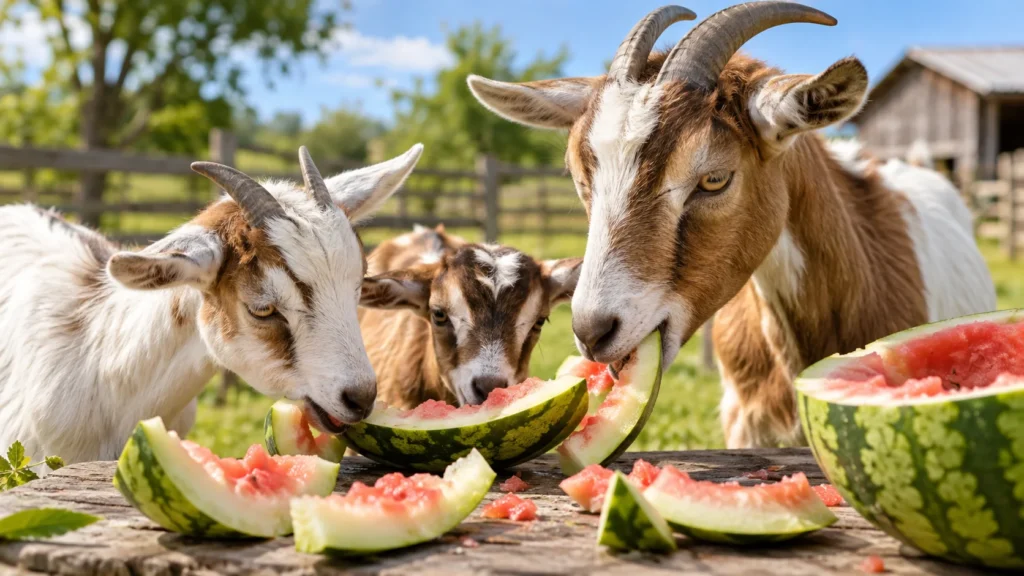
Yes, goats can eat watermelon rind when it is fresh, properly prepared, and offered in moderation. The rind is not considered a necessary part of a goat’s diet, but it can be given as an occasional treat alongside a normal diet based primarily on good-quality forage.
Watermelon rind contains water and fiber, and some goats enjoy eating it after consuming the sweet flesh. However, watermelon should remain a treat rather than replacing hay, pasture, browse, or other nutritionally appropriate goat feed.
If you are wondering whether goats can eat watermelon in general, watermelon flesh can also be offered as an occasional treat. The important consideration is how much is given and how the food fits into the goat’s overall diet.
Can Goats Eat Watermelon Rind?
Goats can eat watermelon rind. Many goats will eat the white and green portions after eating the juicy red flesh.
The rind is different from the sweet flesh because it is firmer and contains more fiber. However, this does not mean goats should be given unlimited amounts. Treat foods should complement a goat’s normal diet rather than replace it.
Goats are ruminants, and their diets should primarily consist of good-quality forage such as hay, pasture, or appropriate browse.
Is Watermelon Rind Safe for Goats?
Fresh watermelon rind can be a suitable occasional treat for goats. However, preparation matters.
Before giving watermelon rind to goats:
- Wash the watermelon thoroughly.
- Remove visibly damaged or spoiled portions.
- Cut large pieces into manageable portions.
- Introduce it gradually if your goats have never eaten it before.
- Give it as a treat rather than as a replacement for forage.
Some goats may prefer the sweet flesh, while others may enjoy chewing on the rind.
Can Goats Eat Watermelon Skin?
The term “watermelon skin” can refer to the outer green portion of the watermelon. Goats can eat watermelon skin when it is clean and fresh.
Because the outside of the fruit may come into contact with dirt or agricultural chemicals, washing the watermelon before feeding it is particularly important if the goats will eat the outer portion.
If you are uncertain about how the watermelon was grown or treated, you can simply provide smaller amounts of washed rind or choose to feed the flesh instead.
Can Goats Eat Watermelon Seeds?
Watermelon seeds are generally considered safe for goats in small amounts. Several goat-feeding sources report that goats can consume the seeds along with the watermelon.
There is usually no need to spend time removing every small seed from a piece of watermelon.
However, seedless watermelon can also be used if that is what you already have available.
The bigger consideration is the quantity of watermelon being offered, rather than the presence of a few seeds.
How Much Watermelon Rind Can Goats Eat?
There is no single portion that is appropriate for every goat. The suitable amount depends on factors such as the goat’s size, age, normal diet, health, and how accustomed it is to treats.
A sensible approach is to start with a small amount rather than giving a goat a large quantity of watermelon at once.
For example, you can offer a few small pieces of watermelon containing some rind and observe how the goat responds. If there are no digestive problems, watermelon can occasionally be included as a treat.
Avoid allowing watermelon to displace the goat’s normal forage.
Can Baby Goats Eat Watermelon Rind?
Extra caution is appropriate with young goats.
Kids have different nutritional needs from mature goats, and their diet should be appropriate for their age and stage of development. A young goat should not be given large quantities of fruit simply because an adult goat enjoys it.
If watermelon is offered to a young goat, use a very small amount and make sure its normal nutritional requirements are being met first.
For very young, nursing, recently weaned, or medically compromised kids, ask a veterinarian or qualified livestock professional before introducing unusual treats.
What Are the Benefits of Watermelon Rind for Goats?
Watermelon is mostly water, making it a moist fruit that can provide additional fluid as part of an occasional treat. Water is an essential nutrient for goats, although fresh drinking water should always remain available.
Watermelon also contains nutrients such as vitamins and minerals, but it should not be viewed as a replacement for a properly balanced goat diet.
The potential advantages of watermelon as an occasional treat include:
- High moisture content
- Some fiber from the rind
- Variety in the diet
- A palatable treat for many goats
- A convenient way to use leftover fresh watermelon
These benefits are secondary to the goat’s normal forage-based diet.
Are There Risks of Feeding Watermelon Rind to Goats?
Watermelon rind is not a substitute for hay or pasture, and excessive treats can interfere with a balanced feeding program.
Too much watermelon may also provide more sugar and moisture than a goat normally receives from its regular forage.
When introducing any new food, monitor the goat for changes such as:
- Loose stool
- Reduced appetite
- Digestive discomfort
- Abnormal behavior
- Bloating
If a goat develops significant digestive symptoms or appears unwell, stop offering the new food and contact a veterinarian.
Should You Cut Watermelon Rind Before Feeding It?
Cutting large watermelon pieces into manageable portions can make them easier for goats to handle.
Avoid giving extremely large, awkward pieces if your goats tend to eat quickly. Smaller portions can also make it easier to control how much watermelon each goat receives.
You do not need to turn the rind into tiny pieces. The goal is simply to provide portions that the animals can comfortably handle.
Can Goats Eat Rotten Watermelon?
No. Do not intentionally feed goats spoiled, moldy, or rotten watermelon.
The fact that goats are willing to eat many unusual foods does not mean spoiled food is appropriate for them. Fresh, clean watermelon is a much safer choice.
If a watermelon has developed mold, an unpleasant odor, significant decomposition, or other obvious signs of spoilage, discard it rather than putting it in the goat enclosure.
Can Goats Eat Watermelon Leaves and Vines?
Some sources report that goats may eat watermelon vines and other parts of the plant. However, these materials require additional caution because agricultural chemicals may have been applied to plants grown commercially.
For this reason, do not assume that leftover watermelon plants from an unknown source are automatically suitable for goats.
If you are considering feeding vines or other plant material, make sure you know how the plants were grown and whether any pesticides or other treatments were used.
How to Introduce Watermelon Rind to Goats
If your goats have never eaten watermelon before, start slowly.
- Wash the watermelon thoroughly.
- Cut a small amount into manageable pieces.
- Give each goat a small portion.
- Keep normal hay, forage, and drinking water available.
- Observe the goats for digestive changes.
- Only offer watermelon occasionally if they tolerate it well.
Introducing new foods gradually is a useful approach because individual goats can respond differently to dietary changes.
Should Watermelon Rind Replace Hay?
No.
Watermelon should never replace the forage that forms the foundation of a goat’s diet. According to the Merck Veterinary Manual, goats are ruminants whose diets should primarily consist of good-quality forage or browse, including hay or pasture.
Watermelon is best treated as an occasional addition.
A goat that eagerly eats watermelon may still need its normal hay or pasture afterward. The sweet taste of fruit should not encourage owners to reduce the animal’s regular forage.
Can Goats Eat Watermelon Every Day?
It is better to think of watermelon as an occasional treat rather than something goats need every day.
Although watermelon contains a lot of water and can be enjoyable for goats, providing fruit too frequently can add unnecessary sugar and moisture to the diet.
The majority of the diet should continue to come from appropriate forage and other nutritionally suitable feed.
Frequently Asked Questions
Can goats eat watermelon rind?
Yes. Goats can eat fresh watermelon rind in moderation. Wash the watermelon and cut large pieces into manageable portions before offering it.
Can goats eat watermelon skin?
Yes, goats can eat the outer portion of watermelon when it is fresh and properly washed. Offer it as an occasional treat.
Can goats eat watermelon seeds?
Small amounts of watermelon seeds are generally considered safe for goats. There is normally no need to remove every seed before offering watermelon.
Is watermelon rind better than watermelon flesh for goats?
The rind and flesh have different nutritional characteristics. The rind provides more fiber, while the flesh contains more water and natural sugars. Neither should replace the goat’s normal forage-based diet.
Can baby goats eat watermelon rind?
Young goats should receive age-appropriate nutrition first. If watermelon is introduced, only a small amount should be offered, and extra caution is appropriate for very young or recently weaned kids.
Can goats eat a whole watermelon?
A whole watermelon is not necessary. Cutting it into manageable portions makes it easier to control the amount offered and can reduce waste.
Can goats eat watermelon every day?
Watermelon is best used as an occasional treat rather than a daily dietary staple. Goats should continue receiving an appropriate forage-based diet.
What should goats eat instead of watermelon?
Good-quality hay, pasture, browse, and appropriately formulated goat feed should form the foundation of the diet. Fresh, clean drinking water should also be available at all times.
Final Thoughts
Goats can eat watermelon rind, and many goats enjoy it as an occasional treat. The rind can be offered with the flesh or separately after the watermelon has been washed and prepared into manageable portions.
The most important point is moderation. Watermelon should add variety to a goat’s diet, not replace the hay, pasture, browse, and other appropriate foods that provide the nutrition goats need.
If you are introducing watermelon for the first time, start with a small amount and watch your goats for any digestive changes. When in doubt about a particular goat’s diet, especially for young, pregnant, lactating, or unwell animals, consult a qualified veterinarian or livestock nutrition professional.