
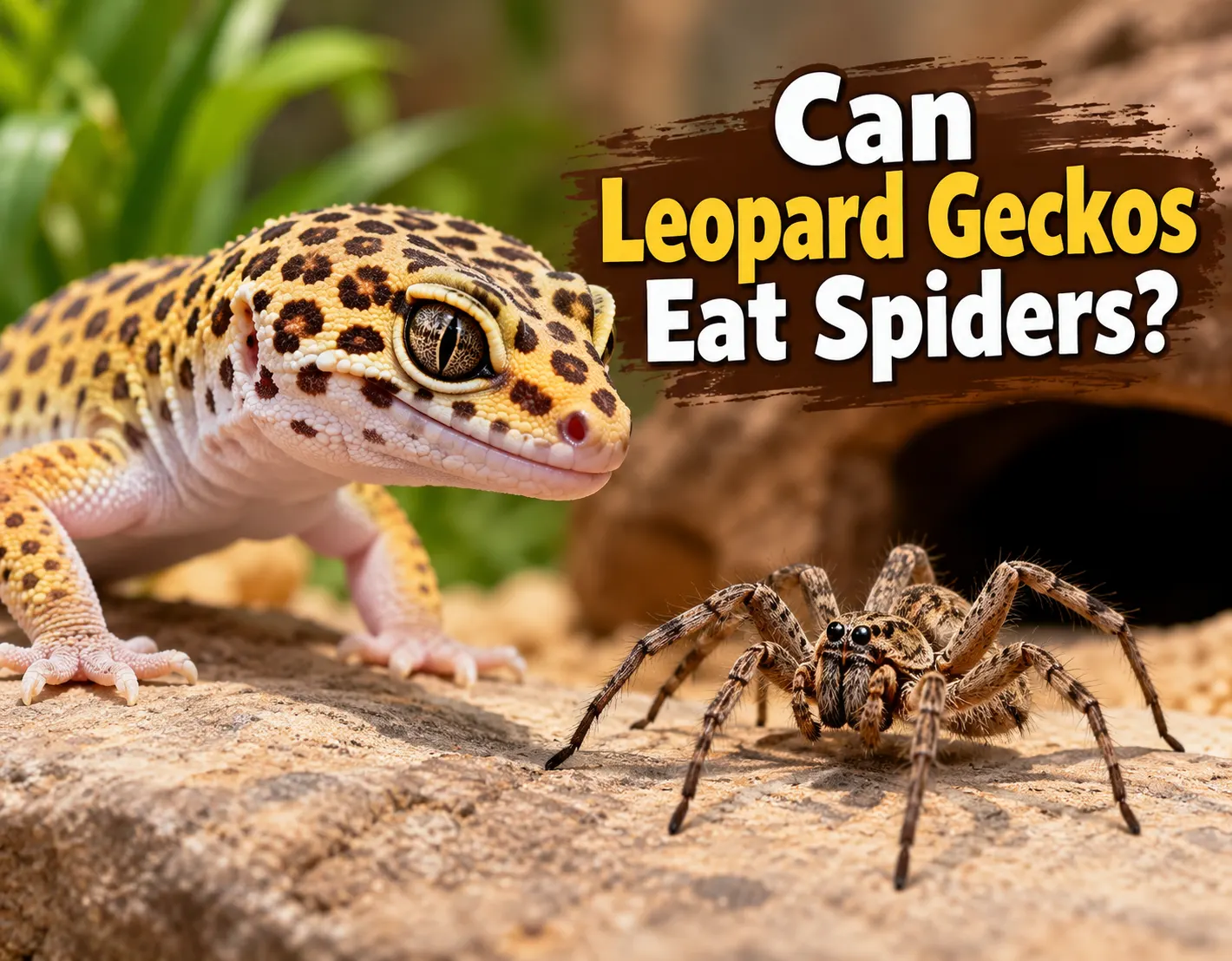
Leopard geckos are popular pets because they are relatively easy to care for, have gentle personalities, and have fascinating behaviors. As insect-eating reptiles, they need a diet made up primarily of appropriately sized feeder insects. This naturally leads many owners to wonder: can leopard geckos eat spiders?
The short answer is that leopard geckos may eat small spiders if they encounter one, but spiders are not a recommended regular food source for captive leopard geckos. Wild spiders can be difficult to identify, may have been exposed to pesticides, and some species can bite or contain venom that could potentially harm a gecko.
For a pet leopard gecko, it is generally safer to rely on established feeder insects such as crickets, dubia roaches, mealworms, and appropriately sized other captive-bred insects. A varied diet, proper supplementation, and suitable prey size are more important than adding unusual prey items such as spiders.
What Do Leopard Geckos Normally Eat?
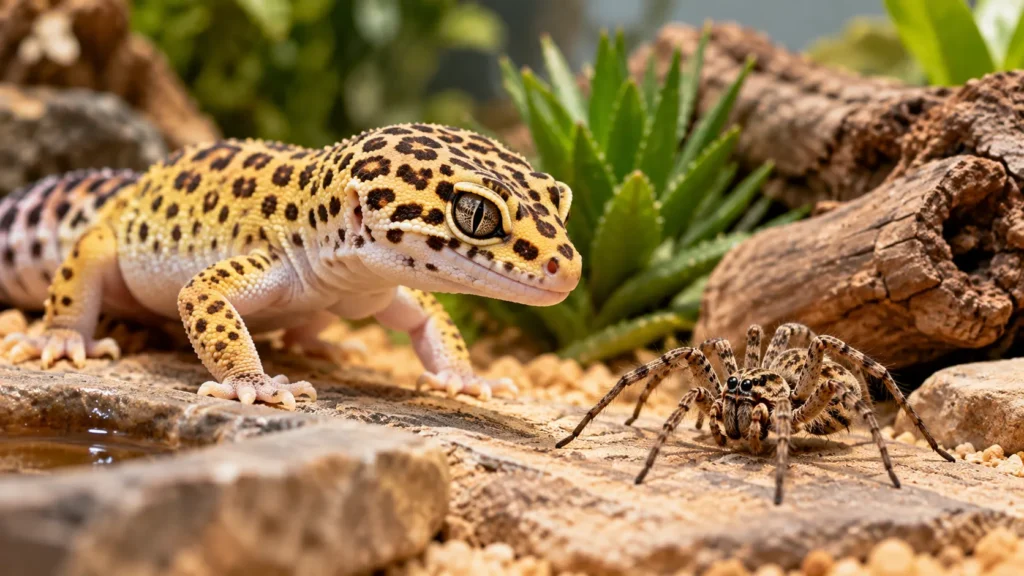
Leopard geckos are insectivores, meaning animal-based invertebrates make up the main part of their natural diet. In the wild, they may consume a variety of insects and other small invertebrates when available.
For captive leopard geckos, commonly used feeder insects include crickets, mealworms, dubia roaches, black soldier fly larvae, and appropriately sized waxworms. Offering more than one type of feeder can help provide dietary variety.
Young leopard geckos generally need smaller prey than adults, and the size of each feeder should be appropriate for the gecko. Feeding prey that is too large can increase the risk of choking, regurgitation, or digestive problems.
A healthy leopard gecko diet is not simply about providing protein. Feeder insects should be appropriately gut-loaded and supplemented according to the animal’s age, diet, and husbandry needs. Calcium and other supplements are commonly used as part of proper captive care.
Can Leopard Geckos Eat Spiders?
Leopard geckos can physically eat some small spiders, but that does not mean spiders are a good choice for routine feeding. If a gecko catches a small, harmless spider inside its enclosure, the situation is different from intentionally collecting wild spiders and offering them as food.
The biggest problem is that you may not know exactly what species of spider you are dealing with. Some spiders can bite, while others may be difficult to distinguish from potentially dangerous species. Wild spiders may also have come into contact with insecticides, pesticides, or other contaminants.
Because commercially raised feeder insects are readily available and their nutritional value and safety are easier to manage, there is usually little reason to use wild spiders as a food source.
In short, it is best not to intentionally feed wild spiders to a leopard gecko.
Are Spiders Nutritious for Leopard Geckos?
Spiders contain protein and other nutrients, so it is understandable why they may appear to be a potential food source for an insectivorous reptile. However, the nutritional value of a spider can vary considerably between species.
More importantly, nutrition is only one part of choosing a safe feeder. A food item can contain protein while still being unsuitable because of its potential toxicity, contamination, size, or ability to injure the gecko.
Protein
Protein is an important part of a leopard gecko’s diet because it supports normal growth, tissue maintenance, and other body functions. Insects commonly used as feeder prey can provide this protein in a predictable and practical way.
While spiders also contain protein, there is no major nutritional advantage that makes wild spiders necessary for a leopard gecko’s diet.
Vitamins and Minerals
The nutritional profile of spiders varies by species and what they have been eating. Therefore, it is difficult for a pet owner to use wild spiders as a consistent source of specific vitamins or minerals.
With feeder insects, owners can use established husbandry practices such as gut-loading and appropriate supplementation to help provide a more controlled diet.
Potential Risks
The biggest concern with spiders is not simply their nutritional content. The species may be unknown, and some spiders can bite or pose other risks. Wild-caught prey can also potentially carry parasites or have been exposed to chemicals.
For these reasons, commercially raised feeder insects are generally a more practical and controllable option for captive leopard geckos.
Why You Should Be Careful With Wild Spiders
If you find a spider in your home or near your leopard gecko’s enclosure, it may be tempting to use it as free food. However, wild-caught prey comes with several uncertainties.
1. You May Not Know the Spider Species
Not every spider is easy to identify. A spider that looks harmless may be difficult to distinguish from another species that presents a greater risk.
Unless you are completely certain about the species and its safety, it is better not to offer it to your leopard gecko.
2. Some Spiders Can Bite
A leopard gecko may attempt to catch and swallow a spider, but the spider may still defend itself. A bite could potentially cause injury, particularly if the spider is allowed to move around the enclosure before being eaten.
For this reason, intentionally offering spiders is an unnecessary risk when safer feeder insects are available.
3. Wild Spiders May Be Contaminated
Wild insects and spiders can come into contact with pesticides, insecticides, cleaning chemicals, or other contaminants. You generally cannot know what a wild-caught spider has been exposed to.
This is one reason experienced reptile keepers often prefer feeder insects raised specifically for reptile consumption.
4. Parasites Are Another Concern
Wild-caught invertebrates can potentially carry parasites or other organisms that may cause problems for captive reptiles. Using commercially bred feeders reduces some of the uncertainty associated with wild prey.
Can Leopard Geckos Eat Different Types of Spiders?
It is not a good idea to choose a spider for your leopard gecko simply because someone describes it as a “non-venomous” or “safe” species. Spider identification can be difficult, and common names can vary from one region to another.
For example, jumping spiders, wolf spiders, and other small spiders may be encountered by reptiles in nature. However, that does not mean that wild specimens should automatically be collected and fed to a pet leopard gecko.
Black widows and other medically significant spiders should never be offered as food. A leopard gecko should not be used to test whether a particular spider is safe to eat.
What Should You Do If Your Leopard Gecko Eats a Spider?
If your leopard gecko accidentally eats a small spider, there is no need to panic immediately. A single accidental ingestion does not necessarily mean the gecko will become ill.
Remove any remaining spiders from the enclosure and observe your pet closely. Watch for unusual symptoms such as:
- Loss of appetite
- Unusual weakness or lethargy
- Difficulty moving normally
- Vomiting or repeated regurgitation
- Abnormal breathing
- Swelling or other unusual physical changes
- Significant changes in normal behavior
If you suspect that the spider was venomous or your leopard gecko develops concerning symptoms, contact a veterinarian experienced in reptile care as soon as possible.
Safe Feeding Techniques for Leopard Geckos
Whether you feed crickets, roaches, mealworms, or other suitable insects, feeding technique matters. The goal is to provide prey that is appropriately sized, nutritious, and safe.
Live Prey Feeding
Many leopard geckos enjoy hunting live insects. Moving prey can encourage natural hunting behavior and provide enrichment.
When offering live feeders, choose insects that are appropriately sized for your gecko. A commonly used guideline is to avoid prey that is wider than the space between the gecko’s eyes.
Do not leave excessive numbers of live insects inside the enclosure for long periods. Some feeder insects can bite or stress a reptile if they remain in the enclosure after feeding.
Pre-Killed or Prepared Prey
Some leopard geckos can accept pre-killed prey, although live insects are commonly used. If using pre-killed prey, make sure it is fresh, appropriately sized, and free from contamination.
Never force-feed a healthy leopard gecko simply because it refuses an occasional meal. Changes in appetite can have many causes, and persistent appetite loss should be discussed with a reptile veterinarian.
Better Alternatives to Spiders
If you are looking for alternatives to spiders, there are plenty of established feeder insects that can be included in a leopard gecko’s diet.
Crickets
Crickets are one of the most commonly used feeder insects for leopard geckos. They are readily available in different sizes and can be gut-loaded before being offered to your pet.
Dubia Roaches
Dubia roaches are another popular feeder because they provide protein and can be offered in different sizes. They are also relatively easy to manage when purchased from a reputable feeder supplier.
Mealworms
Mealworms are convenient and easy to store. They can form part of a varied diet, although relying on only one feeder insect is not ideal.
Black Soldier Fly Larvae
Black soldier fly larvae are another option used by reptile keepers. They are naturally calcium-rich compared with many other feeder insects and can provide variety in the diet.
Waxworms
Waxworms are generally high in fat, so they are better treated as an occasional feeder rather than the primary food for a leopard gecko.
Do Leopard Geckos Need Calcium and Vitamins?
Proper supplementation is an important part of leopard gecko care. Calcium is particularly important for normal bone development and maintenance.
Depending on the gecko’s diet, age, lighting setup, and husbandry, keepers may use calcium and reptile multivitamin supplements. Vitamin D3 requirements can vary depending on the animal’s overall husbandry and UVB exposure.
Because excessive supplementation can also create problems, follow the instructions provided with your supplement and consider getting advice from an experienced reptile veterinarian if you are unsure about your gecko’s supplementation schedule.
How to Monitor Your Leopard Gecko’s Health
Diet is only one part of keeping a leopard gecko healthy. Regular observation can help you notice changes before they become more serious.
1. Watch Their Appetite
Pay attention to how much your gecko normally eats. A temporary reduction in appetite can occur for several reasons, but prolonged refusal to eat deserves attention.
2. Monitor Body Weight
Regular weighing can help you identify gradual changes that may not be obvious from appearance alone. Use a small digital kitchen scale and record the weight over time.
There is no single ideal weight for every leopard gecko because age, sex, body size, and individual build can vary. Trends in weight are often more useful than relying on one number.
3. Maintain Appropriate Enclosure Conditions
Leopard geckos require suitable temperatures, a proper enclosure setup, and appropriate humidity. Poor environmental conditions can affect digestion, appetite, activity, and overall health.
Use reliable thermometers and monitor the enclosure regularly rather than relying on room temperature alone.
4. Pay Attention to Behavior
Learn what normal behavior looks like for your individual gecko. Changes such as unusual inactivity, persistent hiding, difficulty moving, or major appetite changes may indicate that something is wrong.
If you notice persistent or severe changes, consult a veterinarian who has experience treating reptiles.
Understanding a Leopard Gecko’s Natural Prey
In their natural environment, leopard geckos eat a variety of small invertebrates. Their exact diet can depend on what prey is available in their habitat and season.
Although a wild leopard gecko may encounter and consume an occasional spider, this does not mean spiders need to be included in the diet of a captive animal.
There are also certain wild insects that should never be fed to leopard geckos. Fireflies, for example, are known to be dangerous to reptiles and should be avoided. Wild-caught insects can also introduce unnecessary risks from pesticides, parasites, or other contaminants.
For captive leopard geckos, it is generally better to choose feeder insects that are known to be suitable, appropriately sized, and sourced from a reputable supplier.
Frequently Asked Questions About Leopard Geckos and Spiders
Can leopard geckos eat spiders?
Leopard geckos can physically eat some small spiders, but intentionally feeding wild spiders is generally not recommended. The spider species may be difficult to identify, and there can be risks from bites, venom, pesticides, or parasites.
What happens if my leopard gecko accidentally eats a spider?
If your leopard gecko accidentally eats a small spider, monitor it closely for unusual behavior or symptoms. Remove any remaining spiders from the enclosure. If you suspect the spider was dangerous or your gecko develops concerning symptoms, contact a reptile veterinarian.
Can leopard geckos eat house spiders?
It is best not to intentionally feed house spiders to a leopard gecko. Even if a spider appears harmless, you may not know its exact species or whether it has been exposed to household pesticides or other chemicals.
Can leopard geckos eat black widows?
No. Black widows and other potentially dangerous spiders should never be offered to a leopard gecko. A venomous spider can pose a serious risk if it bites the gecko.
Can leopard geckos eat jumping spiders?
Although small jumping spiders may be eaten by some insectivorous animals, wild jumping spiders should not be intentionally used as feeder prey for a leopard gecko. Commercially raised feeder insects are a safer and more predictable option.
Can leopard geckos eat wolf spiders?
It is not recommended to collect wild wolf spiders and feed them to your leopard gecko. Even when a particular species is generally considered less medically significant to humans, the risks associated with unidentified wild prey and contamination still apply.
Are spiders a good source of food for leopard geckos?
Spiders can contain protein, but they are not necessary for a healthy leopard gecko diet. Established feeder insects such as crickets, dubia roaches, mealworms, and black soldier fly larvae are easier to source and manage.
What insects are best for leopard geckos?
Common feeder choices include crickets, dubia roaches, mealworms, black soldier fly larvae, and occasional waxworms. Offering a suitable variety helps provide different nutritional profiles while keeping meals interesting.
Can leopard geckos eat ants?
It is better to avoid collecting wild ants as feeder insects. Some species can bite or sting, and wild insects may have been exposed to chemicals. Use established feeder insects instead.
Can leopard geckos eat scorpions?
Scorpions should not be offered to pet leopard geckos. Their pincers and stinger can injure a gecko, and there is no nutritional reason to take that unnecessary risk.
How often should leopard geckos eat?
Feeding frequency depends on factors such as age, size, body condition, and individual needs. Young leopard geckos generally eat more frequently than adults. Rather than following a one-size-fits-all schedule, monitor body condition and discuss feeding needs with a reptile veterinarian when necessary.
What should I do if my leopard gecko stops eating?
A short-term change in appetite can happen for several reasons, but persistent appetite loss should not be ignored. Check the enclosure conditions and observe your gecko for other symptoms. If the problem continues or your gecko appears unwell, seek advice from a veterinarian experienced with reptiles.
Final Thoughts
So, can leopard geckos eat spiders? They may eat a small spider if they encounter one, but spiders are not a necessary or recommended part of a captive leopard gecko’s regular diet.
The biggest concerns with wild spiders are species identification, potential bites or venom, pesticide exposure, and parasites. With so many suitable feeder insects available, there is little reason to take those risks.
A varied diet of appropriately sized, reputable feeder insects, combined with proper supplementation and good enclosure care, is a much more practical way to support your leopard gecko’s nutritional needs.
If your leopard gecko accidentally eats a spider, monitor it carefully. If the spider may have been venomous or your gecko develops unusual symptoms, contact a reptile veterinarian promptly.