Rabbits are adorable pets that require a balanced diet to stay healthy and happy. As a responsible pet owner, it’s important to know what foods are safe for your furry friend to eat. One common question that rabbit owners have is whether or not rabbits can eat cucumbers.

The short answer is yes, rabbits can eat cucumbers. Cucumbers are a safe and healthy snack for rabbits when given in moderation. They are low in calories and high in water content, making them a great choice for keeping rabbits hydrated. However, it’s important to note that cucumbers should not make up the majority of a rabbit’s diet. Rabbits require a varied diet that includes hay, fresh vegetables, and a small amount of pellets.
Rabbit Dietary Basics

When it comes to feeding rabbits, it is important to keep in mind that their digestive system is quite sensitive. Therefore, it is crucial to provide them with a well-balanced diet that meets their nutritional needs. In this section, we will cover the basics of rabbit dietary requirements, including the importance of fiber and safe foods for rabbits.
Importance of Fiber
Fiber is a crucial component of a rabbit’s diet. It helps to maintain digestive health and prevents various health problems such as gastrointestinal stasis, which can be life-threatening. Fiber also helps to wear down their constantly growing teeth and keeps them healthy.
Rabbits require a high-fiber diet, which can be found in hay, grass, and leafy greens. Hay should make up the majority of their diet, with fresh vegetables and fruits being given in moderation.
Safe Foods for Rabbits
Not all foods are safe for rabbits to eat. Some foods can be toxic and cause serious health problems. Therefore, it is important to know which foods are safe for your rabbit to consume.
Here are some safe foods for rabbits:
- Hay (timothy hay, orchard grass, oat hay)
- Fresh vegetables (carrots, kale, parsley, cilantro, romaine lettuce)
- Fresh fruits (apples, bananas, strawberries, blueberries)
- Pellets (high-quality, plain pellets without added seeds or fruits)
It is important to introduce new foods slowly and in small amounts to avoid digestive upset. Additionally, some rabbits may have specific dietary requirements or health conditions that require a specialized diet. Therefore, it is always best to consult with a veterinarian before making any changes to your rabbit’s diet.
By providing your rabbit with a well-balanced diet that meets their nutritional needs, you can help ensure they live a healthy and happy life.
Cucumbers and Rabbits
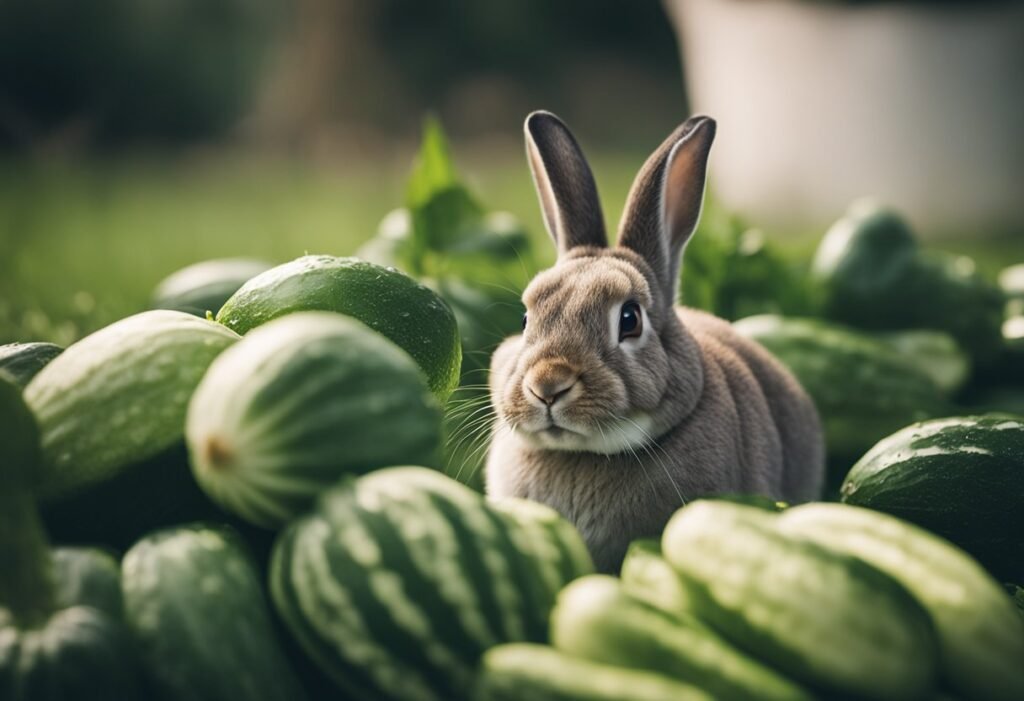
When it comes to feeding our furry friends, we always want to make sure we are giving them the right kind of food. One common question that rabbit owners have is whether or not cucumbers are safe for their pets to eat. In this section, we will explore the nutritional value, benefits, and risks of feeding cucumbers to rabbits.
Nutritional Value
Cucumbers are a low-calorie vegetable that is high in water content. They are also a good source of vitamin C, vitamin K, potassium, and magnesium. In addition, cucumbers contain small amounts of other vitamins and minerals, including vitamin A, vitamin B6, and calcium.
Benefits of Cucumbers
Feeding cucumbers to rabbits can provide some health benefits. The high water content in cucumbers can help keep rabbits hydrated, especially during hot weather. The fiber in cucumbers can also aid in digestion and help prevent gastrointestinal issues. Additionally, the vitamin C in cucumbers can boost the immune system and promote overall health.
Risks of Feeding Cucumbers
While cucumbers can be a healthy addition to a rabbit’s diet, there are some risks to consider. First, cucumbers should always be given in moderation, as too much can cause digestive upset. Second, it is important to wash cucumbers thoroughly before feeding them to rabbits to remove any pesticides or other contaminants. Finally, the seeds and skin of cucumbers can be difficult for rabbits to digest, so it is best to remove them before feeding cucumbers to your pet.
In conclusion, cucumbers can be a healthy and refreshing treat for rabbits when given in moderation and with proper preparation. As always, it is important to consult with a veterinarian before making any significant changes to your pet’s diet.
Feeding Guidelines
How to Introduce Cucumbers
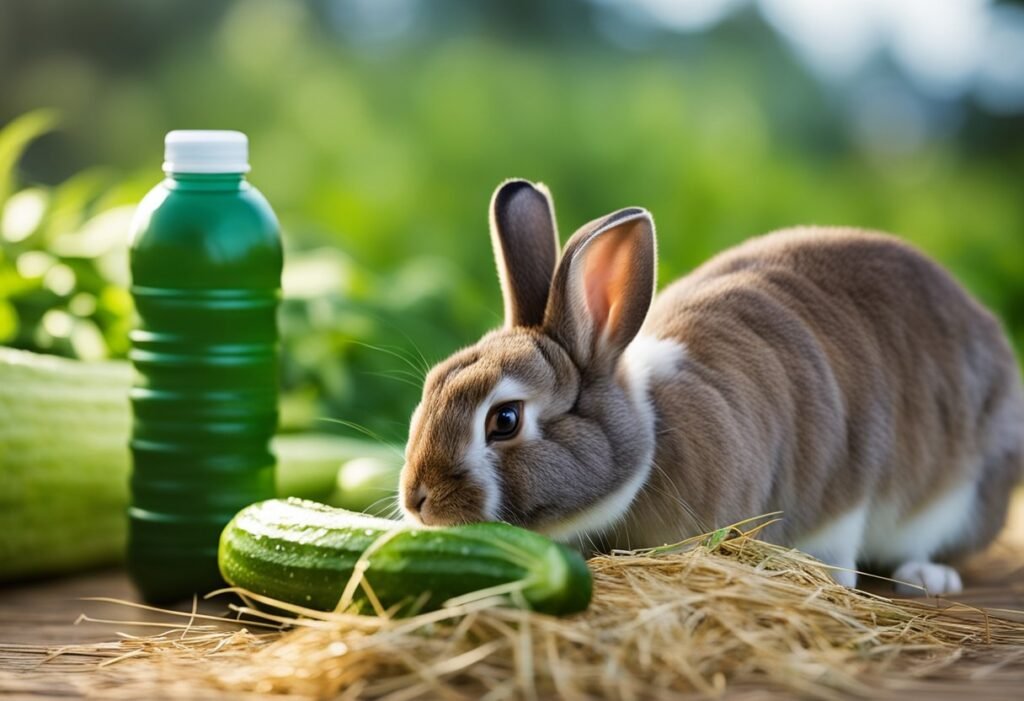
When introducing cucumbers to your rabbit’s diet, it is important to do so gradually. Start by offering a small piece of cucumber and monitor your rabbit’s reaction. If your rabbit tolerates the cucumber well, gradually increase the amount over a few days. If your rabbit experiences any digestive issues, such as diarrhea or bloating, discontinue feeding cucumbers immediately.
Appropriate Quantities
Cucumbers should be fed to rabbits in moderation. While cucumbers are safe for rabbits to eat, they are high in water content and low in fiber, which can lead to digestive issues if fed in excess. We recommend feeding cucumbers as a treat, rather than a staple food. A good rule of thumb is to offer no more than 1-2 small slices of cucumber per day, depending on the size of your rabbit.
In addition to cucumbers, rabbits should have access to a variety of fresh vegetables and hay to maintain a healthy diet. Always consult with your veterinarian before making any significant changes to your rabbit’s diet.
Preparation of Cucumbers

Cucumbers are a nutritious and refreshing treat for rabbits. However, before feeding them to your furry friend, it is important to properly prepare them. Here are some tips on how to prepare cucumbers for your rabbit.
Washing and Peeling
First, we recommend washing the cucumber thoroughly to remove any dirt or pesticides. We suggest using a vegetable brush to scrub the cucumber under running water. If you prefer to peel the cucumber, make sure to use a clean peeler to remove the skin. It is important to note that the skin of the cucumber contains most of the nutrients, so we suggest leaving the skin on if possible.
Cutting and Serving Sizes
Next, we recommend cutting the cucumber into small pieces to make it easier for your rabbit to eat. We suggest cutting the cucumber into slices or cubes that are no larger than the size of a grape. This will prevent your rabbit from choking on the cucumber.
It is important to remember that cucumbers should only be given to rabbits in moderation. Too much cucumber can cause digestive problems such as diarrhea. We suggest serving cucumbers as a treat or supplement to your rabbit’s regular diet.
In conclusion, preparing cucumbers for your rabbit is a simple and easy process. By following these tips, you can ensure that your rabbit receives a healthy and nutritious treat.
Alternatives to Cucumbers

If you’re looking for other healthy treats to give your rabbit besides cucumbers, there are plenty of options to choose from. Here are some of our favorites:
Vegetable Options
- Carrots: Carrots are a great source of vitamin A and beta-carotene, which can help improve your rabbit’s vision and immune system. Plus, they’re crunchy and sweet, making them a great treat for your bunny.
- Bell Peppers: Bell peppers are another great source of vitamin C, which can help boost your rabbit’s immune system. They’re also low in calories and high in fiber, making them a healthy snack for your furry friend.
- Broccoli: Broccoli is packed with vitamins and minerals, including vitamin C, vitamin K, and calcium. Just be sure to feed it to your rabbit in moderation, as too much can cause gas and bloating.
Fruit Treats
- Apples: Apples are a great source of fiber and vitamin C, and they’re also low in calories. Just be sure to remove the seeds and core before feeding them to your rabbit, as they can be harmful.
- Blueberries: Blueberries are high in antioxidants and low in calories, making them a great treat for your rabbit. Just be sure to feed them in moderation, as too many can cause digestive upset.
- Pineapple: Pineapple is high in vitamin C and bromelain, which can help improve digestion. Just be sure to remove the tough outer skin and core before feeding it to your rabbit.
Overall, there are plenty of healthy alternatives to cucumbers that you can feed your rabbit. Just be sure to introduce new foods slowly and in moderation, and always consult with your veterinarian if you have any concerns about your rabbit’s diet.
Frequently Asked Questions
Is it safe for rabbits to eat cucumber with the skin on?
Yes, rabbits can eat cucumber with the skin on. However, it is important to wash the cucumber thoroughly to remove any dirt or pesticides that may be present on the skin. Additionally, some rabbits may have trouble digesting the skin, so it is recommended to peel the cucumber if your rabbit has a sensitive digestive system.
How often can rabbits have cucumbers in their diet?
Cucumbers should be given to rabbits in moderation as a treat, rather than a staple food in their diet. A small slice of cucumber once or twice a week is sufficient for most rabbits. Overfeeding cucumbers can lead to digestive problems and diarrhea.
What parts of the cucumber plant are edible for rabbits?
Rabbits can eat the flesh of the cucumber as well as the leaves and stems of the plant. However, the seeds and skin should be removed before feeding to prevent any potential choking hazards or digestive issues.
Can feeding cucumbers to rabbits affect their digestive system?
Feeding too much cucumber to rabbits can cause digestive problems such as diarrhea and bloating. It is important to feed cucumbers in moderation and as a treat rather than a staple food in their diet. If your rabbit experiences any digestive issues after eating cucumbers, it is recommended to stop feeding them to your rabbit.
What are some vegetables that are healthy for daily rabbit consumption?
Some vegetables that are healthy for daily rabbit consumption include leafy greens such as kale, spinach, and parsley, as well as carrots, bell peppers, and celery. It is important to introduce new vegetables slowly and in small quantities to prevent any digestive issues.
Are there any vegetables that should be avoided in a rabbit’s diet?
Yes, some vegetables should be avoided in a rabbit’s diet. These include iceberg lettuce, which can cause digestive problems, and starchy vegetables such as potatoes and corn, which can lead to obesity. It is important to research and consult with a veterinarian before introducing new foods to your rabbit’s diet.