
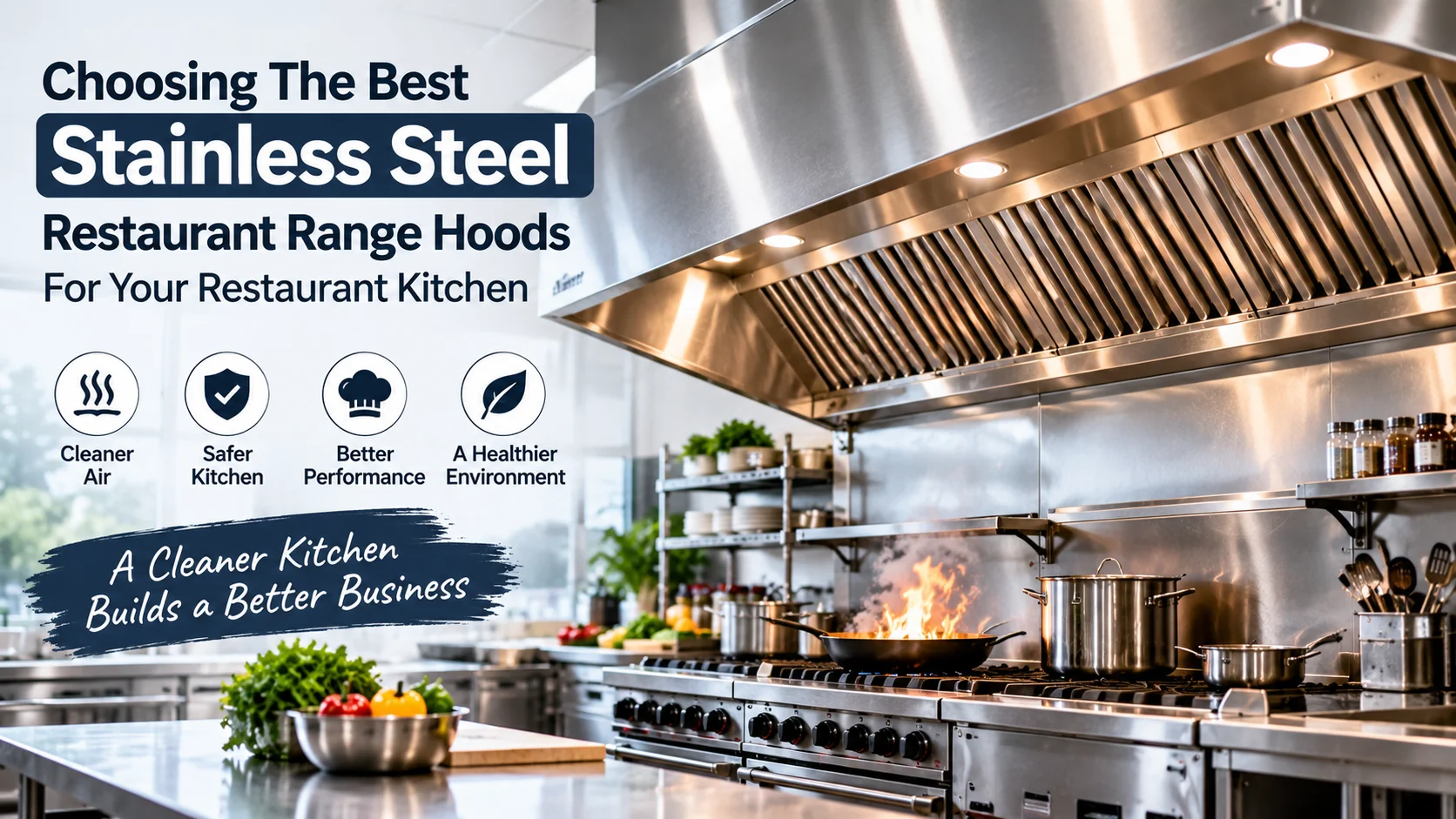
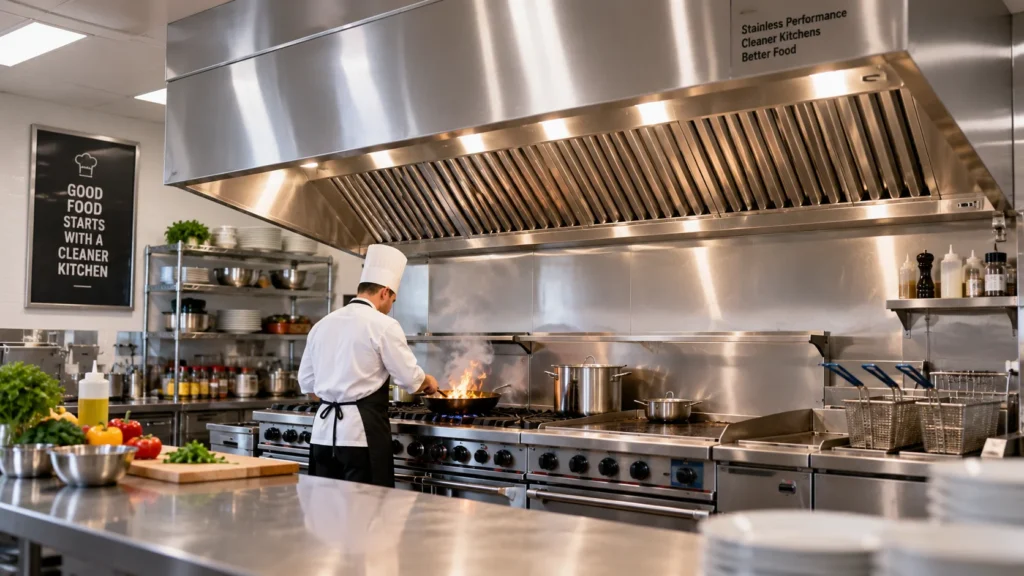
A reliable range hood is an essential part of a commercial kitchen. It helps remove heat, smoke, grease, steam, and cooking odors from the workspace while supporting a cleaner and more comfortable environment for kitchen staff. When choosing stainless steel restaurant range hoods, however, it’s important to look beyond appearance and price.
As experts like Martin Stainless Steel demonstrate, commercial exhaust hoods come in different designs and configurations, and the right choice depends on factors such as cooking equipment, hood dimensions, airflow requirements, ductwork, filtration, installation conditions, and applicable regulations.
Whether you’re opening a new restaurant or upgrading an existing kitchen, taking the time to evaluate these factors can help you select a range hood that suits your operation. Here are some important considerations when comparing stainless steel restaurant range hoods.
Determine the Required Airflow
Airflow is one of the most important considerations when selecting a commercial range hood. It is commonly expressed in CFM, or cubic feet per minute, which describes the volume of air the exhaust system can move.
There isn’t a single CFM number that works for every commercial kitchen. The appropriate exhaust airflow can depend on the type and amount of cooking equipment, the cooking processes involved, the hood design, the size of the hood, and applicable ventilation requirements.
Heavy-duty equipment such as charbroilers, grills, wok ranges, and fryers may create different ventilation demands from lighter-duty cooking equipment. Instead of relying on a simple formula, work with the hood manufacturer or a qualified commercial kitchen ventilation professional to determine the appropriate airflow for your particular setup.
Proper airflow is important because insufficient exhaust can allow heat, smoke, grease, and cooking vapors to remain in the kitchen. Excessive exhaust can also create unnecessary energy demands and may affect the balance of the kitchen’s air supply.
Choose the Correct Hood Size
The size of the hood should correspond to the cooking equipment it is designed to serve. A hood that is too small may not adequately capture heat, grease, and cooking vapors, while an unnecessarily large hood can increase equipment and operating costs.
Start by measuring the complete cooking line, including the width and arrangement of the appliances beneath the hood. The required hood dimensions and overhang should then be determined according to the hood design, equipment configuration, manufacturer’s specifications, and applicable requirements.
If your kitchen includes several appliances, consider the entire cookline rather than sizing the hood around only one piece of equipment. A professional kitchen ventilation specialist can help determine the appropriate dimensions for the complete installation.
Consider the Cooking Equipment and Duty Level
Different cooking appliances produce different amounts of heat, grease, smoke, and moisture. This means the ventilation system should be selected according to what your kitchen actually does rather than simply choosing a hood based on its appearance or dimensions.
For example, a kitchen using deep-fat fryers, charbroilers, heavy-duty ranges, and other grease-producing appliances may have different exhaust requirements from a kitchen focused primarily on light cooking.
Make a complete list of the appliances that will operate under the hood before selecting your ventilation system. Providing this information to the hood manufacturer or installer can help ensure the system is designed for the intended application.
Check Mounting Height and Clearance Requirements
The distance between the cooking equipment and the range hood is another important consideration. Mounting height can affect capture and containment performance, so the hood should not simply be installed at an arbitrary height.
Follow the manufacturer’s installation instructions and any applicable local building, mechanical, fire, and safety requirements when determining the correct mounting position.
Ceiling height, appliance configuration, hood design, and clearance requirements can all influence the final installation. Getting these measurements right before installation can help prevent expensive modifications later.
Plan the Ductwork Carefully
The ductwork is an important part of the overall exhaust system. Even a well-designed hood can perform poorly if the duct system is not properly configured.
When planning ductwork, consider factors such as duct diameter, total length, bends, elbows, transitions, exhaust fan capacity, and the location of the final exhaust point. Longer or more complicated duct runs can increase resistance and affect the performance requirements of the exhaust fan.
Commercial kitchen exhaust systems may also have specific requirements for duct construction, access, fire safety, and cleaning. For this reason, ductwork should be designed and installed by professionals who understand commercial kitchen ventilation.
Select Durable Stainless Steel Construction
Restaurant range hoods operate in demanding environments where they are exposed to grease, heat, moisture, cleaning chemicals, and frequent use. Durable construction is therefore an important consideration.
Look for a hood manufactured from quality stainless steel with strong seams, properly finished surfaces, and robust internal components. The construction should be appropriate for the commercial environment in which the hood will be installed.
Stainless steel is popular in restaurant kitchens because it is durable, relatively easy to clean, and well suited to environments where hygiene and regular maintenance are important.
When comparing products, also review the manufacturer’s specifications and any applicable certifications or listings. Certifications should be considered in relation to the specific requirements of the hood and its intended installation rather than treated simply as a measure of durability.
Choose the Right Grease Filtration System
Grease filtration plays an important role in commercial kitchen exhaust systems. The appropriate filter depends on the type of cooking equipment and the design of the exhaust hood.
Many commercial grease hoods use baffle-style grease filters designed to capture grease from the exhaust air. Other filtration technologies may be appropriate for specific applications, but not every restaurant requires a combination of baffle filters, mesh filters, and electrostatic systems.
When choosing a hood, check which filtration system is supplied and make sure it is suitable for your cooking operation. Also consider how easily the filters can be removed, cleaned, inspected, and replaced.
Consider Make-Up Air
Removing large amounts of air from a commercial kitchen can affect the pressure balance of the building. A properly designed ventilation system therefore needs to consider how replacement air will enter the kitchen.
Make-up air requirements can vary depending on the exhaust system, building, climate, and applicable regulations. If a hood exhausts a substantial volume of air without adequate replacement air, the kitchen may experience undesirable pressure differences and reduced ventilation performance.
Discuss make-up air requirements with your ventilation professional before installing a high-capacity exhaust system.
Evaluate Noise Levels
Commercial kitchens can already be noisy environments because of cooking equipment, refrigeration systems, dishwashers, and staff activity. Exhaust fans can add another source of noise.
When comparing stainless steel restaurant range hoods, ask about the expected operating noise and the fan configuration. Sound-dampening measures and proper equipment selection can help create a more comfortable working environment.
If possible, listen to a comparable installation before making a final decision. Real-world noise levels can provide useful information that isn’t always obvious from a product specification sheet.
Compare Useful Features
Modern commercial range hoods can include a variety of features designed to improve usability, maintenance, and kitchen safety.
Depending on the hood and application, features may include LED lighting, digital controls, variable-speed fan operation, insulated components, automatic cleaning systems, and other control options.
Fire suppression should also be considered as part of the overall commercial kitchen safety system where required. Its design and installation should comply with the applicable fire-safety requirements for the kitchen rather than being treated simply as an optional hood accessory.
When comparing additional features, consider whether they provide a genuine benefit for your kitchen. Extra features can increase the purchase price, so prioritize those that improve safety, efficiency, maintenance, or daily operation.
Research the Manufacturer’s Reputation
The manufacturer you choose can have a significant impact on the long-term ownership experience. Look for companies with experience producing commercial kitchen ventilation equipment and providing support after installation.
Read reviews from restaurant owners and operators where possible. Pay attention to comments about construction quality, product reliability, installation support, replacement parts, customer service, and warranty handling.
A reputable manufacturer should provide clear product specifications and be able to answer questions about installation, maintenance, compatibility, and service requirements.
Request a Professional Assessment or Demonstration
If you’re unsure which range hood is appropriate for your restaurant, a professional assessment can be more useful than choosing a model based solely on photographs or online specifications.
A qualified ventilation professional can review your kitchen layout, cooking equipment, hood location, ductwork, airflow requirements, and make-up air needs. This can help identify potential problems before equipment is purchased.
If a demonstration is available, use the opportunity to evaluate the hood’s controls, lighting, filter access, noise level, and general usability. Asking questions before installation can help you understand what to expect from the finished system.
Inspect Existing Commercial Kitchen Installations
Existing restaurant kitchens can also provide useful examples when you’re researching ventilation options. If you regularly visit restaurants with effective ventilation and comfortable working environments, you can ask what type of exhaust system they use.
Seeing a commercial hood in an actual working environment can give you a better understanding of factors such as hood size, filter access, noise, lighting, and general maintenance.
However, remember that every kitchen has different equipment, layouts, building conditions, and ventilation requirements. A hood that works well in one restaurant isn’t necessarily the correct solution for another.
Consider Installation and Maintenance Costs
The purchase price of the hood is only one part of the total investment. You should also consider installation, ductwork, exhaust fans, make-up air equipment, electrical work, controls, and other components that may be required for a complete system.
Maintenance should also be included in your budget. Filters need regular cleaning, and the exhaust system may require periodic inspection and professional cleaning depending on the type of cooking operation and applicable requirements.
A lower-priced hood may not necessarily be the most economical choice if it requires more maintenance, has limited parts availability, or isn’t properly matched to your kitchen.
Work With Qualified Installation Professionals
Commercial kitchen ventilation is more complicated than installing a typical residential range hood. Incorrect sizing, poor ductwork, inadequate airflow, or improper installation can affect ventilation performance and may create safety or compliance problems.
For that reason, work with qualified professionals who understand commercial kitchen exhaust systems and local requirements. They can help coordinate the hood, exhaust fan, ductwork, make-up air, controls, and other components as part of a complete ventilation solution.
Before installation begins, confirm the responsibilities of the manufacturer, contractor, ventilation specialist, electrician, and other professionals involved in the project.
Conclusion
Choosing the best stainless steel restaurant range hood requires more than comparing prices and appearances. The right system should be appropriate for your cooking equipment, kitchen layout, ventilation requirements, ductwork, filtration needs, and applicable safety regulations.
Start by identifying the equipment the hood will serve and determining the appropriate airflow and dimensions with qualified professionals. Then consider stainless steel construction, filtration, ductwork, make-up air, noise, features, maintenance, and long-term support.
A well-designed commercial exhaust system can help create a cleaner, safer, and more comfortable working environment while supporting the day-to-day operation of your restaurant kitchen. By evaluating the complete ventilation system rather than focusing on the hood alone, you can make a more informed investment that suits both your kitchen and your budget.