

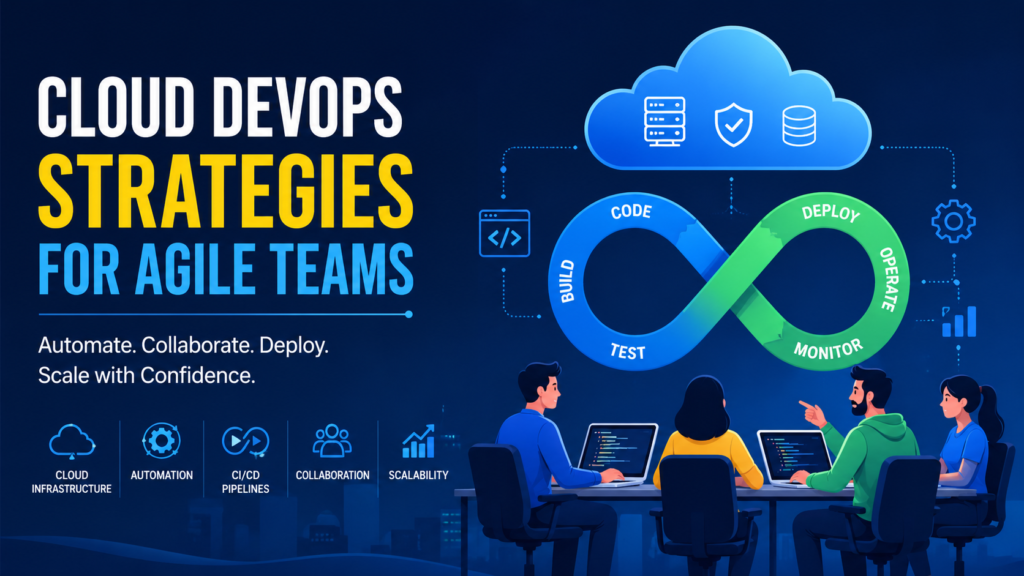
As software development accelerates, Agile teams are embracing new ways to keep up with evolving business demands and rapid iteration. Integrating Cloud and DevOps practices has become a transformative approach for organizations aiming to deliver value seamlessly. Teams can now leverage scalable infrastructure, collaborative cloud tools, and workflow automation to iterate faster and innovate. For those looking to boost productivity and output, devops outsourcing is also a growing option to access specialized resources and expertise without expanding internal workloads.
This article outlines proven strategies for Agile teams looking to harness the full power of Cloud DevOps. By integrating these methodologies, organizations streamline development, increase resilience, and align cross-functional teams to achieve better results in dynamic environments.
Cloud DevOps is not just about technology upgrades. It means reshaping your workflows, improving transparency, and adopting a culture of ongoing feedback and improvement. Teams can experiment confidently, quickly recover from setbacks, and scale their applications or operations as needed. The combination also nurtures collaborative mindsets, enabling everyone from developers to QA specialists and operations engineers to contribute at all stages of the development lifecycle. Before diving deeper, it is important to recognize that successful Cloud DevOps requires alignment between business goals, technical processes, and human collaboration. Organizations that recognize this interplay are best positioned to reap the benefits of faster releases, higher product quality, and satisfied customers.
Understanding Cloud DevOps
Cloud DevOps merges the on-demand and elastic possibilities of cloud computing with robust DevOps practices. Imagine instantly scalable servers, automated provisioning, and integrated deployment cycles, all within a unified ecosystem. With Cloud DevOps, Agile teams work in adaptable environments that can spin up or down resources to meet fluctuating needs. This flexible backbone makes it easier to deliver small, incremental changes frequently, aligning perfectly with Agile philosophies. Crucially, Cloud DevOps prioritizes automation, monitoring, and collaboration. It combines these foundational DevOps practices with cloud-native technologies (such as containers and managed services), helping teams focus on coding and creativity rather than managing infrastructure and manual steps.
Benefits of Cloud DevOps for Agile Teams
- Scalability: Cloud platforms let teams immediately access servers, databases, and computing power, scaling up or down to match the workload without up-front investments.
- Flexibility: Agile is about responding to change. Cloud DevOps gives teams the freedom to experiment, rollback, or update environments rapidly as requirements evolve.
- Collaboration: Distributed teams access cloud-based tools that track code commits, deployments, and live system states, keeping everyone aligned—regardless of location.
According to an analysis by IBM’s DevOps Guide, organizations see improved delivery speed, reduced risk, and a more collaborative culture when DevOps is integrated with cloud platforms.
Implementing Continuous Integration and Deployment
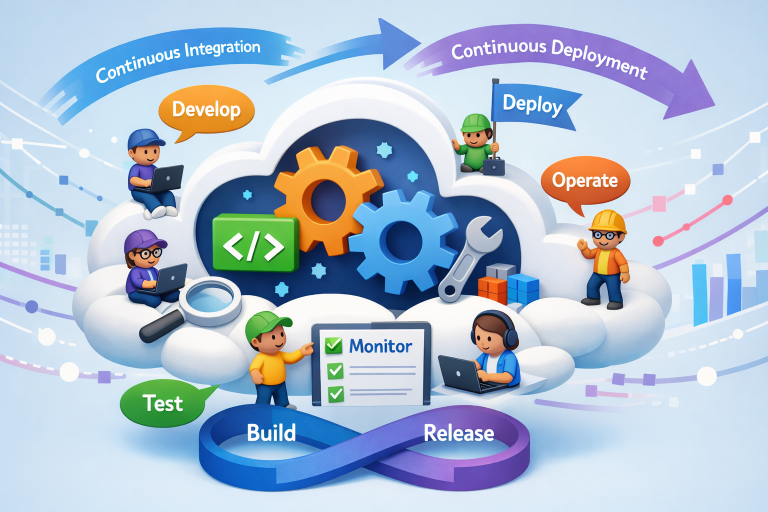
Continuous Integration and Continuous Deployment (CI/CD) are central to both DevOps and Agile success. CI/CD pipelines automate the build, test, and release process, enabling teams to push new features and fixes at any time with minimal friction. By leveraging managed services such as AWS CodePipeline or Azure DevOps, teams can implement inspection gates and automated rollbacks, ensuring high code quality and rapid feedback cycles. Automated pipelines also mean fewer manual steps, reducing the risk of human error and accelerating time-to-production. Teams that master CI/CD find it easier to experiment and innovate without compromising stability or security. Learn more about best practices for CI/CD from Red Hat’s guide.
Adopting Infrastructure as Code
Infrastructure as Code (IaC) brings the same discipline and version control to infrastructure as you apply to application code. Tools like Terraform, AWS CloudFormation, and Ansible allow teams to define server environments, networking, and databases in reusable configuration files. These files are stored in source control and can be peer reviewed, making infrastructure changes safe, repeatable, and auditable. IaC promotes consistency across environments, which means teams avoid the classic “it works on my machine” issues. When onboarding or scaling, a team can stand up identical infrastructure in minutes, ensuring consistent behavior across development, staging, and production.
Enhancing Collaboration Through Cross-Functional Teams
Modern Agile DevOps teams thrive by breaking out of traditional silos. Instead of separating developers, testers, and operations, cross-functional teams bring together skill sets and perspectives from the start. This collaboration reduces handoffs, speeds up decision-making, and increases ownership over the end product.
Open communication channels, powered by cloud-native collaboration tools, help distributed members stay connected and accountable. When everyone has insight into priorities, status, and upcoming deployments, the entire organization is positioned for smoother releases and fewer surprises.
Leveraging Automation for Efficiency
Automation is vital for eliminating repetitive tasks, minimizing manual errors, and freeing up time for creative problem-solving. Agile Cloud DevOps teams automate testing, infrastructure provisioning, security scans, and even rollbacks. By putting as much as possible into code and letting the system execute repetitive jobs, human effort focuses on value-add activities rather than maintenance or firefighting. The reliability gained from automation also means teams can confidently push changes, knowing that automated tests and deployment rules safeguard quality standards throughout the delivery process.
Monitoring and Feedback Loops
No development cycle is complete without a robust feedback system. Cloud DevOps equips teams with real-time monitoring and analytics tools, like AWS CloudWatch or Azure Monitor, that visualize application health, usage, and system performance. Teams act immediately when issues are detected, turning insights into actionable improvements. Alerting tools, error tracking, and user behavior analytics all contribute to a cycle of continuous learning and rapid product evolution. Emphasizing open and frequent feedback not only catches problems earlier but also surfaces user needs and competitive opportunities that can drive future releases.
Conclusion
Cloud DevOps has emerged as a game-changing enabler for Agile teams looking for productivity, resilience, and growth. Combining the scalability and flexibility of cloud technology with the automation and collaboration of DevOps enables organizations to deliver faster deployments, better customer experiences, and happier, more empowered teams. Approaches like CI/CD, Infrastructure as Code, and proactive feedback are not only best practices but also critical for organizations that want to stay ahead in a tech-driven marketplace.