

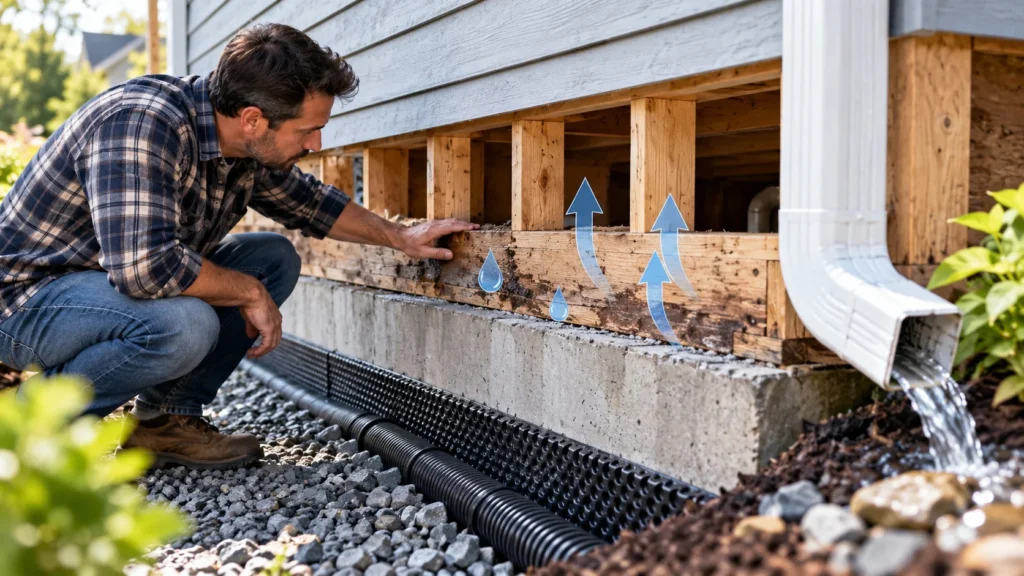
Wood framing is an important part of many homes, but prolonged exposure to moisture can create serious problems. Water intrusion can contribute to wood decay, mold growth, insect activity, and deterioration of structural components. The good news is that many moisture-related problems can be reduced through proper drainage, ventilation, flashing, moisture barriers, and regular inspections.
If your home has a wooden foundation or wood framing near the foundation, protecting these components should be part of your regular home maintenance routine.
Why Moisture Is a Problem for Wood Framing
Wood naturally contains some moisture, but prolonged exposure to elevated moisture levels can create conditions that encourage decay organisms and mold. Water can reach framing through roof leaks, plumbing problems, foundation seepage, condensation, poor drainage, or rainwater that collects against exterior walls.
The American Wood Council emphasizes that protecting wood structures requires effective moisture control, appropriate material selection, termite and organism protection, and sound construction practices.
Moisture problems can also become more serious when they remain hidden. A small leak behind a wall may continue for months before visible staining, soft wood, odors, or other signs appear.
1. Keep Rainwater Away From the Foundation
One of the simplest ways to protect wood framing is to control water around the outside of the house.
Check your gutters regularly and make sure they are not clogged with leaves or other debris. Downspouts should discharge water away from the foundation rather than allowing it to collect beside the house.
The ground around the home should also be designed or maintained so that surface water moves away from the foundation. Building-science guidance recommends using grading, drainage systems, and properly managed roof runoff to reduce water accumulation around foundations.
If water repeatedly pools next to your foundation after heavy rain, investigate the drainage problem rather than simply repairing the visible damage.
2. Prevent Wood-to-Soil Contact
Wood should not have unnecessary direct contact with soil.
Soil can remain damp for long periods, particularly after heavy rain or irrigation. It can also provide termites with a concealed route toward wood components.
The University of Kentucky’s termite guidance recommends eliminating wood-to-ground contact and keeping soil and other materials away from wood components.
Inspect the perimeter of your home for:
- Wood siding touching the soil
- Wood posts extending directly into the ground
- Mulch piled against wooden walls
- Buried construction debris
- Timber landscaping materials touching the structure
Correcting these conditions can improve both moisture management and termite prevention.
3. Use Proper Moisture Barriers
Moisture barriers and capillary breaks can help prevent water from moving into moisture-sensitive building materials.
Where wood framing meets masonry or concrete, an appropriate capillary break or sill-sealing system can help reduce moisture transfer. Building-science guidance also recommends protective membranes between foundation components and wood framing in appropriate assemblies.
Wood foundations require particularly careful moisture management. Building codes can specify dampproofing, sealed panel joints, and below-grade moisture barriers for wood foundation systems.
Because foundation assemblies differ considerably, the correct membrane or barrier depends on the construction system, climate, local code requirements, and site conditions.
4. Make Sure Foundation Drainage Works Properly
A foundation drainage system helps prevent water from remaining against foundation walls.
Perimeter drains, drainage layers, free-draining materials, and appropriate discharge systems can help manage groundwater and rainwater. The exact drainage design depends on the foundation and site.
The International Residential Code includes specific drainage requirements for wood foundations below grade, while building-science guidance emphasizes keeping foundation drainage functioning properly to prevent moisture intrusion.
If you have a basement, crawlspace, or wood foundation that regularly becomes damp, do not assume that waterproofing the visible interior surface will solve the underlying problem. Water may need to be controlled outside the foundation assembly.
5. Inspect Flashing Around Doors and Windows
Flashing is another important part of moisture protection.
Water can enter around windows, doors, roof-wall intersections, decks, vents, pipes, and other openings when flashing or water-management details are missing or improperly installed.
The APA identifies improper flashing and poorly detailed wall penetrations as important contributors to water intrusion in wall assemblies.
During an inspection, look for:
- Peeling or bubbling paint
- Stained wood
- Soft or swollen trim
- Damaged sealants
- Gaps around windows and doors
- Water stains below openings
Visible damage around an opening can sometimes indicate a larger concealed moisture problem.
6. Control Indoor Humidity and Condensation
Not all moisture problems originate outside the house.
Warm, humid indoor air can produce condensation when it comes into contact with colder surfaces. Bathrooms, kitchens, laundry rooms, crawlspaces, and poorly ventilated areas can therefore contribute to moisture problems.
Use exhaust ventilation where appropriate and repair plumbing leaks promptly. Keep crawlspaces and other enclosed areas properly ventilated or conditioned according to the building design.
Moisture management should address both liquid water and water vapor. APA guidance notes that moisture can enter buildings through rain, groundwater, condensation, and vapor diffusion.
7. Watch for Termite Activity
Moisture control and termite prevention are closely connected.
Damp wood and persistently wet soil can create favorable conditions for termite activity. Keeping the area around the foundation dry and maintaining a visible inspection zone can make problems easier to detect.
The U.S. Department of Energy’s Building America guidance recommends keeping the ground around the home dry, directing roof runoff away from the foundation, and maintaining clearance between wood components and soil.
Look for warning signs such as:
- Mud tubes
- Hollow-sounding wood
- Damaged or weakened timber
- Discarded wings near windows or doors
- Unexplained cracks or deterioration around wood components
If you find evidence of an active infestation, have the structure inspected by a qualified pest professional.
8. Remove Sources of Moisture Quickly
A small leak can become a major structural problem when it remains unnoticed.
Repair leaking plumbing, roof leaks, overflowing gutters, damaged flashing, and drainage problems as soon as they are identified.
Do not simply cover a damp area with paint or sealant. The source of the moisture needs to be identified and corrected first.
If wood has remained wet for an extended period, a professional may need to determine whether the affected material can be dried and retained or whether damaged components require replacement.
9. Keep the Foundation Perimeter Accessible
Landscaping can unintentionally hide moisture and termite problems.
Keep excessive soil, mulch, vegetation, and stored materials away from areas that need to remain visible for inspection. This makes it easier to identify cracks, water damage, termite activity, damaged flashing, and other problems.
The Building America termite guidance specifically emphasizes maintaining clearance between wood and soil and keeping the foundation perimeter accessible for protection and inspection.
10. Inspect Wooden Framing Regularly
Regular inspections can help identify small problems before they become expensive repairs.
During a basic inspection, look around accessible framing for:
- Discoloration
- Soft or deteriorating wood
- Mold-like growth
- Musty odors
- Water stains
- Insect damage
- Loose or damaged connections
- Areas that remain unusually damp
Pay particular attention to areas close to bathrooms, kitchens, plumbing lines, exterior walls, roofs, crawlspaces, and foundations.
What to Do If Your Wood Framing Is Already Wet
If you discover wet wood, start by identifying where the water is coming from.
Possible sources include:
- Roof leaks
- Plumbing leaks
- Foundation seepage
- Poor exterior drainage
- Condensation
- Damaged flashing
- Improperly sealed openings
After the source is corrected, the affected area should be allowed to dry appropriately. Severely deteriorated structural wood may require evaluation and replacement.
Avoid cutting, removing, or modifying structural framing without understanding its structural role. When significant structural damage is suspected, consult a qualified building professional or structural engineer.
Wood Foundation and Framing Protection Checklist
Use this checklist when inspecting your home:
- Check gutters and downspouts.
- Make sure rainwater drains away from the foundation.
- Look for standing water around the house.
- Keep soil and mulch away from wood components.
- Inspect exposed wood for decay and insect damage.
- Check flashing around doors and windows.
- Look for plumbing and roof leaks.
- Inspect accessible crawlspace or basement areas.
- Maintain appropriate moisture barriers and drainage systems.
- Arrange a professional inspection when structural damage is suspected.
How This Relates to Protecting a Wooden Foundation
Protecting wood framing is not just about treating the wood after damage occurs. A long-term strategy combines moisture control, drainage, proper separation from soil, appropriate barriers, termite prevention, and regular inspection.
For a broader guide covering these measures at the foundation and framing level, see our related guide on how to protect your home’s wooden foundation and framing.
Frequently Asked Questions
What is the biggest threat to wood framing?
Moisture is one of the most persistent threats to wood framing because prolonged moisture exposure can contribute to decay, mold, and other building problems. Controlling water intrusion and keeping wood dry are therefore fundamental to long-term protection.
How do I protect wood framing from water?
Control water at the source by maintaining gutters and downspouts, directing surface water away from the foundation, repairing leaks, using appropriate flashing and moisture barriers, and maintaining effective foundation drainage.
Can termites damage treated wood?
Preservative-treated wood can provide increased resistance to some forms of deterioration, but it should not be considered a substitute for proper termite-resistant design and moisture control. Eliminating wood-to-soil contact and maintaining a dry, inspectable foundation perimeter are important preventive measures.
How often should wooden framing be inspected?
Inspect accessible areas regularly as part of normal home maintenance, particularly after major storms, plumbing leaks, flooding, or other water events. Homes with known moisture or termite problems may require more frequent professional inspections.
Should I replace wet wood immediately?
Not necessarily. The appropriate response depends on how long the wood has been exposed to moisture, the extent of deterioration, and whether the component is structural. The moisture source should be corrected first, and significantly damaged structural wood should be evaluated by a qualified professional.
Final Thoughts
Protecting wood framing starts with keeping water away from the structure and preventing moisture from becoming trapped around vulnerable components. Good drainage, proper flashing, moisture barriers, separation from soil, termite prevention, and regular inspections can all contribute to a more durable building.
If you have a wooden foundation or wood framing that shows persistent dampness, decay, or suspected structural damage, addressing the underlying cause is more important than simply covering the visible symptoms.