
Coming forward as a survivor of childhood abuse takes serious courage.
For every family ready to fight for justice, there are dozens who remain silent. They fear their name coming up in a Google search. They fear their neighbours knowing. They fear being dragged through trauma once again in a public courtroom.
Here’s the good news:
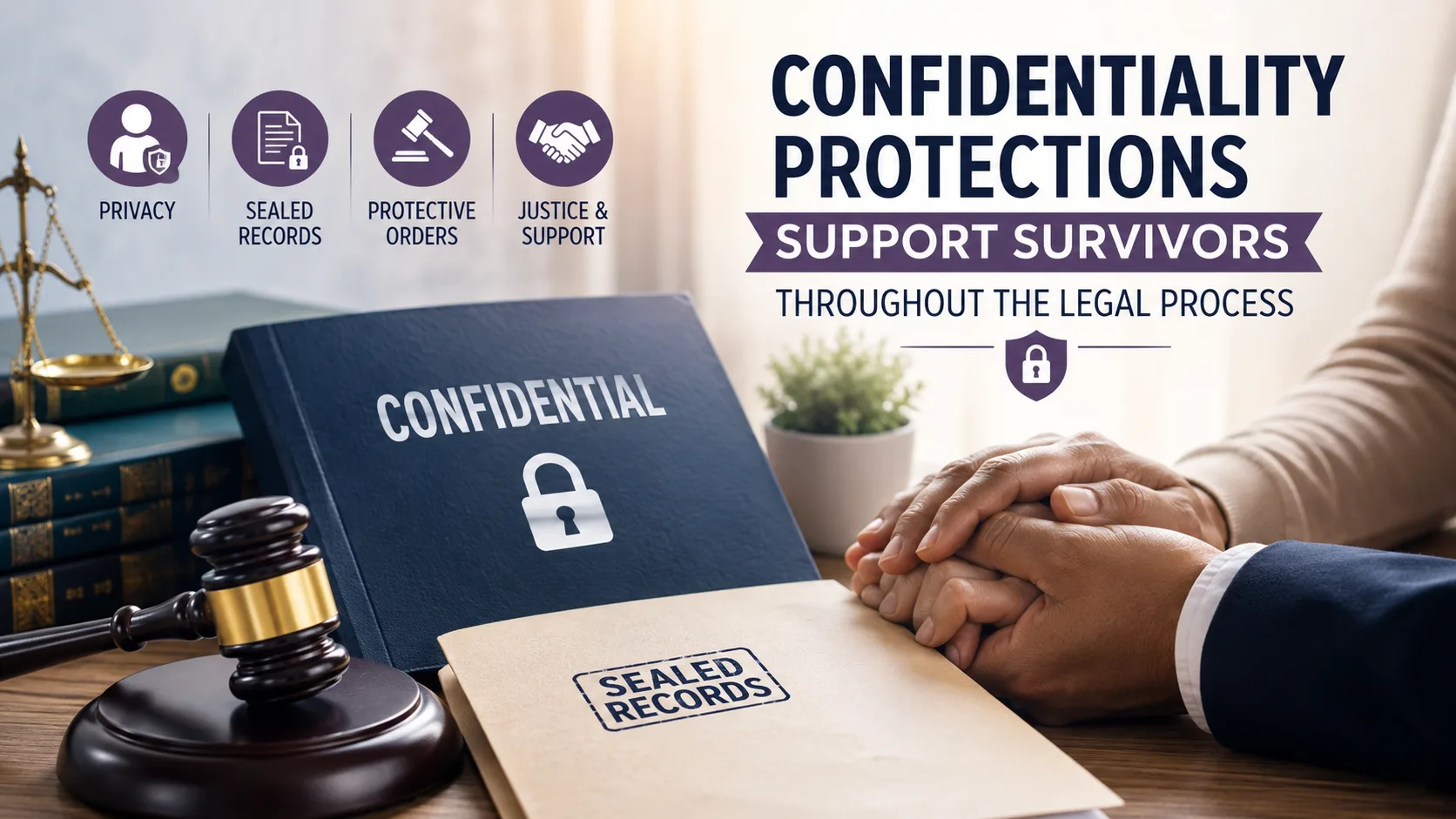
The legal system has confidentiality protections built in from the start. For survivors of childhood failure to protect, these shields can mean the difference between filing a claim… or not speaking up at all.
Let’s break it all down.
Here’s what’s covered:
- Why Confidentiality Matters In Failure To Protect A Child Cases
- Legal Tools That Shield Survivor Identity
- How Sealed Records And Protective Orders Work
- What Confidentiality Looks Like In Settlements
- The Role Of An Attorney In Protecting Privacy
Why Confidentiality Matters In Failure To Protect A Child Cases
Negligence claims often stem from organizations designed to protect children. Foster care. Group homes. Churches. Schools. When failings occur, survivors are burdened with trauma they shouldn’t have to bear.
And the numbers are shocking.
An estimated 542,900 individual victims of child maltreatment were substantiated in 2023. Nearly 3 out of 4 were for neglect. That means millions of kids who were let down by the adults and systems who were supposed to care for them.
Fear. That’s what keeps many survivors of these cases from seeking justice.
- Fear of public exposure
- Fear of being judged by family and community
- Fear of losing their job
- Fear of being re-traumatised on the stand
Working with an experienced foster care abuse lawyer can provide some peace of mind. They can explain to survivors what confidentiality protections apply in a failure to protect a child claim, and help them seek accountability without sacrificing privacy.
That’s the whole point here.
Confidentiality isn’t about hiding. It’s about handing control back to the survivor.
Legal Tools That Shield Survivor Identity
Courts have layers of safeguards built in to protect the identity of abuse survivors. And in failure to protect a child cases judges are typically very bias towards the survivor.
Here’s how…
Filing Under A Pseudonym
The most frequently used tool is filing under a pseudonym such as “Jane Doe” or “John Doe.” This prevents the survivor’s real name from appearing on every public record. Neighbours, employers, reporters — none of them can look up a court docket and discover the survivor’s identity.
The rule is even more stringent with regard to minors. Generally, initials or pseudonyms must be used whenever a child is a party.
Sealed Records
Courts have the authority to close their files to the public. This includes transcripts and evidence. Only the attorneys and judge can view them. That means… extremely personal information about the abuse, medical documentation, therapy records and school records are kept private.
Protective Orders
Restrictive orders determine who can view documents during discovery. Discovery can be where the most sensitive information is exchanged.
How Sealed Records And Protective Orders Work
Sealed records and protective orders sound similar, but they do different jobs.
Sealed records keep the entire file confidential from the public. Someone looking in the courthouse records cannot retrieve the file in any way.
Protective orders are narrower. They restrict who in the case can access certain evidence. For instance: therapy notes may only be viewed by the opposing attorney, and never by the defendant.
Here’s why this matters…
Survivors must turn over years of medical and psychological records in failure to protect a child’s claims. Without protective orders, that information would be vulnerable. With protective orders in place, the information is sealed.
Statistics reveal that children in foster care are 4 times more likely to be sexually abused compared to their non-foster care counterparts, and group home children are 28 times more likely. It’s a tough reality, but it explains why records are sealed. Think about these victims filing these lawsuits. Many are minors who have experienced severe trauma. They don’t need the world knowing what happened to them.
What Confidentiality Looks Like In Settlements
Most failure to protect a child cases don’t go to trial.
They settle.
And settlements have their own privacy rights as well. Most settlement agreements contain a non-disclosure provision which makes it legally binding on the defendant (typically a large entity) from ever discussing the case publicly.
Here’s what a confidential settlement usually protects:
- The survivor’s name and identifying details
- The amount paid
- The specific facts of the abuse
- Any admissions of wrongdoing
- Internal documents exchanged during discovery
This is powerful because it allows the survivor to obtain accountability… without having to publicly relive the abuse in a courtroom.
And here’s the biggie…
If the defendant breaks that promise they can face severe monetary consequences. Survivors are then given actual power to withhold their story until they choose.
The Role Of An Attorney In Protecting Privacy
Confidentiality doesn’t happen automatically.
Survivors need someone to file appropriate motions, request proper orders and negotiate acceptable clauses. This is where an experienced attorney can help.
A skilled attorney will:
- File pseudonym motions right at the start of the case
- Request that all sensitive records be sealed
- Draft protective orders covering therapy and medical records
- Negotiate strong confidentiality clauses in any settlement
- Handle communication with the defence to shield the survivor
They can assist you with something else that’s often forgotten: media strategy. If your case attracts media attention, an attorney can stand up to news outlets who are trying to publish identifying information.
Survivors have enough to deal with. Why should they have to protect their own privacy on top of that?
Bringing It All Together
Failure to protect a child cases are incredibly sensitive. Survivors should feel comfortable knowing that speaking up doesn’t mean speaking publicly.
Survivors have powerful confidentiality tools at their disposal today. Anonymous filings, sealed records, protective orders and confidential settlements can all be used to protect survivor identities. When used correctly, these allow survivors to prioritize healing and accountability — instead of damage control.
To quickly recap:
- Confidentiality shields survivor identity from the public
- Pseudonyms keep real names off court dockets
- Sealed records lock down sensitive case files
- Protective orders limit who sees personal evidence
- Settlements often include strict non-disclosure terms
Every survivor should have the opportunity to seek justice while maintaining their privacy. With the proper legal team behind you, you can.