Most adults know they need to decompress after a long day. The problem is that the default options, scrolling your phone, watching another episode, drifting through social media, don’t actually relieve stress. They just put it on pause.
Research now backs what hobbyists have always known: hands-on creative activities measurably reduce stress, depressive symptoms, and anxiety. According to an APA Healthy Minds Monthly Poll conducted by Morning Consult in June 2023, 46% of Americans already use creative activities such as painting, crocheting, or puzzles to relieve stress or anxiety. That’s a majority, not a niche finding.
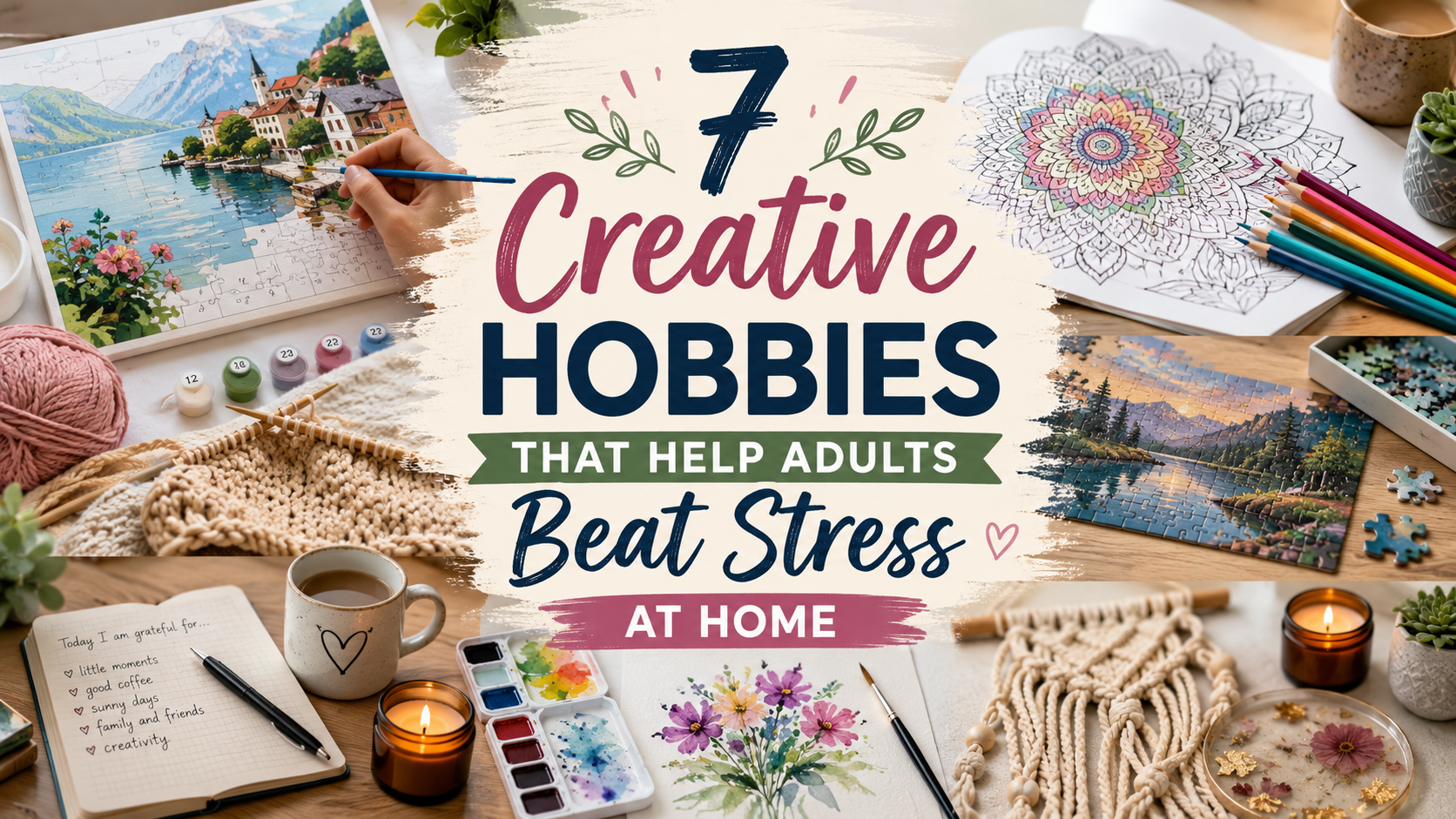
The seven hobbies below don’t require a studio, a big budget, or any prior skill. You can start most of them this week.
1. Paint by numbers – the easiest way to enter a flow state
If you’ve never tried paint by numbers as an adult, the concept is simpler than it sounds: a canvas is printed with numbered sections, and each number corresponds to a specific acrylic color. You match the number, pick up the brush, and fill in the shape.
The therapeutic appeal is in the focus it demands. You’re not trying to be creative or make difficult decisions. You’re following a concrete, low-stakes task, one section at a time. That kind of narrow attention is exactly what quiets a racing mind. Many people describe entering a genuine flow state mid-session, where the to-do list stops running in the background.
paint by numbers kits range from simple 8×12 beginner canvases to large, detailed landscapes with dozens of colors. There are also custom kits built from your own photos, which makes the finished piece worth keeping. That’s one of the real advantages here: you end up with actual wall art. A finished canvas reinforces a visible, concrete sense of accomplishment that most screen-based hobbies can’t match.
2. Adult coloring books – the lowest-barrier creative outlet
No artistic skill required here, and the startup cost is under $15. An intricate design book and a pack of colored pencils is all it takes.
Coloring is a recognized mindfulness practice. The repetitive motion narrows your attention to the present task: which section, which color, how much pressure. There’s no product to judge and no outcome to worry about. It works well as a 20-minute wind-down before bed because it replaces screen time without demanding mental output.
Skills carry over, too. Color awareness, hand control, and patience that you build coloring connect directly to paint by numbers and watercolor work.
3. Puzzle building – small wins that keep you going
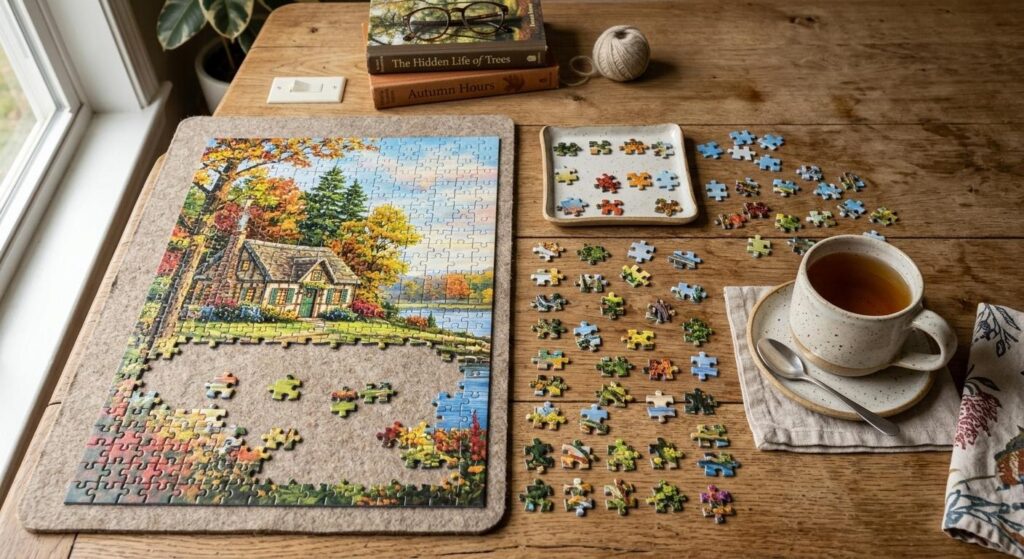
Puzzles are one of the most widely used stress-relief tools in America. The APA’s 2023 Healthy Minds Monthly Poll, conducted by Morning Consult across 2,202 adults and reported via GlobeNewswire, found that 46% of Americans use creative activities including puzzles, painting, and crocheting to manage stress, with puzzle building among the most commonly cited choices.
The psychology is simple. Progress is always visible. Every piece you place is a small, concrete win, and your brain responds to those small wins the same way it responds to larger achievements. There’s no failure state.
Difficulty scales easily. A 300-piece set suits a 45-minute solo session. A 2,000-piece set is a week-long project. They work well for shared evenings, too: two people working on the same puzzle is collaborative rather than competitive.
4. Watercolor painting – more forgiving than you’d expect
Watercolor has a reputation for being difficult. It isn’t. It’s different from acrylic. Mistakes don’t sit hard on the surface. Colors blend and blur together, so most errors either disappear or become something unexpected.
A beginner watercolor set and a pad of watercolor paper costs under $20. You don’t need a canvas, expensive brushes, or formal instruction.
The same APA 2023 data found that 24% of Americans specifically use drawing, painting, or sculpting to relieve stress. Watercolor hits that same pathway: absorbing enough to crowd out anxious thoughts, but low-stakes enough that a bad session is still a session.
The best approach for beginners is to treat watercolor as pure experimentation. Pick a color you like. Wet the paper. See what happens. There’s nothing to lose.
5. Knitting or crochet – repetitive by design, calming by effect
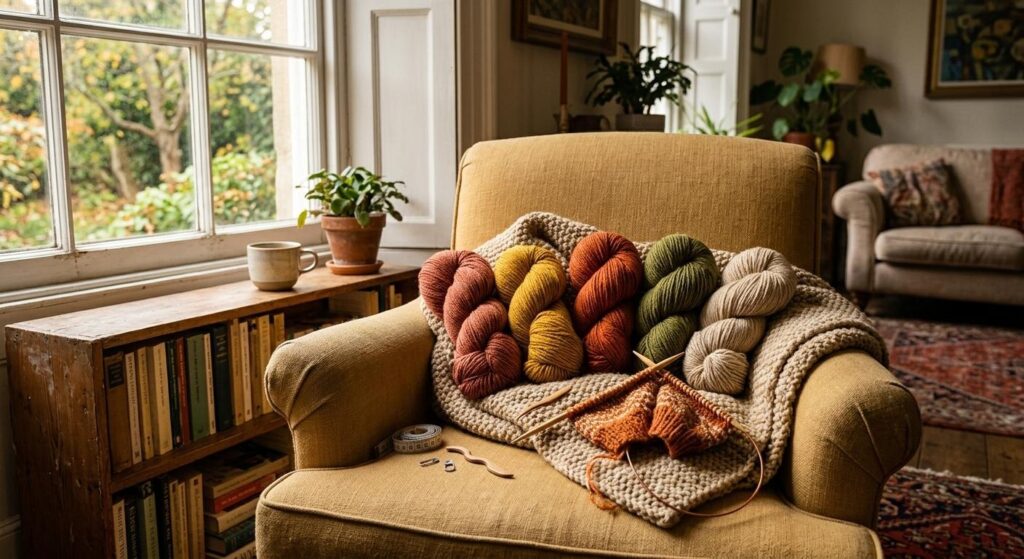
The repetitive stitch motion in knitting and crochet isn’t a drawback. It’s the entire point. Your hands stay busy, your attention stays on a concrete task, and the mental noise from the day has nowhere to attach.
A 2023 study published in Nature Medicine analyzed data from 93,263 participants across 16 countries and found that having a hobby is independently associated with fewer depressive symptoms, better self-reported health, and higher life satisfaction. The effect held across age groups, genders, and national contexts. Knitting and crochet fit exactly the profile of hobby engagement the study measured: regular, hands-on, low-barrier activities that give you something concrete to return to.
Both crafts are portable. You can knit on a commute, in a waiting room, or while watching a film. No dedicated space needed. And unlike purely meditative practices, you end the session with something to show for it: a scarf, a hat, a blanket, or a gift.
6. Journaling and creative writing – no equipment needed
Journaling doesn’t require artistic ability, specialized equipment, or any cost. It’s also one of the most consistently supported stress-reduction tools in mental health research.
You don’t need a format. Stream-of-consciousness writing, where you write whatever is in your head without editing or judging it, is a valid starting point. Over time, that can evolve into short fiction, poetry, or personal essays if the impulse is there.
The connection between writing and reading is worth noting. If you’re already looking for screen-free ways to unwind alongside a creative writing practice, pairing journaling with reading turns a single habit into a broader routine that keeps you off your phone for longer stretches.
7. DIY craft projects – two benefits at once
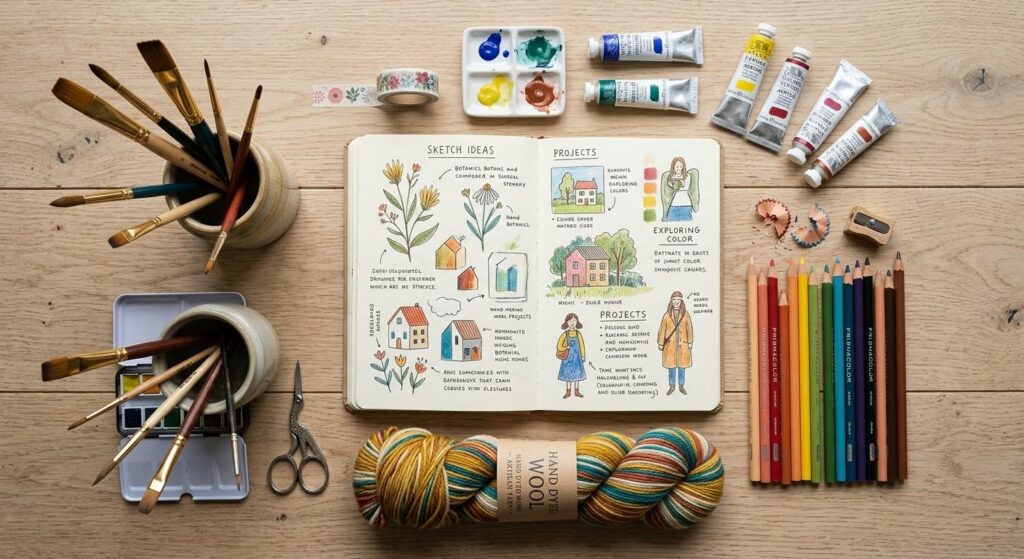
DIY crafts cover a wide range: macrame, candle-making, resin art, pressed flower frames, hand-lettering. What they share is a functional or decorative end result. You make something that goes in your home or gets given as a gift, which adds a layer of purpose that purely process-based hobbies don’t always carry.
A 2025 UK survey by Jackson’s Art found that 21% of artists say creative work helps them feel relaxed, 20% say it boosts their confidence and self-esteem, and 9% say it actively reduces their symptoms of anxiety and depression. DIY crafting delivers all three: it’s calming while you’re doing it, satisfying when it’s done, and the result builds confidence over time.
If you’re thinking about where to work on any of these projects, having a dedicated corner makes the habit easier to return to. A few ideas for setting up a relaxing space at home can make a real difference in whether a creative habit sticks.
How to pick a hobby and actually stick with it
Starting is the part most people overcomplicate. They research options for weeks, buy equipment for a hobby they’ve never tried, and then feel pressure to justify the investment. That’s backwards.
Three principles work better.
Start with the lowest-barrier option on this list. Adult coloring books and puzzle building require almost no commitment. Try one session before spending anything significant.
Set a 20-minute timer for your first session. Most people go longer. That extension is the hook: it tells you whether the hobby has any pull for you or not.
Don’t judge quality for the first two weeks. The stress-relief benefit comes from doing it, not from being good at it. A messy crochet row still counts.
A 2025 scoping review in the Journal of Psychosocial Nursing and Mental Health Services mapped 12 primary studies on hobbies and mental health and consistently found the same three benefit themes: reduced depression, anxiety, and stress; improved quality of life; and enhanced social support. That holds across hobby types. The specific activity matters less than the habit of doing it consistently.
Healthline also has a practical guide to picking up hobbies as an adult that covers how to match activities to your schedule and personality if you want more structured guidance.
One underrated bonus: the things you make become gifts. Finished canvases, hand-knitted items, crafted decorations. There’s a solid collection of personalized craft gift ideas worth browsing once you’ve got a few projects under your belt.
Final thoughts
Creative hobbies aren’t a luxury reserved for people with free afternoons and art studios. Multiple studies now show they’re one of the most practical, low-cost tools available for managing stress, and the barriers to starting most of them are genuinely low.
Pick one item from this list. Try it for 20 minutes this week. That’s the only commitment it takes to find out whether it’s something worth building into your routine.