
Cooking a great steak is about more than simply putting a piece of meat on a hot grill or pan. The cut of steak, cooking method, seasoning, and internal temperature all play an important role in the final result. A well-marbled ribeye needs a slightly different approach from a lean sirloin, while a delicate filet mignon benefits from careful temperature control.
One of the easiest ways to take the guesswork out of cooking steak is to monitor its internal temperature. Using a wireless meat thermometer can help you track the temperature accurately, whether you’re grilling outdoors, pan-searing in the kitchen, or finishing a steak in the oven.
In this guide, we’ll look at some of the most popular cuts of steak, how they differ, the best ways to cook them, and the steak temperatures to aim for when you want your preferred level of doneness.
Popular Cuts of Steak and What Makes Them Different
Every steak cut comes from a different part of the cow, which is why no two cuts have exactly the same combination of tenderness, fat content, texture, and flavor. Understanding these differences can help you choose the right steak for your cooking style and personal preference.
1. Ribeye Steak
Ribeye is one of the most popular steak cuts for people who enjoy a rich, juicy, beef-forward flavor. It typically contains plenty of intramuscular fat, known as marbling, which melts as the steak cooks and helps create a tender and flavorful bite.
- Characteristics: Richly marbled, juicy, tender, and full of flavor.
- Best Cooking Method: Grilling and high-heat pan-searing are excellent choices because they help develop a flavorful crust while keeping the center juicy.
- Ideal Doneness: Medium-rare to medium is a popular range for ribeye and allows the marbling to soften and render.
2. Filet Mignon
Filet mignon comes from the tenderloin and is particularly well known for its soft, buttery texture. Compared with fattier cuts such as ribeye, filet mignon has relatively little marbling and a milder beef flavor.
- Characteristics: Extremely tender, lean, and mild in flavor.
- Best Cooking Method: Sear the steak over high heat to create a crust, then finish it gently in the oven when necessary, especially for thicker cuts.
- Ideal Doneness: Rare to medium-rare is commonly preferred because it helps preserve the tender texture.
3. New York Strip
The New York strip offers a satisfying middle ground between tenderness and beefy flavor. It generally has a good amount of marbling without being as fatty as a ribeye.
- Characteristics: Firm but tender texture, noticeable marbling, and a strong beef flavor.
- Best Cooking Method: Grill or pan-sear over high heat to develop a browned, flavorful crust.
- Ideal Doneness: Medium-rare to medium works well for maintaining its juiciness and texture.
4. T-Bone and Porterhouse Steak
T-bone and porterhouse steaks are recognizable by the T-shaped bone running through the center. Both cuts contain two different portions of beef: strip steak on one side and tenderloin on the other. A porterhouse generally contains a larger portion of tenderloin.
- Characteristics: Two distinct steak textures and flavors in one cut, separated by a central bone.
- Best Cooking Method: Grilling is a popular choice, although they can also be cooked in a large heavy skillet.
- Ideal Doneness: Medium-rare is a common target, although extra care is needed because the two sections can cook at different rates.
5. Sirloin Steak
Sirloin is a versatile steak that delivers plenty of beefy flavor without the higher fat content of cuts such as ribeye. It is also often more affordable, making it a practical option for everyday meals.
- Characteristics: Leaner than many premium cuts, with a firm texture and pronounced beef flavor.
- Best Cooking Method: Sirloin can be grilled, broiled, or pan-seared. A marinade can also be useful when working with a leaner or less tender piece.
- Ideal Doneness: Medium to medium-well may suit those who prefer a firmer steak, but excessive cooking can make lean sirloin dry.
6. Flank and Skirt Steak
Flank and skirt steaks are relatively thin cuts with a pronounced beef flavor. Because they have prominent muscle fibers, preparation and slicing technique can make a noticeable difference in tenderness.
- Characteristics: Lean, flavorful, relatively thin, and distinctly fibrous.
- Best Cooking Method: Marinate if desired, then cook quickly over high heat using a grill or hot pan.
- Ideal Doneness: Medium-rare to medium is often preferred. After cooking, slice the steak thinly against the grain.
Why Steak Temperature Matters
Internal temperature is one of the most reliable ways to determine how well a steak is cooked. Looking at the outside of the steak alone doesn’t tell you exactly what is happening in the center. Two steaks that look similar on the outside can have very different internal temperatures.
Cooking by temperature also makes it easier to achieve consistent results. If you prefer medium-rare steak, for example, monitoring the internal temperature gives you a much better indication of when to remove the steak from the heat than relying only on cooking time.
A meat thermometer can provide a quick temperature reading while reducing the need to cut into the steak during cooking.
Benefits of Using a Meat Thermometer
- Better Precision: A thermometer gives you an actual temperature reading instead of requiring you to guess whether the steak is ready.
- More Consistent Results: Once you know the temperature you prefer, you can reproduce the same level of doneness more reliably.
- Less Cutting During Cooking: Checking the temperature with a probe means you don’t need to repeatedly cut into the steak to inspect the center.
- Versatile Cooking Tool: A thermometer can be used when grilling, pan-searing, roasting, or finishing thick steaks in the oven.
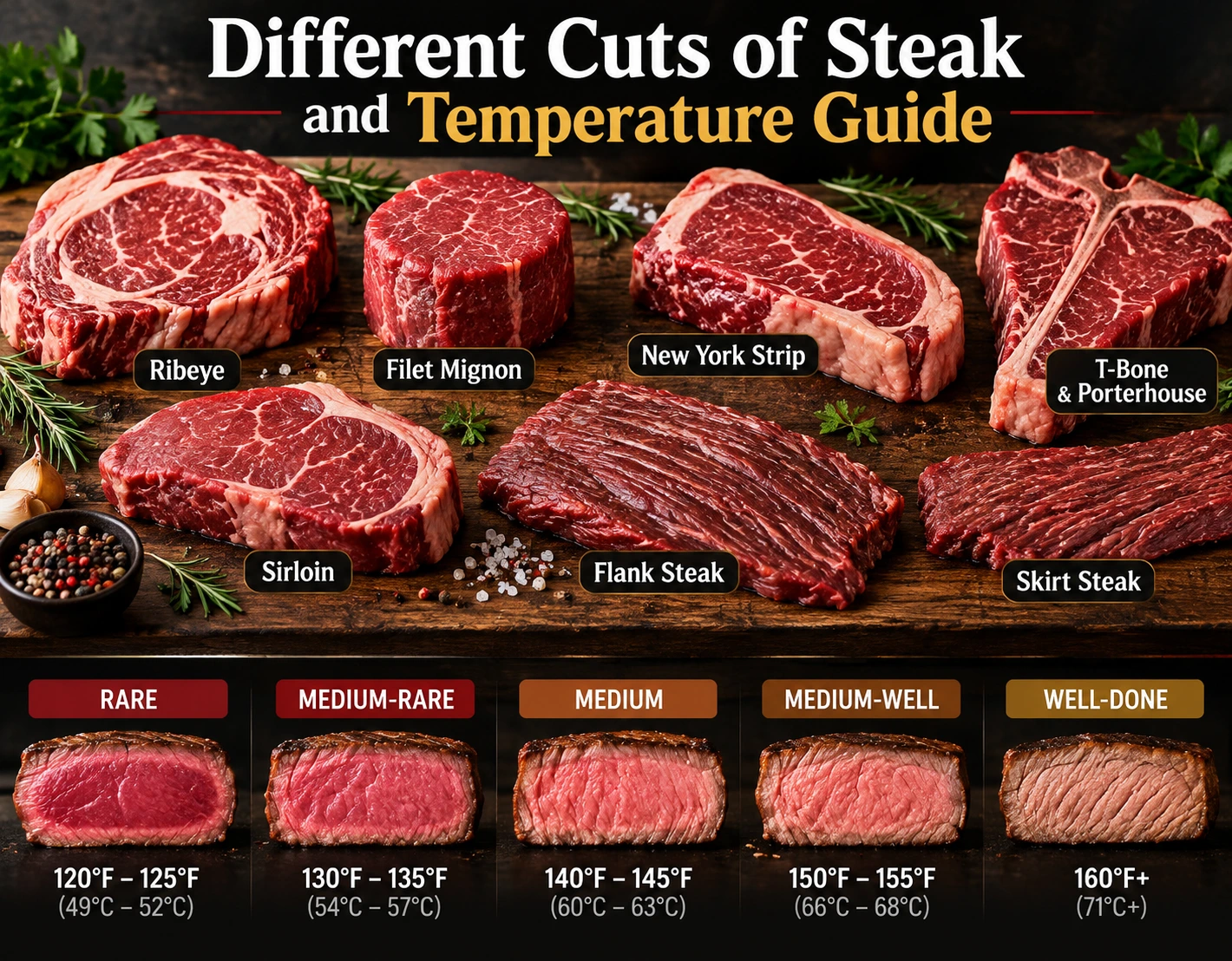
Steak Temperature Guide
The following temperature ranges provide a useful guide to different levels of steak doneness. Keep in mind that the steak can continue cooking slightly after it is removed from the heat, so many cooks remove it a little before their final target temperature is reached.
- Rare: 120°F–125°F (49°C–52°C)
- Cool, red center with a soft texture.
- Often chosen for naturally tender cuts such as filet mignon.
- Medium-Rare: 130°F–135°F (54°C–57°C)
- Warm, red center with a pink transition toward the outside.
- A popular level of doneness for ribeye, New York strip, and T-bone.
- Medium: 140°F–145°F (60°C–63°C)
- Warm pink center with a noticeably firmer texture.
- Works well for people who prefer more cooking while retaining some moisture.
- Medium-Well: 150°F–155°F (66°C–68°C)
- Mostly cooked through with a small amount of pink in the center.
- Can work with leaner steaks, although extra cooking can reduce juiciness.
- Well-Done: 160°F+ (71°C+)
- Fully cooked throughout with little or no visible pink.
- Can result in a firmer and drier texture, particularly with lean cuts.
Food safety note: Steak temperature preferences and food-safety recommendations are not always the same thing. For the safest approach, follow the recommended internal temperature guidance from your local food-safety authority, particularly for vulnerable people, children, older adults, or anyone with a weakened immune system.
How to Cook the Perfect Steak
Once you’ve selected the right cut and decided how you want it cooked, a few simple techniques can make a significant difference to the final result.
- Prepare the Steak: Pat the surface dry before cooking. Removing excess moisture helps the steak develop better browning.
- Season Well: Salt and black pepper are simple choices, but you can also use your preferred steak seasoning or dry rub.
- Preheat the Pan or Grill: A properly heated cooking surface helps create the browned crust that makes a steak so appealing.
- Use a Meat Thermometer: Insert the probe into the thickest part of the steak, avoiding the bone or large pockets of fat, to get a more representative reading.
- Watch the Temperature: Remove the steak from the heat according to your desired level of doneness and account for the fact that its temperature can continue to rise while resting.
- Let It Rest: Allow the steak to rest for several minutes before slicing. This gives the meat time to settle after cooking.
- Slice Against the Grain: For cuts such as flank and skirt steak, identify the direction of the muscle fibers and cut across them rather than parallel to them.
Common Steak-Cooking Mistakes to Avoid
- Cooking Without Checking Temperature: Cooking time alone can be unreliable because steak thickness, starting temperature, and cooking equipment all affect the result.
- Overcooking Lean Cuts: Lean steaks have less fat to provide moisture, so prolonged cooking can make them noticeably firmer and drier.
- Using a Cold Cooking Surface: A pan or grill that isn’t sufficiently hot may prevent the steak from developing a good crust.
- Cutting Immediately: Giving the steak a short resting period can make serving easier and helps avoid losing as much moisture immediately after cooking.
- Slicing With the Grain: Especially with flank and skirt steak, slicing parallel to the muscle fibers can make the steak seem chewier.
Frequently Asked Questions About Steak Cuts and Temperatures
What is the best temperature for medium-rare steak?
A commonly used medium-rare range is 130°F–135°F (54°C–57°C). A meat thermometer can help you monitor the internal temperature instead of relying only on cooking time or appearance.
Which steak cut is the most tender?
Filet mignon is widely known for its exceptional tenderness because it comes from the tenderloin, a muscle that does relatively little work. Other cuts, such as ribeye, can also be very tender while offering more marbling and a richer flavor.
Is ribeye better rare or medium-rare?
Ribeye is commonly enjoyed around medium-rare to medium. The extra cooking compared with rare can help the marbled fat soften and render, while still keeping the steak juicy.
What temperature is a medium steak?
A commonly used range for medium steak is 140°F–145°F (60°C–63°C). The center should be warm and pink, with a firmer texture than medium-rare.
Should steak rest after cooking?
Yes. Allowing a steak to rest for several minutes before slicing gives it time to settle after cooking. The exact resting time can depend on the steak’s thickness and size.
Why should flank steak be sliced against the grain?
Flank steak contains prominent muscle fibers. Cutting across those fibers shortens them, which can make each bite easier to chew. This technique is particularly important for lean, fibrous cuts.
Can I use a wireless meat thermometer for steak?
Yes. A wireless meat thermometer can be useful when monitoring steak during grilling, roasting, or other cooking methods. It allows you to keep track of internal temperature without repeatedly cutting into the meat.
Final Thoughts
Learning how different cuts of steak behave can make cooking much easier. Ribeye is known for its rich marbling, filet mignon for its tenderness, New York strip for its balance of flavor and texture, and flank and skirt steak for their bold beef flavor and distinctive grain.
Temperature is just as important as the cut itself. Instead of relying entirely on cooking time or appearance, use an accurate thermometer to monitor the internal temperature and aim for the level of doneness you prefer.
With the right steak, a properly heated cooking surface, good seasoning, and a wireless meat thermometer, you can make the cooking process more predictable and consistently serve a flavorful steak at home.
Whether you’re preparing a tender filet mignon, a richly marbled ribeye, or a flavorful flank steak, understanding the cut and monitoring its temperature are two of the simplest ways to improve your results.